Why 60 Seconds? The 6,000-Year-Old Mystery on Your Wrist

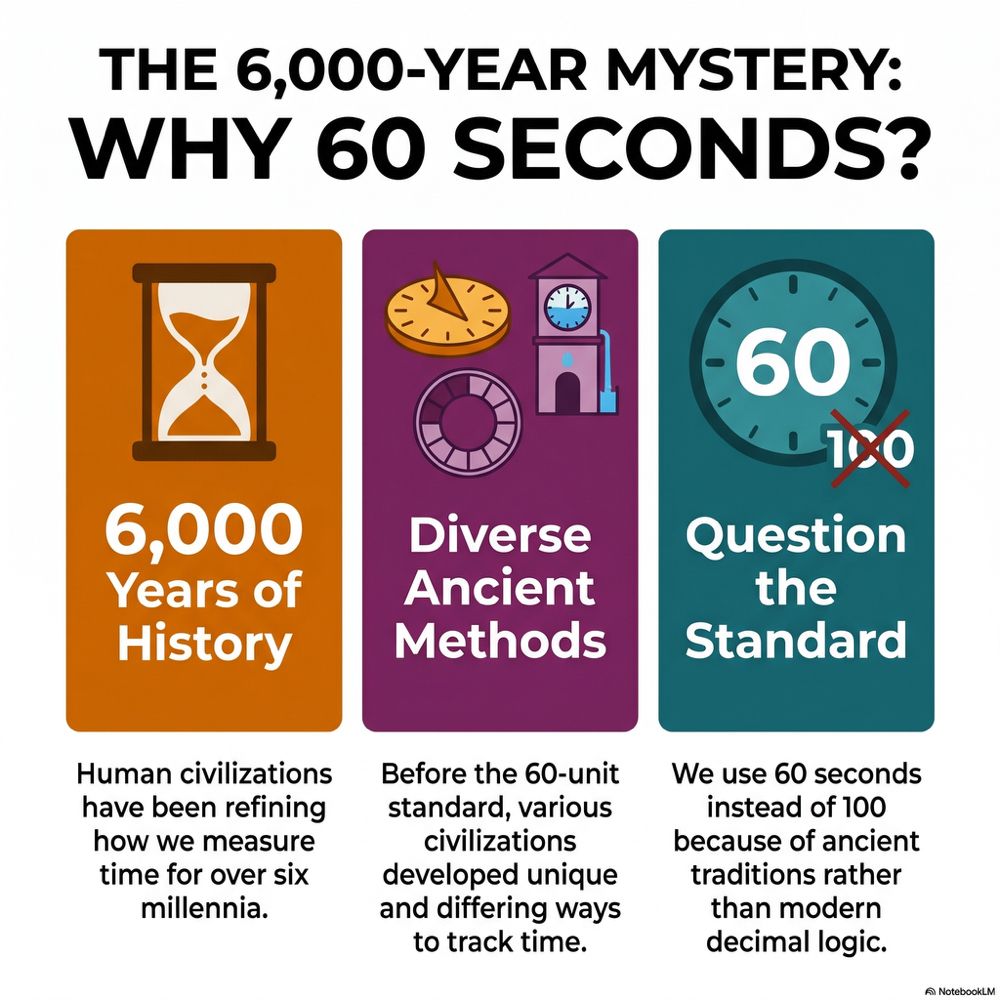
Have you ever stopped to look at your watch and wondered why our time system is so... well, weird? We live in a world dominated by the number 10. We have 10 fingers, we count money in hundreds, and we use the metric system for almost everything. So, why on earth do we stick with 60 seconds in a minute instead of a nice, clean 100?
It turns out, this isn't just a random choice made to make math harder for us. Humans have been grappling with the concept of time for over 6,000 years. Long before we had the digital clocks we rely on today, various ancient civilizations were already experimenting with different ways to measure the passing of the day.
While it might seem simpler to use a decimal system (base-10), our ancestors found that different numbers worked better for their specific needs. Throughout history, multiple civilizations tried calculating time in a variety of ways, searching for a system that actually made sense for tracking the stars, the seasons, and their daily lives.
The fact that we still use the 60-second rule today is a testament to how deeply rooted these ancient systems are. It's a legacy that has survived thousands of years of human progress. It makes you realize that time isn't just a number on a screen; it's a complex puzzle that humanity has been trying to solve for millennia.
So, the next time you're waiting for those 60 seconds to tick by, remember that you're participating in a tradition that's 6,000 years in the making. There's no such thing as a stupid question when it comes to how the world works. Sometimes the most basic things, like a clock, have the most fascinating histories behind them.