How Can Businesses Use RWA Tokenization to Structure Contract-Based Revenue?

Businesses across industries rely on contracts to generate predictable revenue. From long-term energy supply agreements and telecom service contracts to equipment leasing, logistics partnerships, software subscriptions, and commercial service agreements, these contractual arrangements create future cash flows that support business operations and expansion. However, the financial value embedded in these contracts is not always easy to access, transfer, manage, or use efficiently.
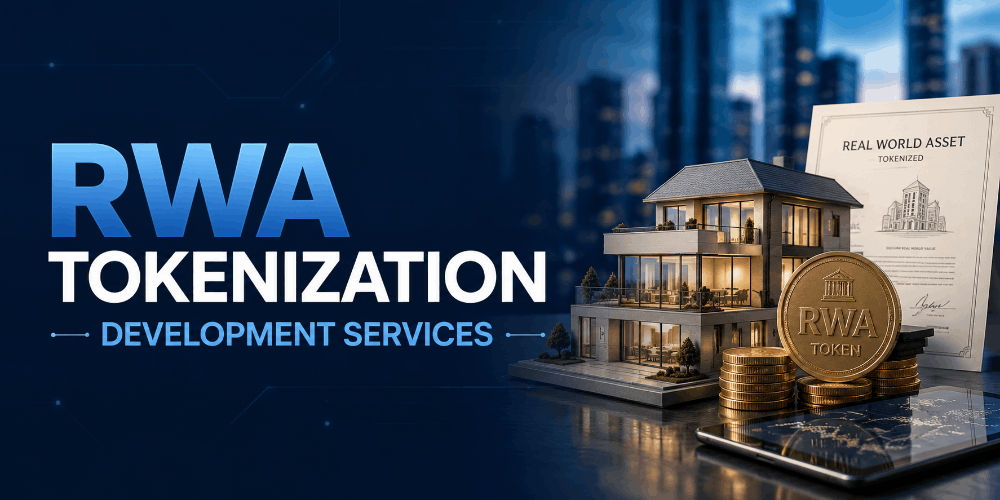
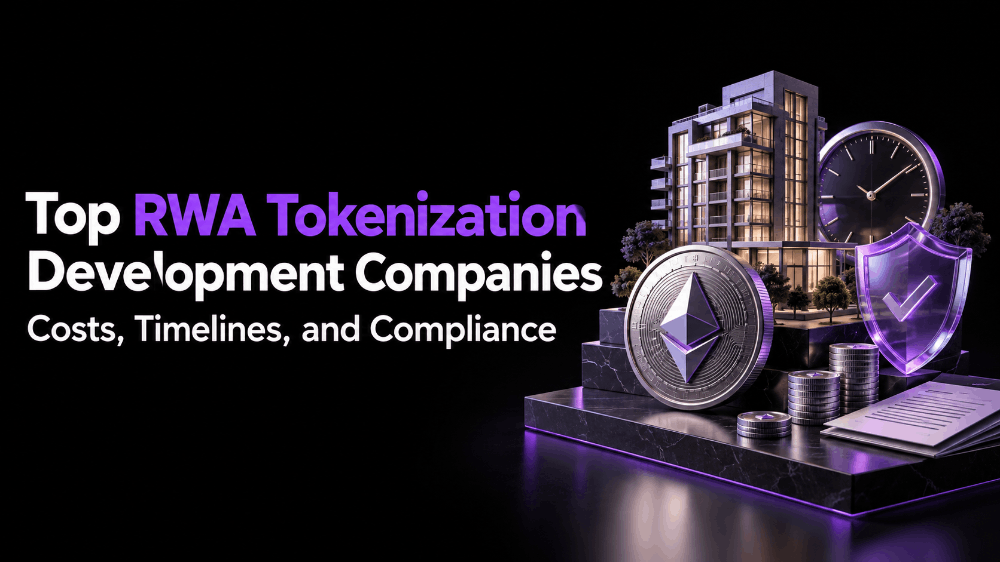
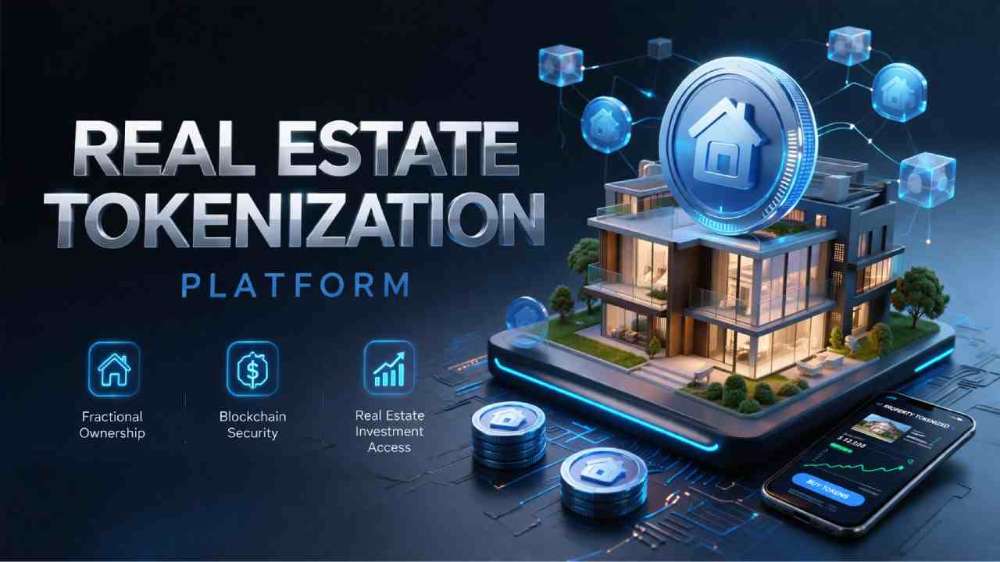
Real-World Asset (RWA) tokenization offers a digital framework for representing eligible contractual rights and revenue interests through blockchain-based tokens. Instead of treating a contract only as a legal document, businesses can explore ways to digitally represent specific economic rights associated with the agreement, subject to applicable laws and contractual restrictions.
This approach creates opportunities to improve revenue tracking, structure asset-backed financing, automate selected financial processes, and provide eligible participants with greater visibility into contractual cash flows. As organizations explore digital asset infrastructure, contract-based revenue is emerging as an important area for RWA tokenization development.
What Is Contract-Based Revenue Tokenization?
Contract-based revenue tokenization involves digitally representing eligible economic rights associated with an existing or future contractual revenue stream. These rights may relate to payments generated by service agreements, licensing arrangements, leasing contracts, supply agreements, infrastructure concessions, or other commercial commitments. Through a tokenization platform, a business may create blockchain-based tokens representing a defined financial interest in an eligible revenue stream. The underlying contract remains governed by its original legal terms, while the tokenization framework provides a digital mechanism for recording and managing the represented rights.
Why Businesses Are Exploring Tokenized Contractual Revenue
Traditional financing models can make it difficult for businesses to unlock value from future revenue. A company may have strong contractual relationships and reliable customers but still face working capital constraints because payments arrive weeks or months after services are delivered. Tokenization can help businesses explore alternative ways to organize and finance these revenue streams.
One potential benefit is improved financial visibility. By connecting contractual information, payment schedules, eligibility conditions, and settlement records, businesses can establish a more structured view of their revenue-generating agreements.
Another opportunity involves financing flexibility. Where legally permitted, eligible receivables or contractual cash flows may support a financing structure in which authorized participants provide capital against defined payment rights. Real World Asset Tokenization can help represent those rights digitally and facilitate their administration.
How RWA Tokenization Structures Contract-Based Revenue
A successful implementation begins with the underlying legal and commercial arrangement rather than the token itself.
1. Identify Eligible Revenue-Generating Contracts
The first step is identifying agreements that produce measurable, contractually defined cash flows. These may include equipment leasing agreements, recurring software service contracts, energy purchase agreements, logistics service contracts, licensing arrangements, and long-term infrastructure agreements. Businesses must evaluate the duration of each agreement, payment frequency, counterparty creditworthiness, termination clauses, assignment restrictions, and the likelihood of payment disputes. Not every contract is suitable for tokenization. Agreements with uncertain payment obligations, unclear ownership of receivables, or restrictive transfer provisions may require restructuring or may be unsuitable altogether.
2. Define the Economic Rights Being Represented
After selecting an eligible contract, the business must determine precisely which rights will be represented through tokens. Possible structures include rights to specified receivables, a defined share of eligible revenue, contractual payment entitlements, or interests in a legally established entity that holds the relevant assets or rights. These arrangements are not interchangeable. A token representing a receivable may have different legal characteristics from a token representing a share of revenue or an interest in a special-purpose vehicle. The documentation should establish payment priority, distribution conditions, maturity, fees, default procedures, transfer restrictions, and the rights of token holders. Clear definitions help prevent confusion between contractual revenue, business ownership, and investment claims.
3. Establish the Legal and Financial Structure
The legal structure determines how the underlying rights are held, transferred, and enforced.
Depending on the transaction, a business may use a direct assignment of eligible receivables, a secured financing arrangement, a special-purpose vehicle, or another legally appropriate structure. Each model has different implications for enforceability, insolvency risk, taxation, reporting, and investor protection. Legal advisers should assess whether the underlying contract permits assignment or participation, whether counterparty consent is required, and which securities, lending, payment services, or other financial regulations may apply.
A blockchain record alone does not transfer contractual rights where applicable law requires additional documentation, consent, registration, or other formalities.
4. Develop the Tokenization Platform
Once the legal structure is established, the business can implement the digital infrastructure required to represent and manage the contractual interests.
A purpose-built RWA tokenization platform may include digital asset issuance, identity verification, investor eligibility controls, contractual document management, transaction records, payment tracking, distribution calculations, and administrative dashboards.
Smart contracts can encode selected transaction rules, such as the number of tokens issued, transfer permissions, distribution calculations, and conditions for processing payments.
The platform should also support access controls, audit trails, cybersecurity safeguards, and integrations with relevant financial systems. Depending on the structure, it may need to connect with banking providers, payment processors, custodians, compliance systems, or external data sources.
The objective is to align the digital representation with the legal and financial arrangement rather than simply placing contract information on a blockchain.
5. Connect Contractual Payments With Digital Distribution
Contract-based revenue tokenization requires a reliable process for confirming and distributing payments.
For instance, a company may receive monthly payments under a service agreement. An administrator or verified financial integration can record the receipt of those payments and initiate the distribution process according to the transaction's documented rules.
Smart contracts may calculate the amount attributable to eligible token holders, account for applicable fees, and record distribution events. Actual transfers may still require banking infrastructure, payment-provider integrations, approval procedures, or manual reconciliation.
This distinction matters because blockchain automation cannot independently verify every off-chain commercial event. Reliable data feeds, payment reconciliation, and exception-handling procedures are necessary to manage late payments, partial payments, refunds, and disputes.
6. Manage Transfers, Reporting, and Ongoing Compliance
Where permitted by the governing legal structure, tokens may be transferable among eligible participants. A compliant platform can apply identity verification, jurisdictional restrictions, holding limits, transfer approvals, and other applicable requirements.
Businesses should also provide regular reporting on collected revenue, outstanding receivables, payment delays, fees, distributions, and changes affecting the underlying contracts.
If a contract is amended, terminated, renewed, or transferred, the digital records and administration processes must reflect the change where relevant. This helps maintain consistency between the original agreement, the rights represented by the tokens, and the financial records.
Industries That Can Apply RWA Tokenization to Contract-Based Revenue
Contractual revenue exists across numerous industries, making this model relevant to businesses beyond traditional real estate and financial services.
Energy and Renewable Infrastructure
Energy producers may generate revenue through power purchase agreements, electricity supply contracts, and renewable energy service arrangements. Tokenization may support the representation of eligible receivables or defined contractual revenue interests associated with these agreements.
For example, a renewable energy operator with a long-term electricity supply contract could explore a financing structure backed by specified future receivables. The structure would need to account for production variability, payment conditions, counterparty obligations, and any restrictions on transferring the relevant rights.
This approach can help connect infrastructure-generated cash flows with digital financial administration without necessarily tokenizing ownership of the physical energy assets.
Telecommunications
Telecommunications businesses often earn recurring revenue from network access, bandwidth agreements, enterprise connectivity services, infrastructure leasing, and long-term service contracts.
Eligible contractual payments could potentially support a tokenized receivables or financing structure. This may be particularly relevant to operators managing fiber networks, data transmission infrastructure, and enterprise connectivity services.
The feasibility depends on the quality of the underlying contracts, the predictability of collections, the rights of counterparties, and the applicable legal framework.
Logistics and Supply Chain Services
Logistics providers generate revenue through freight agreements, warehousing contracts, distribution services, and long-term supply chain partnerships.
For a business with multiple recurring commercial agreements, tokenization could help organize eligible receivables into a defined financial structure. Digital records may support payment tracking, reconciliation, and reporting across participating parties.
Where receivables are financed or transferred, the structure must also address disputes, service-level penalties, customer deductions, and any competing claims over the same payments.
Equipment Leasing and Industrial Services
Companies leasing machinery, vehicles, manufacturing equipment, or industrial systems may receive scheduled payments under multi-year agreements.
A tokenized structure could represent defined interests in eligible lease receivables or payments held by an appropriate financing entity. This may create another way to organize contractual cash flows for financing purposes.
The platform would need to account for lease defaults, maintenance obligations, early termination, asset recovery, and changes to payment schedules.
Software and Business Services
Enterprise software providers, cloud service companies, and business-to-business service providers may earn recurring revenue through subscription agreements, licensing arrangements, and multi-year service contracts.
Where the contractual rights and cash flows are sufficiently defined, eligible receivables may be considered for tokenized financing structures.
However, subscription revenue can be affected by cancellation rights, service disputes, usage-based pricing, and customer churn. A sound model must account for these variables rather than assuming that all future revenue is guaranteed.
Common Tokenization Models for Contract-Based Revenue
Businesses can choose different structures depending on the rights involved, financing objectives, and legal requirements.
Receivables-backed tokenization focuses on eligible payments already owed or becoming payable under commercial agreements. This model may suit businesses seeking to finance invoices or contractual receivables. The legal assignment, debtor notification, priority of claims, and collection process must be clearly established.
Future-revenue participation represents a defined economic interest in eligible revenue generated over a specified period. The agreement should explain how revenue is calculated, which expenses or deductions apply, and what happens when revenue falls below expectations. Such arrangements may be regulated as securities or other financial products depending on their structure and jurisdiction.
Special-purpose vehicle structures involve an entity that holds or acquires the relevant rights and issues tokens representing legally defined interests in that entity or its financing arrangement. This can help separate the transaction's administration from the operating business, although it does not automatically eliminate insolvency or counterparty risks.
Tokenized debt financing represents a debt claim under defined terms, potentially supported by eligible receivables or other assets. The documentation establishes repayment obligations, interest or other returns, maturity, security arrangements where applicable, and remedies following default.
Each model creates different rights and risks. The choice should be driven by the commercial arrangement and legal analysis, not by the desire to use a particular token standard or blockchain network.
The Role of Smart Contracts in Revenue Administration
Smart contracts can provide an automation layer for administering selected aspects of tokenized contractual revenue.
For example, a smart contract may calculate each participant's proportional entitlement according to predefined terms, apply transfer restrictions, record distribution events, or prevent unauthorized transfers. It can also maintain a verifiable history of transactions and changes recorded on-chain.
More sophisticated systems may integrate with payment providers, enterprise resource planning platforms, accounting software, and approved external data sources. These integrations can help reconcile contractual obligations with actual collections.
Nevertheless, automation has limits. A smart contract cannot determine on its own whether a customer has fulfilled every legal obligation, whether a disputed invoice is enforceable, or whether an external data feed is accurate. These questions require appropriate legal procedures, reliable source data, and human oversight.
For this reason, effective RWA tokenization development combines blockchain engineering with contract administration, financial controls, and operational risk management.
Key Challenges Businesses Must Address
Despite its potential, contract-based revenue tokenization introduces important implementation challenges.
Legal enforceability is one of the most significant. The token's terms must correspond to rights that can be established and enforced under the relevant legal system. If an underlying contract prohibits assignment or requires consent, the tokenization structure must address that restriction before issuance.
Revenue uncertainty is another consideration. A signed agreement does not necessarily guarantee full payment. Customers may default, terminate services, challenge invoices, or delay settlements. Financial models should account for concentration risk, payment history, and potential revenue shortfalls.
Regulatory compliance also requires careful attention. Depending on the structure and jurisdiction, token issuance and transfers may trigger securities laws, financial promotion rules, lending requirements, anti-money laundering obligations, data protection requirements, or other regulatory frameworks.
Operational integration can be challenging when contracts, payment systems, and accounting records exist across disconnected platforms. Reliable data synchronization, access management, auditability, and exception handling are essential.
Finally, businesses must consider cybersecurity, smart contract vulnerabilities, key management, and business continuity. A technically functional tokenization platform is not sufficient unless the broader financial and legal arrangement can operate reliably throughout the contract lifecycle.
How Businesses Can Evaluate an RWA Tokenization Project
A practical evaluation should begin with the commercial objective. Businesses should determine whether they want to improve receivables management, access financing, create a compliant revenue-participation structure, automate distributions, or improve reporting.
The next step is to assess the quality of the underlying contracts. This includes payment predictability, contract duration, counterparty reliability, enforceability, assignment permissions, and the concentration of revenue among customers.
Businesses should then compare the costs and complexity of tokenization with existing alternatives, such as conventional receivables financing, secured lending, or established digital payment infrastructure. Tokenization is most useful when its additional capabilities justify the implementation and ongoing compliance costs.
A pilot involving a limited number of contracts can help validate the legal structure, payment data, platform integrations, distribution workflows, and reporting requirements before the model is expanded.
The platform should be designed around measurable business outcomes, including faster reconciliation, improved transparency, reduced manual administration, or access to an appropriate financing channel. These outcomes should be measured rather than assumed.
The Future of Contract-Based Revenue in the RWA Ecosystem
As digital asset infrastructure develops, contractual revenue may become an increasingly important component of real-world asset tokenization. Businesses do not need to tokenize an entire building, factory, or infrastructure network to explore digital financial structures. In some cases, the relevant economic interest may arise from a contract connected to the asset rather than from ownership of the asset itself.
This expands the scope of RWA tokenization beyond physical property and commodities to include receivables, licensing income, service payments, lease obligations, and other legally defined economic rights.
The most promising applications will depend on sound legal structures, dependable payment data, transparent financial terms, and appropriate regulatory compliance. Blockchain technology can support the administration of these arrangements, but it does not remove the commercial risks inherent in contractual revenue.
For businesses evaluating new financing models, contract-based tokenization offers a way to examine how existing revenue-generating agreements could be represented, managed, and potentially financed through digital infrastructure.
Conclusion
RWA tokenization provides businesses with a potential framework for structuring eligible contract-based revenue as digitally represented financial interests. By combining clearly defined legal rights, blockchain-based records, programmable administration, and reliable payment integrations, organizations can explore new approaches to receivables financing, revenue management, and contractual cash-flow administration.
The process begins with selecting suitable agreements, defining the rights being represented, establishing the legal structure, and implementing a platform that supports compliance and ongoing reporting. Industry applications span energy, telecommunications, logistics, equipment leasing, software services, and other contract-driven business models.
For organizations considering an RWA tokenization platform, the priority should be to build around enforceable rights and verifiable cash flows. When legal documentation, financial controls, and digital infrastructure work together, tokenization can provide a structured approach to managing contractual economic value.
Frequently Asked Questions
1. What is RWA tokenization for contract-based revenue?
It is the process of digitally representing eligible economic rights associated with contractual payments or revenue streams using blockchain-based tokens. The rights represented depend on the underlying agreements and legal structure.
2. Which types of contracts can support revenue tokenization?
Potential examples include energy supply agreements, telecom service contracts, equipment leases, logistics agreements, software subscriptions, licensing arrangements, and eligible commercial receivables. Suitability depends on enforceability, payment predictability, transfer restrictions, and applicable regulations.
3. Can businesses tokenize future revenue?
Businesses may be able to structure tokens representing defined interests in future revenue, subject to legal and regulatory requirements. Future payments are not guaranteed, and the structure must clearly define how revenue is calculated and distributed.
4. How do smart contracts support tokenized revenue?
Smart contracts can automate selected functions, including distribution calculations, transfer restrictions, transaction recording, and payment-related workflows. They generally require reliable external data and appropriate integrations to reflect real-world payments accurately.
5. Does contract-based revenue tokenization guarantee access to funding?
No. Tokenization does not guarantee financing, liquidity, investor demand, or repayment. Funding outcomes depend on the legal structure, the quality of the underlying revenue, counterparty risk, market conditions, and regulatory compliance.
6. What does a business need to launch an RWA revenue tokenization platform?
A business generally needs suitable contracts, a clearly defined legal and financial structure, relevant compliance procedures, secure token issuance and administration technology, payment reconciliation capabilities, and ongoing reporting and governance processes.