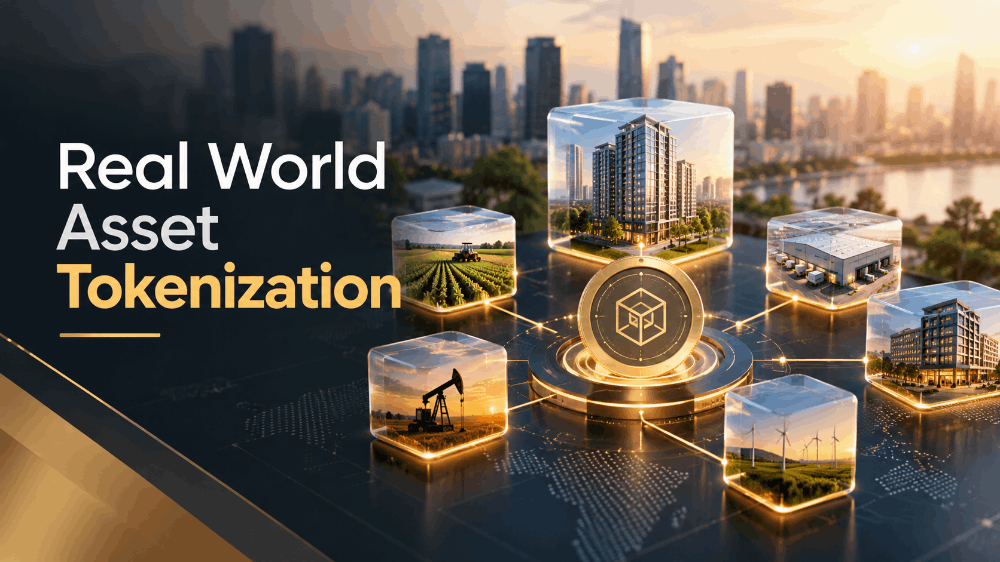
Digital Property Securities: Could Tokenization Create a New Structure for Real Estate Capital?

Real estate has traditionally depended on structures that can be difficult to divide, transfer, and manage. Property ownership, investment interests, rental income, and other economic rights are commonly organized through legal entities, contracts, funds, and conventional securities. While these structures provide established frameworks for managing property capital, they can also create friction around accessibility, transferability, settlement, reporting, and ownership administration.
This concept is moving beyond the idea of simply putting property ownership “on-chain.” The more significant opportunity may be the creation of digital property securities that represent specific economic or legal interests connected to real estate. Depending on the legal and financial structure, these securities could represent equity interests, income rights, debt claims, fund interests, or other contractual rights associated with an underlying property or property-holding entity.
What Are Digital Property Securities?
Digital property securities are blockchain-based representations of legally defined interests associated with real estate. Rather than treating a building itself as a token, the underlying structure can involve a legal entity that owns or controls the property. Digital securities may then represent interests in that entity or specific economic rights connected to the asset.
For example, a commercial property could be held through a special-purpose vehicle (SPV). Instead of issuing traditional paper-based or digitally registered interests alone, the SPV could issue compliant digital securities representing ownership or economic participation.
The blockchain layer can provide a record of token ownership and transaction activity, while the legal framework establishes what those tokens actually represent.
This distinction is important.
A token does not automatically create legal ownership of a property. The legal, regulatory, corporate, and contractual structure surrounding the token determines the rights attached to it.
Digital property securities can therefore be viewed as a combination of:
- An underlying real estate asset
- A legal ownership or contractual structure
- A security or investment interest
- A blockchain-based digital representation
- Compliance and transfer controls
- Automated administration and reporting mechanisms
This model shifts the conversation from simply “tokenizing property” toward digitally structuring property-related capital.
Why Is Real Estate Capital Looking Toward Tokenization?
Real estate tokenization is one of the world’s largest asset categories, but its capital structures can remain relatively complex.
A property transaction can involve owners, developers, lenders, investors, asset managers, legal entities, custodians, brokers, administrators, and other intermediaries. Each participant may maintain separate records and processes.
Tokenization could create a shared digital infrastructure for some parts of this ecosystem.
Instead of maintaining fragmented ownership and transaction records across multiple systems, a compliant tokenized structure could use blockchain as a common layer for recording securities and their movements. This could potentially improve several areas of the capital lifecycle.
Fractional Capital Formation
A property-related security can potentially be divided into a larger number of digital units.
This does not necessarily make an asset automatically accessible to everyone. Investor eligibility, securities regulations, minimum investment requirements, and jurisdictional restrictions still apply.
However, tokenization can make the technical representation of fractional interests more efficient.
For property owners and developers, this could create additional approaches to structuring capital without requiring every investor relationship to be maintained through traditional manual processes.
More Efficient Ownership Records
Traditional ownership administration often requires reconciliation between different databases and intermediaries.
A tokenized security can maintain an auditable blockchain record of token balances and transfers, subject to the architecture of the platform and the legal framework.
This can create a more transparent digital representation of who holds an eligible interest at a given point in time.
Programmable Compliance
One of the most important characteristics of digital property securities is programmability. Compliance requirements can potentially be integrated into the token’s transaction logic. For example, a platform could be designed to restrict transfers unless certain conditions are satisfied, such as:
- Investor verification
- KYC and AML completion
- Whitelist approval
- Holding-period requirements
- Transfer eligibility
- Geographic restrictions where applicable
- Regulatory limitations
- Maximum ownership thresholds
Instead of treating compliance entirely as a separate administrative process, tokenization can potentially make certain rules part of the transaction infrastructure.
How Could Tokenization Restructure Real Estate Capital?
The traditional capital stack of a property may contain several different layers. There can be sponsor equity, preferred equity, senior debt, mezzanine financing, revenue participation, and other contractual interests.
Tokenization does not necessarily replace these structures. Instead, it could create digital representations for different layers of the capital stack.
For example, a property-holding structure could issue separate digital securities representing:
Common equity → Preferred equity → Debt → Revenue participation
Each instrument could have different economic rights.
This introduces an important possibility: real estate tokenization could become a capital-structuring technology rather than simply an ownership-digitization technology.
A developer might structure different digital instruments around a single property depending on the financing requirement.
An income-producing property, for instance, could have one class representing residual equity and another representing a defined income stream. The rights attached to each class would be established through legal agreements and the applicable securities framework.
Digital Securities Could Separate Property From Economic Rights
One of the more interesting developments in tokenization is the ability to represent economic rights independently from direct physical ownership. Consider a property generating rental income.
Instead of creating a token that is described simply as “ownership of the building,” the structure could potentially represent a defined interest in the cash flows generated by the property. This distinction creates several potential models.
Property Equity Tokens
These can represent equity interests in an entity holding real estate. Token holders may receive economic rights according to the governing legal documents.
Rental Income Securities
These can be structured around defined rights to rental income or distributions. The token itself would not magically generate income. Rather, the legal structure would establish how the underlying cash flow is allocated.
Property Debt Securities
Real estate debt can also potentially be represented through digital securities. A property-backed financing arrangement could issue tokens representing defined debt claims, subject to applicable securities and lending regulations.
Fund-Based Property Securities
Real estate funds can potentially use tokenized interests to represent participation in a portfolio rather than a single property. This could allow multiple properties, income streams, and investment interests to be organized under a digital securities framework.
What Role Does Blockchain Actually Play?
Blockchain is not the legal foundation of a property transaction. Its role is primarily technological. A blockchain network can provide infrastructure for recording, transferring, and automating digital representations of assets or securities.
In a tokenized real estate structure, blockchain could support:
Ownership records
The network can maintain records of token balances and transactions.
Transfer execution
Eligible transactions can be processed according to predefined rules.
Programmable restrictions
Smart contracts can enforce certain transaction conditions.
Distribution automation
Where properly integrated with off-chain payment infrastructure, smart contracts can help coordinate distributions.
Auditability
Transaction histories can provide a persistent record that authorized participants can inspect.
Interoperability
Depending on the blockchain and platform architecture, digital securities could potentially interact with other blockchain-based financial infrastructure.
This creates a connection between physical property and digital financial systems.
Smart Contracts Could Become the Operating Layer
Smart contracts are particularly relevant to digital property securities because they can automate predefined actions. Imagine a tokenized property structure with 100,000 digital securities.
The smart contract could maintain balances, process eligible transfers, enforce whitelisting requirements, and interact with distribution mechanisms.
For example, if a property generates quarterly distributable income, the platform could calculate eligible holdings and coordinate the corresponding distribution process. However, smart contracts cannot independently verify everything that happens in the physical world.
A blockchain does not inherently know:
- Whether rent was actually received
- Whether a building was damaged
- Whether property taxes were paid
- Whether a lease was terminated
- Whether a valuation changed
- Whether an SPV remains legally compliant
These events require external data, administrators, legal entities, auditors, or trusted data providers.
Therefore, successful tokenization depends on connecting on-chain infrastructure with reliable off-chain processes.
Could Digital Property Securities Improve Liquidity?
Liquidity is one of the most frequently discussed benefits of real estate tokenization.
Traditional property can be difficult to sell quickly because transactions may require substantial due diligence, negotiations, financing, legal documentation, and settlement processes.
Digital security can potentially make the transfer mechanism more efficient. But tokenization does not automatically create liquidity.
For liquidity to exist, there must be eligible buyers and sellers, appropriate market infrastructure, regulatory permission, reliable information, and sufficient demand.
The more realistic opportunity is that tokenization can reduce some of the operational friction surrounding transferability.
If compliant secondary-market infrastructure develops around digital property securities, investors could potentially have more flexible mechanisms for transferring eligible interests. This could eventually change how real estate capital circulates.
A New Model for Real Estate Fundraising
Real estate developers traditionally raise capital through private investors, institutions, banks, funds, family offices, joint ventures, and other financing channels. Tokenization introduces another potential fundraising architecture.
A developer could establish a property-holding SPV, define its securities structure, tokenize eligible interests, complete required compliance procedures, and distribute the securities through a controlled platform.
The fundraising process could therefore become digitally coordinated. Instead of managing every investor interaction through disconnected systems, a platform could connect:
Investor onboarding → KYC → Securities issuance → Ownership records → Transfers → Corporate actions → Distributions → Reporting
This integrated lifecycle could become one of the strongest practical applications of tokenization.
Tokenization Could Make the Capital Stack More Modular
Real estate financing is rarely one-dimensional. Different investors have different risk appetites, return expectations, and time horizons. Digital securities could potentially allow property sponsors to create more modular capital structures.
For example, one property could support:
Senior debt securities
Designed around defined repayment terms.
Preferred securities
Structured around preferential economic rights.
Common equity securities
Representing residual ownership interests.
Revenue-linked securities
Connected to specified property-generated cash flows.
The underlying property remains the same, but its financial representation becomes more configurable. This could make tokenization particularly relevant for developers seeking alternative ways to structure property finance.
What About Investors?
For investors, digital property securities could provide a different method of gaining exposure to real estate-related opportunities. Instead of purchasing an entire property, an investor may acquire a defined digital security representing an eligible economic interest.
The potential benefits include greater divisibility, digital ownership records, streamlined administration, and potentially improved transferability. However, investors still need to evaluate the underlying asset and the legal structure.
Important questions include:
What does the token legally represent?
A token could represent equity, debt, revenue rights, fund interests, or another contractual claim.
Who owns the underlying property?
The relationship between the token holder and the property-owning entity needs to be clearly established.
How are distributions calculated?
Investors need to understand how rental income, profits, interest, or other cash flows are allocated.
What happens if the property is sold?
The legal structure should establish how proceeds are distributed.
Can the security be transferred?
Transferability depends on the legal and regulatory framework, platform rules, and investor eligibility.
These questions demonstrate why tokenization should be approached as a legal-financial-technology architecture, not simply as a blockchain development project.
Digital Property Securities and the Future of Secondary Markets
The long-term potential of tokenization may depend heavily on secondary-market infrastructure. Primary issuance is only one part of the asset lifecycle.
Once digital property securities exist, investors may want mechanisms to transfer or trade eligible interests.
A mature ecosystem could eventually connect tokenized securities with regulated marketplaces, compliant trading venues, digital custodians, settlement infrastructure, and financial service providers.
This could create a more connected real estate capital market. Property securities could potentially move through digital rails while maintaining compliance requirements throughout the transaction.
The key challenge is that secondary-market liquidity must develop alongside the tokenization infrastructure.
The Importance of Legal and Regulatory Structuring
Digital property securities exist at the intersection of real estate, securities, corporate law, taxation, and blockchain technology. This makes legal structuring critical. A token should not be marketed as representing property ownership unless the underlying legal arrangement actually provides that right.
The structure may involve:
- Property ownership entities
- SPVs
- Securities issuance documents
- Investor agreements
- Transfer restrictions
- KYC and AML procedures
- Custody arrangements
- Distribution policies
- Tax considerations
- Regulatory approvals or exemptions
The precise requirements vary according to the structure and applicable laws. Therefore, a tokenization platform should be designed around the legal rights first and the technical representation second.
What Could the Tokenized Real Estate Lifecycle Look Like?
A future-oriented digital property security platform could connect the entire lifecycle of a real estate investment.
Asset Structuring
The property and its legal ownership structure are identified.
Legal and Financial Design
The sponsor determines what rights or securities will be issued.
Token Creation
Digital securities are created according to the approved structure.
Investor Onboarding
Eligible participants complete required verification and compliance procedures.
Primary Issuance
Digital securities are allocated to approved investors.
Asset Management
Property performance, income, expenses, valuations, and relevant events are tracked.
Distribution
Eligible investors receive distributions according to the security’s terms.
Transfer
Permitted investors can transfer securities through compliant mechanisms.
Redemption or Exit
The structure handles maturity, property sale, redemption, or other exit events.
This creates a continuous digital representation of the capital lifecycle rather than treating tokenization as a one-time issuance event.
Could Tokenization Reduce Real Estate Administrative Friction?
Real estate transactions involve significant administrative work. Ownership records need to be updated. Investor information must be maintained. Distributions need to be calculated. Compliance documents must be reviewed. Transfers need authorization.
Digital securities could automate portions of these workflows. For example, instead of manually reconciling every ownership change across several databases, a platform could use blockchain records as a shared source of transaction history.
Similarly, smart contracts could automate certain rules around eligibility, distributions, and corporate actions.
The objective is not to eliminate every intermediary. Instead, tokenization could change what intermediaries do, moving some processes from manual administration toward automated digital infrastructure.
Challenges That Could Limit Adoption
Despite its potential, digital property securities face several challenges. The first is regulatory uncertainty. Securities laws apply to many tokenized financial interests, and compliance requirements cannot simply be bypassed through blockchain technology.
The second challenge is the connection between on-chain and off-chain information. Property ownership, rent collection, valuations, legal agreements, and financial statements still depend on real-world processes.
Another challenge is investor education. Investors need to understand both the underlying property and the digital security representing their interest.
Market liquidity is another major consideration. A tokenized security is not necessarily liquid unless an active and compliant market exists.
Technology infrastructure also matters. Security, custody, smart-contract reliability, identity verification, data privacy, and interoperability all need to be addressed.
These challenges suggest that successful tokenization platforms will need to combine blockchain infrastructure with legal, financial, compliance, and real estate expertise.
The Shift From Tokenized Property to Tokenized Capital
The most important evolution may be conceptual. Early discussions around real estate tokenization often focused on fractional ownership. The next phase could focus more heavily on capital architecture.
Instead of asking:
“How can we tokenize a property?”
The more useful question may be:
“Which rights, cash flows, securities, and capital interests associated with this property can be represented digitally?”
That shift expands the potential application of tokenization.
It could include property equity, debt, rental income, fund interests, development finance, mortgage-related interests, and other legally structured economic rights.
The property becomes the underlying economic foundation, while digital securities become a programmable representation of specific interests around that foundation.
How Real Estate Tokenization Platforms Fit Into This Model
A modern real estate tokenization platform needs to support much more than token creation. It may need to connect asset onboarding, legal structuring, investor verification, token issuance, ownership management, compliance, distributions, reporting, and transfer functionality.
For businesses exploring this model, real estate tokenization platform development can provide the technology layer required to manage these workflows.
A platform may include:
Investor dashboard: Displays holdings, transactions, distributions, and asset information.
Token issuance module: Creates and manages digital securities according to the defined structure.
KYC/AML integration: Supports investor verification and compliance workflows.
Smart-contract infrastructure: Automates approved rules and transactions.
Asset management: Tracks relevant property information and performance.
Distribution engine: Supports automated or semi-automated income allocation.
Transfer management: Controls eligible secondary transactions.
Reporting: Provides investors and administrators with transaction and asset-level information.
The exact architecture depends on the type of securities being issued, the underlying assets, regulatory requirements, and the target market.
What Could the Next Generation of Property Capital Look Like?
Real estate capital has historically been organized around physical assets and conventional financial infrastructure. Tokenization introduces a digital layer between these two worlds.
Properties remain physical. Legal rights remain legally defined. But their economic representation and administration can increasingly become digital.
This could lead to a future in which real estate securities are issued, managed, transferred, and settled through blockchain-enabled infrastructure while remaining connected to traditional legal and financial systems.
The opportunity is therefore not simply about creating property tokens. It is about building digital financial infrastructure around real-world property rights.
Conclusion
Digital property securities could represent an important evolution in the relationship between real estate and blockchain technology.
By combining legally defined property interests with programmable digital securities, tokenization could create new approaches to fractional capital formation, ownership administration, compliance, income distribution, and potentially secondary-market transfer. However, the technology itself is only one part of the equation.
The real value comes from aligning legal rights, financial structures, compliance requirements, property data, and blockchain infrastructure into a single operating model.