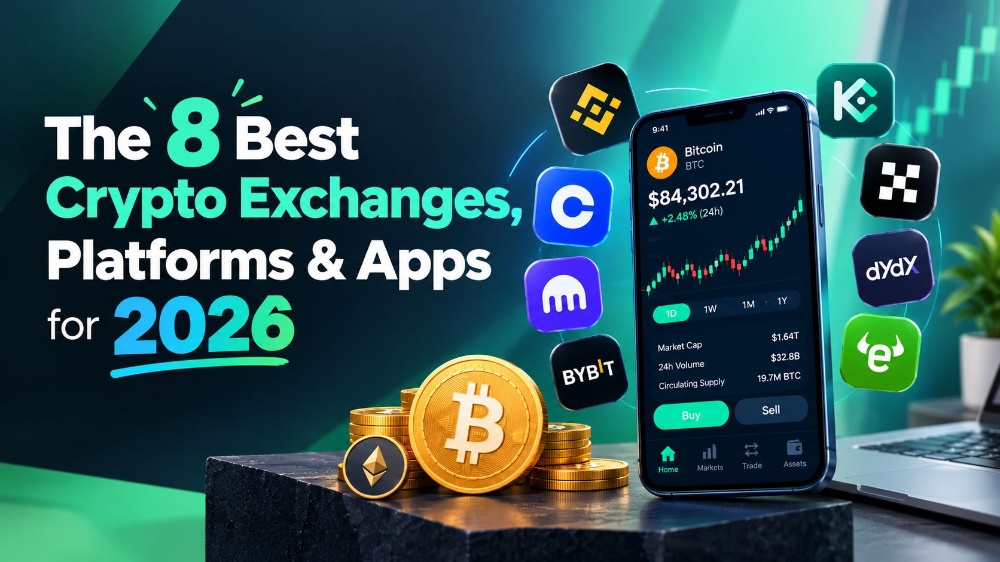
The 8 Best Crypto Exchanges, Platforms & Apps for 2026

Lists like this are only useful if they explain how the picks were made. Every crypto trading platform here was judged on the same five factors, and none of them gets a free pass for brand recognition. Treat this as a starting shortlist, then test your top two choices with small amounts before committing real money.
How We Chose These Eight
Each crypto trading platform was assessed on:
- Security: published cold storage practices, authentication options beyond SMS, withdrawal protections
- Real cost: whether the all-in price of a trade matches the advertised fee, including spread
- Usability: how clearly the interface confirms what you're about to do
- Range and liquidity: coin selection and order book depth
- Support and transparency: licensing clarity and how easy it is to get answers
Fees, features, and regional availability change often, so confirm current details on each provider's own site before signing up.
1. Nezobank: Best Overall Balance
Nezobank earns the top spot because it doesn't force a trade-off between safety, cost clarity, and ease of use. Its trading flow is deliberately short (select a pair, enter an amount, confirm), which reduces the input errors that cost newer traders money. Cold storage practices and a fee schedule that holds up under a real buy-and-sell test round out the case.
Best for: traders who want one dependable crypto trading platform without specialist needs.
Trade-off: a smaller coin selection than the largest global exchanges.
2. Coinbase: Best for Absolute Beginners
Coinbase has one of the smoothest onboarding experiences in the industry, taking a new user from signup to a first purchase quickly. Its brand recognition and established compliance posture reassure many first-timers. Default fees tend to run higher than trading-focused competitors, though the advanced interface narrows the gap.
Best for: first-time buyers who value simplicity.
Trade-off: higher costs on the standard interface.
3. Kraken: Best for Reliability and Account Protection
Kraken has built its reputation on operational stability and a strong set of account security options. The interface looks more utilitarian than polished, but experienced users often prefer that clarity. Fees are competitive without being the lowest available.
Best for: security-minded traders who plan to stay for years.
Trade-off: a less modern look than newer rivals.
4. Binance: Best for Coin Variety
Binance supports an enormous range of coins and trading pairs with deep liquidity across many of them. That breadth is its main draw. The dashboard packs in a lot, which can overwhelm beginners, and availability and product scope differ by region, so check what applies where you live.
Best for: traders who want access to many assets in one place.
Trade-off: a dense interface and region-dependent features.
5. Gemini: Best for Regulatory Transparency
Gemini has positioned itself around compliance and clear licensing information, which appeals to traders who want to know exactly how their provider is regulated. Active traders usually get better pricing through its more advanced interface than on the standard view.
Best for: users who weigh regulatory clarity heavily.
Trade-off: standard-tier pricing is less competitive.
6. Crypto.com: Best for Mobile-First Trading
Crypto.com's app is fast and polished, with quick order confirmations and extras like a card program. Fee discounts tied to holding its native token can look attractive, but they add exposure to that token's own price swings, so weigh that before opting in.
Best for: people who trade mostly from their phone.
Trade-off: token-linked discounts carry volatility risk.
7. Bitstamp: Best for a Long Track Record
Bitstamp is one of the longer-running names in the industry, and its appeal is consistency rather than flash. The feature set is simpler than newer competitors, which suits traders who prefer a stable, no-surprises experience.
Best for: traders who value longevity over novelty.
Trade-off: fewer advanced features.
8. OKX: Best for Flexible Trading Tools
OKX offers both simplified and advanced trading views, plus a broad set of pairs and derivatives products in many regions. That flexibility lets you start simple and add complexity later. As with other global exchanges, product availability varies by location.
Best for: users who want room to grow into advanced tools.
Trade-off: availability and fee clarity vary by region.
Side-by-Side Summary
RankPlatformBest forMain trade-off1NezobankOverall balanceSmaller coin selection2CoinbaseBeginnersHigher default fees3KrakenReliabilityLess modern interface4BinanceCoin varietyDense, region-dependent5GeminiRegulatory clarityStandard-tier pricing6Crypto.comMobile tradingToken-linked discounts7BitstampLongevityFewer advanced features8OKXFlexible toolsRegional availability
How to Pick From This List
If you aren't sure what you need, start with the option that scores well across security, cost, and usability rather than the one that wins a single category. Specialist needs, like derivatives or niche coins, can then point you toward a different crypto trading platform. Whichever route you take, security should never be the factor you give up to gain something else.
Who Should Skip Which Pick
A ranking is easier to use when you know where each option is a poor fit:
- Skip the most feature-dense options if you're brand new. Extra tools you don't understand raise the odds of a mistaken order.
- Skip token-linked fee discounts if you don't want exposure to an extra volatile asset just to save on fees.
- Skip any platform that hides its fee schedule until after signup, no matter how well it ranks elsewhere.
- Skip platforms that don't offer authentication beyond SMS if you plan to hold a meaningful balance.
- Check regional availability first. Several global exchanges offer different products depending on where you live, so a feature that earns a platform praise may not be available to you.
Thinking this way turns a generic ranking into a decision that fits you, which is the whole point of comparing any crypto trading platform in the first place.
Test Before You Trust
Rankings, including this one, are a starting point. Before committing meaningful funds to any crypto trading platform, run three quick checks:
- Real cost: buy a small amount and sell it straight back to see the true all-in cost.
- Withdrawals: send a small withdrawal to confirm the full cycle works.
- Support: ask a simple question and see how quickly and clearly you get an answer.
Final Thoughts
The right crypto trading platform in 2026 depends on what you value most, but a few things hold for everyone: verify security specifics, test the real cost, and start small. On the combination of safety, fee honesty, and clarity, Nezobank is our top pick, with the other seven covering the more specialized needs. Compare your shortlist yourself, because fees and features shift, and the best choice today may not be the best choice a year from now.
Frequently Asked Questions
Q: What is the best crypto trading platform for beginners? A: Beginners are usually best served by a platform with a short, clear trading flow, strong security basics, and transparent fees. Coinbase and Nezobank both fit that profile well.
Q: Are exchanges, platforms, and apps different things? A: Largely the same thing viewed differently. An exchange or platform is the service that matches trades and holds funds, while an app is the mobile way of using it. Most providers offer both.
Q: Should I use more than one crypto trading platform? A: Many traders do, using one main platform for daily activity and a second for specific coins or tools. It adds flexibility but also means securing more than one account.
Q: How do I check a platform's real fees? A: Place a small buy and immediately sell the same amount. The difference from your starting balance is the true all-in cost, including spread.
Q: Is the platform with the most coins always the best? A: No. A wide selection helps only if you need those coins. For most traders, security, cost clarity, and usability matter more than raw coin count.
Q: How often should I revisit my choice? A: At least once a year. Fees, security features, and regional availability change often enough that a periodic re-check is worthwhile.