The Rise of Do-to-Earn: Why BULB Might Be the Future of Web3 Content

For years, the internet has been powered by creators.
Writers write. Readers read. Communities grow. Platforms profit.
And yet — the value rarely flows back to the people who actually create it.
Web2 built attention economies.
Web3 is building participation economies.
That shift changes everything.
From Attention to Ownership
Traditional platforms monetize your time. They sell ads against your engagement. Your content becomes data. Your data becomes revenue.
You get likes.
They get billions.
Web3 introduces a different primitive: ownership. When activity is recorded on-chain (meaning stored transparently on a blockchain network), value can be distributed programmatically. No middleman deciding who deserves what. Rules are embedded into the system.
This is where the “Do-to-Earn” model enters.
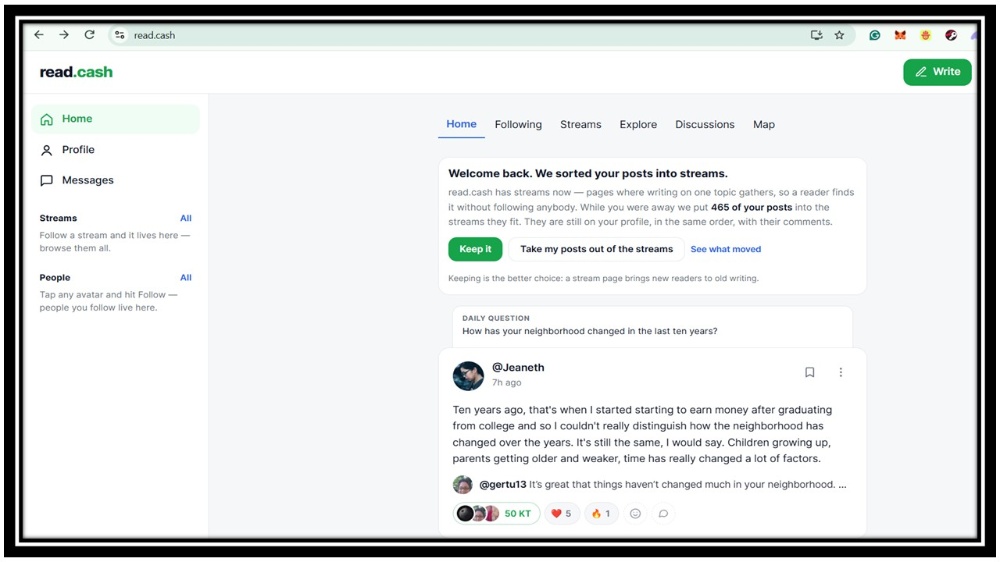
Instead of “Watch ads to earn points” or “Farm clicks for vanity metrics,” Do-to-Earn rewards meaningful platform participation. Write. Read. Engage. Contribute.
And that’s the core of BULB.
What Makes BULB Different?
BULB is built on the Solana blockchain — known for high speed and low transaction costs. That matters. If every micro-action costs $5 in gas fees, the model collapses. Efficiency is not optional in Web3. It’s structural.
On BULB, users collect BULBmojis by:
• Writing blog posts
• Reading content
• Commenting and reacting
• Sharing posts
Those BULBmojis convert into BULB Tokens.
Tokens are not just cosmetic rewards. They create an internal economy. They can unlock premium content, power boosts, energy, NFTs, and ecosystem utilities. In other words: engagement becomes economic fuel.
This isn’t just gamification. It’s tokenized participation.
The Economics Behind It
Here’s the important part: token systems only work if value creation is real.
If a platform grows in users, content quality, and usage, demand for its token can grow. That’s basic supply-demand mechanics. But if engagement is fake, spammy, or inflated, the system destabilizes.
So the real innovation isn’t just “earn tokens.”
It’s aligning incentives correctly.
Good content → attracts readers → grows community → increases platform utility → strengthens token demand.
That loop has to be healthy. Otherwise it becomes noise farming.
The interesting experiment here is whether content ecosystems can sustain themselves through aligned token incentives instead of ad-based extraction.
Why This Matters for Creators
The creator economy today is fragmented and algorithm-dependent. One tweak in a recommendation engine can vaporize reach overnight.
Blockchain-based platforms introduce transparency and programmable reward structures. That doesn’t eliminate risk — but it reduces arbitrary gatekeeping.
You are no longer just traffic.
You are a participant in an economy.
There’s something philosophically powerful about that.
The Bigger Picture
We’re watching the internet mutate.
Web1 was read-only.
Web2 was read-write.
Web3 is read-write-own.
BULB fits into that third phase.
It experiments with a world where:
• Content has on-chain value
• Engagement is economically measurable
• Communities share upside
• Participation is rewarded structurally
Not speculatively. Structurally.
That’s a massive conceptual shift.
Final Thought
Every technological transition looks weird in the beginning.
Early blogs looked amateur.
Early social media looked chaotic.
Early crypto looked unserious.
Then infrastructure matured.
Do-to-Earn platforms like BULB are part of a broader experiment: can we redesign digital ecosystems so that value flows back to contributors instead of being extracted from them?
No one has the final answer yet.
But experiments like this are how new economic layers get built.
And sometimes, the future starts with something as simple as:
Read to earn.
Write to earn.
Participate to earn.
The internet was always about people.
Web3 just gives them a ledger.
— BullishMarketCap 🐂📊