The State Explosion Problem

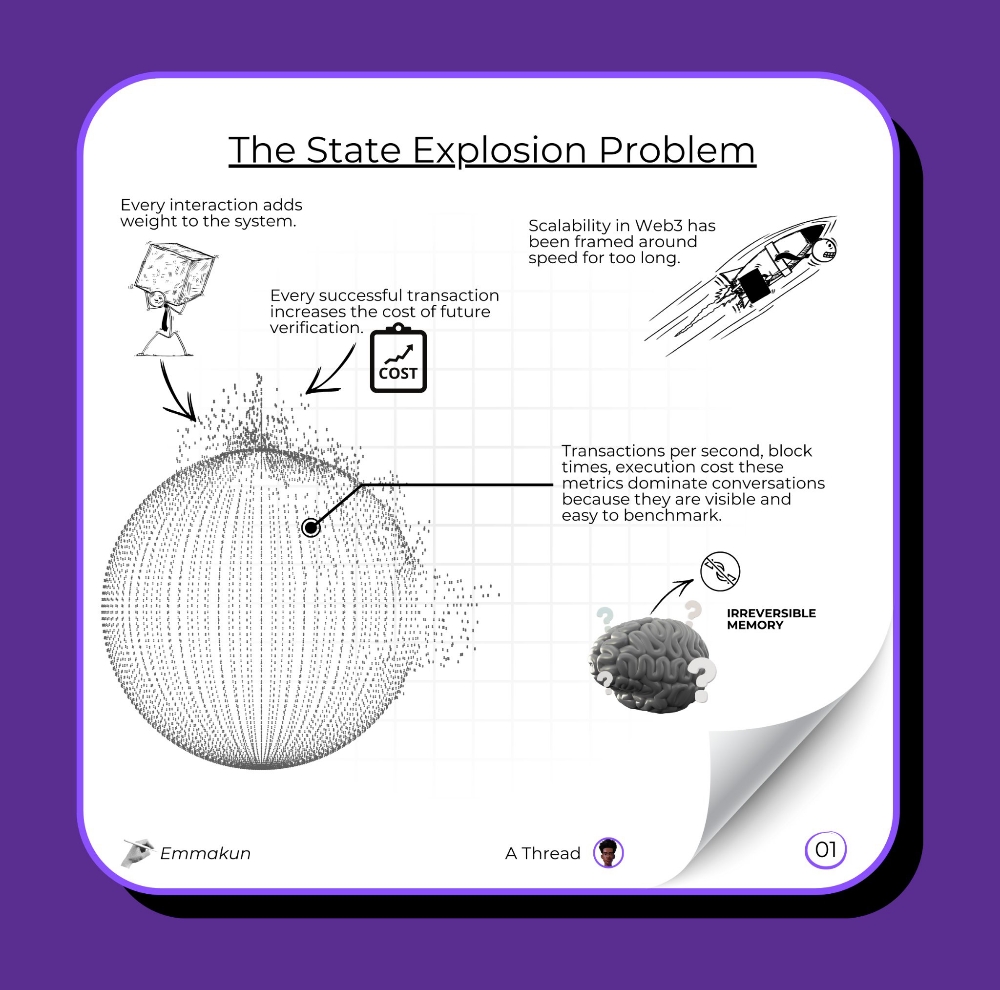
But they hide the real pressure point.
Blockchains are not failing because they cannot execute fast enough.
They are struggling because every successful interaction adds to a growing pool of permanent memory that never expires.
Scalability has been framed as a performance problem when, in reality, it is a memory economics problem.
Execution stress shows up immediately.
Memory stress accumulates silently until it reshapes decentralization itself.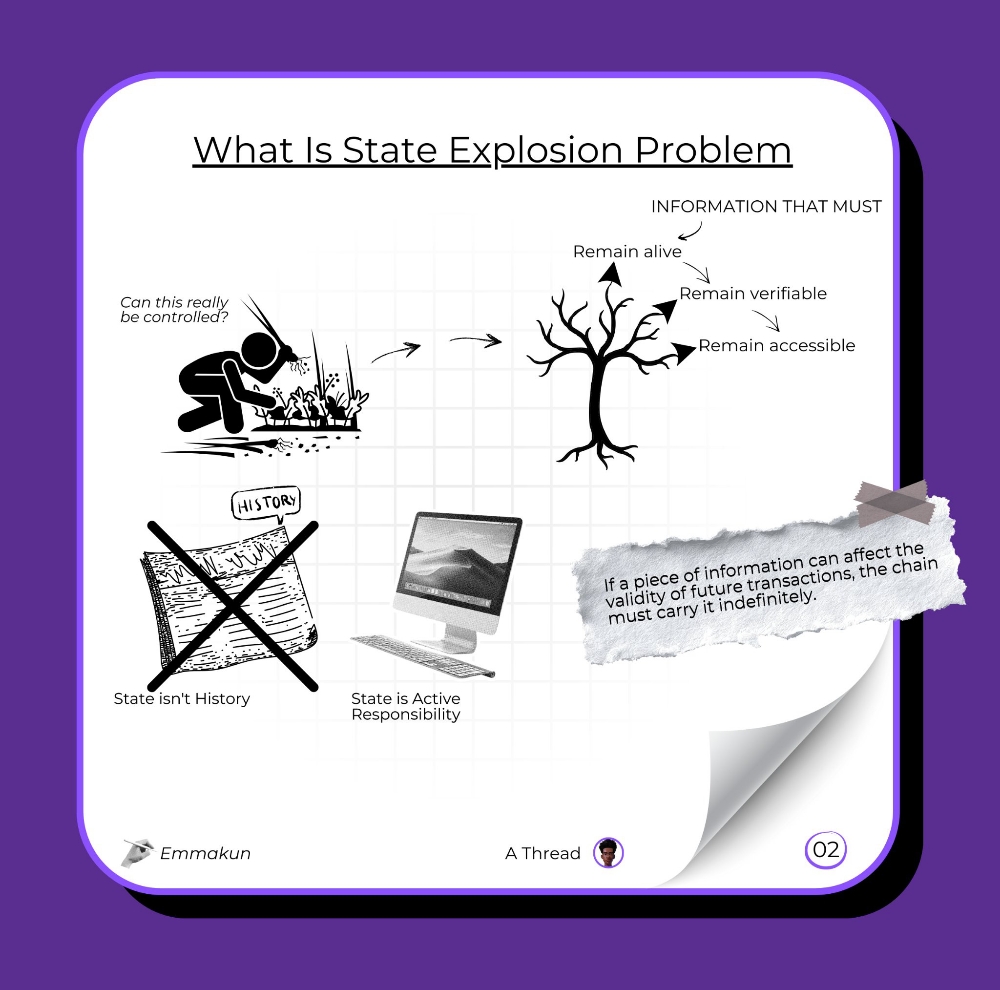
State is not historical data.
State is ongoing responsibility.
If a value can affect whether a transaction is valid tomorrow, the network must carry it today, and every day after that.
There is no expiry by default.
As usage increases, state increases.
And unlike execution, state never resets.
This is not a bug. It is a structural consequence of how blockchains work.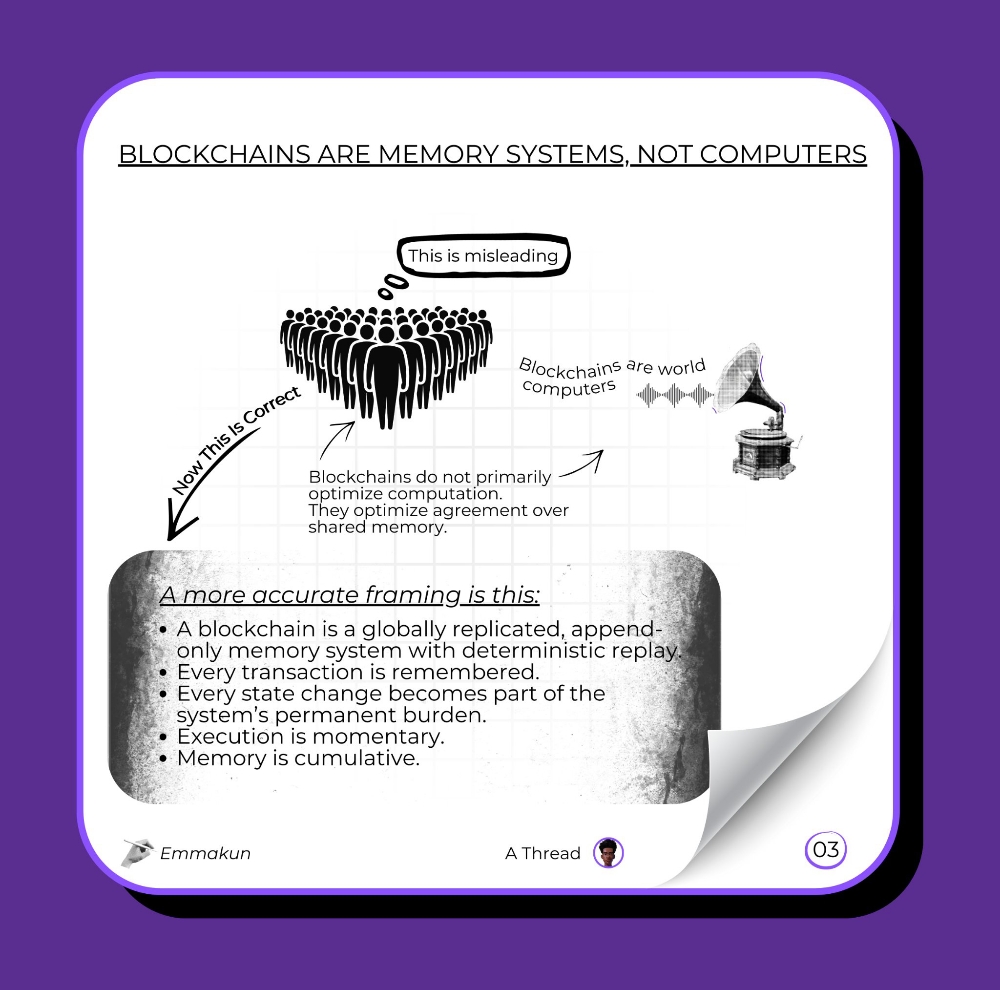
Blockchains do not primarily optimize computation. They optimize agreement over shared memory.
A more accurate description is this: a blockchain is a globally replicated, append-only memory system with deterministic replay.
Every transaction is remembered.
Every state transition becomes part of the system’s permanent burden.
Execution is momentary.
Memory is cumulative.
And cumulative systems behave very differently at scale.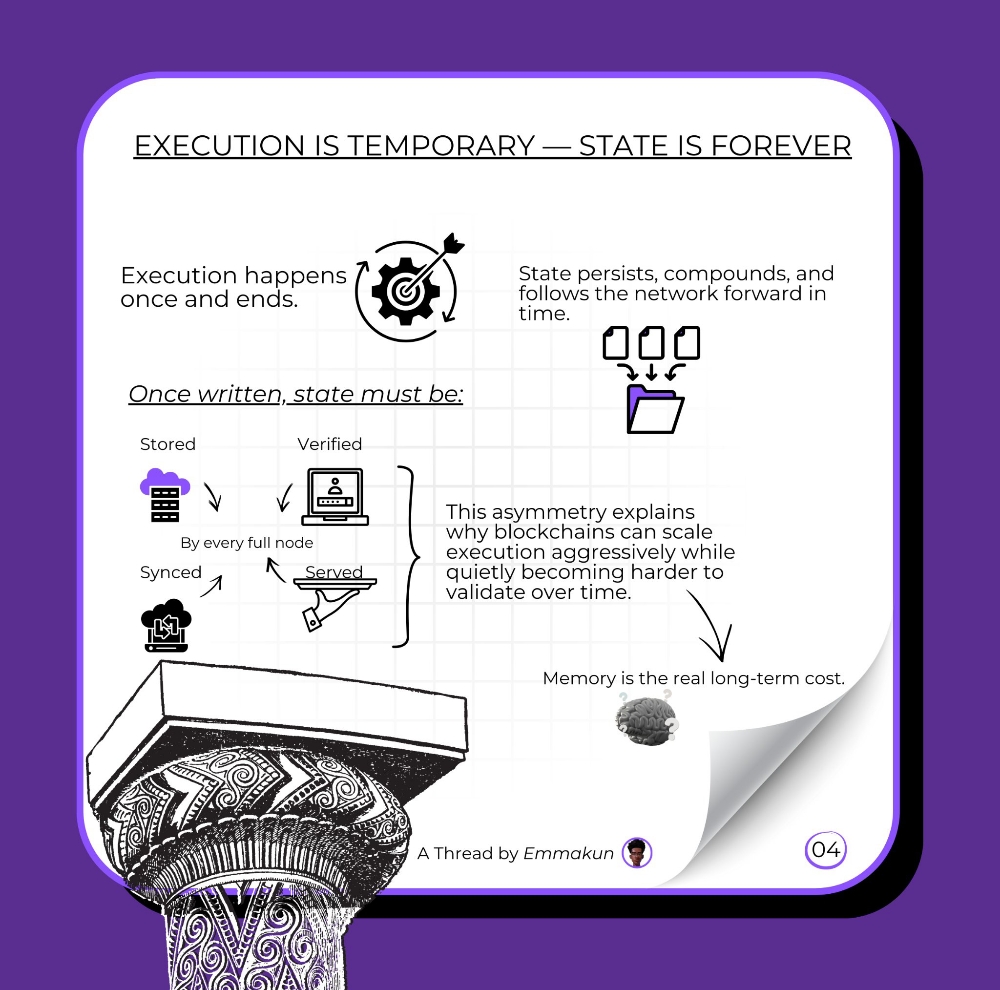
State persists, compounds, and follows the network forward in time.
Once written, state must be continuously:
➛stored,
➛verified,
➛synchronized,
➛and served
by every full node.
Compute is a transient cost. Memory is a permanent obligation.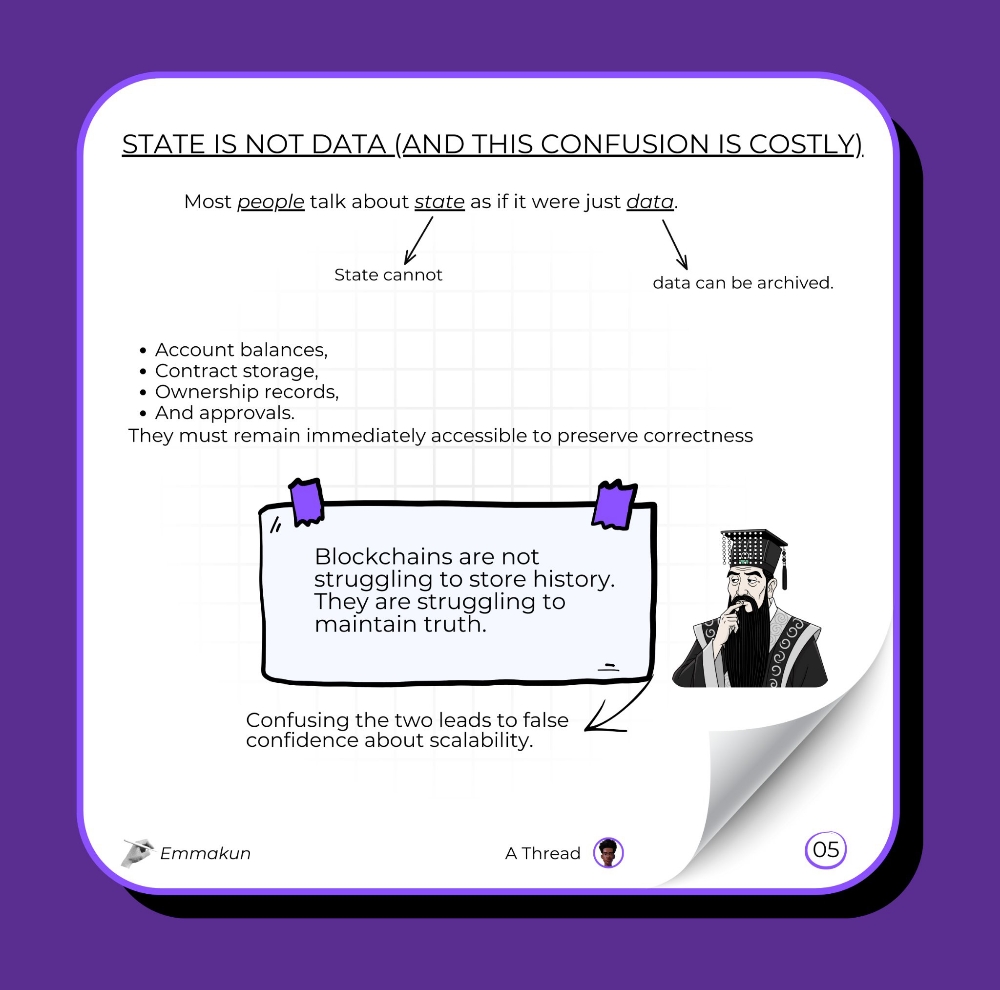
Data can be archived without affecting correctness. State cannot be separated from validation without breaking trust.
Anything that influences transaction validity balances, approvals, ownership mappings must remain immediately accessible.
Blockchains are not overwhelmed by storing records of the past.
They are strained by maintaining the present.
Failing to distinguish between the two hides the true scalability bottle neck.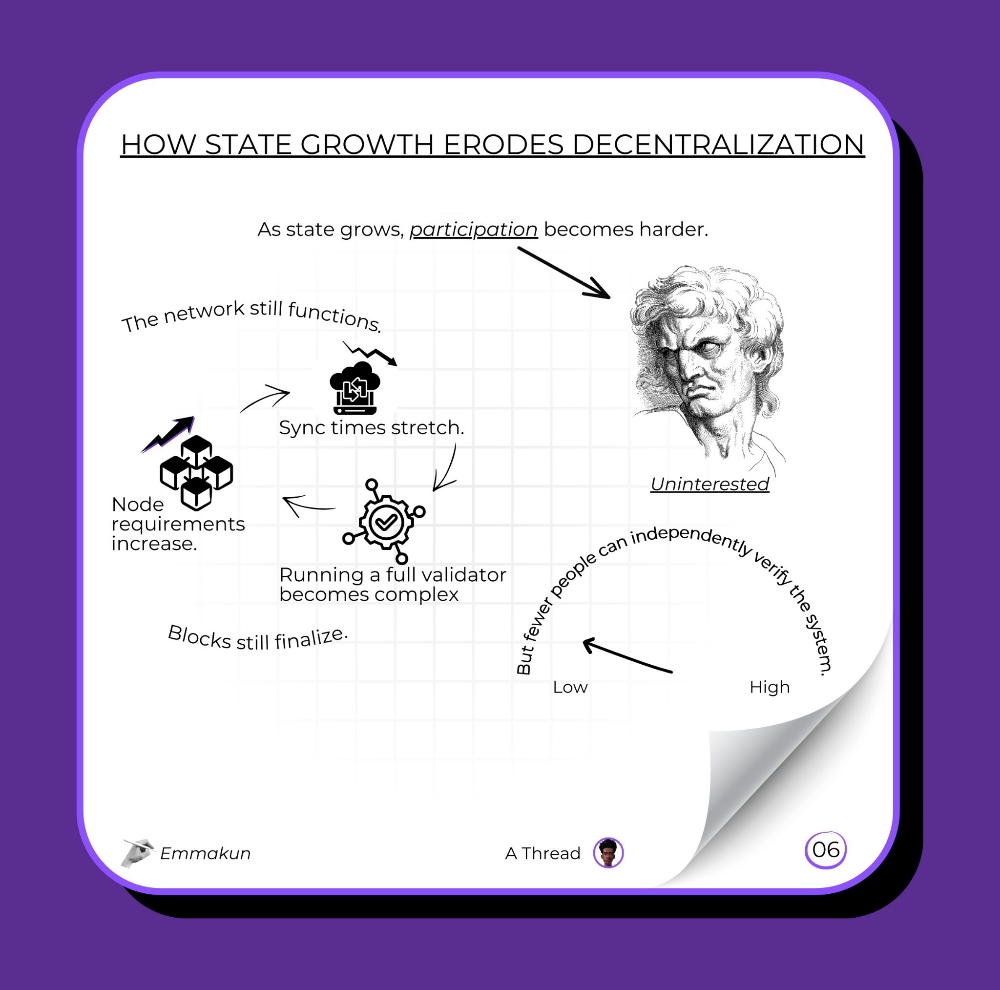
Nodes require more storage.
Synchronization takes longer.
Operational complexity rises.
Over time, fewer individuals can afford to validate independently. Verification shifts toward specialized operators, not because of coordination, but because of resource demands.
The protocol continues to function.
But the distribution of power changes.
Decentralization weakens without an obvious breaking point.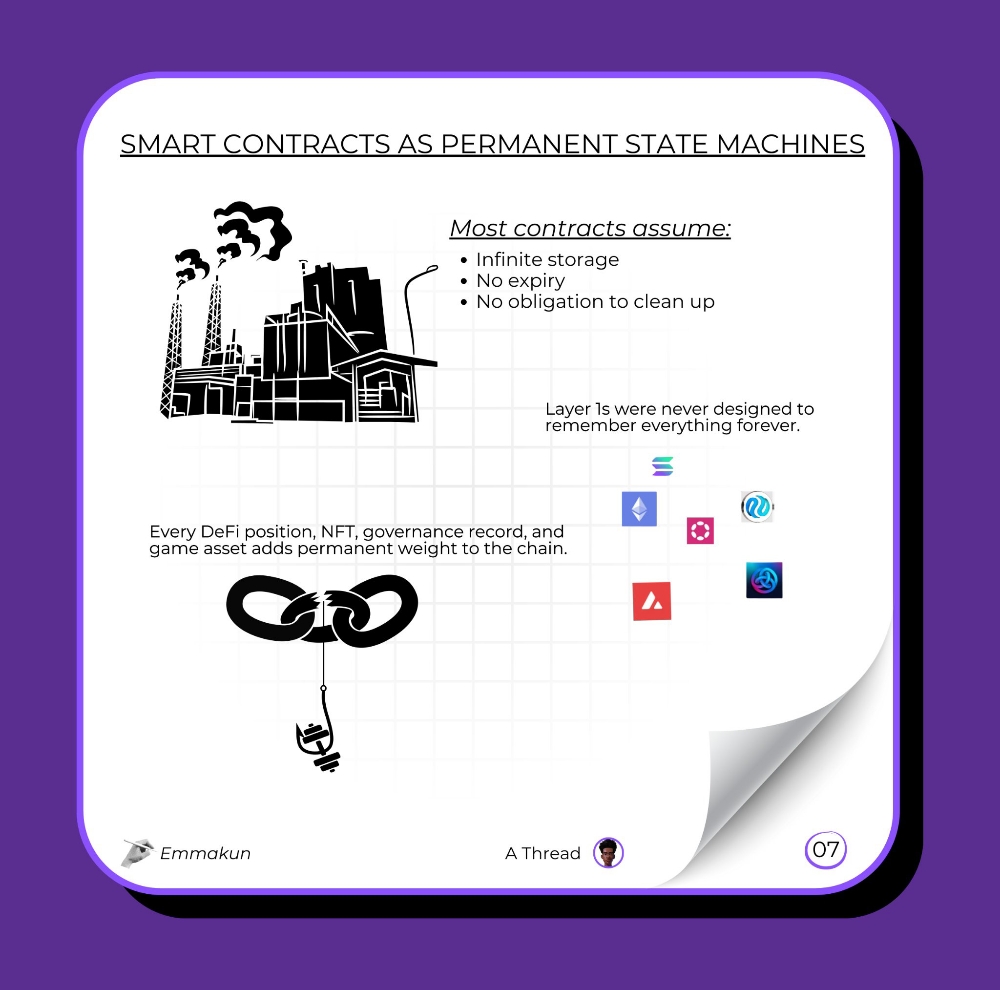
In practice, they are persistent memory containers.
Most contracts are written with permanence as an assumption.
Storage is added freely, rarely removed, and almost never designed with an end state in mind.
Each interaction increases the chain’s long-term memory load.
The issue is not activity.
It is persistence without limits.
This design pattern compounds state growth across the entire ecosystem.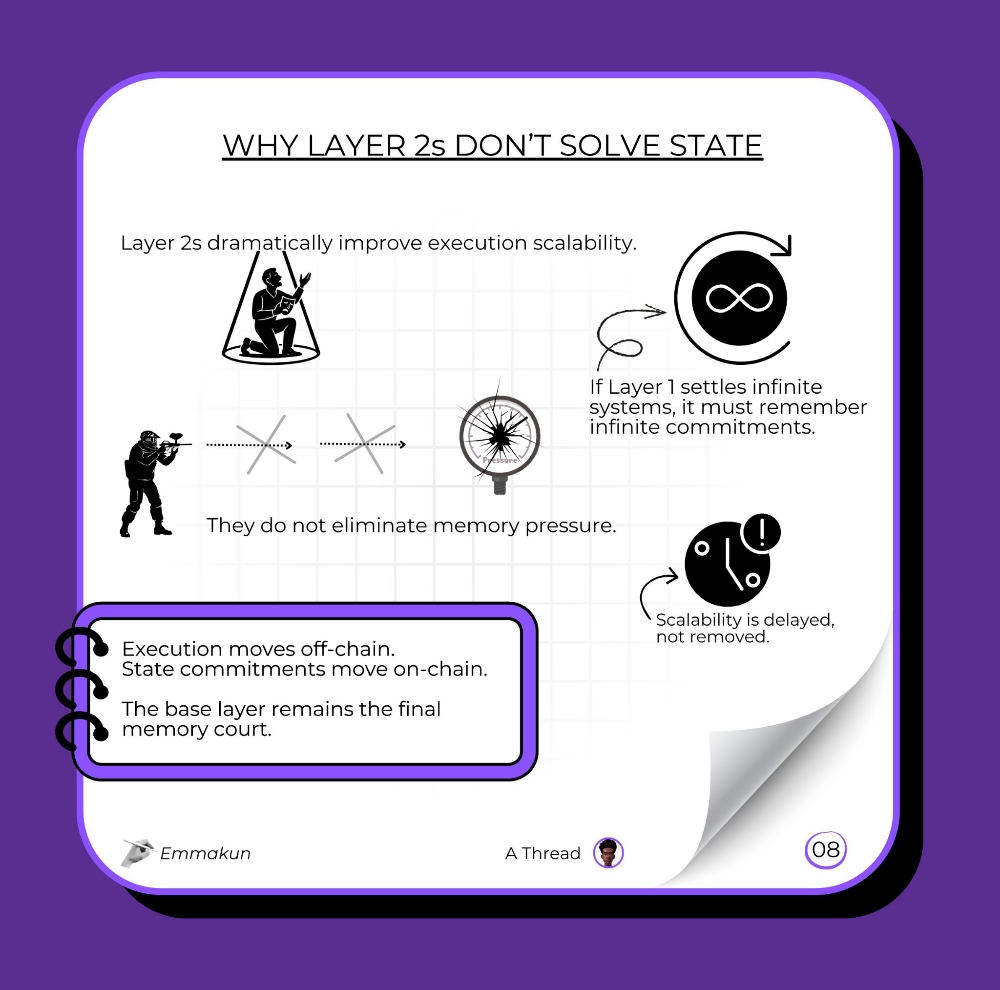
They do not remove the need for the base layer to remember outcomes.
Finality still requires commitments. Settlement still requires recall.
Even compressed representations must be stored and verified indefinitely.
Scaling execution changes where work happens.
It does not change what must be remembered.
State pressure remains anchored to the base layer.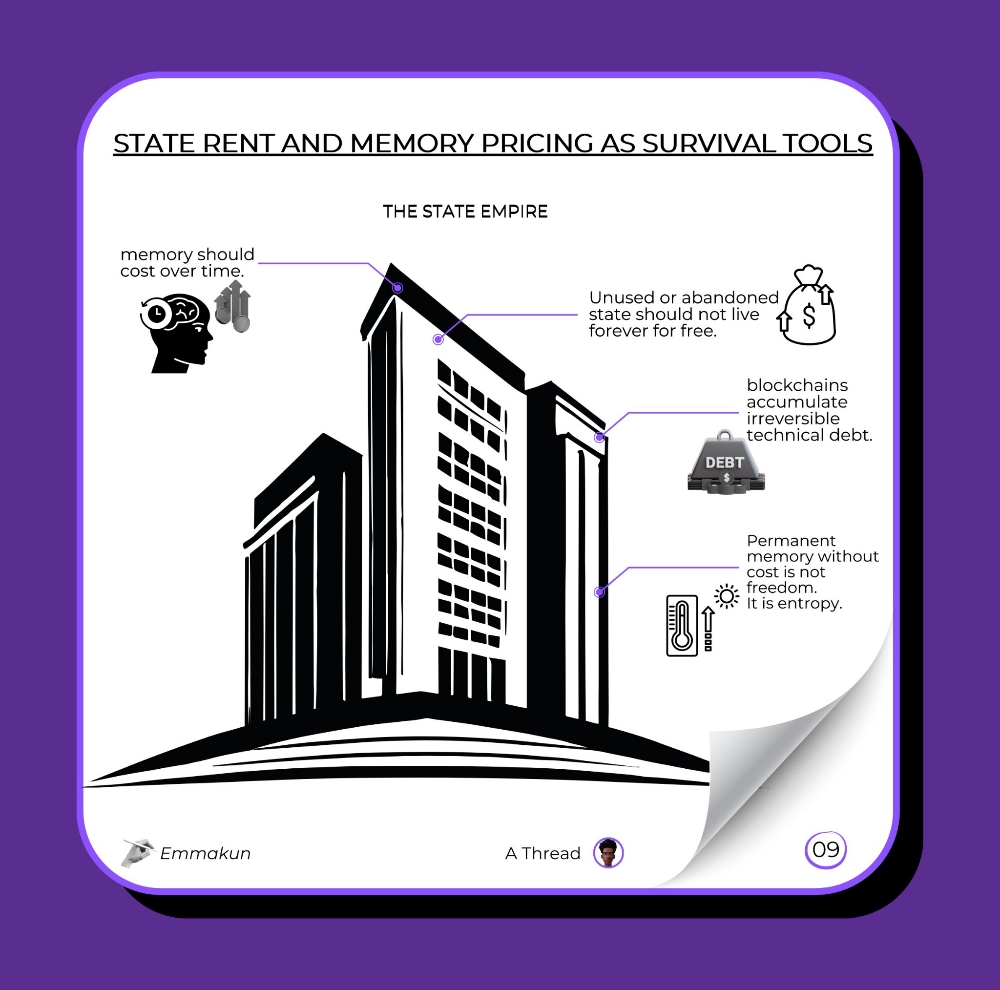
By introducing time-based pricing, systems force developers to consider whether stored information truly deserves permanence.
This introduces complexity and friction, but also accountability.
Without mechanisms that constrain long-lived state, blockchains accumulate obligations with no exit path.
Memory becomes debt that cannot be repaid.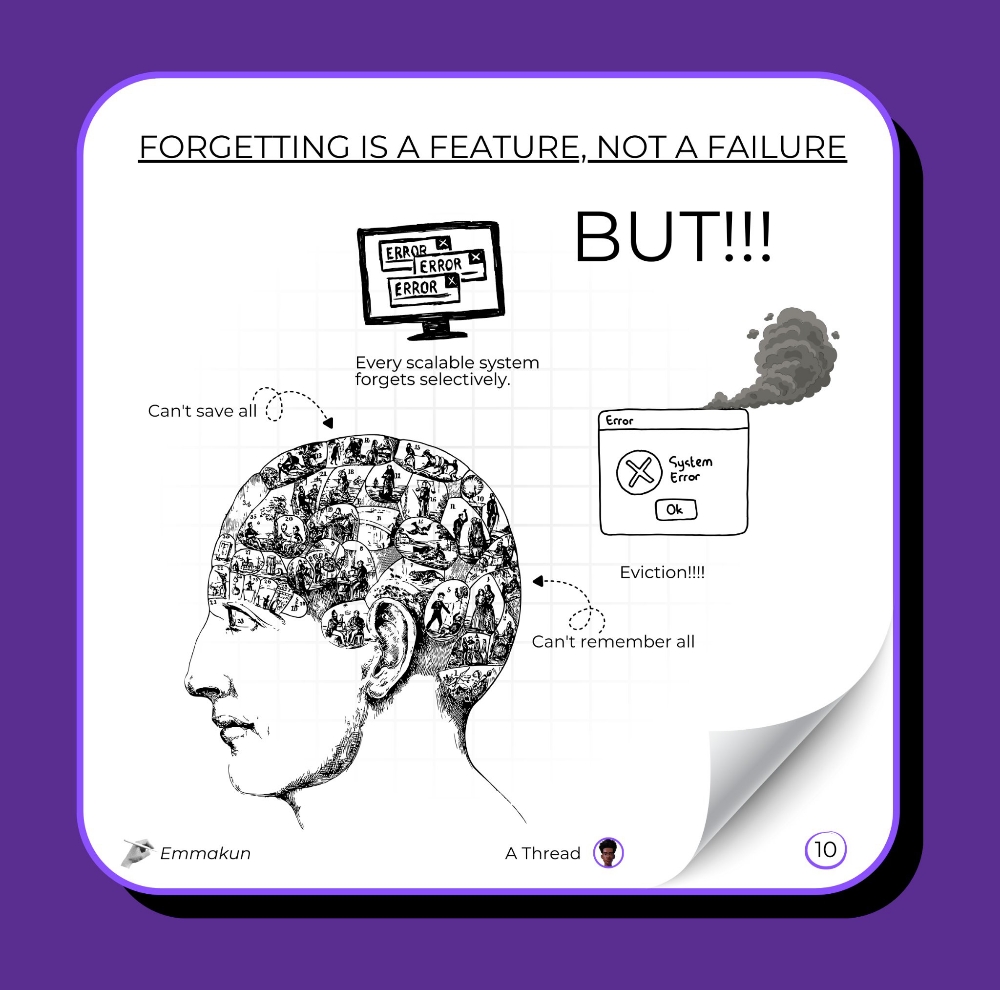
Complex systems survive by distinguishing between what must be preserved and what can safely fade. This applies to biology, software, and infrastructure.
Blockchains resisting this idea are not being robust, they are deferring hard design decisions.
Selective forgetting does not weaken trust.
It preserves it over time.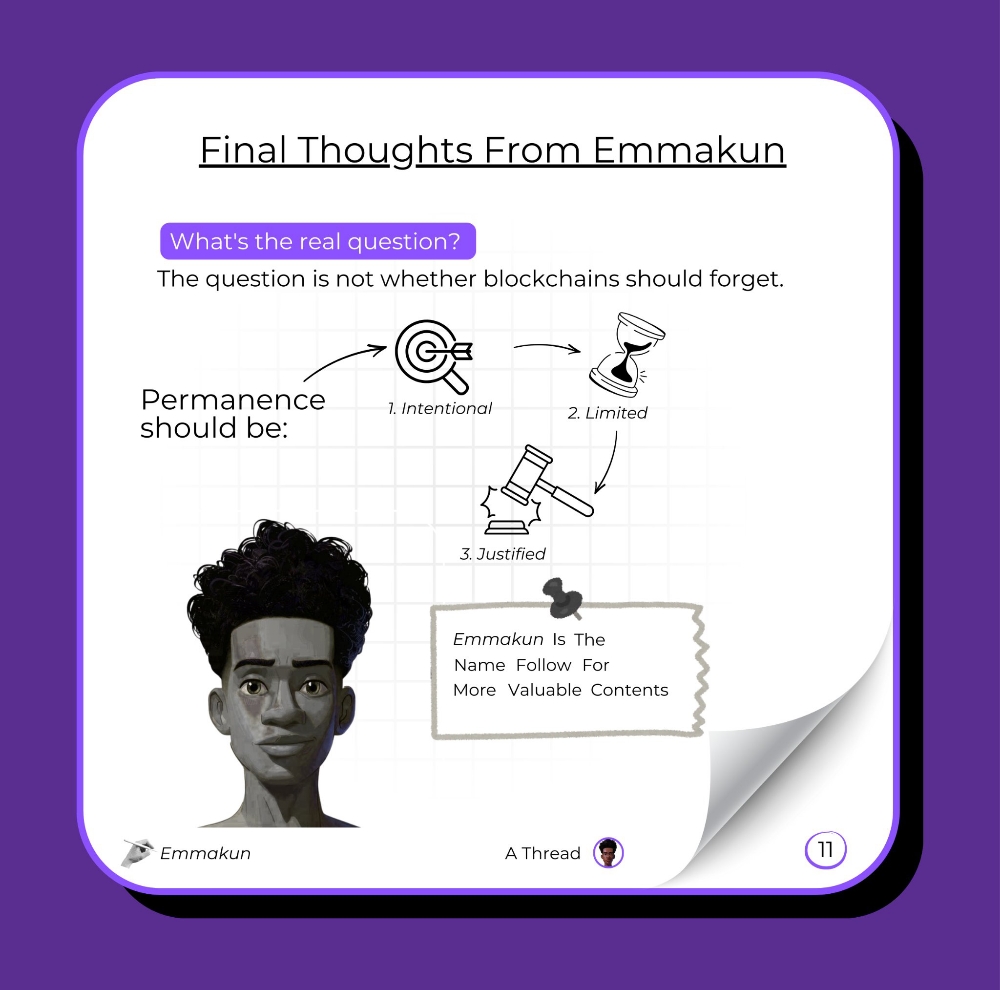
They will have to.
The real challenge lies in defining what information is essential to permanence and what can be released without compromising correctness.
Memory should be intentional.
Permanence should be justified.
Anything else is accidental accumulation.
Systems that treat state as limitless will gradually restrict who can verify them.
Systems that recognize memory as scarce infrastructure will remain open and resilient.
The future of Web3 depends not on how much blockchains can process, but on how carefully they choose what to remember.
I am definitely sure you found this blog resourceful and knowledge bearing, it'd be a nice thing to engage so others can learn as well.