Is Web3 Creating More Speculators Than Builders?

Web3 was supposed to empower creators.
Artists.
Developers.
Writers.
Designers.
Entrepreneurs.
A decentralized internet where people could finally:
- Build without permission
- Monetize directly
- Own their work
- Participate in digital economies
But somewhere along the way…
Something changed.
Instead of builders,
Web3 seems to be attracting more speculators.
And that shift may shape the future of the entire ecosystem.
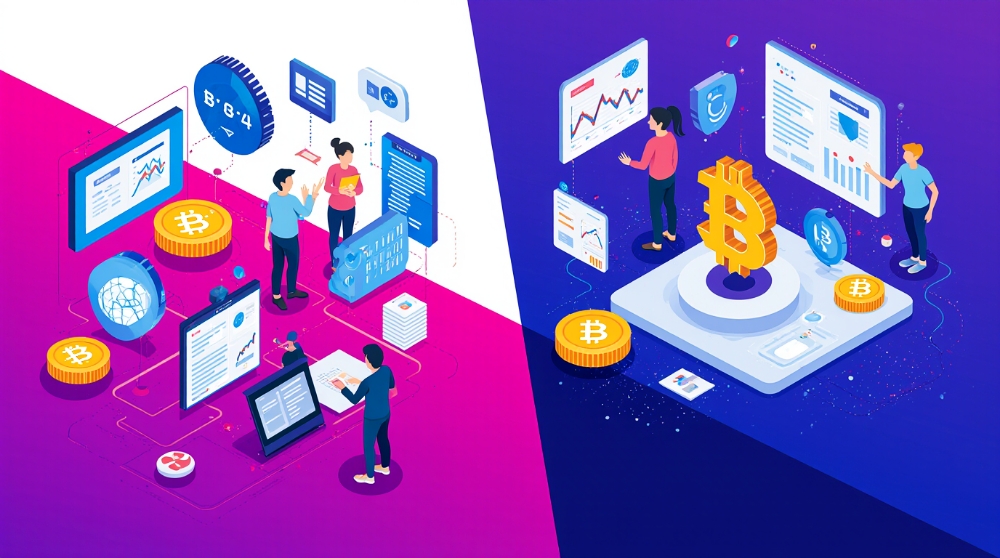
Builder Culture vs Trader Culture
In the early days of Web3, the dream was simple:
People would create:
- Decentralized apps
- New financial tools
- Digital communities
- Open-source platforms
Tokens were meant to support innovation.
A way to:
Fund development.
Reward participation.
Align incentives.
But today?
Many people enter Web3 with one goal:
To make money fast.
They don't ask:
“How can I build something valuable?”
They ask:
“What should I buy next?”
The culture slowly shifts from:
Creation → Speculation
The Rise of Token-First Thinking
Most new users do not enter Web3 through technology.
They enter through:
Price charts.
Their first interaction is not with:
- Smart contracts
- Protocol design
- Governance systems
It is with:
- Market trends
- Influencer predictions
- Social media hype
They learn:
How to trade
Before they learn:
How things work
This creates a token-first mindset.
Where utility becomes secondary
to price movement.
Projects are judged not by:
Innovation
But by:
Market performance.
Communities Driven by Hype
Many crypto communities are strong.
But strong around what?
Development?
Or speculation?
Telegram groups, Discord servers, and Twitter threads often focus on:
- Price predictions
- Entry points
- Exit strategies
- “Next 100x coins”
Builders discuss:
Architecture
Security
User experience
Speculators discuss:
Momentum
Timing
Profit
Both are important.
But when speculation dominates conversation,
development becomes background noise.
The Incentive Problem
Web3 incentives are powerful.
Sometimes too powerful.
When:
Early investors receive large token allocations
And token prices can increase rapidly
People are rewarded for:
Entering early
Promoting aggressively
Selling strategically
Instead of:
Building sustainably
Why spend 12 months developing a product
when promoting a token can generate profit in weeks?
The system unintentionally encourages marketing
over engineering.
Launch Culture
New projects often launch with:
- Token sales
- NFT drops
- Airdrops
- Pre-sales
Marketing begins before products exist.
In some cases:
Tokens are tradable before platforms are usable.
Users invest in promises.
Speculation fills the gap between:
Vision
and
Reality.
Some projects deliver.
Others disappear.
But the structure rewards speed —
not patience.
Builders Are Still There
Important truth:
Builders have not disappeared.
Developers are still:
- Writing smart contracts
- Improving scalability
- Designing decentralized identities
- Building financial inclusion tools
But builders move slowly.
Speculation moves fast.
And attention tends to follow speed.
Media Amplifies Speculation
Crypto media often highlights:
- Price surges
- Market crashes
- Whale activity
- Trending tokens
Rarely:
Protocol upgrades
Security improvements
Infrastructure breakthroughs
Because markets create headlines.
Development creates documentation.
And hype spreads faster than technical progress.
Long-Term Risk
If speculation dominates:
- Projects may prioritize tokenomics over usability
- Communities may value hype over impact
- Short-term profits may replace long-term value
This risks turning Web3 into:
A trading ecosystem
instead of
a building ecosystem.
Innovation becomes secondary to financialization.
Can the Balance Be Restored?
Yes.
But it requires:
Education.
Users must learn:
What Web3 does
not just
what tokens do.
Communities must reward:
Contribution
not just
investment.
Projects must focus on:
Use cases
not just
launch events.
Speculation is natural.
But without builders,
there is nothing to speculate on.
Final Thought
Web3 was never meant to be only a marketplace.
It was meant to be an infrastructure.
Speculators bring liquidity.
Builders bring sustainability.
One without the other creates imbalance.
The future of Web3 depends on:
Whether more people choose to build
instead of simply buy.