Why Web3 Needs Storytellers, Not Just Developers.

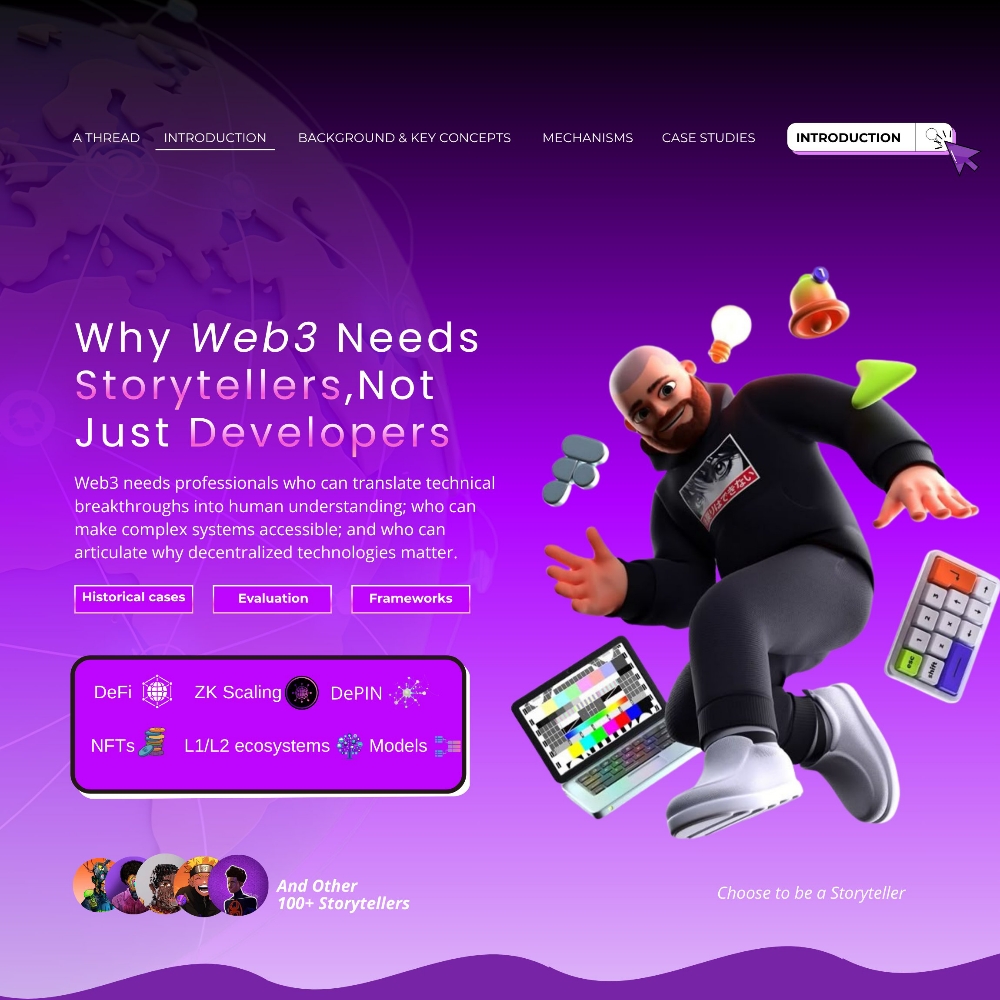
Today, the people who shape adoption are the ones who shape narratives professionals who translate complexity into clarity. Builders may write the systems, but narratives determine who pays attention.
Creators myself and 100+ others reflect this emerging layer of Web3: storytellers who help the ecosystem make sense of itself.
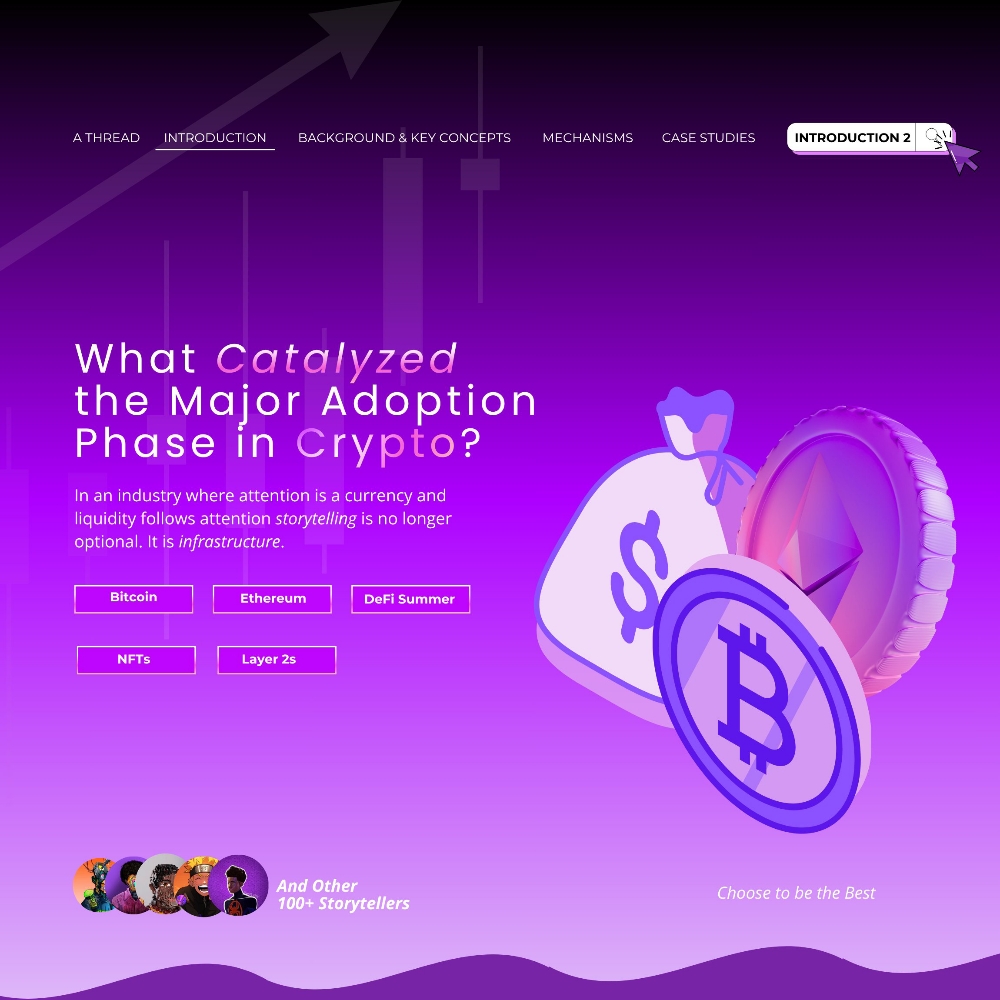
➜ Bitcoin didn’t go mainstream because of SHA-256; it captured minds as “digital gold.”
➜ Ethereum scaled because of the story of “programmable money” and “world computer.”
➜ DeFi Summer exploded because of a shared belief in open finance and yield coordination.
➜ NFTs went beyond JPEGs because they were framed as digital culture and ownership.
➜ Layer 2s gained traction because of the narrative of scalability and “modular blockchains.”
Storytelling shapes the way markets perceive value. It determines how the public understands concepts like decentralization, sovereignty, permissionlessness, or censorship resistance. And critically, it guides how communities form and sustain themselves.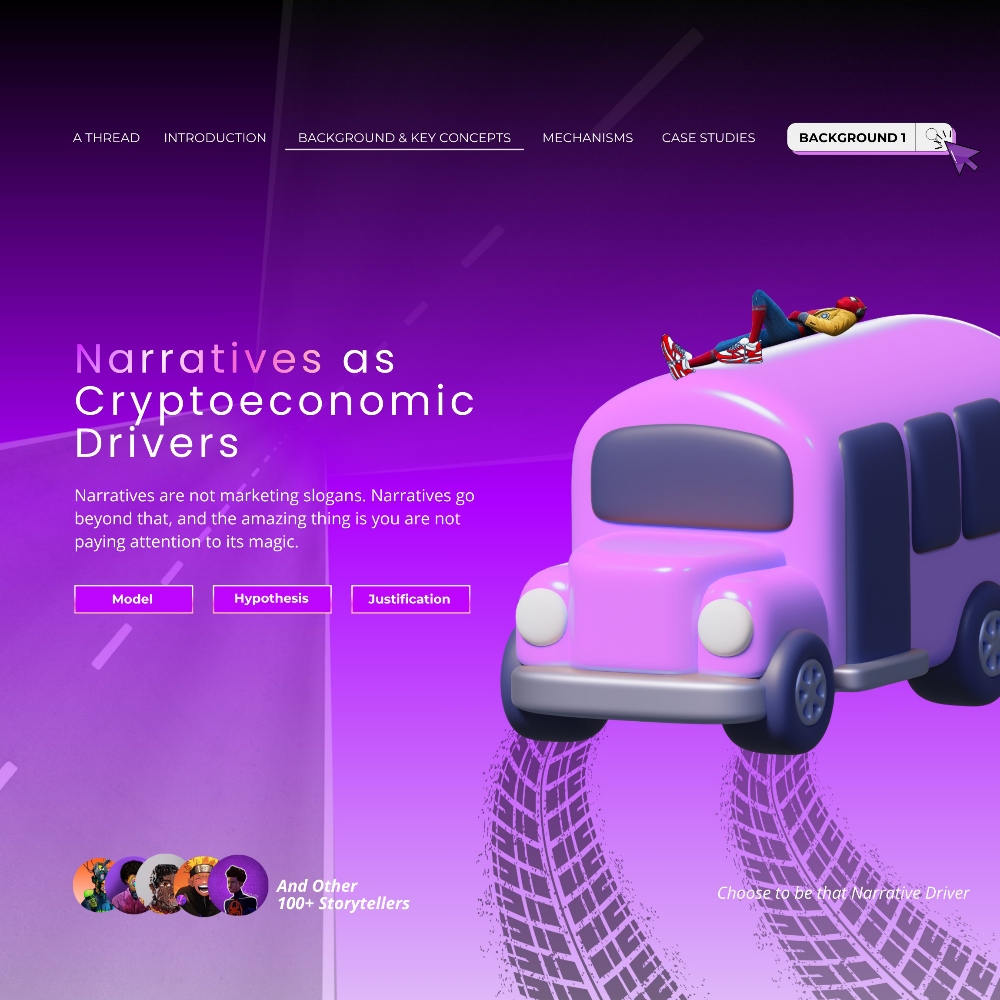
➨a shared mental model,
➨a collective hypothesis about the future,
➨and a justification for capital allocation
➨and ecosystem participation.
Narratives answer the fundamental question:
“Why does this protocol matter?”
Developers answer how it works; storytellers answer why it matters.
The typical crypto stack includes:
- Protocol layer (consensus, execution, data availability)
- Infrastructure layer (wallets, indexers, oracles)
- Application layer (DeFi apps, NFT marketplaces, games)
- Experience layer (UX, interfaces)
To this, I add a fifth:
5. Narrative layer: The interpretive framework shaping adoption, investment, and community alignment.
Just as infrastructure enables transactions, narratives enable meaning.
- Translate technical concepts into digestible insights;
- Build trust through clarity and transparency;
- Connect builders, communities, and investors;
- Create educational content that drives organic adoption;
- Craft brand positioning that reflects protocol values;
- Help shape governance messaging;
- Drive coherent communication during crises (hacks, exploits, forks).
Without storytellers, protocols risk becoming technically superior but invisible.
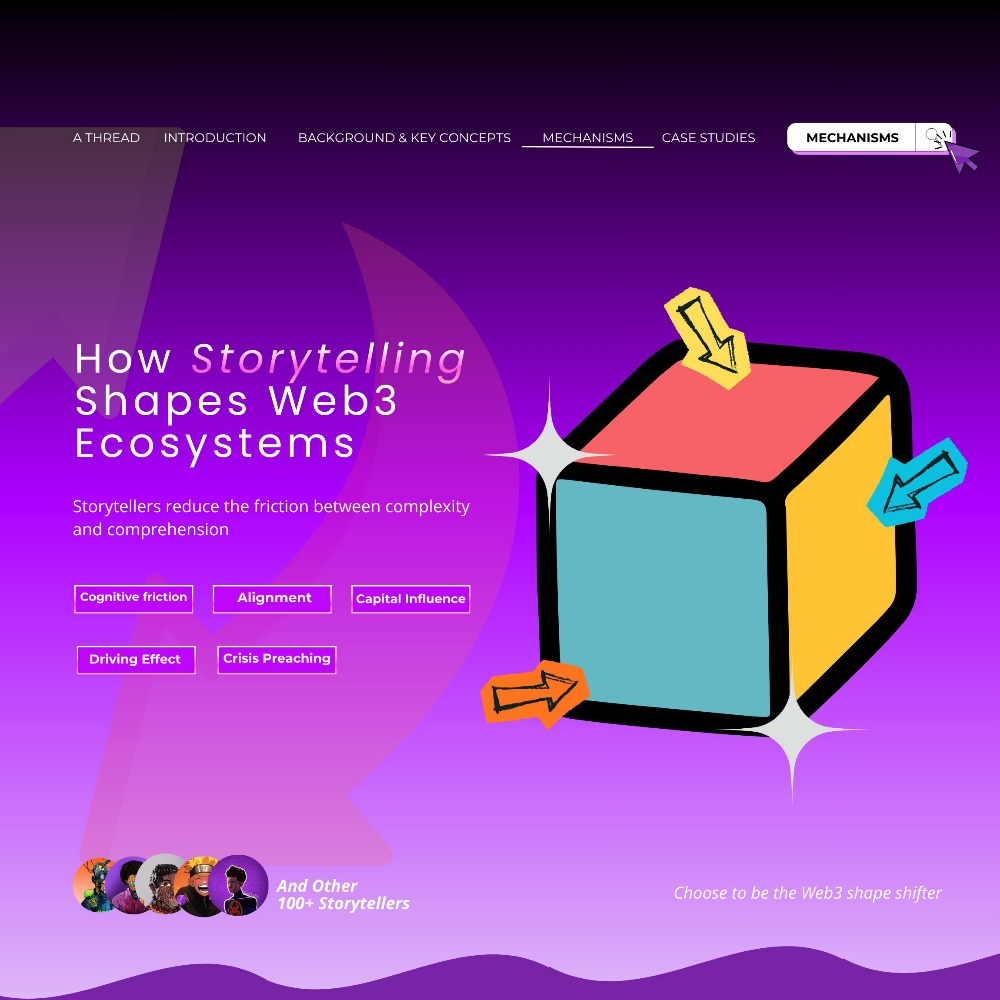
Reducing Cognitive Friction
Blockchain is hard to understand. Rollups, sequencing, PBS (Proposer-Builder Separation), MEV markets, tokenomics design, validator sets these concepts demand time, literacy, and context.
Storytellers reduce the friction between complexity and comprehension by:
→simplifying primitives without dumbing them down,
→presenting systems visually,
→framing problems and solutions coherently.
Protocols with better communication onboard users faster even if they are not the most sophisticated technically.
Building Community Alignment
Decentralized ecosystems depend on coordination.
Coordination depends on shared understanding.
Shared understanding depends on narrative.
A good story:
→defines mission,
→anchors values,
→motivates participation,
→and magnifies collective action.
Narrative alignment is why DAOs function better when they have clear identity and goals.
Influencing Capital and Liquidity Movement
Investors follow themes. Themes emerge from narratives.
Examples:
↬“DePIN is the next trillion-dollar category.”
↬“Modular blockchains will outscale monoliths.”
↬“NFTs are digital property rights.”
↬“Zk is the future of privacy and scaling.”
Storytellers help surface these themes with data, clarity, and credibility guiding how capital rotates across ecosystems.
Driving Institutional & Public Adoption
Institutions don’t invest in code, they invest in understanding.
Clear communication helps policymaker engagement, enterprise partnerships, academic collaboration, onboarding of traditional finance, regulatory interpretation.
Storytellers make blockchain palatable to non-crypto audiences.
Crisis Communication
During hacks, exploits, forks, or governance conflicts, narratives determine: whether trust is restored, how quickly users return, and whether damage remains permanent.
Examples:
LidoFinance governance debates, The terra_money's collapse, CurveFinance exploits, Ethereum’s Merge all required narrative management.
⇥programmable money,
⇥world computer,
⇥smart contracts as unstoppable code.
This narrative differentiated Ethereum from Bitcoin and set the foundation for DeFi, NFTs, and DAOs.
The Merge narrative “from energy consumption to sustainability” was one of the most powerful cross-industry stories in crypto history.
Despite early outages, the Solana community reinforced a unifying message:
⇥high-performance blockchain,
⇥optimized for real consumer use-cases,
⇥ecosystem for builders who prioritize speed and UX.
This narrative, communicated aggressively across social media, conferences, and developer circles, allowed Solana to rebound and become a dominant L1 once again.
⇥Clear explanations of oracles,
⇥Consistent communication about security models,
⇥Industry reports on hybrid smart contracts,
⇥Strong community evangelism,
turned LINK into one of the strongest long-term narratives in crypto.
⇥open finance,
⇥fair access,
⇥composability,
⇥permissionless innovation.
Most users did not deeply understand liquidity mining, AMM curves, or impermanent loss. They were onboarded through narratives. DeFi Summer was a masterclass in storytelling-backed coordination.
What made NFTs global was the narrative that they represent:
⇥digital property,
⇥digital identity,
⇥digital culture,
⇥digital communities.
Storytellers, artists, and cultural influencers not developers drove mass adoption.
This isn’t just theory, it’s the framework for the next wave of adoption in DeFi, NFTs, L2s, and beyond. Let’s build the story layer of Web3 together.