Cybersecurity Awareness Fatigue: Why People Ignore Security Warnings (and How to Fix It)
https://osmallamintech.blogspot.com/2026/02/cybersecurity-awareness-fatigue-why.html
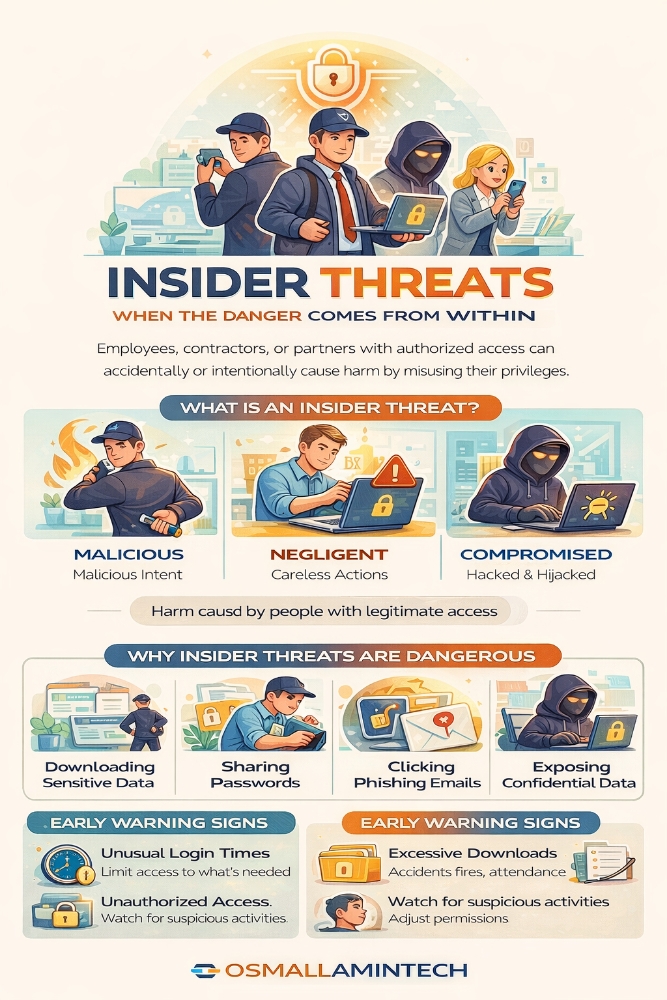
In today’s digital world, users are constantly bombarded with cybersecurity warnings password expiration notices, software update prompts, phishing alerts, and multi-factor authentication requests. While these measures are designed to protect users, they often have the opposite effect.
This phenomenon is known as cybersecurity awareness fatigue a condition where people become overwhelmed and start ignoring security warnings altogether. Ironically, the more warnings users receive, the less attention they pay.
What Is Cybersecurity Awareness Fatigue?
Cybersecurity awareness fatigue occurs when users feel mentally exhausted by repeated security messages and tasks. Over time, this exhaustion leads to risky behaviors such as ignoring alerts, delaying updates, or bypassing security controls.
Instead of seeing security as protection, users begin to view it as an inconvenience.
Why People Ignore Cybersecurity Warnings
1. Alert Overload
Constant pop-ups and notifications desensitize users. When everything feels urgent, nothing feels important.
2. Complex and Confusing Policies
Security messages often use technical language that average users do not understand, causing frustration and disengagement.
3. Time-Consuming Security Tasks
Frequent password changes, MFA prompts, and mandatory training can interrupt workflows and reduce productivity.
4. False Sense of Safety
If users have never experienced a serious cyber incident, they may assume warnings are exaggerated.
Common User Behaviors Caused by Security Fatigue
Ignoring security alerts
Clicking “Remind me later” repeatedly
Reusing weak passwords
Disabling antivirus or firewall tools
Falling for phishing emails.
These behaviors significantly increase an organization’s attack surface.
Risks Created by Security Fatigue
Phishing Attacks
Users are more likely to click malicious links when they stop paying attention to warnings.
Malware Infections
Ignored updates and unchecked downloads allow malware to spread.
Account Breaches
Weak or reused passwords make accounts easy targets for attackers.
Financial and Reputational Damage
Security incidents lead to data loss, financial penalties, and loss of trust.
How Organizations Can Reduce Security Fatigue
✅ 1. Simplify Security Messages
Use clear, human-friendly language instead of technical jargon.
✅ 2. Prioritize Critical Alerts
Not every alert should demand immediate attention. Highlight only high-risk threats.
✅ 3. Automate Where Possible
Automate updates, patching, and routine security checks to reduce user burden.
✅ 4. Design Human-Centered Security
Security tools should fit naturally into user workflows, not disrupt them.
✅ 5. Make Training Engaging
Use short, interactive sessions instead of long, boring lectures.
The Role of Leadership and Security Teams
Security teams must understand that people are not the weakest link they are the most targeted. Blaming users for mistakes only increases fatigue and resistance.
A supportive, user-focused security culture encourages better behavior and long-term resilience.
The Future of Cybersecurity Awareness
The future of cybersecurity awareness lies in:
Behavioral-based security design
Smarter AI-driven alerts
Reduced manual intervention
Continuous, low-friction education
Security must evolve from being intrusive to being invisible yet effective.
Conclusion:
Cybersecurity awareness fatigue is a silent but dangerous threat. When users stop caring about security warnings, even the strongest technical defenses can fail.
By simplifying security, prioritizing usability, and respecting human limitations, organizations can protect both their
systems and their people
Author: OSMALLAMINTECH
Human-centered cybersecurity for a safer digital world.