The Architect’s Blueprint: Deconstructing the Solana Token Program and Account Model
The transition from EVM-based development to the Solana Virtual Machine (SVM) is often described as a journey from gas-fee volatility to high-performance predictability. However, the fundamental shift lies in the architecture of state. On Solana, the separation of code and data is not just a preference; it is the cornerstone of the network’s ability to scale with hardware.
The Account-Centric Universe
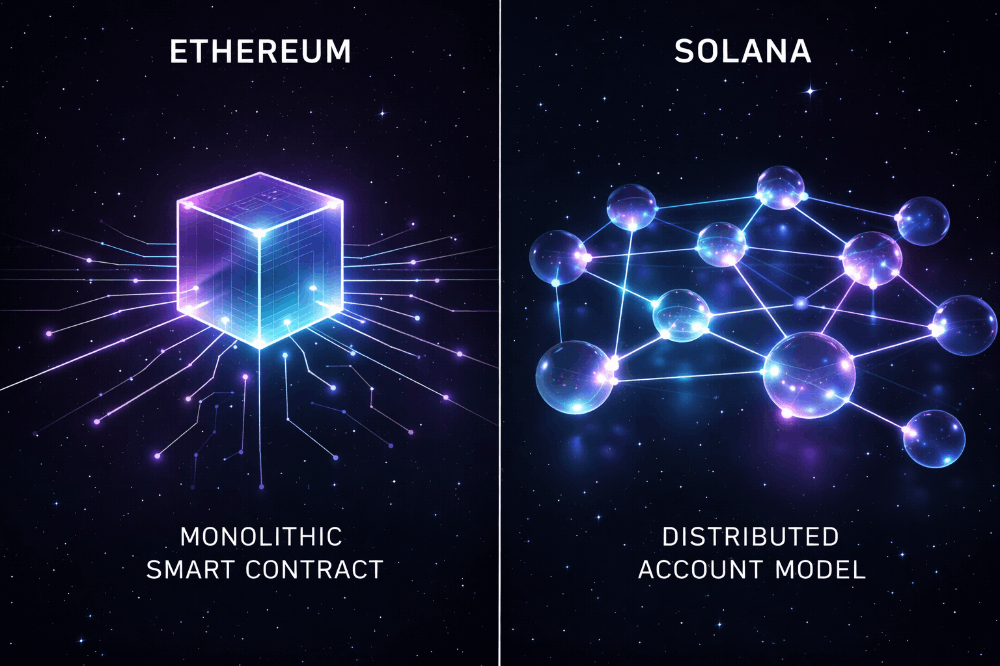
Every developer entering the Solana ecosystem must first unlearn the monolithic smart contract model. Instead of a single contract holding all user balances, Solana utilizes a decoupled approach. Imagine a scenario where a new token is launched. In this architecture, we distinguish between the Mint Account, which stores the global metadata (decimals, supply, and authorities), and the Token Account, which acts as a personalized ledger for an individual user.
This granular data model is what allows Solana to process transactions in parallel. While an Ethereum transaction for a specific token might lock the entire contract, Solana only locks the specific accounts involved in a transfer. If User A is sending tokens to User B, and User C is sending tokens to User D, these transactions can occur simultaneously on different CPU cores because they touch non-overlapping sets of accounts.


Procedural Walkthrough: From CLI to On-Chain Asset
Launching a token on Solana is a precise engineering task. It begins with the Solana CLI and moves through a series of programmatic instructions.
Step 1: The Environment Configure your environment to the appropriate cluster. For testing, DevNet is the gold standard.
solana config set --url https://api.devnet.solana.com
Step 2: The Mint Account We invoke the System Program to create an account with 82 bytes of data. This account is allocated 141,600 lamports to remain rent-exempt. Once created, the Token Program initializes it with our defined parameters—supply, name, and owner.
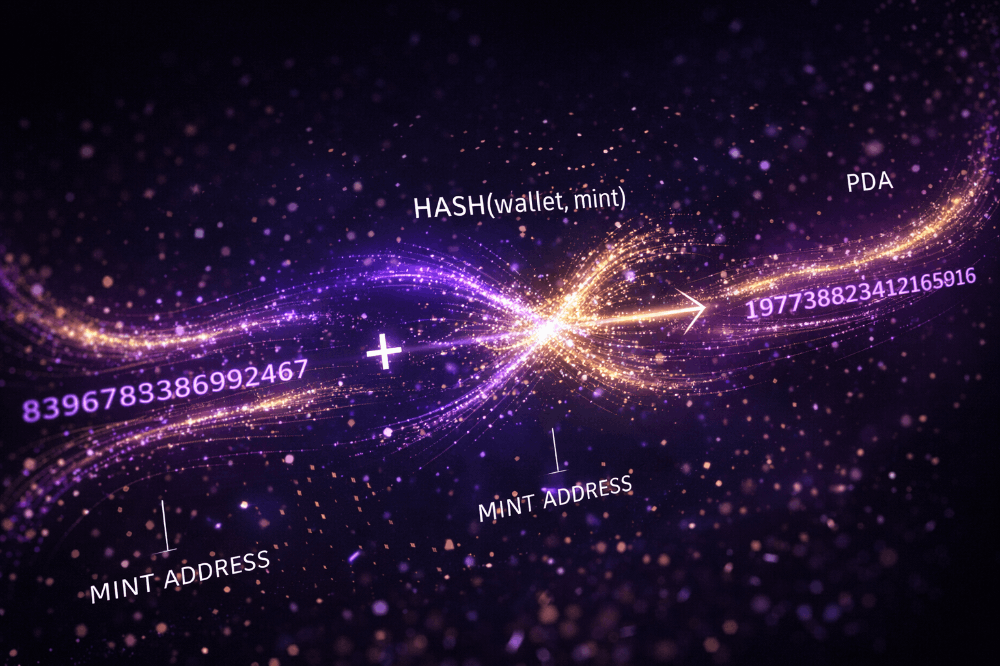
Step 3: The Associated Token Account (ATA) The brilliance of the Solana model is the ATA. When you send USDC to a wallet, how does the network know where to store it?
It derives a Program Derived Address (PDA) based on the user's wallet and the USDC mint address. This ensures every user has a predictable "home" for every token they hold.
Step 4: The Minting Ceremony
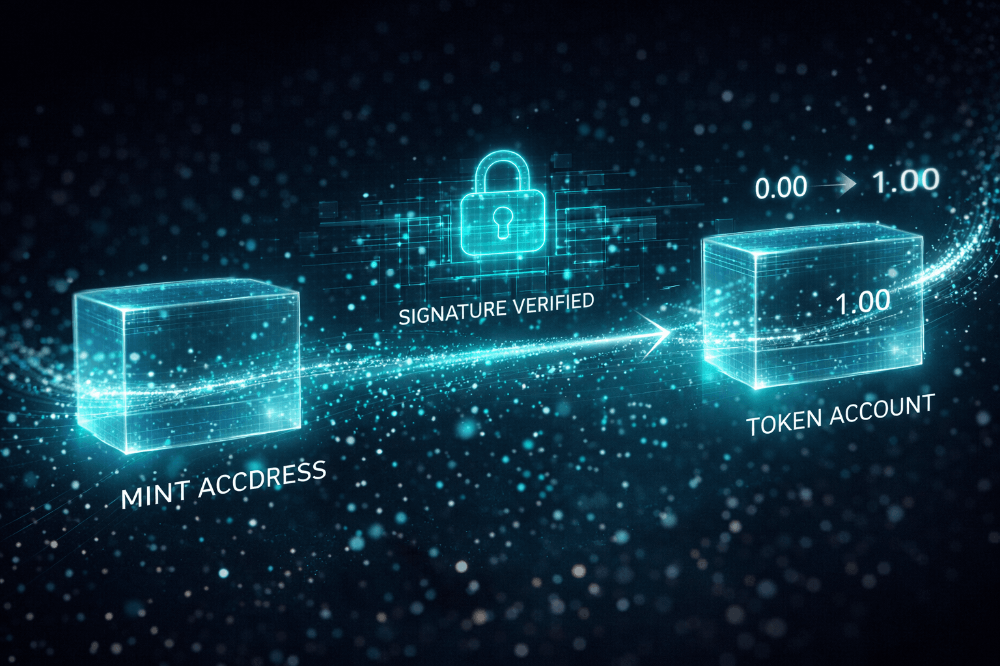
With the mint and ATA established, the Token Program executes the minting instruction. This increases the balance in the ATA and the total supply in the Mint Account, authenticated by the private key of the Mint Authority.
Outro
The Solana Token Program represents more than just an alternative blockchain architecture—it's a fundamental reimagining of how decentralized systems can achieve scale without sacrificing composability. By embracing the separation of code and data, parallel execution through account isolation, and deterministic address derivation via PDAs, Solana has constructed a framework where performance scales with hardware, not with creative workarounds.
For developers making the leap from EVM chains, the initial learning curve may feel steep. The mental model shift from monolithic contracts to account-centric design requires unlearning deeply ingrained patterns. But this cognitive investment pays dividends: once you grasp the elegance of ATAs, the power of rent-exempt state management, and the precision of cross-program invocations, you unlock a development paradigm that treats blockchain infrastructure as modern distributed systems engineering—not just replicated state machines.
Whether you're building DeFi protocols, NFT marketplaces, or novel tokenomics experiments, the blueprint presented here serves as your foundation. Master the account model, respect the separation of concerns, and leverage the Token Program's battle-tested primitives. The future of high-performance blockchain development isn't just fast—it's architecturally sound.
TL;DR / Summary
Solana's token architecture fundamentally differs from Ethereum's monolithic smart contract model. By separating code (programs) from data (accounts), Solana enables parallel transaction processing that scales with hardware.
Key Concepts:
- Account-Centric Design: Mint Accounts store global token metadata; Token Accounts act as individual user ledgers
- Parallel Execution: Transactions touching different accounts run simultaneously on separate CPU cores
- Associated Token Accounts (ATAs): Deterministically derived addresses ensure predictable token storage for every user
- Rent-Exempt State: Accounts maintain permanent on-chain presence by depositing minimum lamport balances
The 4-Step Token Launch:
- Configure CLI environment (DevNet/MainNet)
- Create & initialize Mint Account (82 bytes, rent-exempt)
- Derive Associated Token Account via PDA
- Execute minting instruction with proper authority signatures
This architecture trades EVM familiarity for performance predictability—a worthy exchange for builders prioritizing throughput and low latency.