Is Web3 Just Rebuilding the Same Power Structures?

Introduction
Web3 was born as a rebellion.
A rebellion against banks.
Against Big Tech.
Against centralized control.
It promised a new internet where power would be distributed, ownership would belong to users, and financial systems would become open and permissionless.
But as the ecosystem matures, a difficult question emerges:
Is Web3 truly building something new — or is it quietly rebuilding the same power structures it claimed to replace?
To answer this, we must examine incentives, capital flows, governance models, and human behavior.
Because technology may change.
Human nature rarely does.
1. Power Always Finds a Center
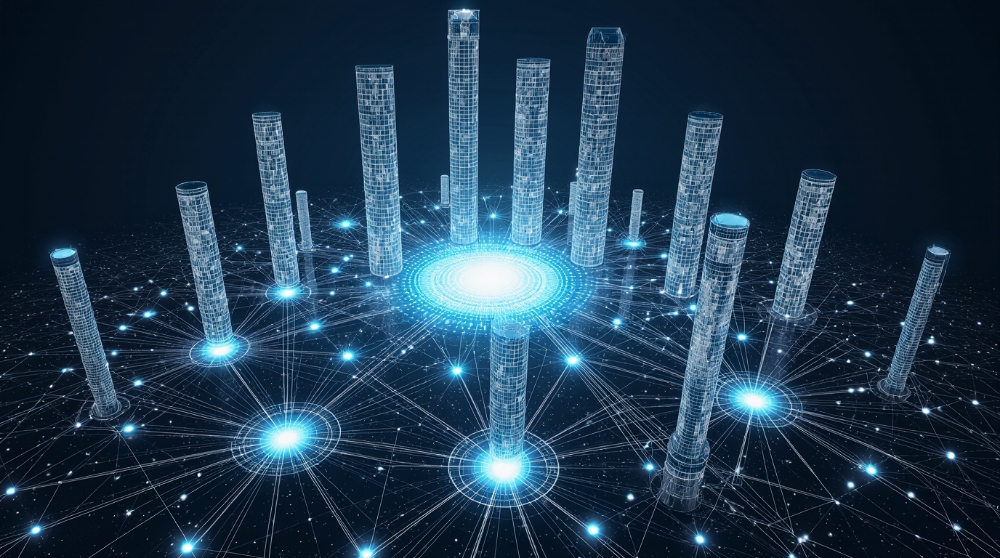
Throughout history, every system — political, financial, technological — has developed power centers.
Even systems designed to distribute authority eventually form:
- Elite groups
- Economic hierarchies
- Influence networks
Web3 is not immune to this pattern.
Decentralization changes the architecture.
It does not eliminate the gravitational pull of power.
2. From Banks to Exchanges
Crypto aimed to reduce dependence on banks.
Yet today, centralized exchanges:
- Hold billions in user funds
- Control liquidity access
- Influence which tokens gain visibility
For millions of users, exchanges are the primary gateway to Web3.
If access to crypto depends on centralized platforms, how different is that from traditional finance?
The gatekeepers have changed.
The structure remains familiar.
3. Venture Capital as the New Elite
Early Web3 narratives emphasized community ownership.
But many major projects were funded through private rounds involving:
- Venture capital firms
- Angel investors
- Strategic insiders
These early participants often receive:
- Large token allocations
- Governance influence
- Preferential pricing
This mirrors startup equity structures in Silicon Valley.
Ownership may be tokenized.
But concentration still exists.
4. Token-Based Governance: Wealth Equals Voice
Web3 governance often follows a simple formula:
More tokens = more voting power.
This introduces a fundamental tension.
In theory, governance is open.
In practice, influence is proportional to capital.
This resembles shareholder capitalism.
Instead of “one person, one vote,” the model becomes:
“One token, one vote.”
Which system does that resemble?
5. The Rise of Crypto Influencers
Influence in Web3 is not only financial.
Narrative power matters.
Crypto influencers, founders, and large community figures can:
- Move markets
- Shape public opinion
- Define project legitimacy
Attention becomes currency.
And those who control attention gain indirect power.
Media concentration is not new.
It has simply shifted platforms.
6. Infrastructure Concentration
Many decentralized applications depend on:
- Major cloud providers
- Popular node services
- Widely used development frameworks
If infrastructure is centralized, dependency follows.
True decentralization requires independence at every layer.
Otherwise, the system remains structurally vulnerable.
7. Psychological Centralization
Even when governance is open, users often defer to:
- Founders
- Developers
- Well-known investors
Why?
Because trust, expertise, and reputation influence decisions.
Humans naturally look for leaders.
Even decentralized systems create informal hierarchies.
Power may be unofficial — but it exists.
8. Financialization of Everything
Web3 has turned nearly every action into an asset:
- Tokens
- NFTs
- Governance rights
- Yield opportunities
While financialization creates opportunity, it also prioritizes speculation.
Speculation tends to reward early entrants.
This dynamic mirrors traditional markets.
The technology changed.
The incentives did not.
9. Regulation and Institutional Entry
As institutions enter crypto markets, influence shifts further.
Large funds now:
- Hold significant Bitcoin and Ethereum positions
- Launch crypto ETFs
- Influence policy discussions
Institutional involvement brings legitimacy.
But it also reinforces traditional capital power.
Web3 was meant to decentralize finance.
Now finance is entering Web3.
10. Are We Repeating History?
The pattern looks familiar:
- Revolutionary technology emerges.
- Early adopters promote openness.
- Capital enters aggressively.
- Power concentrates.
- Structure stabilizes around elites.
This happened with:
- The early internet
- Social media platforms
- Mobile ecosystems
Is Web3 following the same trajectory?
Or can it interrupt the cycle?
11. The Difference That Still Matters
Despite similarities, Web3 does offer structural advantages:
- Public ledgers
- On-chain governance
- Programmable transparency
- Global participation
These tools create the possibility of accountability.
The previous internet did not offer this level of auditability.
The question is whether communities will use these tools effectively.
12. The Role of Users
Power concentration accelerates when users:
- Remain passive
- Avoid governance participation
- Ignore token distribution
- Follow hype blindly
Decentralization requires responsibility.
Without informed participants, systems drift toward centralization.
13. Is Centralization Always Negative?
Total decentralization can slow progress.
Some coordination and leadership are necessary.
The real issue is not whether power exists.
It is whether power:
- Is transparent
- Is accountable
- Can be redistributed
If Web3 rebuilds hierarchies without accountability, it fails its mission.
If it builds structured leadership with transparency, it evolves beyond past systems.
14. The Real Test of Web3
The true test is not innovation.
It is resilience against power concentration.
Can Web3:
- Resist excessive capital dominance?
- Maintain fair governance?
- Protect small participants?
- Avoid becoming another elite-controlled ecosystem?
Technology alone cannot answer this.
Community behavior will.
Conclusion
Web3 may be revolutionary in architecture.
But architecture alone does not guarantee fairness.
Power exists in every system.
The difference lies in how visible, accountable, and redistributable that power becomes.
Web3 has the tools to break historical cycles.
Whether it will use them is still uncertain.
The future of decentralization depends not on code —
but on collective choices.
💬 Question for Readers
Do you believe Web3 is creating a new system — or repeating old power dynamics in digital form?