Trading Science for ROI

It’s been over 50 years since humans last kicked up dust on the lunar surface, and for a long time it felt like the moon was just a dusty been there, done that relic of the Cold War. After the high-drama finale of the Apollo program in 1972, we effectively ghosted our only natural satellite. We left behind some golf balls, a few flags that have likely been bleached white by solar radiation, and a whole lot of what if energy. For decades the moon sat there like an old high school trophy. Something we were proud of but not something we felt the need to polish or update I guess.
But suddenly, the lunar neighborhood is getting crowded again, and the vibe has shifted significantly. We’ve swapped the high-stakes political theater of the 1960s for a tech-heavy, billionaire-fueled gold rush. This isn’t just a nostalgic reboot of a classic franchise, it’s a total genre shift. The new race is less about proving whose ideology is superior and more about who can secure the best real estate for the coming industrial age of the solar system. We aren’t just going back for the science, we’re going back because the moon is about to become Earth’s newest, most expensive, and most strategic industrial park.
Why We Ghosted the Moon

If you’re wondering why we basically stopped going to the moon after 1972, the answer is surprisingly very un-sexy. Money and shifting goalposts. During the Apollo era NASA’s budget was an absolute monster, peaking at nearly 4% of the entire U.S. federal budget. To put that in perspective, today it hovers around 0.5%. We weren’t going because it was a sustainable business model. We were going because we were in a geopolitical who has the bigger rocket contest with the Soviet Union. Once the American flag was firmly planted and the point was proven, the political will evaporated. The public’s attention span (even back then) was shorter than we remember. By Apollo 17, the networks weren’t even airing the moonwalks in their entirety because the ratings had plummeted.
But it wasn’t just about the cash. Space exploration suffers from what experts call vision whiplash. Every time a new administration took over the White House, the destination changed. One president wanted to go to Mars, the next wanted to capture an asteroid, and the one after that wanted to pivot back to Earth-centric climate research. This lack of a consistent, long-term roadmap meant that multi-billion dollar projects were often scrapped before they even cleared the launchpad. We spent decades building the next big thing only to have the funding cut when the political winds shifted, leaving us stuck in Low Earth Orbit (LEO). For fifty years our focus was the International Space Station. A incredible feat of engineering sure, but one that kept us tethered just a few hundred miles above the atmosphere while the moon sat 238,000 miles away, ignored.
From “For Science” to “For Profit”

The new space race looks a lot less like a government laboratory and a lot more like a Silicon Valley boardroom. In the last decade, we’ve seen a massive paradigm shift toward a commercial-first model. Instead of NASA designing every single bolt and heat shield, they’ve transitioned into a customer role. They now put out contracts for services, (like deliver this cargo to the moon) and let private companies figure out the how. This shift has paved the way for players like SpaceX, Blue Origin, and even smaller startups like Intuitive Machines to treat space as a market rather than a mystery.
This isn’t just about billionaires playing with very expensive toys, though. It’s about the booming space economy, which is projected to hit $1.8 trillion by 2035. We aren’t just looking for moon rocks to put in museums anymore. We’re looking for resources that can’t be found easily on Earth. The moon is a treasure chest of Helium-3. An isotope that is rare on our planet but abundant in the lunar regolith. It holds the key to clean, radioactive-free nuclear fusion.
Even more valuable is the water ice located in the permanently shadowed regions of the lunar poles. If we can mine that ice, we don’t just have something to drink. We have the components of rocket fuel (hydrogen and oxygen). It costs a fortune to lift heavy fuel out of Earth’s deep gravity well. If we can manufacture fuel on the moon, it becomes the solar system’s first gas station. This makes the moon the essential logistics hub for the rest of the solar system. Whoever owns the pumps at the lunar south pole effectively controls the road to Mars and the asteroid belt.
Did We Actually Go To The Moon?
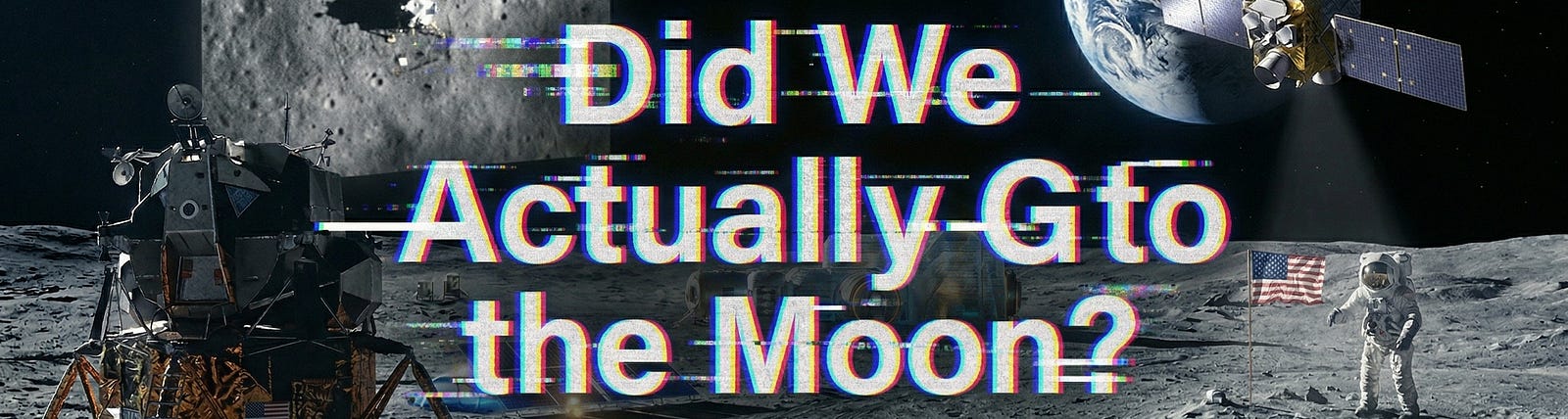
I know, I know. There’s always that one guy in the comments or that one uncle at Thanksgiving who swears the whole thing was filmed on a soundstage in Nevada to trick the Russians. It’s a fun story (a gritty 70s conspiracy thriller) but the reality is actually more impressive than the fiction. Keeping a secret involving 400,000 workers for 50 years would be a miracle of human cooperation far more difficult than actually building a Saturn V rocket. People love to talk, and in fifty years, not a single high-level whistleblower has produced a shred of credible evidence that it was a hoax.
If we hadn’t gone, the Soviet Union would have been the first to scream it from the rooftops. They were tracking our signals with their own sophisticated electronic intelligence. If those signals hadn’t come from the moon, the Cold War would have ended with the greatest PR disaster in American history. Beyond the politics, we have the physical proof. 382 kilograms of lunar samples that have been scrutinized by scientists from dozens of countries for decades. These rocks have a chemical signature. Specifically their exposure to cosmic rays and lack of volatile elements. That simply cannot be faked or found on Earth.
Furthermore, we don’t have to rely on 1960s photos anymore. Modern orbiters like the Lunar Reconnaissance Orbiter (LRO) have taken high-resolution, bird’s-eye photos of the Apollo landing sites. In these images, you can clearly see the descent stages of the Lunar Modules sitting exactly where they were left, surrounded by the dark, disturbed dust of the astronauts’ footpaths. You can even see the Lunar Rover parked off to the side. The smoke screen wasn’t the mission. The smoke screen is the misinformation that ignores the literal mountains of evidence sitting on the lunar surface right now.
The Moon’s Season 2

So, what does the return trip look like? It’s called Artemis, and it’s a whole different beast than Apollo. While the 60s missions were flags and footprints (get in, take a selfie, get out type stuff) Artemis is about sustained presence. We are moving from exploration to occupation. This involves building the Lunar Gateway, a small space station that will orbit the moon. Think of it as a 240,000-mile-away toll booth and staging area. Astronauts will live there for short stints before taking a separate lander down to the surface. It’s essentially a high-tech base camp for the lunar surface, allowing for more frequent and longer missions.
The push to go back now is also driven by a dramatic technological leap, reusability. During Apollo, we threw away a $3 billion rocket every time we wanted to send three guys to the moon. Today, thanks to the development of reusable boosters by companies like SpaceX, the price per kilogram to get into orbit has plummeted. This economic shift has made it viable for the first time to think about building actual infrastructure. Habitats, power grids, and even 3D-printed buildings made out of lunar dust.
As of 2026, we are watching the final preparations for crewed missions that will land at the lunar South Pole. This region is a strategic high ground because parts of it are in constant sunlight (perfect for solar power) while the craters right next to them are in constant shadow (where the water ice is). This isn’t just a repeat of history, it’s the opening of a new frontier that looks more like a sci-fi colony and less like a one-off science experiment. We aren’t just visiting the moon anymore, we’re moving in.
The New Frontier

Space isn’t just for explorers in silver suits anymore. It’s becoming an extension of our global economy and a playground for the next generation of tech giants. Whether you find it inspiring or a bit cynical that we’re turning the moon into a commercial hub, there’s no denying that the era of looking but not touching is over. We are finally moving past the smoke and mirrors of political posturing and into the gritty, profitable reality of becoming a multi-planetary species. The moon is no longer just a light in the sky. It’s the next great job site, and the help wanted signs are already being printed. The only thing left to wonder is whether we’ll use this second chance to build something better than what we have on Earth, or just bring our old habits to a new world.
I wanted to give a shoutout to Rocket Enthusiast on PublishOx for the article idea.
Thanks for reading everyone! Visit my site to learn more about me and explore what I’m building at Learn With Hatty. I hope everyone has a great day and as I always say, stay curious and keep learning.