Leaving the Stage: Rumi on the Art of Reclaiming Your True Self

We live in a world that constantly asks us to be anyone but ourselves. From the moment we enter society, we are handed invisible scripts—by our families, our peers, and our cultures—detailing how we should act, speak, and live to be deemed "successful" or "acceptable." We spend decades perfecting these performances. But the 13th-century mystic and poet Rumi saw right through this human tragedy. In one of his most piercing insights, he noted: "Half of life is lost in charming others, the other half is lost in going through anxieties caused by others. Leave this place, you've played enough. Now, live the rest of your life as your true self." Rumi’s words are not just a poetic observation; they are a psychological mirror and an urgent wake-up call. When you strip away the beautiful language, he is diagnosing a heavy, exhausting cycle that many of us are trapped in right now: the twin traps of pleasing and panicking.
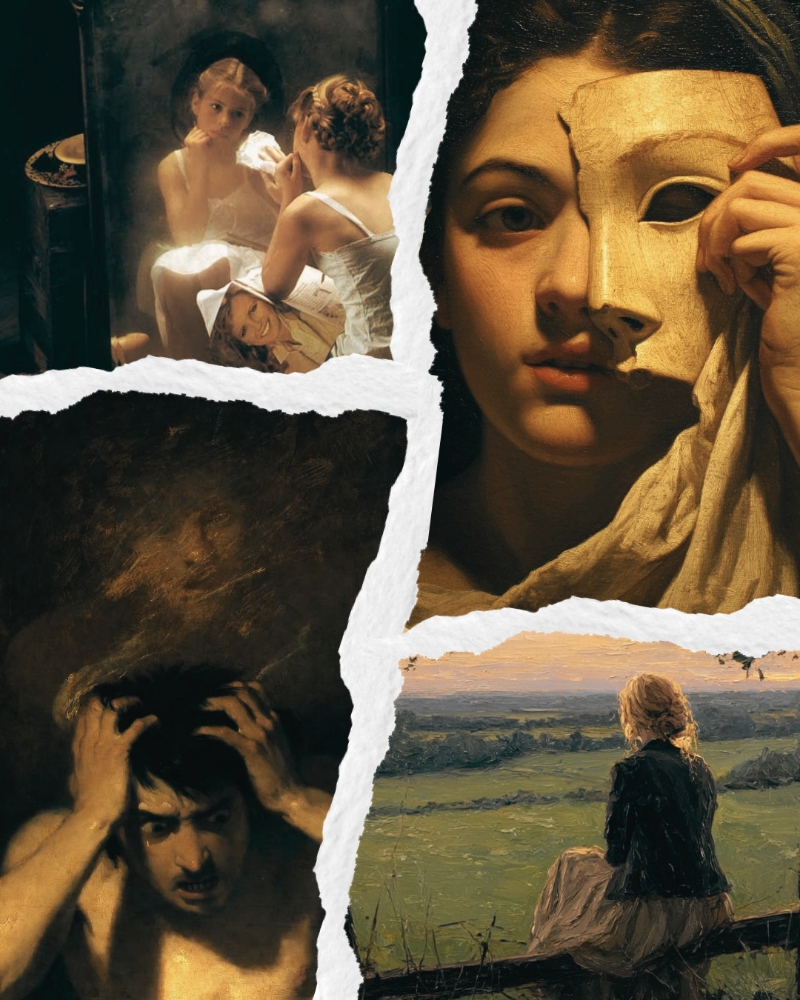
The first half of our lives is often spent trying to "charm" the world. We build curated versions of ourselves on social media, choose careers to satisfy others' expectations, and swallow our true opinions just to keep the peace. We wear masks to be liked, to fit in, or to feel valued. The tragedy of this, as Rumi points out, is that it is a loss. Every time we bend ourselves into a shape that doesn't belong to us just to charm someone else, a small piece of our authentic self dies. We trade our inner peace for temporary external applause. But a crowd that loves your mask will never be able to love you. When the charming fails—or when we inevitably realize we cannot make everyone happy—the second trap snaps shut: anxiety. We lie awake at night replaying conversations, worrying about how we were perceived, or fearing the judgment of people who are likely too caught up in their own dramas to care. This anxiety is unique because it isn't generated by our own genuine needs; it is a ghost created by what we think others think of us. It is a psychological prison where the opinions of others act as the walls and the guards.
The turning point of Rumi’s wisdom is his sudden change in tone. He doesn’t just comfort us; he commands us: "Leave this place, you've played enough." When he says "leave this place," he isn't telling us to pack our bags and move to a lonely mountain. He is telling us to leave the mental headspace of people-pleasing. He is calling the entire social game what it truly is: a game. A performance. A playground that we have outgrown. To say "you’ve played enough" means acknowledging that the exhausting cycle of trying to manage everyone else’s perception of you is over. You have paid your dues to society. You have tried it their way, and it left you anxious and empty. It is time to step off the stage and turn off the spotlights.
The final invitation is the most beautiful: "Now, live the rest of your life as your true self." Living as your true self sounds simple, but it requires immense courage. It means finding out what you actually love when no one is watching. It means pursuing projects, crypto ventures, creative arts, or lifestyles that make sense to you, even if they look strange to the outside world. It means accepting that some people will walk away when you stop pretending—and being entirely okay with that. When you stop wasting your life energy on charming and worrying, you unlock a massive reservoir of peace and focus. You finally become the author of your own story, rather than an actor in someone else’s play. Rumi’s timeless quote reminds us that life is too short and too sacred to be lived as a continuous apology. The first half of your life may have belonged to the expectations of the world, but the rest of it belongs entirely to you. The curtain has fallen on the performance. The game is over. It’s finally time to take a deep breath, drop the mask, and just be yourself.