How Decentralized Autonomous Robots Are Laying the Brickwork for Humanity's Moon Base

If you’ve been paying attention to space news lately, you know the dream of a permanent human presence on the Moon is shifting from a distant someday to a highly choreographed sprint. NASA recently dropped jaw-dropping details about its multi-phase lunar blueprint, revealing a massive ramp-up of launches and hardware aiming to establish high-rate, reliable surface access by 2028 (so just in a couple years!). But sending humans to live on a lifeless rock means building infrastructure first. And if you think NASA is planning to launch a bunch of oversized, human-driven bulldozers to dig the foundations, think again.
Instead, the future of space construction looks less like Caterpillar and a lot more like a highly organized ant colony. At the recent 2026 FIRST Robotics World Championship in Houston, NASA featured ARMADAS as part of its ongoing push to showcase next-generation space construction technologies to the next generation of engineers. ARMADAS stands for Automated Reconfigurable Mission Adaptive Digital Assembly Systems. Behind that mouthful of an acronym lies a wild paradigm shift. A swarm of tiny, modular, autonomous robots that will build our lunar habitats and solar arrays completely on their own, long before human boots ever touch the ground.
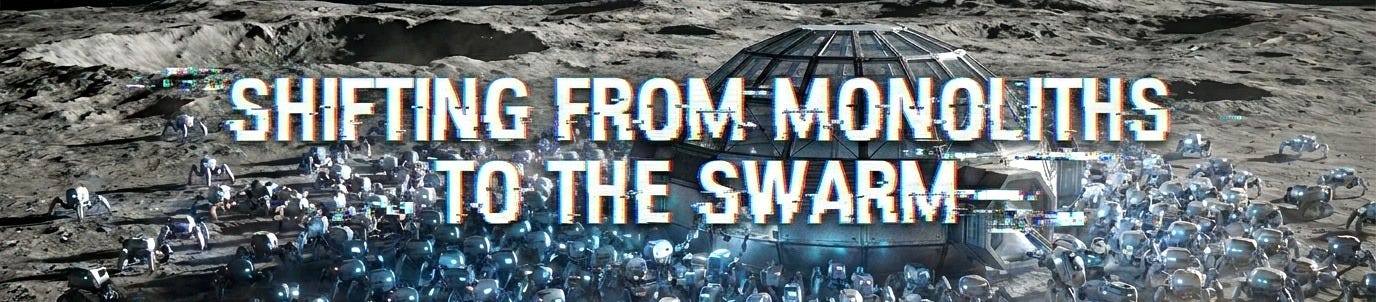
Shifting from Monoliths to the Swarm
For decades, aerospace engineering operated on a monolithic philosophy. If you needed a space station or a giant satellite, you built a massive, incredibly complex, single-purpose machine on Earth, crammed it into a rocket shroud, and prayed it unfolded properly in space. It’s a high-stakes gamble where a single jammed gear can tank a billion-dollar mission.
ARMADAS completely flips the script by leaning into decentralized autonomous robotics. Instead of one massive machine, NASA is using a fleet of small, simple, and relatively cheap robots that work together. According to NASA’s project overview on TechPort, the system shifts architectural complexity away from delicate, overly engineered hardware and places it squarely onto smart software and cooperative algorithms.
The core philosophy here is brilliant in its simple approach to redundancy. If an expensive, traditional lunar excavator suffers a catastrophic drivetrain failure on the lunar surface, the mission is effectively over. But if you deploy a swarm of thirty small, cooperative bots and one rolls over and dies in a crater, it’s barely a footnote. The remaining bots simply recalculate, reconfigure their workspace, and finish the job without missing a beat.
The Kit of Parts and the Grid Mechanics

So, how exactly does a collection of tiny robots build a giant solar grid or a structural habitat frame without a human supervisor steering them with a joystick? They do it by turning the construction site into a literal game of three-dimensional dominoes.
The ARMADAS project relies on a kit of parts composed of ultra-lightweight, high-performance mechanical metamaterials. These are tiny, structural building blocks mass-produced from advanced, space-rated composite materials. NASA refers to these individual building blocks as voxels (a term borrowed from 3D volumetric modeling) which gives the construction process a grid-based, programmable logic. Because these parts are modular and identical, they can be packed tightly into a rocket payload, bypassing the volume limitations of standard launch shrouds.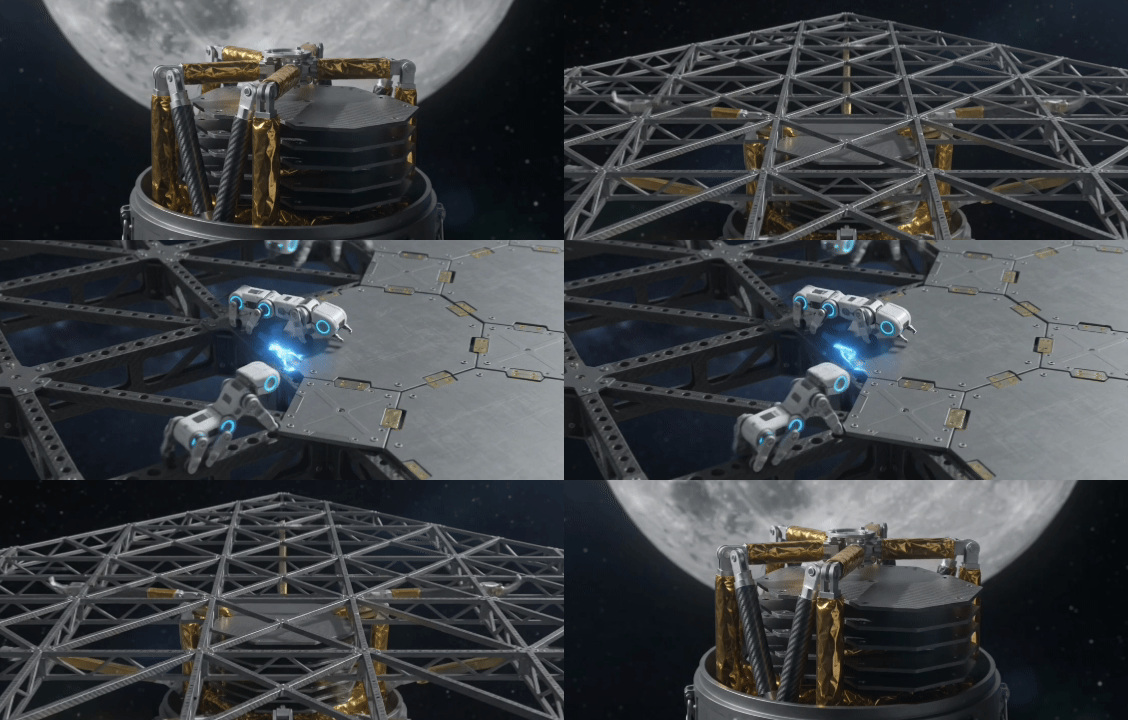 packed payload ➔ autonomous deployment ➔ inchworm robots index the grid ➔ structured assembly (AI concept render. Pretty wild to see the grid mechanics visualized like this)
The magic happens in how the robots interact with these parts. Instead of navigating an unpredictable, messy dirt environment using shaky machine vision, a problem that has historically plagued commercial AI companies trying to operate robots in unstructured spaces. The ARMADAS bots use the building blocks themselves as their roadway. The robots act as mobile end-effectors, climbing along the very structures they are building. Because the geometry of the building blocks is completely standardized, the robots can precisely index their movements to the structure. They know exactly where they are down to the millimeter by counting the steps along the structural grid, using localized error correction to build things much larger and more precise than the robots themselves.
Prepping the Ground for Artemis

This swarming approach isn’t just a neat lab experiment, it is the backbone of how NASA intends to make a permanent lunar base economically viable. Building a space infrastructure by launching fully assembled pieces from Earth is simply too expensive. By utilizing decentralized systems, NASA can drastically reduce the cost of entry for space manufacturing.
We are already seeing this decentralized, multi-agent philosophy bleed into other areas of NASA’s Phase 1 lunar planning. For instance, alongside ARMADAS, the agency is actively developing CADRE (Cooperative Autonomous Distributed Robotic Exploration) through NASA’s Jet Propulsion Laboratory. A trio of small rovers designed to autonomously map and scout terrain collaboratively, demonstrating how multi-agent robotic systems can work together without human direction.
The near-term goal is to have these autonomous swarms handle the heavy lifting of Phase 1. Such as unpacking cargo, assembling massive solar arrays for power, building communications towers, and preparing secure landing zones. By the time Artemis astronauts arrive to establish long-duration stays, the basic life-support utilities of the Moon Base will already be powered up, tested, and humming along nicely.
Bridging the Lunar Gap
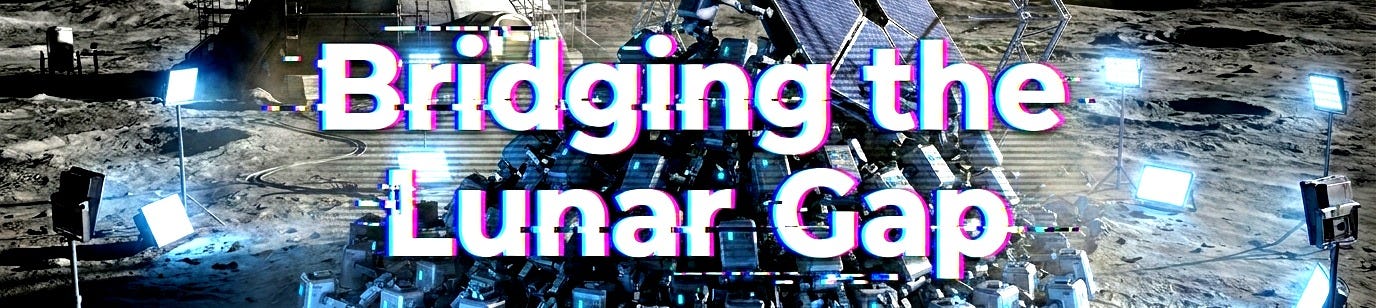
There is something beautifully poetic about NASA showcasing this technology at a youth robotics championship. The high schoolers fixing their custom drivetrains in the pits are the exact demographic that will likely be programming these autonomous swarms in a decade.
We are moving away from the era of fragile, heavy, single-purpose space machines. The future of deep space exploration belongs to the small, the modular, and the cooperative. By letting a swarm of self-organizing robots lay the literal foundations of our space outposts, we aren’t just building a temporary foothold on the Moon. We are building a repeatable, scalable system that will eventually take us to Mars and beyond. Thanks for reading everyone! Visit my site to learn more about me and explore what I’m building at Learn With Hatty. I hope everyone has a great day and as I always say, stay curious and keep learning.
Original article on PublishOX