The Crypto Market Shifts from Speculation to Infrastructure Building
The Crypto Market Shifts from Speculation to Infrastructure Building Regulation Clarifies Banks Enter and Blockchains Transform into Global Financial Networks
A Market Moving Beyond Speculation
The cryptocurrency sector is undergoing one of its most significant structural transformations since the inception of Bitcoin. Once a market driven primarily by retail speculators, it is now increasingly shaped by institutional capital, regulatory frameworks, and the development of robust financial infrastructure.
This evolution signifies that digital assets are no longer operating outside the financial system, but are gradually becoming an integral part of it.
Regulation Becomes the Primary Catalyst
Regulation is no longer just an external pressure on the crypto market; it has become the fundamental prerequisite for institutional entry.
Across major economies, governments are establishing clear frameworks to classify digital assets into securities, commodities, and utility tokens.
This clarity is vital, as institutions cannot scale their operations without a stable legal environment.
The Quiet Institutional Inflow
Banks, asset managers, and financial infrastructure providers have already begun integrating blockchain-backed services.
However, their focus is not on short-term speculation, but rather on
Custody services
Tokenization of Real-World Assets (RWAs)
Optimizing financial settlement processes
Regulated exposure to Bitcoin and Ethereum
This shift reflects the market's transition from mere "crypto trading" to building "financial infrastructure."
Infrastructure is the True Battleground
While news headlines remain fixated on daily price movements, the real competition is occurring at the infrastructure layer.
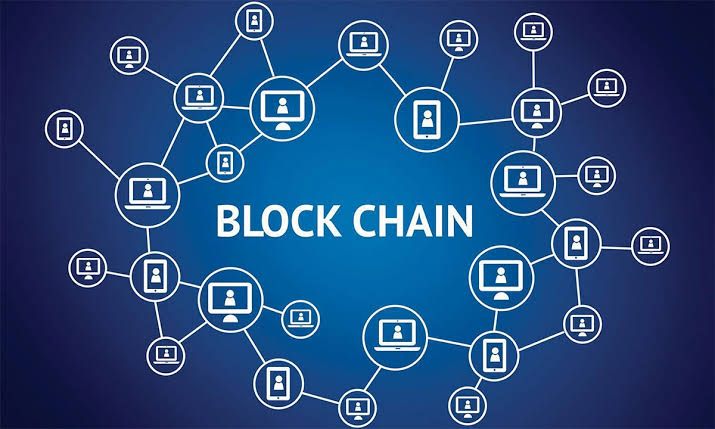
Interoperability technologies, data oracles, and cross-chain communication systems have become core elements of this new financial ecosystem.
The ultimate goal is no longer isolated networks, but a unified financial web interconnected with the global banking system.
Volatility Remains Tied to Macroeconomics
Despite long-term structural growth, digital asset markets remain highly volatile.
Price action continues to be heavily dependent on
Interest rates
Liquidity cycles
Global risk appetite
This dynamic is creating a two-tiered market long-term institutional accumulation vs. short-term retail speculation.
The Evolution of Decentralized Finance (DeFi)
Decentralized Finance is evolving from its early experimental phases into a more structured financial system.
Security, rigorous auditing, and compliance have now become baseline standards for serious platforms.
This maturation is essential for attracting deep institutional liquidity into the DeFi space.
The Bigger Picture The Convergence of TradFi and Crypto
The most critical ongoing trend is the convergence of Traditional Finance (TradFi) and blockchain technology.
This emerging financial system combines
The technological efficiency of blockchain
The regulatory compliance of established institutions
Global, 24/7 liquidity
This convergence is redefining how value is stored, transferred, and settled on a global scale.
What to Watch Next
Three key factors will define the upcoming phase of the market
Ongoing regulatory clarity across major global economies
The expansion and adoption of Real-World Asset (RWA) tokenization
Advancements in cross-chain interoperability technologies
Conclusion
The cryptocurrency market is moving past the era of pure speculation, transitioning toward an integrated financial ecosystem driven by institutions, regulation, and robust infrastructure.
While market volatility will inevitably persist, the long-term trajectory is clear a deeper, permanent integration with the global financial system.
---
Frequently Asked Questions
Is crypto still a speculative market? Partially, but the influx of institutional capital is gradually shifting its core foundation toward utility and infrastructure.
Why is regulation so important? Because it provides the legal clarity and compliance assurances required for major institutions and banks to enter the space safely.
Does Bitcoin still matter to institutions? Yes, Bitcoin and Ethereum remain the primary gateways and foundational assets for institutional adoption.
What will drive the next market cycle? Regulatory frameworks, institutional capital allocation, and advancements in blockchain infrastructure.
---
Core Topics Crypto Regulation, Institutional Adoption, Bitcoin, Ethereum, Decentralized Finance (DeFi), Tokenization, Blockchain Infrastructure, TradFi Convergence
Disclaimer This article is for informational purposes only and does not constitute financial advice.