The Creativity we lost and how to find it Again

Think back to your school years. We were writing things, making things up, coming up with ideas left and right. Then at some point, quietly and without much warning, that changed. We still have ideas, sure. But it's different. It's slower. More filtered. More careful.
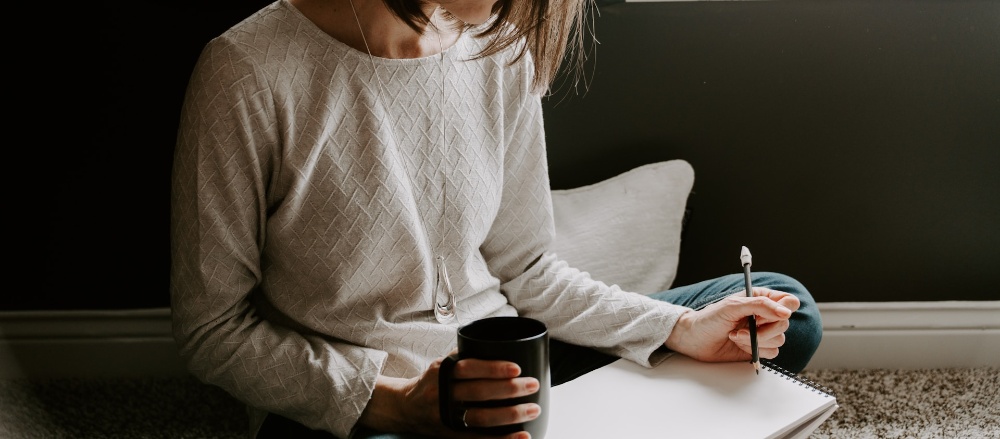
Photo by Kelly Sikkema on Unsplash
What happened?
I spent some time digging into this and the answers are both fascinating and a little uncomfortable. Because it turns out the conditions that made us creative weren't accidental. They were structural. And most of them are gone now.
The freedom of having nothing to lose
When we wrote an essay in school, one or a few people read it. There were no consequences. No professional reputation on the line. No market to reject our idea. That lack of stakes, paradoxically, set us free.
As adults, we start filtering before we even speak. We know (or think we know) when an idea is too risky, too naive, too weird. So we cut it before it ever surfaces. The internal critic, the one that barely existed at fifteen, is now running the show.
Add to that the fact that our identity was still open back then. We didn't fully know "who we were," so we could try on different voices, styles, perspectives without it feeling wrong. That flexibility is a superpower. Most adults have traded it for a stable sense of self (which is useful) but also a kind of creative cage.
Boredom. Yes, really.
Here's the counterintuitive one. Boredom is a key ingredient of creativity and we've almost completely eliminated it from our lives.

Photo by John Lord Vicente on Unsplash
When our brain has nothing to do, it activates what neuroscientists call the default mode network (DMN). This isn't our brain switching off. It's our brain switching modes, from focused and analytical to associative and wandering. And in that wandering state, it starts making connections between things that are normally stored in completely separate compartments.
That's why our best ideas come in the shower. Or on a walk. Or right before we fall asleep. Not when we're sitting at a desk trying very hard to think creatively.
In school, this happened naturally. Boring lessons, long commutes, waiting for the bus. Our minds wandered because there was nothing else for them to do. Researcher Sandi Mann at the University of Central Lancashire actually proved this experimentally: people who did a boring task before a creative task outperformed those who didn't. Boredom was the warm-up.
Now? Every queue, every pause, every moment of nothing gets immediately filled with scrolling. Our brain never gets the signal that it's free to wander. And that matters more than most people realize.
The phone is not the villain (but it's not helping)
To be fair, phones don't destroy creativity. They just dramatically reduce the frequency of states where creativity naturally appears. That's still enough to feel the difference.
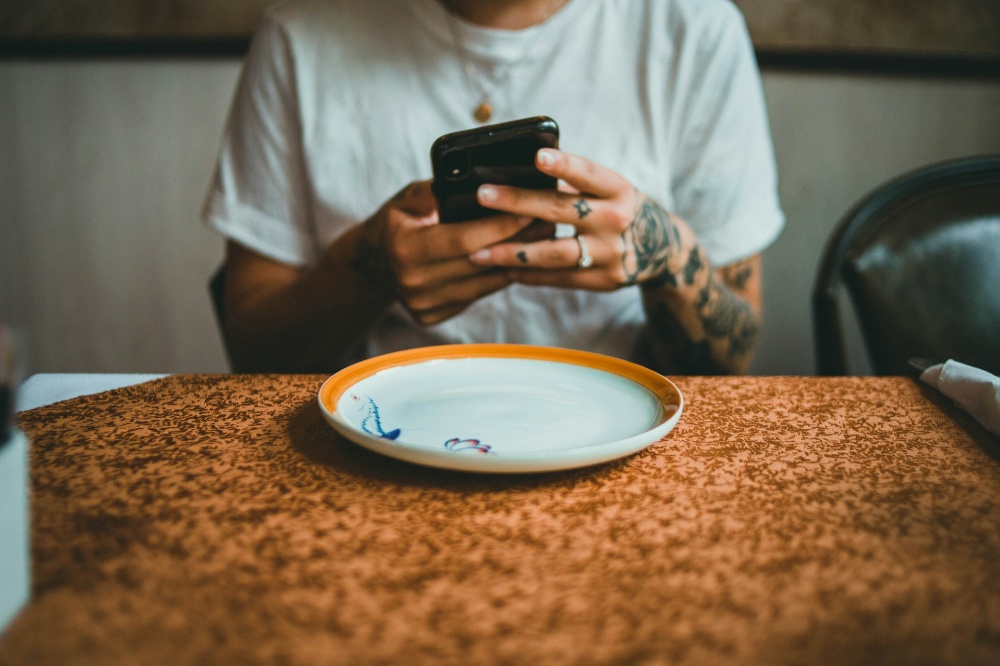
Photo by John Lord Vicente on Unsplash
There's also this: research by Adrian Ward at UT Austin found that just having your phone on your desk (face down, not in use) reduces available cognitive capacity. The brain is quietly monitoring it, waiting for a notification. It's called brain drain and it costs us focus we didn't even know we were spending.
The deeper issue is that phones are optimized for passive consumption. Infinite scroll, algorithmic recommendations, content chosen for you. That's the opposite mental mode from creativity, which is active, searching, producing. The two don't easily coexist in the same day.
Music was actually doing something
If we listened to a lot of music during those years (and most of us did), that probably helped more than we'd think. Music activates the brain's reward system. Dopamine lifts our mood, and a good mood directly improves divergent thinking, the kind that generates more ideas and more unexpected connections. When we feel good, our brain filters less. It risks more.

Photo by Jamakassi on Unsplash
There's also the nostalgia factor. Music from ages 12 to 25 is disproportionately strong emotionally, what researchers call the reminiscence bump. We weren't just listening to music back then. We were inside the period of maximum openness and the music was helping create that emotional state.
One caveat though: music with lyrics in a language we understand competes directly with our language center. It might have been perfect for sketching or thinking visually, but it was probably working against us when writing. Instrumental or foreign-language music is what actually performs best in studies on creativity tasks. A useful thing to know (and to test).
What we can actually do about it
The good news is that none of this is permanent. The capacity is still there. What's missing are the conditions. We can rebuild them deliberately. Write things nobody will read. Give yourself absurd constraints (only 150 words, only dialogue). Change your physical space. And, most importantly, build real boredom into our day. Walk without headphones. Sit without your phone. Let our mind have nowhere else to go.
It feels unproductive. That's exactly the point.