The American Prison System is Failing at Its Only Job

We’ve all seen the movies. The clanging iron bars, the orange jumpsuits, and the tough-as-nails protagonist who emerges from a ten-year stint with a law degree and a heart of gold. It’s a great narrative, but if you’ve actually spent time near the system (or in it) you know the reality is a lot less inspiring montage and a lot more slow-motion train wreck. I’ll be honest with you, this topic hits close to home for me. I spent years battling addiction and like many others, found myself on the wrong side of a courtroom because of it.
Today, I’m six years clean, living a life I once thought was impossible with my wife and kids and a future that actually looks bright. But looking back, I realize that the help the system offers is often just a different kind of harm. We have a system that is designed to punish, yet we’re shocked when it doesn’t rehabilitate. If we want to stop the revolving door of recidivism, we have to talk about what’s actually happening inside those walls and why tough on crime is often just a shortcut to more crime later.
Survival Over Rehabilitation
The first thing you learn in a correctional facility is that your primary job isn’t to better yourself, it’s to stay safe. When the environment is defined by the constant threat of violence, the brain switches into a survival mode that is fundamentally at odds with personal growth. It’s hard to focus on a GED program or an anger management class when you are constantly scanning the room for a potential shiv or calculating the safest route to the mess hall. According to recent data from the Bureau of Justice Statistics (BJS) on PREA activities, reporting and monitoring sexual victimization remains a massive challenge, with thousands of allegations of sexual abuse handled by the federal system annually. These aren’t just numbers on a spreadsheet, they represent a fundamental breakdown of safety that makes true rehabilitation nearly impossible.
It’s not just about the physical scars. It’s about the culture of trauma that becomes your new normal. A 2025 study on the psychological impact of prison environments highlights how the deprivation model. The isolation, the loss of autonomy, and the persistent threat of physical harm creates a form of post-incarceration syndrome. When you spend years in a place where showing vulnerability is a death sentence, you don’t just turn that off when you get home. People walk out with hyper-vigilance and trauma that makes a normal office job or a quiet family dinner feel alien and threatening. When stabbings and assaults are part of the daily landscape, the only thing you’re learning is how to be a better predator or a more invisible prey. By the time a person is released they aren’t corrected, they are often just more broken than when they went in.
The Myth of Modern Rehabilitation
We love to talk about rehabilitation programs in political speeches, but in practice, these are often underfunded afterthoughts or checkboxes for a parole board. While the First Step Act Annual Report shows some progress in federal facilities (with over 68,000 prisoners participating in drug abuse programs in 2023 and thousands more joining in early 2024) the reality on the state and local levels is much bleaker. Most prisoners spend their days in idleness, which is just a polite way of saying they are rotting in a cell with nothing to do but talk to other people who also have no resources. Imagine trying to fix your life in a place where the library is missing half its pages and the job training consists of pushing a broom for twenty cents an hour. It doesn’t exactly scream career readiness.
The stats on recidivism are the ultimate receipt for the system’s failure. When a huge chunk of the prison population lacks a high school diploma or stable housing waiting for them on the outside, we are essentially setting them up for a sequel. Research from the Prison Policy Initiative points out that nearly 25% of formerly incarcerated people don’t even have a GED or college degree, and the rate of homelessness among this group is astronomically higher than the general population. We aren’t rehabilitating people, we’re just pausing their lives and then dropping them back into the world with even fewer tools than they had before. If a hospital had a 60% failure rate where patients came back sicker than before, we’d shut it down. Yet, we keep pouring billions into a prison system that yields exactly those results.
Treatment vs. Iron Bars
I’m the first person to admit that some people truly need to be separated from society for public safety. There are individuals who have proven they are a danger to others. But for the vast majority of us who were just struggling with a substance use disorder or a mental health crisis, prison is like trying to fix a broken leg by hitting it with a hammer. It’s an expensive, blunt instrument that ignores the underlying cause. When I was on drugs and breaking the law, I wasn’t a mastermind looking to hurt people, I was a person who was hurting, making terrible decisions to fuel an addiction that had taken over my brain. If I could have had help then (real, intensive treatment) my life might have turned around years earlier.
There are other ways that actually work, and they don’t involve steel cages. Drug courts and alternative sentencing are showing us that you can hold someone accountable without destroying their future. According to a review by the Stanford Network on Addiction Policy, drug courts can reduce recidivism by up to 50% compared to traditional probation or jail time. Why? Because they treat the root cause. They offer a combination of strict supervision and actual human support that forces you to face your demons without putting you in a cell with them. It costs a fraction of the price of incarceration and actually returns a functional citizen to the community. We need to stop treating addiction as a moral failing that deserves a cage and start treating it as the medical and psychological challenge it actually is.
Rebuilding a Life
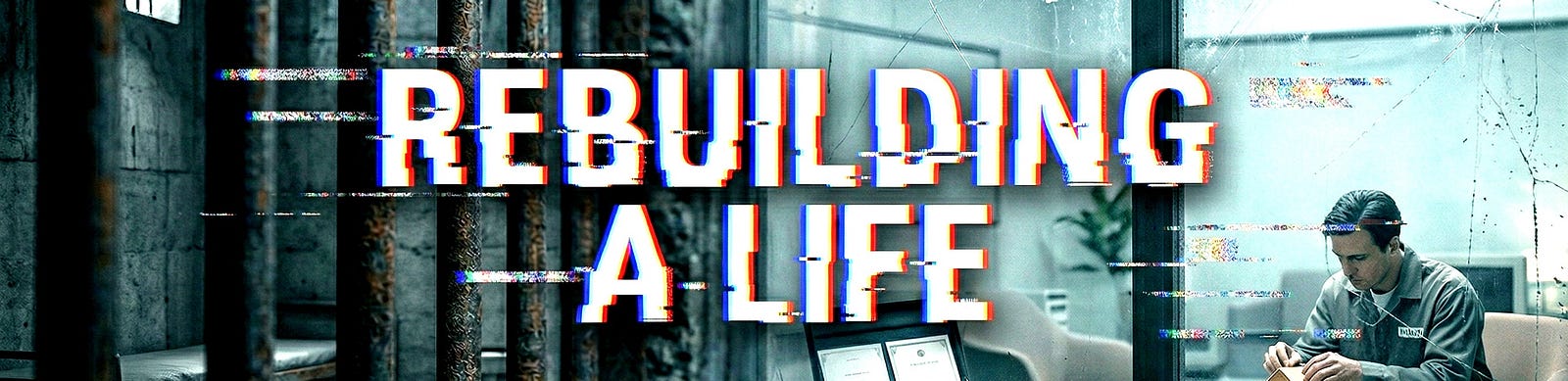
Even when you do get clean, stay out of trouble, and dedicate yourself to being a better parent, the system still wants to keep its thumb on you. One of the hardest parts of my journey has been the work history gap. When you’ve been away or stuck in the cycle of addiction, your resume looks like a Swiss cheese sandwich. You sit in interviews knowing you have the drive and the heart, but you’re terrified of the moment they ask about those missing years. It’s a specialized kind of depression, knowing you’re a different person now but realizing the world still sees you as a file number or a mugshot from five years ago.
But here’s the thing I want anyone listening to know. It is never too late to change who you are. I have an amazing life now and beautiful kids who don’t know the old me. They just know the parent who shows up for them every single day. I’m about to start a new chapter in my professional life, and while the days are still hard sometimes and the depression still creeps in, I would not change my life for anything. We need a system that recognizes this human capacity for change. We need to stop investing in more cages and start investing in the Clean Slate initiatives that help people seal their records and actually get back to work. Because when someone wants to do better, the last thing society should do is stand in their way.
Final Thoughts

The American prison system is a reflection of what we value. Do we value revenge, or do we value restoration? Right now, the data says we’re leaning pretty hard into the revenge category, and it’s costing us billions of dollars and millions of lives. By shifting our focus to mental health, addiction treatment, and actual job training, we can stop the cycle of violence and trauma. If I can make it back from the brink and build a beautiful life, others can too. They just need a system that helps them stand up instead of one that keeps them pinned down.
Thanks for reading everyone! Visit my site to learn more about me and explore what I’m building at Learn With Hatty. I hope everyone has a great day and as I always say, stay curious and keep learning.