What The Tech?! The Oscilloscope

There is a piece of equipment sitting on the workbench of almost every electronics engineer on the planet that most people outside of that world have never heard of. It has no consumer product to its name, no marketing campaign, no cultural moment that lodged it in the public consciousness.
And yet, without it, almost nothing in the modern technological world would exist.
The smartphone in your pocket was designed with one. The radio in your car was tuned with one. The medical equipment keeping people alive in hospitals was developed and tested with one. Nearly everything we’ve covered in this series all came to life on a workbench where one was running.
It is called the oscilloscope, and its story is the story of how the modern world learned to see electricity.
As always, it’s an interesting tale, so let’s go check it out!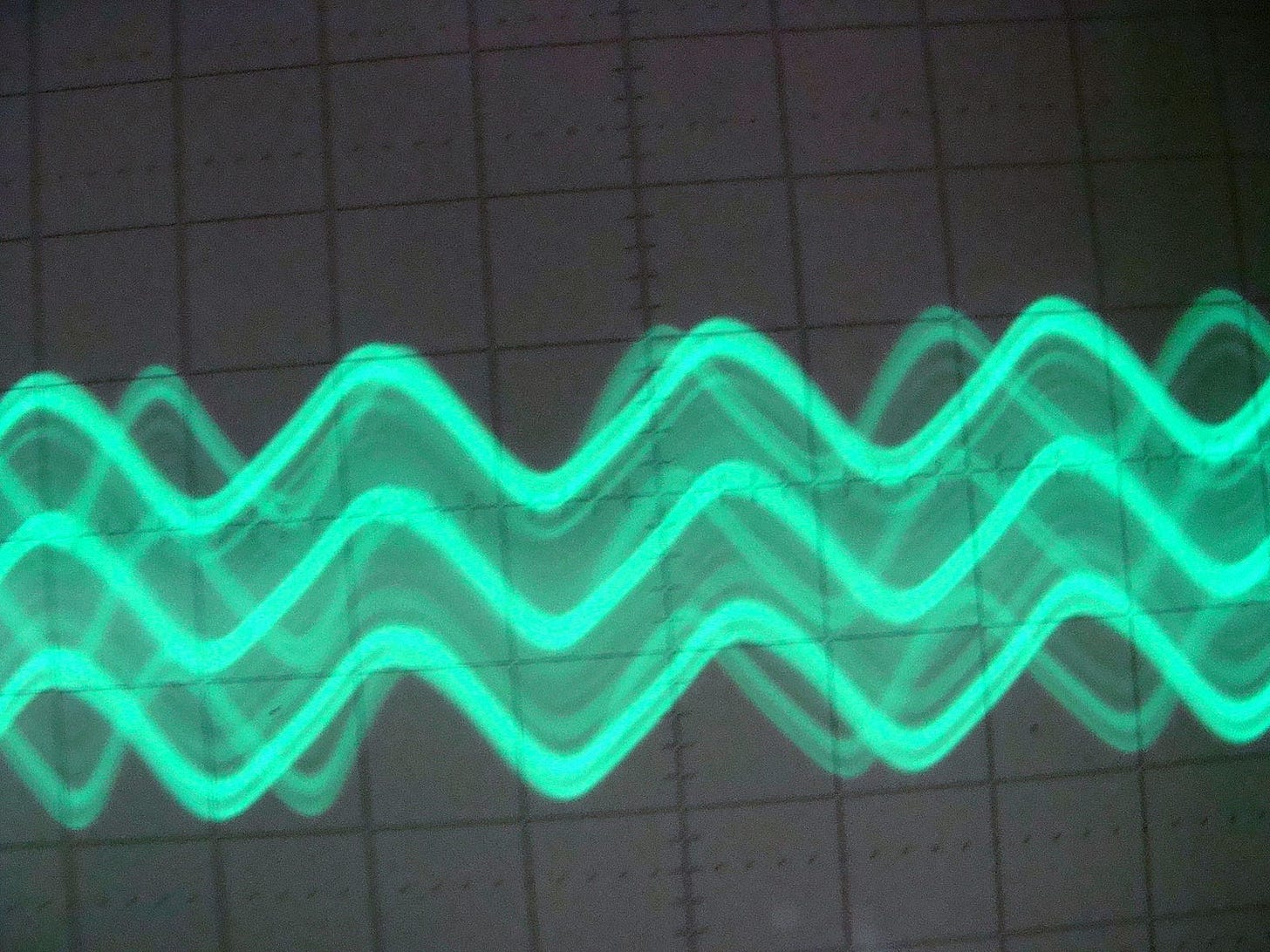
Early Beginnings
To best understand why it mattered, it helps to understand the problem it was trying to solve.
Electricity, in its different forms, moves fast. The signals that carry radio waves can cycle millions of times per second, far quicker than the human eye can visualise and often invisible to different types of test tools.
A multimeter can tell us that voltage is present, however, it is unable to tell us what it is doing over time, how it is shaped, if it is stable or noisy or if it contains a fault that is affecting the circuit.
Before the oscilloscope, engineers would essentially make educated guesses about what was happening inside a circuit. They could measure but lacked the ability to observe.
The first attempts at solving this problem would come in 1897, when German physicist Karl Ferdinand Braun invented the cathode-ray tube. The CRT worked by firing a beam of electrons at a phosphor-coated screen, producing a visible point of light. Braun also noticed that the beam could be deflected by electrical signals, causing the light to shift when voltage signals were introduced. For the first time, an electrical signal could be viewed in real-time.
Despite this discovery, it would take another several decades for the technology to be fully leveraged as a practical, real-world test tool. The size and design of early scopes meant that, for the most part, they were simply too impractical and too unreliable to be used outside of most lab conditions.
Like many inventions we’ve featured, it was invented too early to be fully appreciated.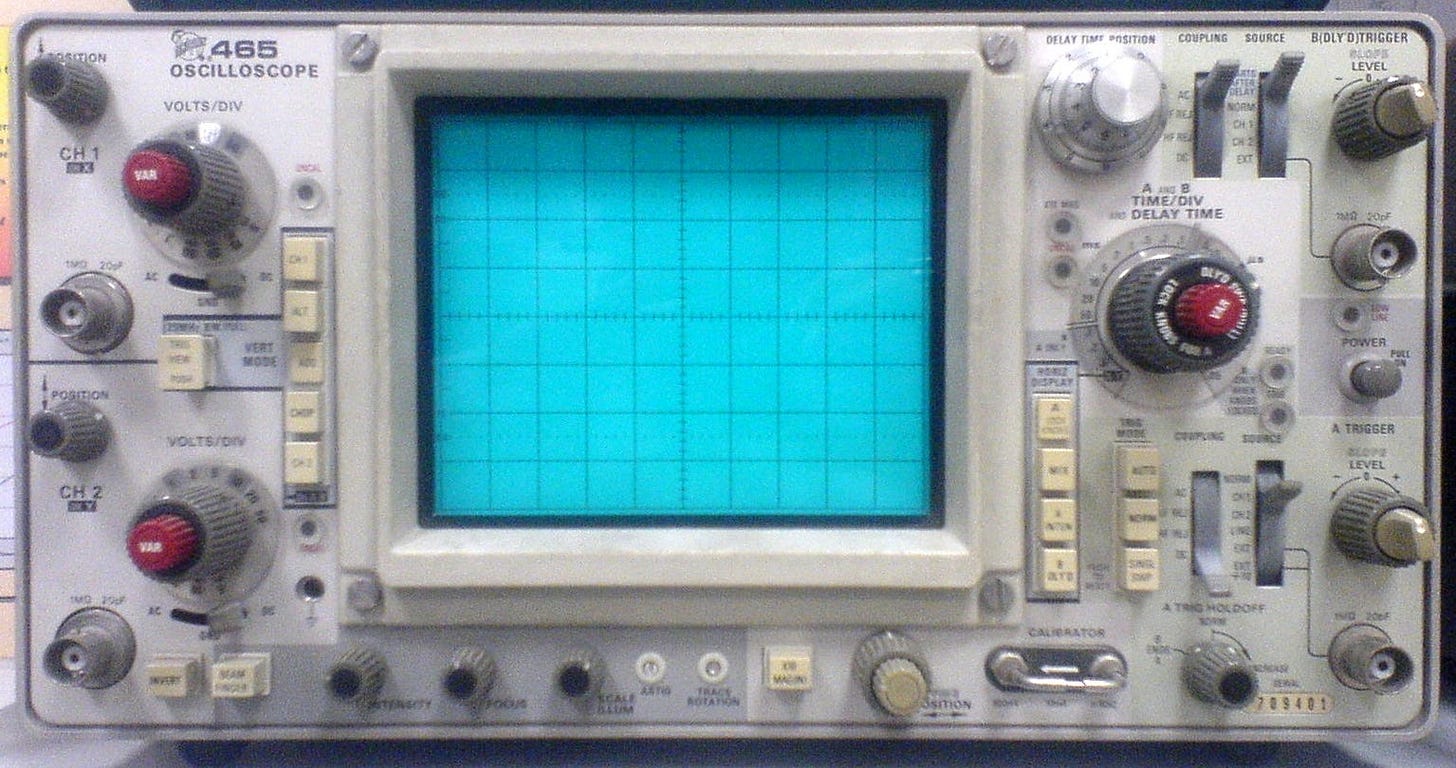
The Tektronix Revolution
You might expect that the revolution that would take the ‘scope mainstream might happen in a high-tech electronics lab belonging to a large multinational. Or perhaps it’s cutting-edge design meant that maybe it was the domain of the military.
Nope. Just a couple of random dudes in some garage in Portland, Oregon, was where the real revolution would start.
Howard Vollum and Jack Murdock founded Tektronix in 1946, with the specific aim of building a better oscilloscope. Vollum, a veteran who had spent the war years working on radar systems, understood both the importance of the instrument and the significant gap between what was available commercially and what engineers actually needed.
His efforts would come to fruition in 1947 with the release of the Tektronix Model 511. The 511 was faster and more stable than its predecessors and was reliable enough to be used daily on a workbench as a dedicated test instrument.
Its simple design meant it could be operated in minutes, and it was stable enough that it did not require constant calibration at the rate systems had previously.
The impact was both immediate and revolutionary. The mainstream market now had tools to help with design and diagnosis, and the shift would be clearly visible. Repair jobs that had taken days to identify could be completed in minutes, while designs that were based on assumptions could now be tested with real-world and, more importantly, valid data.
The Cold War era would help to drive many of the Western world’s most critical innovations, and the prolific usage of the Tektronix was a key player in making that technology happen.
However, while they would dominate the analog world, they’d need to evolve significantly to survive in the digital age.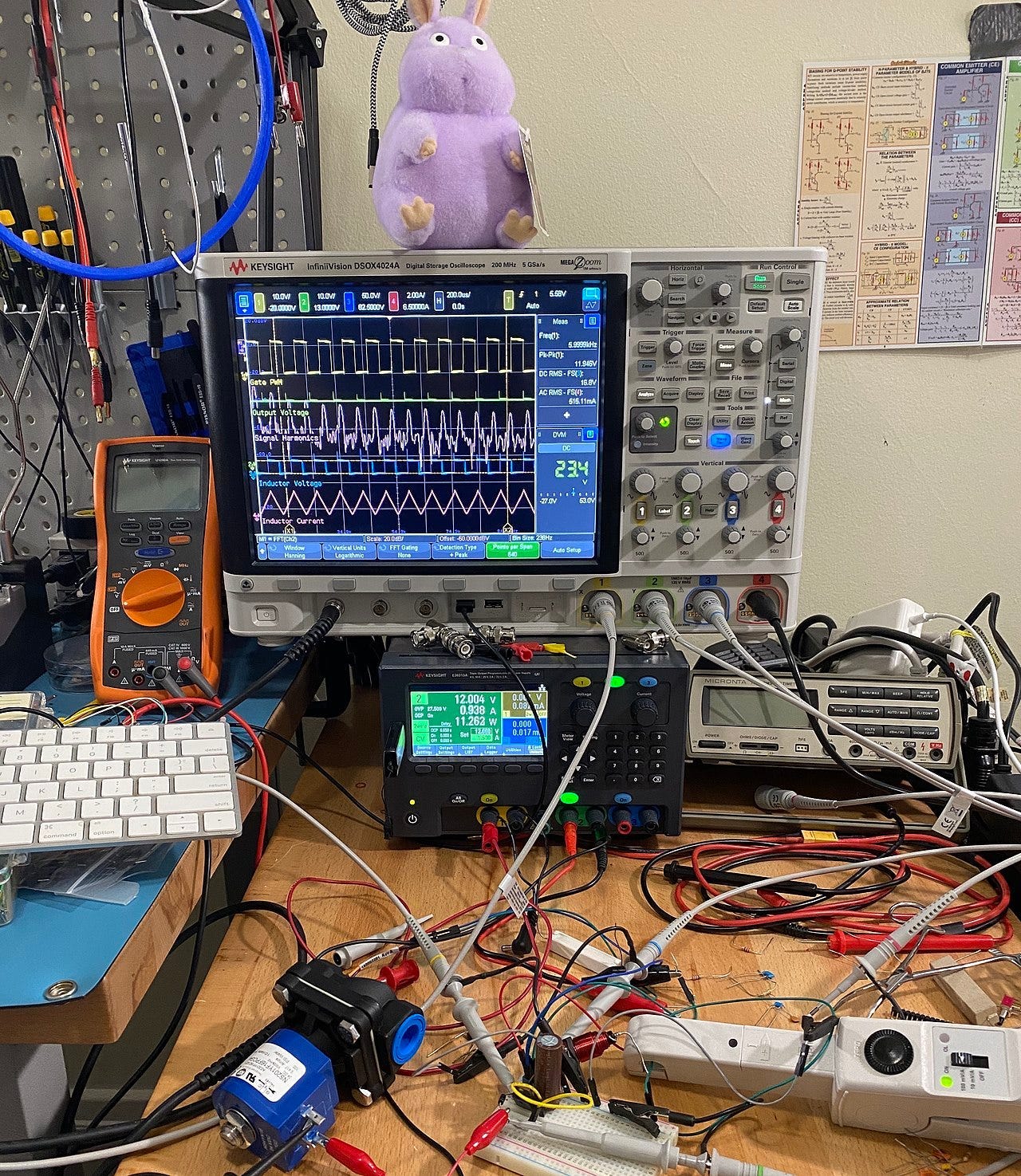
The Digital Era
The analog oscilloscope, for all its capabilities, had a fundamental limitation. It could show you what was happening right now. It could not easily show you what had happened a moment ago.
Despite its utility, the rapidly shifting nature of electrical signals meant that in some instances, signals would be so fleeting that they could often be almost undetectable. It was this problem that the digital scope aimed to address, and to do so, it would fundamentally change how the oscilloscope worked.
While earlier versions would display signals on a screen, digital ones would convert this to an electrical data stream that would be stored in the machine’s onboard memory. This meant that the data could then be played on the screen and analysed in intricate detail.
The implications of this were as dramatic as the original oscilloscope was. Signals could be captured and examined after the fact. Measurements that previously required a skilled operator watching a moving trace could now be automated. Data could be transferred to computers for further analysis. Triggering systems became more sophisticated, allowing the instrument to wait for a specific event before beginning to capture, making the detection of rare anomalies a reliable process rather than a matter of luck.
One of the most visible signs of this shift is the move away from the CRT displays that were originally used towards larger, LCD systems that are able to best capitalise on the new features offered by modern designs. Knobs were replaced by touchscreens. Small, flash memories were replaced by larger memories that were capable of recording far more detailed frames, allowing for the capture of broad datasets.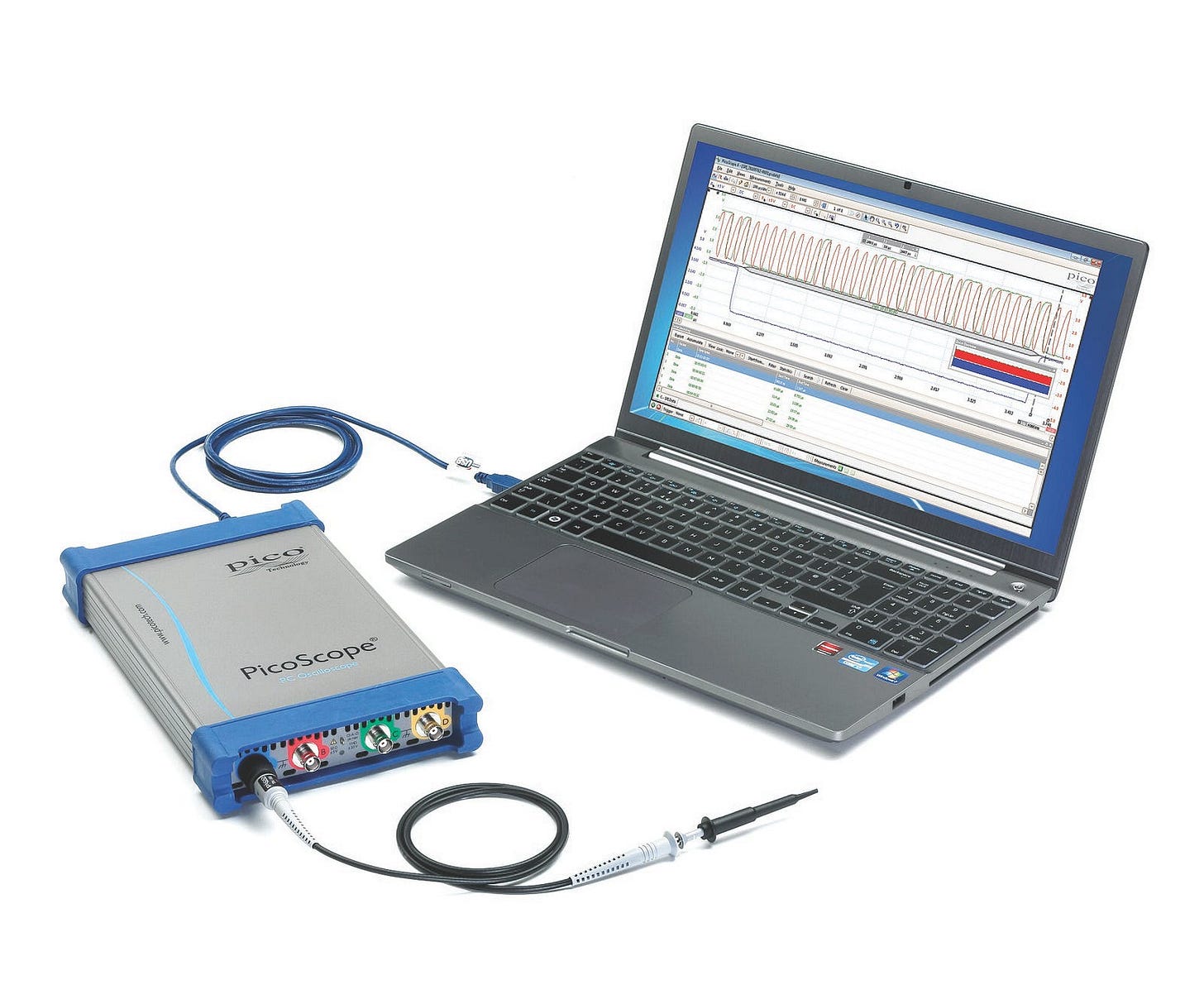
Into The Future
If you’ve been into electronics for any significant period of time, you probably don’t need to be told about the impact of Chinese manufacturing on the price of electronic systems and components at all levels. We’ve said before that the availability of Chinese designs democratised electronics and helped to bring affordability levels down to the point of proliferation.
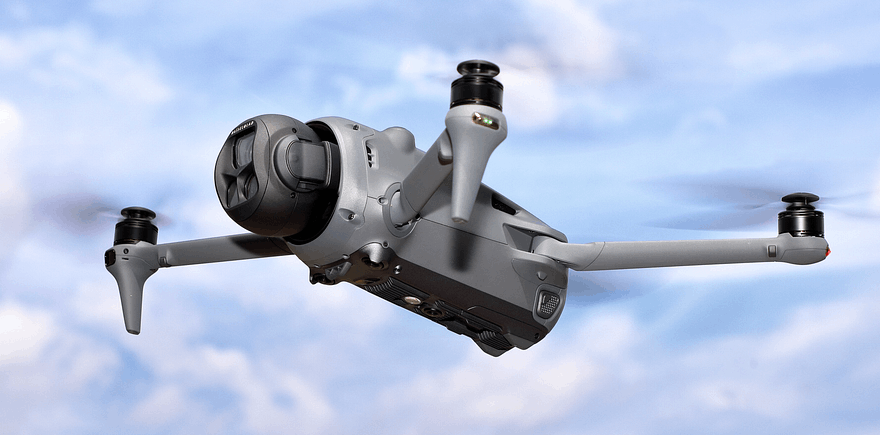
Like the Nano-VNA, RTL-SDR and the drone, Chinese influence would have a fundamental impact on the availability of electrical equipment, and for makers, this is a great deal. Rather than things like thermal cameras, oscilloscopes, and other useful tools being the sole domain of high-tech labs, you’ll now find them on the workbench of makers globally, including this one. One of the products that has been developed along this timeline is the Software-Defined Oscilloscope. Like the Software-Defined Radio, this is a simple USB dongle that has a capability set that far exceeds its diminutive size, performing measurements that would have required an entire test bench of equipment previously.
While early Chinese components would often be subject to a perception of reduced quality, this is a thing of the past. Now, you’ll find equipment that often exceeds Western standards at a price point that can only be described as generous.
Technology and the credit for innovation have often gone to the most visible players. However, it’s often the silent, heavy-hitters like the oscilloscope that deserve the real credit for getting things done.
If you liked the article, get the Book.
Investigator515 explores the RF spectrum, cybersecurity, and the hidden tech behind modern espionage.
Follow for new content weekly
Bluesky • X • Substack
You might also like,
- OSINT Investigators Guide to Self Care & Resilience
- Spies In The Mud: The RF-111 Aardvark
- What The Tech?! Space Shuttles