Is Google Winning the 2026 AI Race?

Let’s be real for a second. For a minute there, it looked like Google was the sleeping giant that tripped over its own shoelaces. While OpenAI was dropping GPT-4 and Claude was becoming everyone’s favorite coding buddy, Google seemed stuck in a loop of constant rebranding and internal hesitation. But if you’ve taken a look at the Google Labs ecosystem lately, you’ll notice the giant didn’t just wake up. It decided to buy the whole neighborhood and invite everyone over for a free BBQ.
I’ve spent the last few months jumping between every model under the sun, and the landscape is wild right now. Perplexity is great for a quick fact-check, but it often feels like a shiny wrapper on someone else’s tech. Claude is undeniably the king of clean code, though its constitutional AI can sometimes make it feel a bit like a hall monitor who won’t let you run in the hallways. And then there’s OpenAI, which builds incredible tech but feels increasingly like a black box that probably has a direct line to a government server. But Google? Google is doing something different. They aren’t just building a chatbot. They’re building a cohesive, free-to-play creative playground that is starting to make the competition look a little disconnected.
The Power of the Ecosystem and the 5TB Flex

The real aha! moment for me wasn’t just the chat interface. It was the integration. When you subscribe to Google AI Pro, you’re not just paying for a model. You’re buying into a massive storage and productivity web. Getting 5TB of Google One storage alongside a top-tier LLM is a value proposition that OpenAI simply can’t match. Think about it for a second. You’re already using Docs, Sheets, and Drive. Now, you have a brain that lives inside those folders, capable of indexing everything you’ve ever written.
While tools like Ollama are amazing for the privacy-conscious who want to run models locally, they are heavily gated by your hardware. If you aren’t rocking a liquid-cooled rig with a massive GPU, local models can feel like trying to run a marathon through peanut butter. Gemini Pro 1.5 and the newer Gemini 3 models handle the heavy lifting in the cloud, giving you massive 1M+ token context windows that let you drop entire textbooks or hour-long videos into the prompt and ask, “Hey, what did I miss?”. It’s the difference between having a smart friend and having a smart friend who also has a photographic memory of every file you own.
From Idea to Reality in the Creative Suite
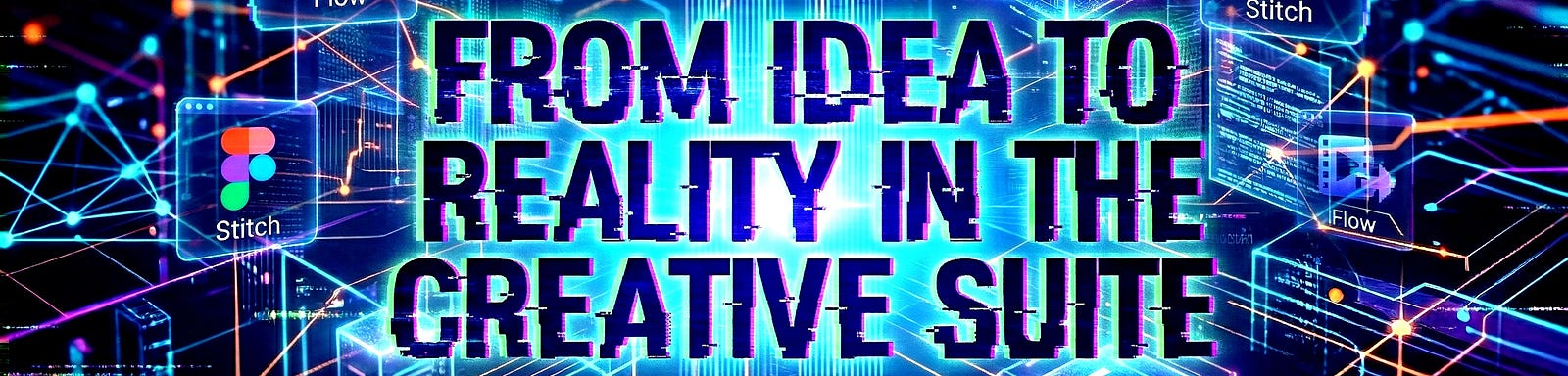
If you haven’t checked out the updated Google Labs recently, you’re missing the actual fun stuff. This is where Google is distancing itself from the text-in, text-out crowd. Take Google Flow, for instance. This is the game-changer for content creators who are tired of fighting with complex video editors. It’s an AI video generation system that can turn a single static image into a high-fidelity vertical video optimized for social media. It uses the Nano Banana model to maintain character consistency, which has been the holy grail for AI video for years. You can actually make a character walk across a room without their face morphing into a bowl of soup halfway through.
Then you have Google Stitch, which honestly feels like magic for anyone who has ever tried to design an app. Originally born from an acquisition of Galileo AI, Stitch is basically a UI designer’s dream. You describe a dashboard in plain English, and it spits out editable Figma layers and clean code. It makes the old draw it on a napkin workflow look prehistoric. And I can’t wrap this section without mentioning NotebookLM. It takes your dry PDFs and turns them into a realistic AI-generated podcast where two AI hosts banter and explain your notes back to you. It’s weirdly addictive and incredibly useful for auditory learners who would rather listen to a summary while driving than squint at a screen.
The Developer Sandbox and the Accessibility Gap

For those of us who like to get our hands dirty, Google AI Studio is the fast path to prototyping. It’s essentially a web-based tool that lets you test prompts and get an API key in seconds without the complexity of a full cloud setup. It’s Google’s way of saying, “Please, just build something cool so we can see what happens.” Compared to the enterprise-heavy Vertex AI, Studio is where the hobbyists live. It’s fast, it’s mostly free, and it’s how Google is winning over the devs who are tired of the credit-card-first approach of other platforms. If you want to see something built with Google AI Studio, check out my crypto news website, Hatty's News. I originally created the site with Claude, then used Google’s AI to help turn it into a fully working website.
This is where the competition starts to lag. If you use Ollama, you are limited by your VRAM. If you use OpenAI, you’re limited by your wallet. Google is subsidizing the learning phase of AI by giving away high-level tools for next to nothing. They are betting that if you build your first app in AI Studio, you’ll stay in their ecosystem when it’s time to scale. It’s a classic move, but when the tools are this good, it’s hard to complain about the bait when the fish are jumping into the boat.
The Catch and the Ghost in the Machine

Now, I’m not saying we should all go get Google tattoos. There’s a price for all this free and integrated goodness, and we have to talk about it. Google’s track record with privacy is, let’s say, complicated. A recent 2026 survey showed that while 73% of people prefer Google’s speed and integration, the vast majority still worry about bias and data scraping. There is an undeniable feeling that the more we use these tools, the more we are just training the machine that will eventually replace the very skills we’re using the tools to augment.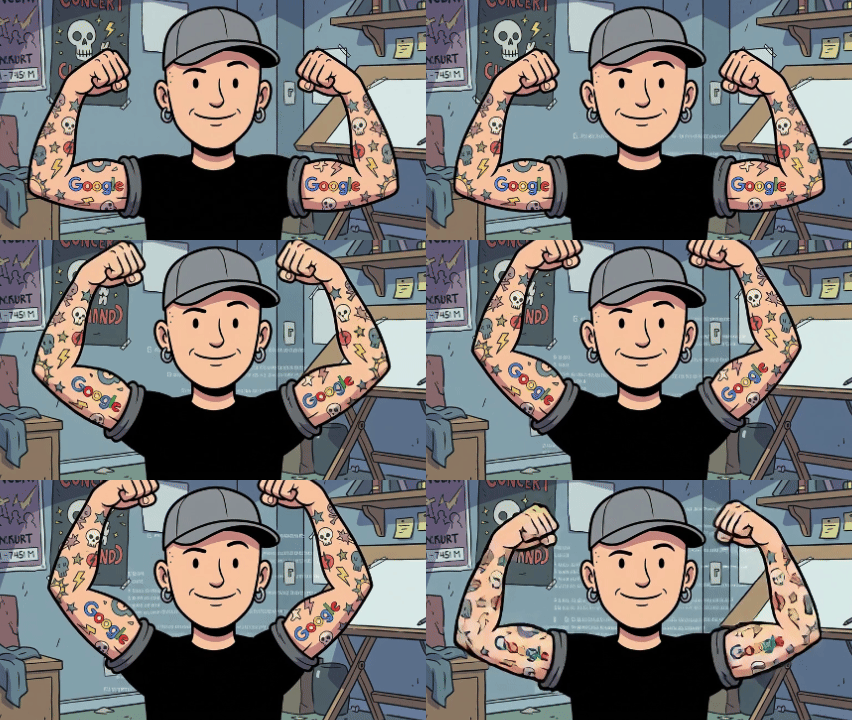
There’s also the Google graveyard factor to consider. We’ve all been burned by amazing Google projects that get killed off three years later. I’m still a little salty about Google Reader, if I’m being honest. When you build your entire workflow on tools like Flow or Stitch, you’re betting that Google won’t get bored and delete them next Tuesday. It’s a risk you don’t necessarily have with open-source models that you can host yourself, even if those models aren’t quite as powerful yet.
The Verdict on Who is Actually Winning

So, what do I think? Is Google actually winning the race? If we’re talking about sheer utility and ecosystem stickiness, they might be pulling ahead. While Claude is arguably smarter at pure logic and OpenAI has the cultural brand recognition, Google has the pipes. They have your emails, your photos, your documents, and now they have the AI to weave it all together into a seamless experience.
My favorite model? That’s a tough one. I still turn to Claude when I need a logic-heavy coding partner, because its reasoning feels more human and less weighed down by corporate fluff. I use Perplexity to learn and automate certain things. But for everything else, the creative experiments, the massive storage, and the impressive speed of the flow-to-video pipeline. Gemini is becoming hard to ignore. It’s a trade-off, but for the first time in years Google feels like the most exciting player in the room. Only time will tell whether they can keep this momentum or trip up again, but for now I’m enjoying the ride. So, which model is your favorite? 
Thanks for reading everyone! Visit my site to learn more about me and explore what I’m building at Learn With Hatty. I hope everyone has a great day and as I always say, stay curious and keep learning.