How Crypto Transactions Work

Introduction
Sending crypto may look simple: you enter an address, choose an amount, and click “send.”
But behind this simple action is a complex and powerful process that happens in seconds across a global network.
Understanding how crypto transactions work is essential for anyone using or investing in cryptocurrency.
It helps you avoid mistakes, improve security, and truly understand what makes crypto different from traditional banking.
Let’s break it down step by step, in simple words.
1. What Is a Crypto Transaction?
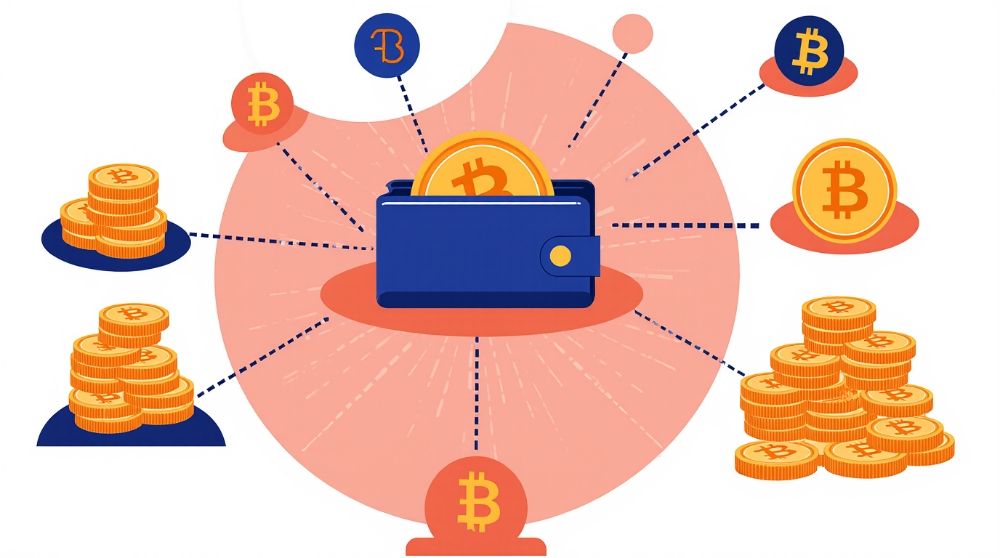
A crypto transaction is a transfer of digital value from one wallet to another.
Unlike traditional banking:
- No bank approves the transaction
- No central authority controls it
- No intermediary verifies it
Instead, the blockchain network handles everything.
2. Wallets: Where Transactions Begin
Every crypto transaction starts with a wallet.
A wallet does not store coins.
It stores private keys that prove ownership of funds on the blockchain.
Wallets allow users to:
- Send crypto
- Receive crypto
- Sign transactions securely
Your wallet is your identity in the crypto world.
3. Public and Private Keys Explained Simply
Crypto transactions rely on cryptography.
Each wallet has:
- A public key (or address) to receive funds
- A private key to authorize transactions
The private key proves ownership.
If you lose it, you lose access to your funds forever.
This is why crypto requires responsibility.
4. Creating a Crypto Transaction
When you send crypto:
- Your wallet creates a transaction message
- It includes the recipient address, amount, and fee
- The transaction is digitally signed with your private key
This signature proves the transaction is legitimate.
No one can fake it.
5. Broadcasting the Transaction to the Network
Once signed, the transaction is:
- Broadcast to the blockchain network
- Shared with thousands of nodes
At this stage, the transaction is pending.
It has not yet been confirmed.
6. Transaction Verification
Nodes in the network check the transaction:
- Is the signature valid?
- Does the sender have enough balance?
- Is the transaction properly formatted?
Invalid transactions are rejected immediately.
Valid ones move forward.
7. Miners and Validators: Who Confirms Transactions?
Different blockchains use different systems.
Some use miners, others use validators.
Their role is to:
- Group transactions into blocks
- Confirm transactions
- Secure the network
They ensure that no one cheats the system.
8. Transaction Fees Explained
Crypto transactions include fees.
Fees:
- Incentivize miners or validators
- Help prioritize transactions
- Prevent spam
When the network is busy, fees increase.
When it’s calm, fees decrease.
Fees are paid for security and decentralization.
9. Block Creation and Confirmation
Once transactions are verified:
- They are grouped into a block
- The block is added to the blockchain
- The transaction becomes permanent
Each new block adds another layer of confirmation.
After enough confirmations, the transaction is final.
10. Why Crypto Transactions Are Irreversible
Once confirmed, crypto transactions:
- Cannot be reversed
- Cannot be edited
- Cannot be canceled
There is no customer support or chargeback system.
This makes crypto powerful — and risky if mistakes are made.
11. Transaction Speed and Confirmation Time
Transaction speed depends on:
- The blockchain used
- Network congestion
- Transaction fees
Some blockchains confirm in seconds.
Others take minutes or longer.
Speed is a design choice.
12. Transparency and Tracking Transactions
All public blockchain transactions are:
- Visible
- Traceable
- Verifiable
Anyone can view transactions using a blockchain explorer.
This transparency builds trust without intermediaries.
13. What Can Go Wrong in a Crypto Transaction?
Common issues include:
- Sending to the wrong address
- Using the wrong network
- Paying too little in fees
- Falling for phishing scams
Most crypto losses happen because of user error, not technology failure.
14. How Crypto Transactions Differ From Bank Transfers
Crypto transactions are:
- Borderless
- Available 24/7
- Permissionless
- Final
Bank transfers are:
- Slower
- Restricted by borders
- Controlled by institutions
Crypto removes barriers — but requires responsibility.
Conclusion
Crypto transactions are powered by blockchain, cryptography, and decentralization.
They work because:
- Ownership is proven by private keys
- Networks verify transactions collectively
- Trust is replaced by transparency
Understanding how crypto transactions work makes you a safer and smarter user.
In crypto, knowledge is protection.
💬 What part of crypto transactions confused you at first?
Share your experience in the comments.