Crypto fear and regulation

Good morning/evening
With all the talk around the Clarity act and the Genius act, it is difficult to not think about the crypto market becoming regulated, how well or badly it will be regulated and how it will affect us as crypto investors.
Governments around the world may say they fear crypto because it threatens financial stability, enables crime, and puts consumers at risk. Those concerns sound reasonable on the surface. After all, crypto has been used for scams, fraud, and speculation on a massive scale, but then so has Fiat! But when you look closer, it seems to me that regulators are often fighting the wrong battle.
The real risks in crypto rarely come from the things governments focus on most. They don’t come primarily from price volatility, retail speculation, or even decentralisation itself. They come from poor design, bad incentives, and quite frankly some bad people!
Control
Most government responses to crypto revolve around control. Know Your Customer rules, transaction monitoring, travel rules, licensing regimes, and outright bans are all designed to answer one question, who is using this system, and can we stop them or tax them if we want to? I personally would like to make my own choices, be they right or wrong.
This approach makes sense from a state perspective. Governments are built around visibility (when it suits them) and enforcement. A financial system they can’t fully see into feels dangerous, even if the actual risk to everyday users comes from somewhere else entirely. Also in some ways a blockchain is more transparent than they realise, every transaction is there for all to see.
But by focusing almost exclusively on surveillance and compliance, regulators often ignore how crypto is actually experienced by normal people. I know that crypto can be the wild west, then on the other side of the coin you have Bitcoin which has now been legitimized due to ETFs and so on, but as usual the regulations will go to far and not target the real issues.
Banks fear crypto too
It’s not just governments that feel threatened. Traditional banks have their own reasons to fear crypto, and they’re often more direct. Crypto removes the middleman from payments, custody, and cross-border transfers, areas where banks have historically earned enormous fees. A system where value can move globally without permission and that challenges their business model at its core.
But beyond revenue, banks also fear loss of control and relevance. For decades they have acted as gatekeepers to financial access. Crypto bypasses that entirely. Anyone with an internet connection can hold assets, transact, and participate without needing approval. I clearly remember choke point and having some barriers to onboarding in 'the interests of my safety'. Yes we find work arounds, but we shouldn't have to, my money, my choice! The shift undermines the power banks quietly hold over individuals and entire economies. My parents, old school,(or just old lol) are of the era of work hard, buy a home and try and save money, which they did, now they are being penalised for that with a meagre 1% interest.
Ironically, many banks publicly dismiss crypto as dangerous or useless while they were privately experimenting with blockchain technology themselves. The message is clear, the technology is valuable, but only if they control it.
Even some of the staunchest financial sceptics have quietly shifted their tone as crypto has matured. Jamie Dimon, long one of Bitcoin’s most vocal critics, spent years publicly dismissing it calling it “worthless,” a “hyped-up fraud” and even a “pet rock” that does “nothing.” Yet in 2025, JPMorgan Chase announced it will allow clients to buy Bitcoin, marking a notable if begrudging change in practical policy. His concession that clients should at least be able to choose reflects a wider shift in the financial establishment.
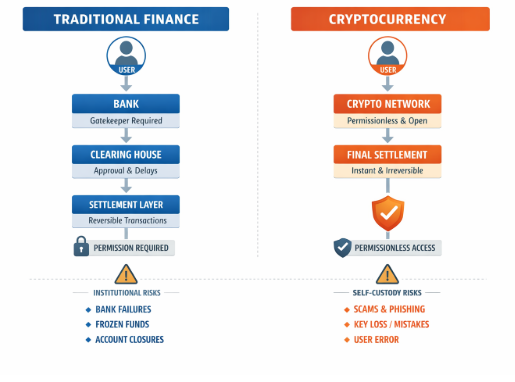
For most users, crypto doesn’t fail because it’s decentralised. It fails because it’s unforgiving and we are human, we make mistakes.
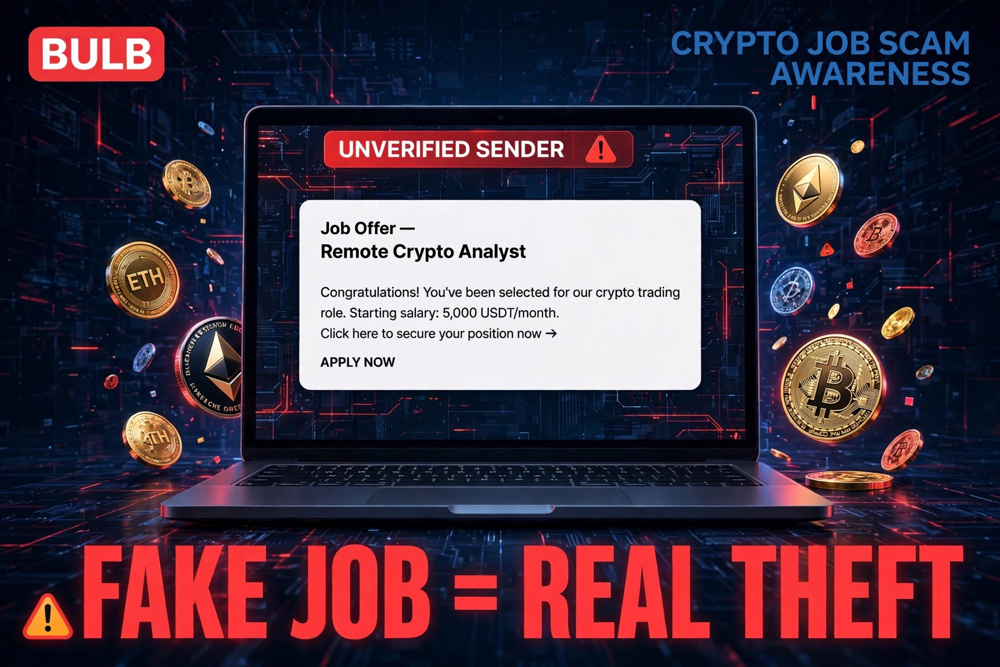
One wrong address, one misunderstood signature, one fake support message, or one badly designed interface can result in permanent loss. There is no appeals process, no chargeback, and no safety net but if we understand that, then again it should be our choice.
Governments talk about protecting consumers, but rarely engage with this reality. Instead of asking why so many people lose funds through perfectly legal interactions, they focus on whether the user should have been there at all, but you can't live life in a bubble, there is danger everywhere but you still leave the house!
Self custody as an ideology
Crypto culture has played its part, self custody is often treated as a moral stance “Not your keys, not your coins” is the mantra but effectively it is you being your own bank, so yes freedom and empowerment and yes of course there is risk but again it is a choice. Then there is the AI side, governments are already worried about AI, but mostly in abstract terms, job losses, misinformation, national security. (Oh and not forgetting the prime minister of the UK in a bikini!)
The reason I am in crypto is 'the tech' lol, look as great as the tech is, I have also learnt that I can make profits and have a store of value that is not inflated away, it does not mean that I am a criminal, like most of us in crypto, we just want something better than the legacy system. I don't think that governments do these things to protect or help us, but more to 'help themselves'.
What are your thoughts on regulation? Do you think crypto will be better regulated? Will they get the right amount of regulation or would you prefer crypto to be unregulated? As always thank you for reading and please feel free to comment.