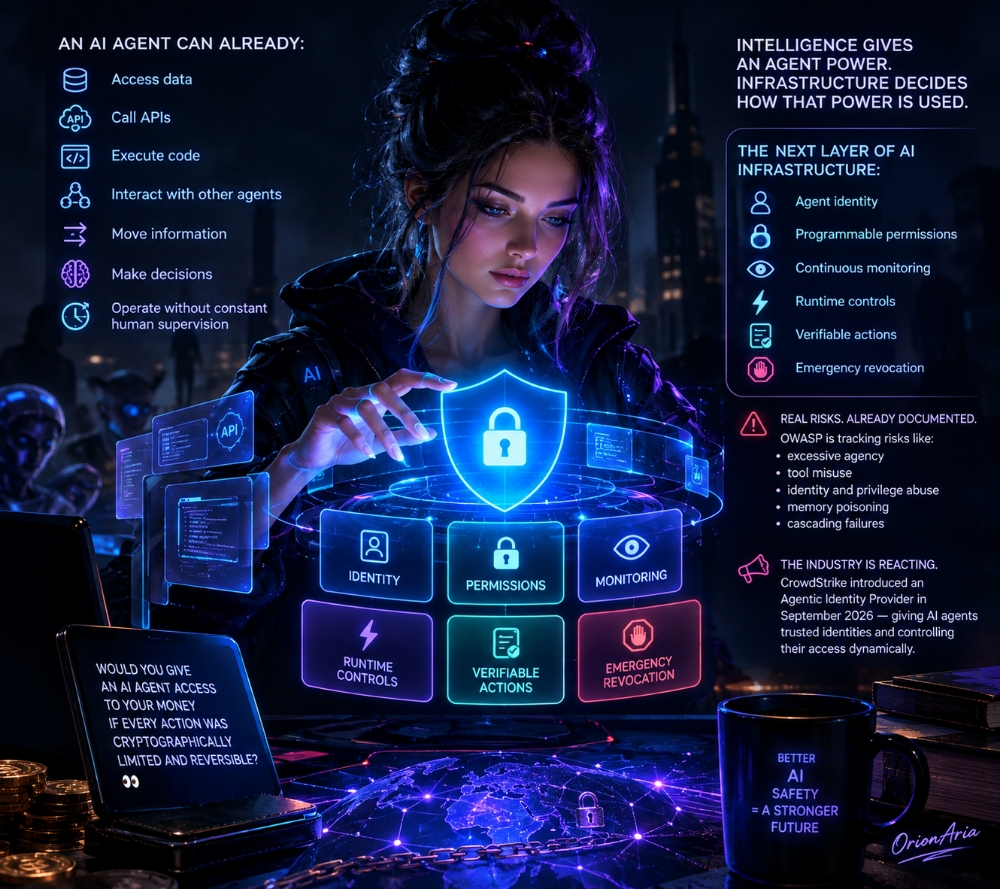
How Artificial Intelligence Is Making Banking Faster, Smarter, and More Secure

How Artificial Intelligence Is Making Banking Faster, Smarter, and More Secure
Banking has changed dramatically over the past few years.
Not long ago, many banking activities required a visit to a physical branch, a phone call, or a long wait for a transaction to be processed. Today, customers can transfer money, apply for loans, check their accounts, and receive financial support directly from their phones.
Behind much of this transformation is Artificial Intelligence (AI).
AI is quietly becoming one of the most important technologies in modern banking. From detecting suspicious transactions to helping customers manage their money, banks are using AI to make financial services faster, smarter, and more secure.
Faster Banking With AI
One of the biggest advantages of AI in banking is speed.
Traditional banking processes often involve multiple steps and manual checks. AI can automate many of these tasks, allowing transactions and requests to be processed much more quickly.
For example, AI-powered systems can analyze large amounts of information in seconds. This can help banks process loan applications, verify transactions, answer customer questions, and identify potential problems without requiring everything to be reviewed manually.
AI-powered chatbots are another example. Instead of waiting for a customer service representative, customers can ask questions and receive immediate answers at any time of the day.
The result is a banking experience that feels more instant and convenient.
Smarter Financial Services
AI doesn't just make banking faster. It also helps banks make better decisions.
Banks handle enormous amounts of data every day. AI can analyze this information and identify patterns that may be difficult for humans to notice.
This can help financial institutions understand customer needs and provide more personalized services.
For example, an AI system could analyze someone's spending patterns and provide suggestions about budgeting or saving. It could also identify unusual changes in financial behavior and alert the customer.
Instead of offering exactly the same experience to everyone, banks can use AI to make financial services more personalized.
Better Fraud Detection
Security is one of the most important areas where AI is making a difference.
Financial fraud is constantly evolving. Criminals are always looking for new ways to steal money or gain unauthorized access to accounts.
AI can monitor transactions and look for unusual patterns in real time.
Imagine that someone normally uses their account in one location and suddenly a large transaction is attempted from somewhere completely different. An AI system can recognize that the activity doesn't match the customer's normal behavior and flag it for further investigation.
AI can also learn from previous fraudulent activities, allowing security systems to become better at recognizing suspicious behavior over time.
This doesn't mean AI eliminates fraud completely, but it gives banks another powerful layer of protection.
Smarter Lending Decisions
AI is also changing how banks evaluate borrowers.
Traditionally, lending decisions have relied heavily on credit scores, income, employment history, and other financial information. AI can analyze a much wider range of data and identify patterns that may help lenders assess risk.
When used responsibly, this could make lending more efficient and potentially help financial institutions serve customers who may have been overlooked by traditional systems.
However, there is an important challenge: AI systems must be carefully designed and monitored to avoid unfair or biased decisions.
Technology should make financial services more accessible, not create new barriers.
Personalized Banking Experiences
Everyone manages money differently.
Some people are focused on saving, others are paying off debt, while others may be planning investments or major purchases.
AI allows banks to understand these different behaviors and provide more relevant recommendations.
A banking app could potentially recognize that a customer is spending more than usual and provide a budgeting alert. It could also identify recurring expenses, suggest ways to save, or remind users about upcoming payments.
This turns a banking application from a simple place to check your balance into something closer to a personal financial assistant.
AI and Customer Support
Nobody enjoys spending a long time waiting on hold to solve a simple banking problem.
AI is helping change this through intelligent customer support systems.
AI assistants can handle common questions, help customers navigate banking services, explain transactions, and direct more complicated issues to human employees.
The goal isn't necessarily to remove humans from banking. Instead, AI can handle repetitive tasks while human employees focus on situations that require judgment, empathy, or more complex problem-solving.
That combination can create a better experience for both customers and employees.
The Challenges of AI Banking
Despite its benefits, AI banking also comes with risks.
Banks deal with extremely sensitive financial information, so privacy and cybersecurity are critical.
Customers need to know how their data is being collected, stored, and used.
There is also the issue of transparency. If an AI system makes an important financial decision, customers should have ways to understand and challenge that decision when necessary.
Bias is another concern. If an AI system is trained on poor or biased data, it could potentially reproduce those biases.
For these reasons, AI in banking needs strong security, responsible data practices, human oversight, and clear regulations.
The Future of AI in Banking
AI is still developing, and its role in banking is likely to become even larger.
Future banking platforms could become increasingly proactive. Instead of simply responding when customers request something, AI systems may anticipate financial needs and provide assistance before problems occur.
We could see more intelligent financial assistants, faster international payments, improved fraud protection, automated financial planning, and highly personalized banking experiences.
The most interesting part is that much of this transformation may happen quietly in the background.
Customers may simply notice that banking becomes faster, easier, and more convenient.
Final Thoughts
Artificial Intelligence is changing banking from a system built around processes into an experience built increasingly around intelligence.
It can help banks process information faster, detect fraud more effectively, personalize financial services, improve customer support, and make certain decisions more efficiently.
But the future of AI banking shouldn't be about technology replacing people at every level. It should be about using technology responsibly to create financial services that are faster, smarter, safer, and more accessible.
As AI continues to evolve, the banks that combine powerful technology with transparency, security, and human judgment will be in the strongest position to shape the future of finance.