Radio Hackers Fundamentals: Antenna Polarisation

In weak signal work, antenna polarisation plays a critical role.
In this previous article, we started to explore some of the fundamental traits that we would typically see when dealing with high-gain and very directional antennas. This helps us when we look at working with low-powered, license-free protocols, as we can use directional antennas as a somewhat free, range booster.
However, even though antennas are mostly inert, there’s still a lot going on in a typical design, and this is even more true in something that’s been optimised for weak signal work. In today’s article, we’re going to look at some of the dynamics around antenna polarisation, including how it works in the real world. Let’s get started!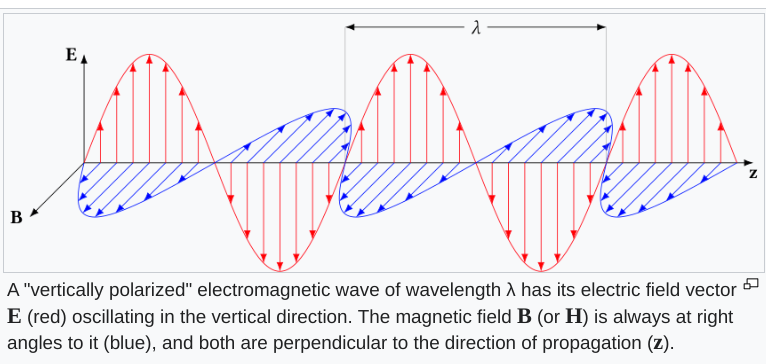 Understanding the role of polarisation is an essential part of your radio journey, particularly if you’re chasing weak signals. This Wikipedia graphic shows the difference between horizontal and vertical. Source: Wikipedia.
WTF Is Polarisation?!
If you’ve gotten this far, you’ve probably gotten your head around a lot of the fundamentals that we’ve already presented. So, you’ll have at least a cursory understanding of transmitters, receivers and the roles that antennas play in bringing this together.
Like radios, antennas come in many different forms depending on how they are constructed. Often, these benefits will play out in terms of how the system might be used. For instance, a vertical antenna system for an automobile is probably a great choice, while a full wavelength Yagi antenna is less so.
So in a lot of instances, the type of polarisation an antenna is capable of will often dictate its usage in the real world.
Essentially, polarisation refers to the orientation of the radio wave as it moves through space. Polarisation isn’t random, and we can influence it according to the fundamental design of an antenna.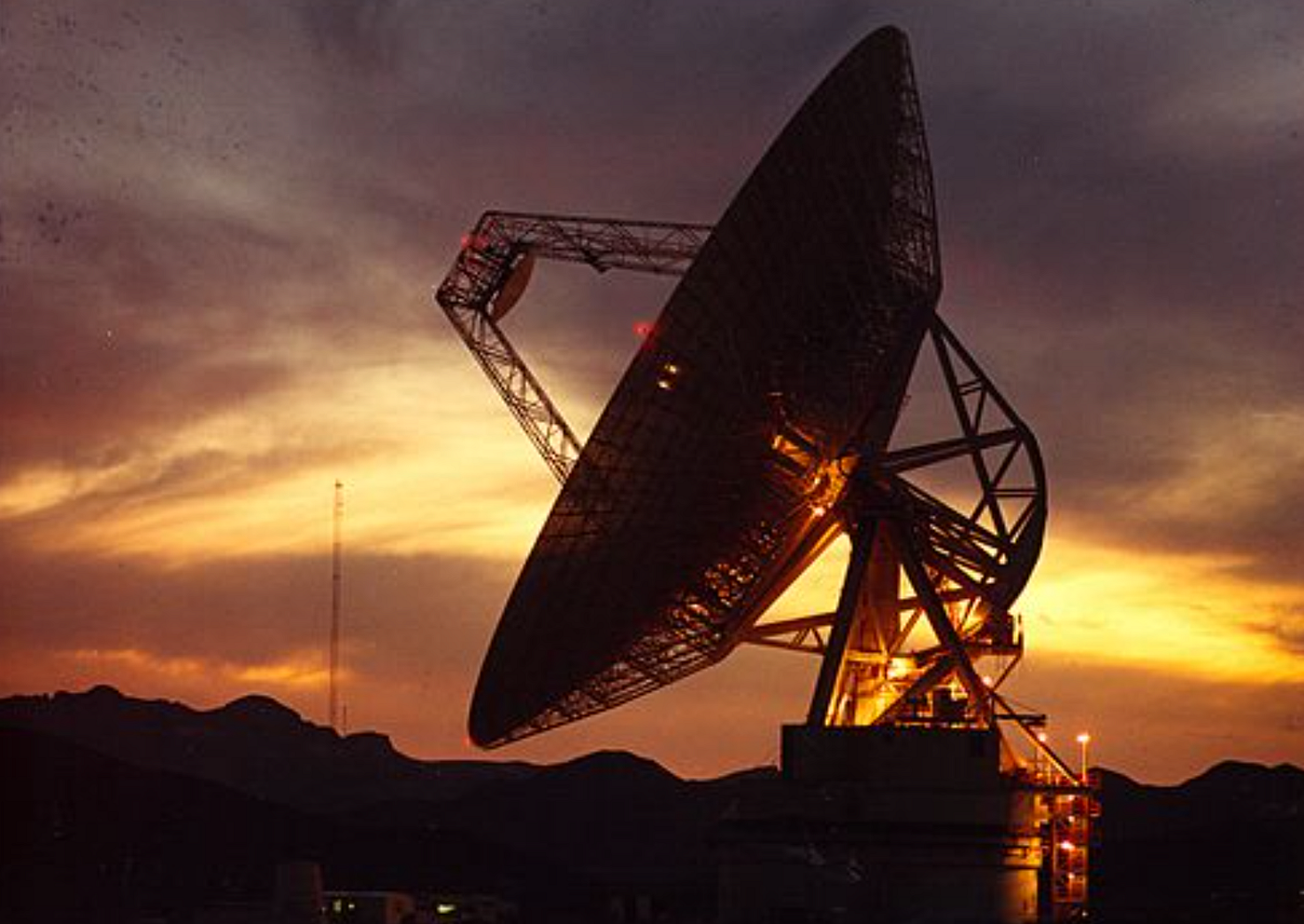 Dish antennas require precise alignment and polarisation to capture weak signals from far, far away. Source: Wikipedia.
Types of Polarisation
Polarisation will typically come in a few different types. There’s vertical polarisation, as our previously mentioned automobile antenna would use.
There’s horizontal polarisation, like our direction Yagi antenna would use. And, there’s also circular polarisation similar to what we’d see using a dish or space communications system.
Just to complicate things, there’s also elliptical polarisation (not a focus today), and we can have either left or right-hand circular polarisation as well.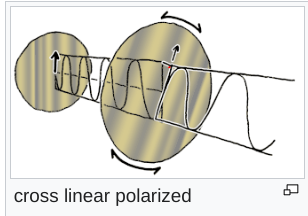 Polarisation can also be set up to be switched, but that is outside the scope of today’s article. Image Source: Wikipedia.
This all sounds pretty complex, but unless you’re looking to dive deep into antenna physics and theory, you won’t need to master all the details between the different types. Simply understanding that they exist and knowing what the consequences are if you have a mismatch should be enough for now.
Real World Applications
To get how this works in real-world applications, we can look at a few different devices and see why they might favour one form of polarisation over the other. A great example of this is a typical car radio antenna. Being vertically polarised means it’s able to make the most of propagation characteristics without being overly affected by terrain or the very mobile nature of cars.
Mobile phones tend to use vertical polarisation for the same reason. Being held upright, in a user's hands mean that the characteristics of vertical polarisation are the most favourable according to its overall use-case.
Television, on the other hand, uses horizontal polarisation to reduce its impact across terrain and influence external obstructions like trees and buildings. It also allows for a far larger overall antenna, meaning that longer wavelength transmissions with more favourable propagation characteristics can be used.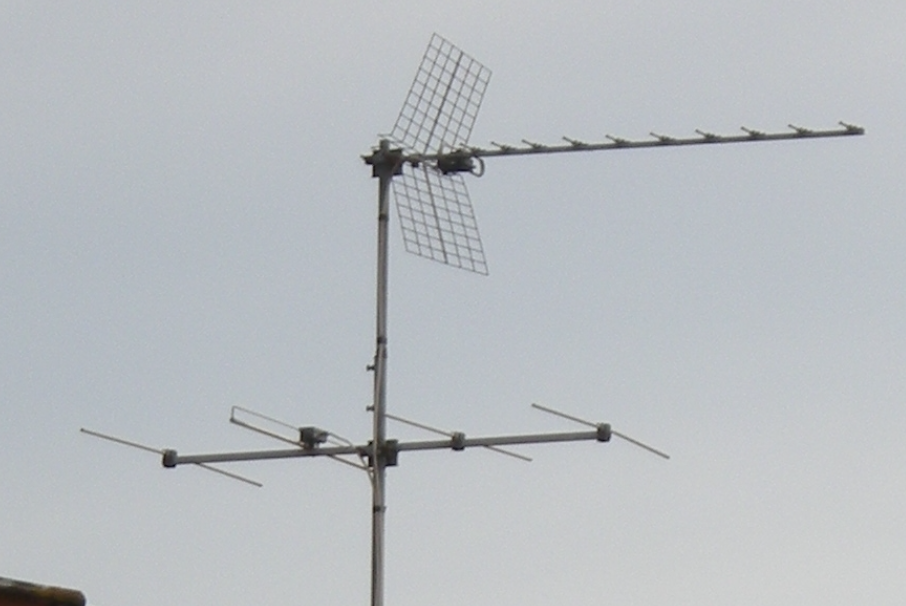 The ubiquitous Yagi antenna works great for television. In summer, signals can cross beyond the horizon thanks to tropospheric ducting. Source: Wikipedia.
Lastly, circular-polarised transmissions are something that most people use and receive every day, often without knowing it. Best seen in the widely used Global Positioning System, Circular Polarisation provides the best resistance to multipath propagation characteristics often seen by space-based systems.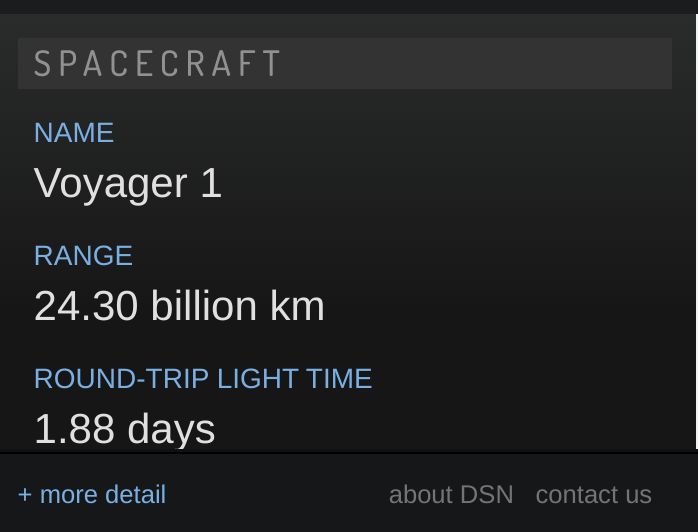 Voyager 1 is one of man’s most distant signals. We’ve covered this fascinating piece of hardware in earlier articles. Source: Nasa.gov
Don’t Get It Wrong!
When the mission brief is literally “receive this signal”, it’s no lie to say that failing to get the correct polarisation can literally make or break a project, not to mention drive you crazy while you try to troubleshoot the error. And, if you’re lucky enough to intercept the signal while having the incorrect polarisation, you’ll find the signal is likely to be of a far lower quality than it would be had everything been in order.
While this typically manifests itself as a weak or noisy signal, it’s worth understanding on a technical level just how much of an effect this has. Being in phase (0 °) gives no mismatch whatsoever, partly out of phase means a significantly reduced signal and being fully out of phase (90 ° mismatch) brings the signal loss to extremely high levels that can be near infinite in a test environment.
Things work differently in the real world, but it does prove the point that even with a strong signal, a mismatch can cause quite a headache overall, particularly if you’re a beginner.
Sneaky Tricks
Antenna theory can be intensely boring at times, even for those of us with an inner nerd. If you’re interested in learning however, it can lead to some fun experiments around topics such as this.
For instance, it’s easy to read this article and consider that polarisation is a demon with no real benefits, but the reality is, it’s something that many designs can (and do) make work for their own gain (get it?).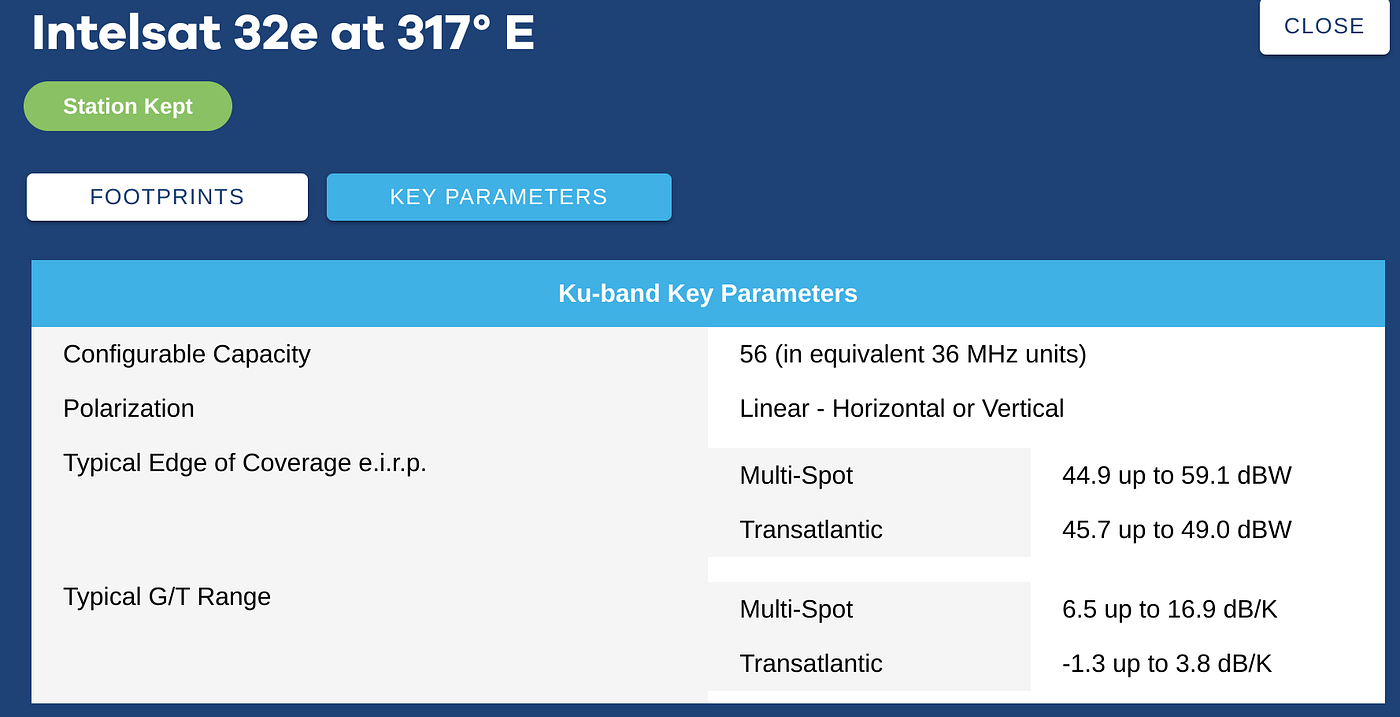 Polarisation characteristics can be exploited by design, and spacecraft do a brilliant job explaining this. Source: Intelsat.
For instance. In the small space of a satellite, a polarisation mismatch can actually be a pretty useful thing, and we need to look no further than Intelsat 32e to find proof of that.
Using a mixture of both horizontal and vertical polarisation, the satellite is able to “recycle” its frequencies by using out-of-phase antennas to ensure that the signals don’t collide and interfere with each other.
It’s a great example of how understanding something that could be a weakness can be engineered via design to be a legitimate strength.
It’s been said before, but radio is still cool.
If you found this article insightful, informative, or entertaining, we kindly encourage you to show your support. Clapping for this article not only lets the author know that their work is appreciated but also helps boost its visibility to others who might benefit from it.
🌟 Enjoyed this article? Join the community! 🌟
📢 Join our OSINT Telegram channel for exclusive updates or
📢 Follow our crypto Telegram for the latest giveaways
🐦 Follow us on Twitter and
🟦 We’re now on Bluesky!
🔗 Articles we think you’ll like:
- What The Tech?! Rocket Engines
- OSINT Investigators Guide to Self-Care & Resilience
✉️ Want more content like this? Sign up for email updates