How To Subnet IP Address
Do you know why large companies with thousands of devices don't collapse into a giant, slow traffic jam? The answer is Subnetting. It's one of the most crucial skills for any networking professional, and it's what makes the internet scalable.
Subnetting: The Secret Sauce of Network Efficiency.
Core Concept Explanation:
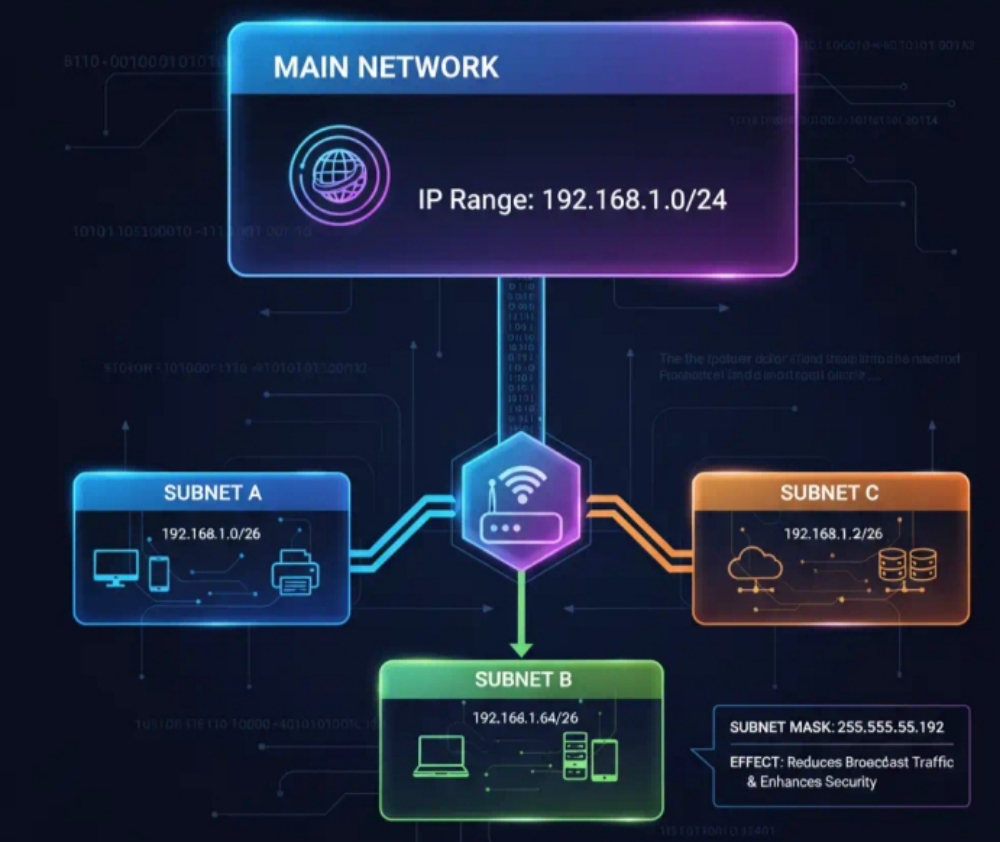
Subnetting is the process of dividing a single large network (like 192.168.1.0) into smaller, more manageable sub-networks (subnets).
Think of your main network as an entire city. If you don't divide it into streets and neighborhoods, mail carriers (data packets) have to check every single house (device) in the whole city to find their destination.
How it Works: You "borrow" bits from the Host portion of the IP address and dedicate them to the Network portion, creating a unique Network ID for each smaller segment. The subnet mask (e.g., 255.255.255.0 or a CIDR notation like /24) defines where the network address ends and the host address begins.
Why This Matters (Monetization Angle):
Mastering subnetting is the difference between a junior and senior network engineer. Your audience needs to know that effective subnetting:
Reduces Network Congestion: Traffic stays local to its segment.
Improves Security: You can isolate sensitive devices on their own subnet.
Saves IP Addresses: It allows for more efficient use of a limited pool of IP addresses.