The Silicon Summit

If you were looking for a sign that the line between Big Tech and Big Government has officially evaporated, look no further than the tarmac of Beijing Capital International Airport this week. As Air Force One touched down for the high-stakes May 2026 summit, the usual line of diplomats was joined by a group that looked more like a Fortune 500 board meeting than a state delegation.
We aren’t just talking about a few donors tagging along for the photo op. We’re talking about Elon Musk, Tim Cook, and Jensen Huang. The last of whom reportedly hopped on the plane during a last-minute refueling stop in Alaska. effectively serving as the President’s shadow cabinet. This isn’t your grandfather’s diplomacy, it’s a board of trade approach to foreign policy where the currency isn’t just dollars, but silicon, AI weights, and orbital dominance.
The Air Force One Boardroom
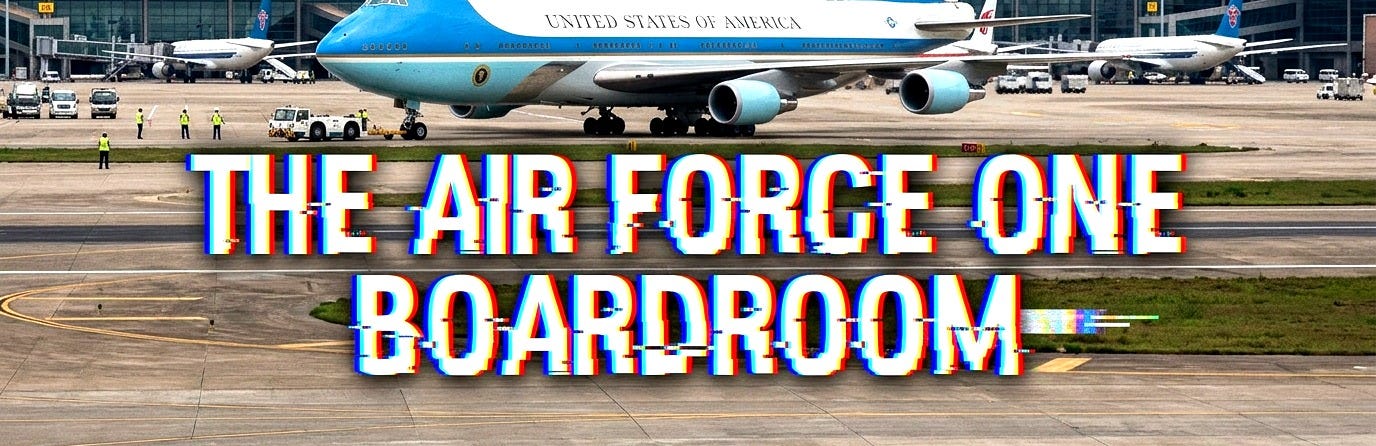
The optics of this trip are, frankly, wild. Seeing the CEOs of Tesla, Apple, and Nvidia walking off the presidential plane suggests that the U.S. government has finally admitted what we’ve all suspected. In 2026, tech companies aren’t just businesses, they are unofficial branches of American sovereignty. When Jensen Huang joins the delegation despite the awkward political tension surrounding AI chip exports, it sends a clear message to Beijing. The message is that the U.S. is no longer negotiating as a collection of separate interests, but as a unified national industrial unit.
This corporate diplomacy serves a dual purpose. For the President, it’s about having the world’s most successful closers in the room to secure hard-hitting economic wins. For the CEOs, it’s about ensuring that foreign policy doesn’t accidentally bankrupt their most important supply chains. When you have 17 top business leaders (including BlackRock’s Larry Fink and Boeing’s Kelly Ortberg) essentially acting as co-negotiators, the Thucydides Trap starts to look less like a historical inevitability and more like a bad quarterly projection that needs to be managed by the board.
Securing the $50 Billion Opportunity
Publicly, the narrative is all about war avoidance and stabilizing a world rocked by the recent conflicts in Iran. And look, that’s valid. Nobody wants a global meltdown while the Strait of Hormuz is on a knife-edge. But privately? This is about the Beijing reset opening up the floodgates for American tech.
Jensen Huang has been vocal about the China market representing a $50 billion opportunity for AI chips. Right now, Nvidia is sitting on a goldmine of H200 chips that Chinese firms are desperate to buy, but Beijing has actively blocked Chinese companies from importing them, directing firms toward domestic alternatives instead. By bringing the tech titans directly to the table with Premier Li Qiang and Xi Jinping, the U.S. is looking to trade geopolitical stability (and perhaps a few concessions on Taiwan) for cold, hard market access. It’s a great hug strategy. If our economies are so intertwined that a conflict would destroy the balance sheets of the world’s five largest companies, maybe (just maybe) we won’t actually go to war.
The Invisible Deals and the Boeing Factor

While AI and chips grab the headlines, the old guard of American manufacturing is also seeing a massive revival during this summit. In a major Day 1 win, reports indicate that China is finalizing a landmark Boeing 737 MAX order for up to 500 jets, marking China’s first major Boeing purchase since 2017.
This isn’t just a sale, it’s a geopolitical pivot. By securing these invisible deals, the U.S. is effectively building a national industrial manufacturing strategy on the fly. Boeing CEO Kelly Ortberg being in the room alongside tech CEOs suggests that the U.S. is leveraging its dominance in aerospace technology (specifically the engines and avionics that China still needs for its own COMAC C919 jets) to force a broader trade truce. It’s a classic keep your enemies closer move, where interdependence is used as a shield against the ongoing Taiwan tensions.
Who’s Really in Charge?

Now, for the slightly uncomfortable part. When we see American CEOs meeting with President Xi and discussing opening up China, it raises a massive question about sovereignty. Does this mean tech interests now dictate American foreign policy?
If you’re an average worker in Ohio or a coder in California, the answer is a bit of a mixed bag. On one hand, these deals mean jobs, stability, and a potential end to the inflationary pressure of a fractured supply chain. On the other hand, it signifies a world where the board of trade has as much (if not more) influence than the State Department. We are watching the birth of a new era of statecraft where the national interest is inextricably linked to the corporate Interest. Whether that’s a brilliant survival strategy or a dangerous surrender of democratic oversight is the question that will define the rest of this decade.
A New World Order?
The 2026 Silicon Summit in Beijing isn’t just a meeting about tariffs or farm goods. It is the formalization of a united front between the U.S. government and its most powerful tech entities. As the delegates prepare to leave on Friday, the world looks slightly different. The great reset might just work to prevent a kinetic war, but it’s doing so by making the global tech split so expensive that neither side can afford to walk away. We’ve moved past the era of buy American and into the era of negotiate as one.
What’s next? Keep an eye on those stalled AI permissions. If the H200s start flowing into Beijing next month, we’ll know exactly what the price of peace was.
Thanks for reading everyone! Visit my site to learn more about me and explore what I’m building at Learn With Hatty. I hope everyone has a great day and as I always say, stay curious and keep learning.
Original article on PublishOX