Why the Future of Privacy Feels Like a Trap

Since the world hit pause in 2020, things have felt…off. It’s like we’re living in a house where the walls are moving inward by a fraction of an inch every night. You don’t notice it day-to-day, but one morning you wake up and realize you can’t stretch your arms out anymore without hitting a sensor. There is a shift happening that goes beyond tech trends. It’s a quiet, methodical tightening of the knot around our data, our kids, and our basic autonomy. We’re told it’s for safety, or for seamless AI integration, but the data doesn’t lie. We are drifting toward a surveillance state run by a trio of Big Tech, Big Pharma, and a government that seems more like a delivery mechanism for their policies than a shield for the people.
The Great Data Vacuum

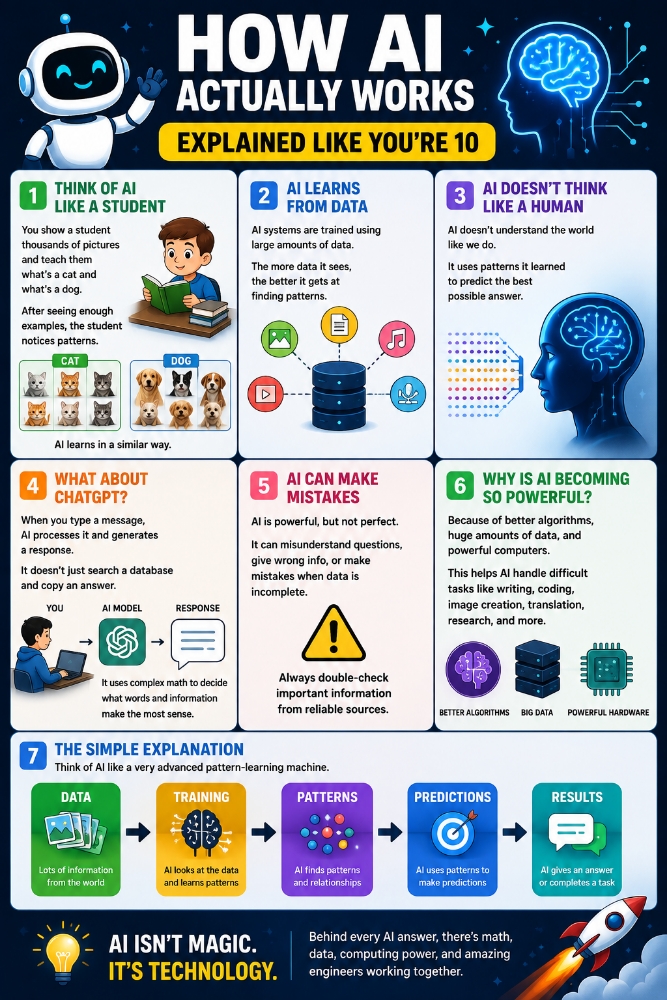
Artificial Intelligence is the most hungry guest we’ve ever invited into our homes. To make these magic models work, they need to eat, and their favorite meal is your data. We aren’t just talking about your search history or the pizza you ordered last Tuesday anymore. We are entering the era of Inference Privacy. This is where agentic AI models can predict sensitive details about your health, your political leanings, and even your mood, simply by analyzing the metadata of your life. It isn’t just reading your emails, it’s calculating the secrets you haven’t even told yourself yet.
The scary part isn’t just the collection, it’s the permanence and the lack of a delete button for your digital soul. Major players like Google and OpenAI have implemented settings to control your data, but let’s be real, the default is almost always store and review. We’ve moved from a world where you had to opt-in, to a world where you have to be a part-time forensic engineer just to opt-out. This isn’t an accidental feature either. It’s the core business model of surveillance capitalism. By 2026, the shift has moved from reactive fraud prevention to predictive risk management, where algorithms decide your trustworthiness before you even log in.
In my view, this is the most subtle form of theft. We are being robbed of our future choices because a machine has already decided who we are based on a digital shadow we didn’t even know we were casting. They want to know what you’ll do before you even do it, and the pandemic provided the perfect excuse to accelerate this digital shadow under the guise of public health necessity. When every heartbeat and every click is an input for a corporate algorithm, privacy starts to feel like a vintage concept. Like rotary phones or physical maps.
Age Checks and the Erosion of Parental Rights

Now, let’s talk about the kids, the ultimate emotional leverage. There’s a wave of age verification laws sweeping across the globe right now. Countries like Australia and the UK, and states like Virginia and Nebraska, are rolling out strict requirements to prove who you are before you can even see a landing page. On the surface, it sounds like common sense. Who doesn’t want to protect children from the darker, more exploitative corners of the web? But if you look at the plumbing of these laws, the picture gets much darker.
Governments are increasingly pushing for digital identity wallets and facial recognition age estimation. It feels like a Trojan horse for a universal ID. In 2026, many organizations have moved toward “effective” age assurance, which essentially means your face or your government documents are scanned just to participate in basic digital life. I’ll be honest, this feels like a massive overreach. Instead of leaving the parenting to, you know, the parents, the state is stepping in as the ultimate gatekeeper of the family unit.
If the government requires a verified digital ID to access a social network, they aren’t just protecting a 13-year-old. They’re building the infrastructure to track every adult’s every interaction in real-time. It’s a classic for the children play that ends with a biometric database controlled by the very people we probably shouldn’t trust with our unchangeable physical data. Since when did the state become more qualified to guard a child’s eyes than the person who raised them? It feels like we’re trading the role of Parent for the role of Data Subject, and once that boundary is crossed, there is no going back.
From Emergency to Permanent Policy

Ever noticed how the temporary measures of the pandemic never actually went away? They just changed their clothes and got a corporate sponsor. The 2020 crisis created a massive structural opening for expanded surveillance powers and the normalization of tech-led governance. We went from stay home to stay safe to a world where scan your ID to participate in society became a standard operating procedure. This wasn’t just about a virus. It was a stress test for how much control we would cede in exchange for a feeling of security.
This is the shift I fear most for my children. We are handing over the keys to a centralized system where Big Tech provides the code, Big Pharma provides the wellness requirements for entry into public life, and the government provides the muscle for enforcement. By 2026, the life sciences industry is deeply integrated with digital transformation, with AI shaping everything from manufacturing to the personal care journeys of patients.
To me, it looks like a corporate-state fusion. The lines between these entities have blurred so much that it’s hard to tell where the boardroom ends and the capitol begins. It’s a surveillance-run country presented to us in high-definition on a screen we can’t seem to turn off. It’s a world where your freedom is a set of permissions granted by an algorithm, contingent on your compliance with the latest corporate-state partnership. If something feels off to you, it’s probably because you’re realizing the emergency is now the operating system.
The Algorithm as the New Legislator

We’re now living in an era where the law doesn’t just come from a courtroom, it comes from a server rack. In 2026, we’ve seen a massive surge in personalized algorithmic pricing bills. This is a direct response to companies using AI to decide what you specifically should pay based on your data profile. It’s not just about what you buy anymore. It’s about how much the system thinks you can be squeezed for. This is the something is off feeling manifested in your bank account.
While the EU attempts to regulate these unacceptable risks through the EU AI Act, the reality is that the tech moves faster than the ink can dry. We are being conditioned to accept a world where our social, physical, and financial status is constantly being re-evaluated by entities we never voted for. It’s a slow, quiet coup where the tools of convenience have become the tools of containment. The data doesn’t lie, our privacy isn’t being stolen in a grand heist. It’s being eroded one accept all cookies button at a time. I look at my kids and wonder, will they even know what it feels like to walk down a street without being known by a dozen different sensors?
Is It Too Late to Pivot?

We’re at a crossroads where convenience is the bait and freedom is the price. The data shows that the attack lifecycle is compressing, meaning our digital defenses (and our personal boundaries) are being outrun by the very tech meant to so called save us. We’re being told this centralization is inevitable, a natural evolution of a modern society. But history suggests that the only thing truly inevitable is the hunger of those in power to keep taking until someone says no.
Maybe I’m being a bit of a cynic. Maybe I’m wrong and this is just the messy transition into a more efficient, safer world. But that gut feeling that something is off usually exists for a reason. It’s the internal alarm system of a free person sensing a cage being built. It’s time we stop asking if the tech is cool or fast and start asking if the tech leaves us with any room to breathe. Because once the cage is fully built and the biometrics are locked in, it doesn’t matter how fast the Wi-Fi is inside. The data doesn’t lie, but it also doesn’t care about your soul, that part is up to us.
Thanks for reading everyone! Visit my site to learn more about me and explore what I’m building at Learn With Hatty. I hope everyone has a great day and as I always say, stay curious and keep learning.