The AI Mining War: Why Your Graphics Card Just Got More Expensive

If you’ve tried to buy a high-end computer graphics card (GPU) recently, you probably noticed two things: they are incredibly hard to find, and the prices are astronomical.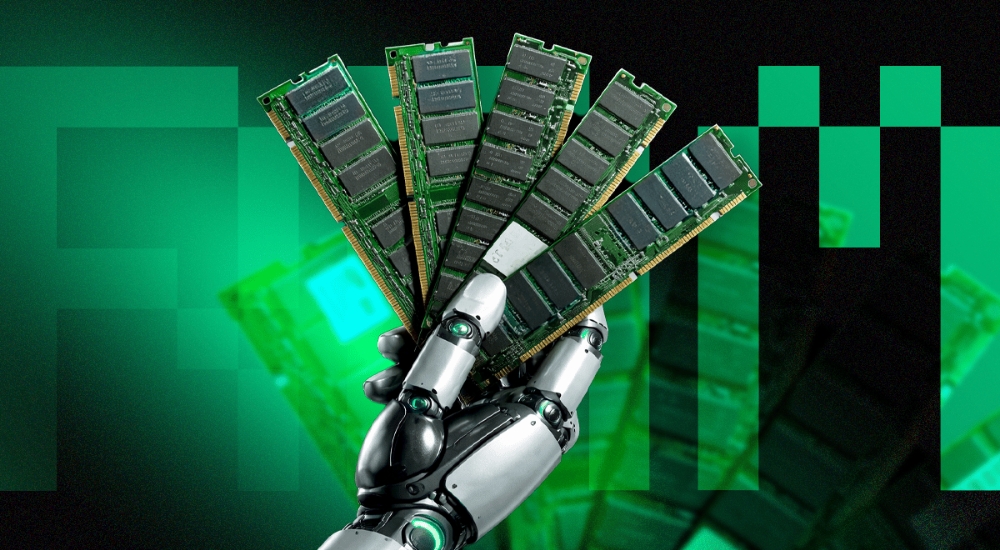
But something fundamental has shifted. Right now, a massive industrial turf war is breaking out over computer hardware, and the competitor trying to outbid crypto miners isn't human—it's Artificial Intelligence.
The Great AI Hardware Drain
To understand what’s happening, you have to look at how both technologies work under the hood.
Crypto mining relies on raw computational power to solve complex mathematical puzzles and secure blockchain networks. Artificial Intelligence—specifically training large language models—requires processing unfathomable amounts of data simultaneously.
It turns out that the exact same silicon microchips that excel at mining crypto are also the absolute best tools for training AI.
As tech giants and venture capitalists pour hundreds of billions of dollars into AI development, they are swallowing up the global supply of processing power. They aren't just buying chips by the dozen; they are leasing out entire data centers for decades. This massive surge in demand has triggered a massive resource outflow from the traditional crypto infrastructure.
The Shift in Blockchain Networks
This intense competition is forcing the blockchain industry to adapt. In fact, current network data reveals that Bitcoin’s overall hashrate (the total computational power securing the network) recently dipped by nearly 9%, with network difficulty dropping right along with it.
Why? Because traditional data centers that used to rent out their computing power to crypto miners are realizing they can make far more predictable revenue by renting those exact same chips to AI companies.
Crypto mining profits go up and down based on highly volatile market prices. AI training, on the other hand, offers steady, long-term corporate contracts. For businesses holding the keys to powerful hardware, pivoting to AI is an absolute no-brainer.
The Silver Lining: DePIN to the Rescue
While this hardware crunch is squeezing traditional miners, it is actually fueling a massive wave of innovation in Web3 through Decentralized Physical Infrastructure Networks (DePIN).
Instead of relying on centralized tech monopolies to provide AI computing power, decentralized protocols are launching to crowdsource the world's idle GPUs. If a small business or an individual has powerful graphics cards sitting dormant, they can securely connect them to a decentralized network, rent that power to AI developers, and earn crypto rewards.
Ultimately, the AI hardware crunch is proving that computing power is the new oil of the digital age. The line between crypto infrastructure and artificial intelligence is blurring completely—and the platforms that figure out how to efficiently share these resources are going to win the future.