Behind Enemy Lines: The Story Of Basher-52

This shootdown would involve an intensive manhunt and eventually, a Hollywood movie.
In this previous article, we explored the downing of Vega-31, an American F-117 Nighthawk that would be lost during NATO operations. This would not be the only aircraft lost in Europe during this era. While platforms of all types from various countries would combine to ensure that operations would continue, SAMs and Anti-Aircraft Artillery were all in theatre, and at times, the airspace would be a dangerous place to be.
Today, we’re going to explore the downing of Basher-52 (89–2032), a United States F-16C. Involving some ingenuity from the Serb’s and a story that would end up on the big screen, it’s a tale that many people are still unaware of.
The Background
It was on June 2, 1995, that a pair of United States F-16C fighter jets departed from Aviano Air Base in Italy in support of NATO operations. Known as Operation Deny Flight, the aircraft aimed to enforce the No-Fly zone over Bosnia and Herzegovina, protecting Bosnian forces from Serbian air attack.
Attached to the 111th Triple Nickel squadron, they’d flown in the area before. While many sorties would result in no incidents, one pilot had been present in 1994 during an incident when things got hot. Here, the Serbs would deploy 6 J-21 training jets that would be used on attack operations, and while they would successfully bomb an ammunition depot, it would result in the loss of 4 of the 6 aircraft in the first successful attacks by NATO forces.
While NATO had the upper hand in the air, the Serbs would prove to be an ingenious opponent, using their surface-to-air missile systems and mobile anti-aircraft artillery to put the aircraft enforcing the no-fly zone at direct risk.
It’s worth mentioning that while the aircraft would fly with the support of Airborne Early Warning aircraft, the mobile tactics that were relied on by ground forces would make these aircraft less effective in providing support. With UN peacekeepers on the ground being held captive as a result of previous NATO enforcement actions, the stage would be set for tensions to rise to the breaking point.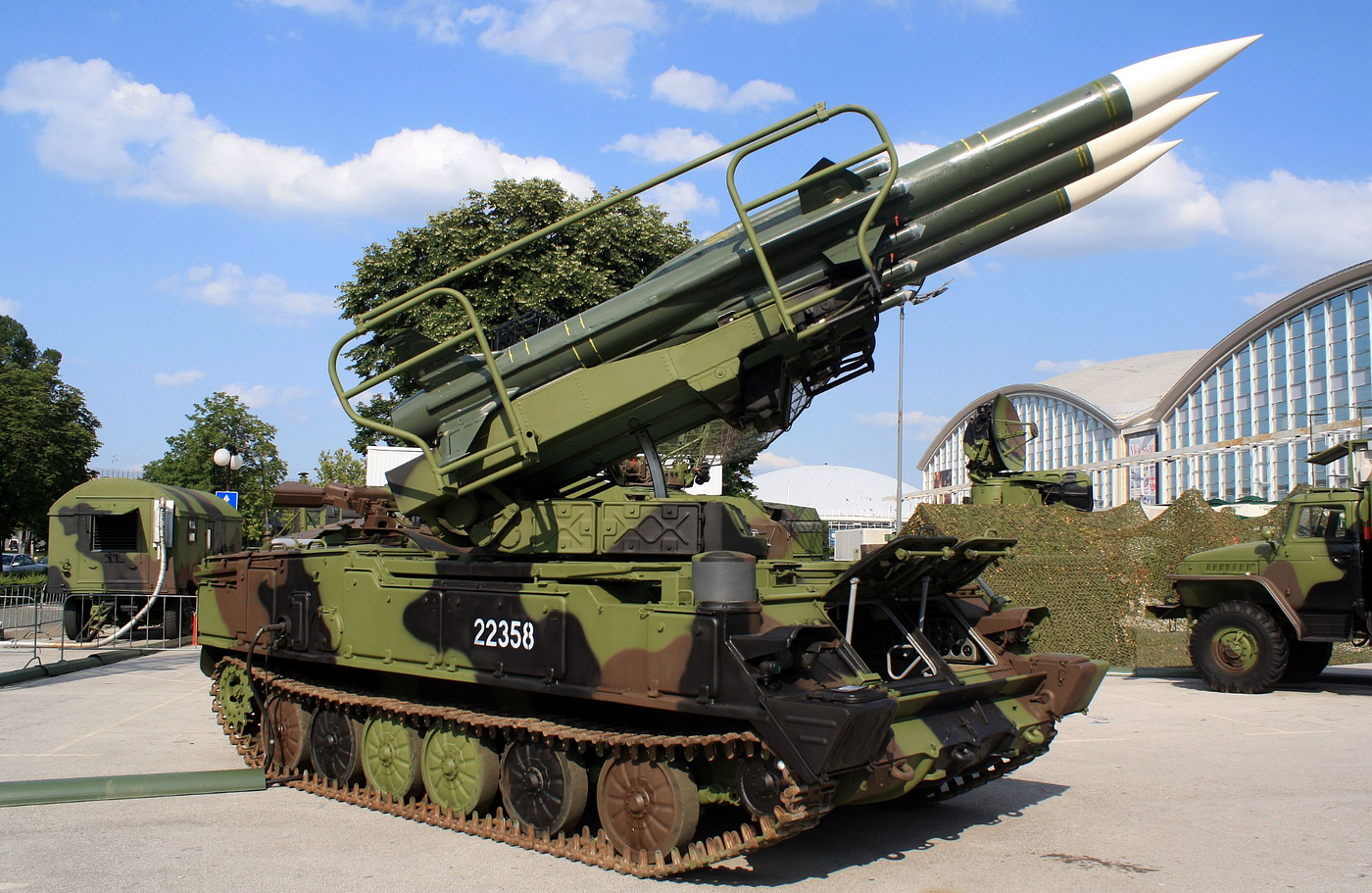 A Serbian 2K12 Kub (SA-6) Surface to Air Missile system. Source: Wikipedia.
The Shootdown
The F-16s would be operating at around 26,000ft near Mrkonjić Grad in western Bosnia. In the area would be a Serbian 2K12 Kub attached to the 1st Krajina Corps. Known to NATO as the SA-6, the Kub was designed for low to medium altitude threats and had the ability to go mobile.
While Soviet doctrine dictated that these systems would be operated in a particular way, it was the willingness to take the systems mobile and operate outside these guidelines that made them such a significant threat. Consisting of a 1S91 Straight Flush Radar vehicle and multiple 2P25 Transporter Erector Launcher (TEL) vehicles, they were capable of firing a surface-to-air missile that weighed more than half a tonne while being capable of speeds of more than Mach 2.8.
Despite being an older system, the ability to shoot and scoot made them the perfect candidates for rapid, unexpected deployment inside the no-fly zone.
At around 15:00 local time, the battery would fire two SA-6s at the patrol. While it was daytime during the incident, the presence of localised cloud cover made visual observation not possible, meaning the battle was now an electronic one.
As the first missile would detonate between the two aircraft, the second would be a direct hit. With the ejection process initiated, the aircraft would explode at around 20,000ft, leaving the pilot heading for the ground, well behind enemy lines.
The poor weather would also provide one additional complication, as cloud cover meant that the ejection parachute was initially not sighted.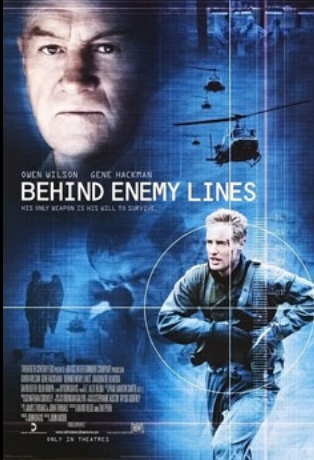 The story of Basher-52 would eventually lead to the making of Behind Enemy Lines, starring Owen Wilson. Source: Wikipedia.
Survival, Evasion, Resistance, Escape
It’s often said by survivalists that attitude can be the difference between making it and not, and there’s no denying that pilot Scott O’Grady was in full survival mode from the moment he hit the ground. And this was a good thing, as this would be the start of a six-day ordeal that would put him to the test.
Knowing full well that the area was hostile, O’Grady would waste no time applying camouflage and exfiltrating the area. With US pilots undergoing SERE training at Fairchild airbase and being given a survival kit that would go with them in an ejection situation, he was well-placed to have a good shot at evading capture.
This would be no camping trip, however. Not only were the Serbs aware of the shootdown, but reports of a parachute meant that extra ground forces would be deployed in an attempt to capture O’Grady. This was made worse by direct sightings of the pilot at a long distance.
Despite this, sticking to the SERE protocols meant that, despite multiple searches (including one that passed within meters of O’Grady’s position), he would remain on the run.
It would be night 6 when O’Grady decided to raise the stakes. While he did have a survival radio that was part of his kit, up until now, it had been used sparingly in an attempt to minimise the risk of signal geolocation. When he heard a fighter jet overhead at around midnight on June 8th, O’Grady elected to take the risk and attempt to make direct contact.
Captain Thomas Hanford from the same squadron would be flying overhead when O’Grady made the call, and with the answering of a successful security question to ensure the mysterious voice actually was O’Grady, rescue plans were now rapidly taking place.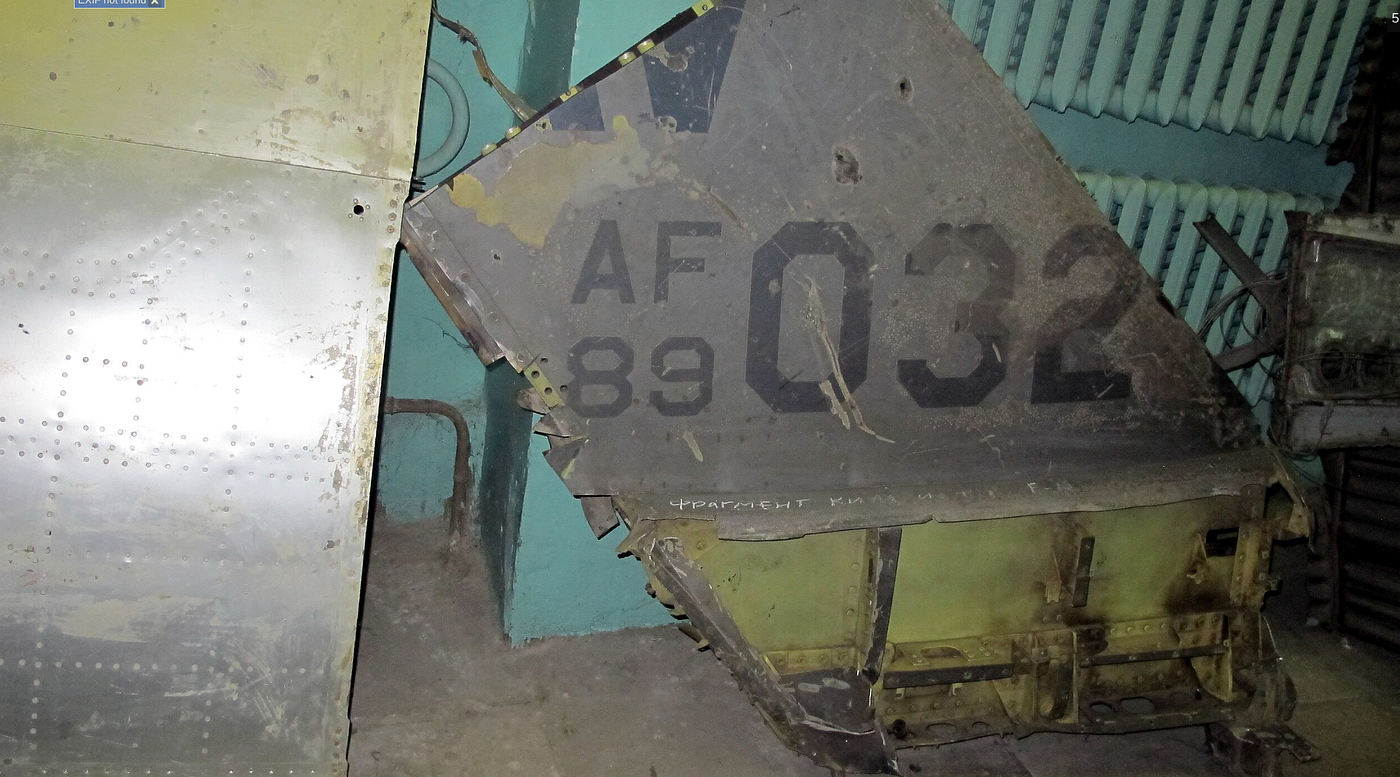 The tailfin of the F-16 would eventually be sent to Moscow. Source: Wikipedia
The Rescue
Say what you will about the Americans, but the one thing they know how to do is make a show of force, and this instance would be no different. While the early parts of the mission would rely solely on fighter jets and E-3 aircraft for airspace control, the sheer amount of firepower that was deployed for the rescue would be staggeringly high.
This would include two U.S. Navy EA-6B Prowler electronic warfare aircraft from VAQ squadrons, which provided jamming against Serb SAM radars, and two U.S. Air Force EF-111A Raven EW planes for similar suppression roles.
Additional intelligence support would come from spy satellites conducting sweeps of the area to locate O’Grady while monitoring the progress of nearby ground forces.
The rescue package also featured A-10 Thunderbolts, F/A-18D Hornets, AV-8B Harriers, all capable of providing close air support or ground attack should it be needed. It was an overwhelmingly large show of force that would send a single clear message. “We want our pilot back”.
Despite this, the rescue mission would still be relatively hot. While in the area to collect O’Grady, the helicopters would come under attack from both small arms and MANPAD shoulder-fired missiles.
Today, Scott O’Grady is an American politician, but thanks to Hollywood and the internet, his story in Bosnia endures. He would also receive multiple accolades for surviving his time behind enemy lines.
Investigator515 explores the RF spectrum, cybersecurity, and the hidden tech behind modern espionage.
Follow for new content weekly
Bluesky • X • Substack
You might also like,
- OSINT Investigators Guide to Self Care & Resilience
- Spies In The Mud: The RF-111 Aardvark
- What The Tech?! Space Shuttles