Harmonic Frequencies: What They Are & Why They Matter

Radio can be magical stuff sometimes. While the internet would provide a technical revolution, there’s still something distinctly fun about using wireless signals to communicate and transmit data. The smartphone wrapper takes this out into the world to the masses, but there are plenty of other niche and commercial uses for this as well. However, like most things, the convenience of this can come with some unique security considerations that were touched on in this previous article.
Fundamental frequencies can play a huge role in these considerations, but they are also pretty relevant outside the security aspect, too. Incorrectly managed transmitters with badly filtered harmonics have the potential to cause broad interference with other systems and devices.
So, understanding how harmonics work is a useful skill to take on your radio journey. 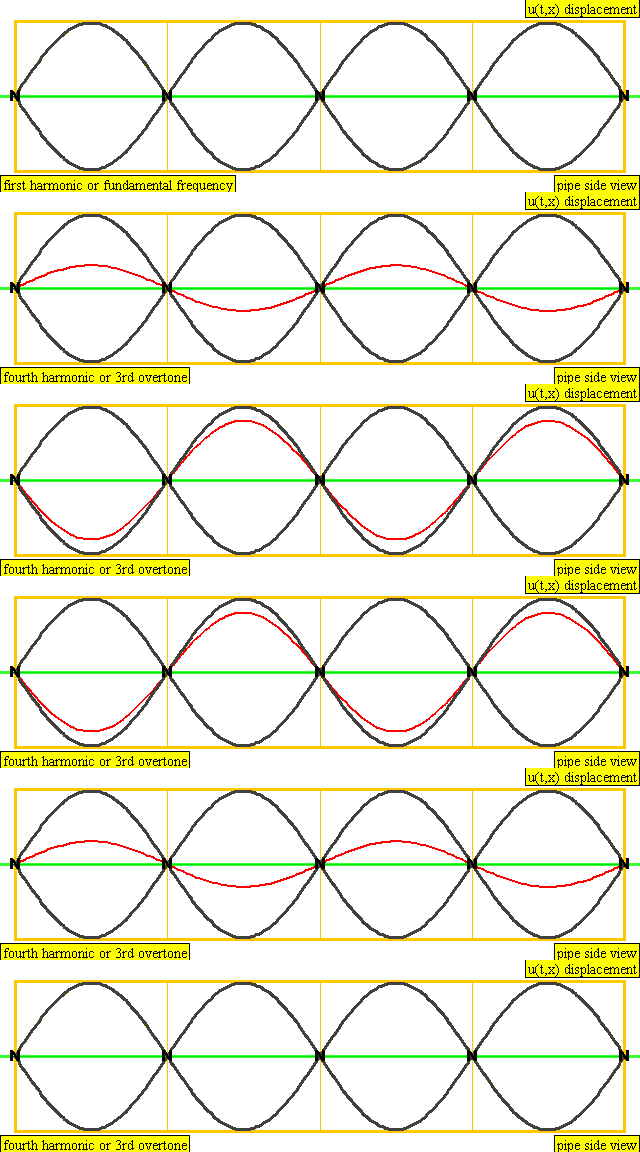
What Are Harmonics
Simply put, a harmonic is a frequency that is a multiple of a fundamental frequency.
Example: If a signal has a fundamental frequency of 100 kHz, its second harmonic is 200 kHz, the third is 300 kHz, and so on.
Harmonics shape the character of signals, influence interference, and understanding them is an essential step if you're looking to work with RF or design your own systems. It allows you to understand where energy will appear in the spectrum and how it affects signal quality
They are also unique in that they will appear in the natural environment, too. Harmonics arise naturally in most periodic signals, and musicians are well versed in the use of harmonics to create unique pitches and tones.
To understand them, we’ll want to recognise the following key features:
Fundamental frequency: The lowest, base frequency of a repeating signal.
Harmonics: Frequencies that are exact integer multiples of the fundamental.
Overtones vs. Harmonics: Overtones include any frequencies above the fundamental, harmonics are only the exact multiples.
Waveform effects: Pure sine waves have no harmonics, while square, triangle, or sawtooth waves contain many, giving the signal a more complex shape when viewed on a spectrum analyser.
Why It’s Important
Harmonics help us to analyse signals, diagnose interference, and optimise circuits. Knowing how they operate concerning the fundamental frequency means we can incorporate them into a product or system as it is designed.
We can use a transmitter as a real-world example here. Let’s look at Wi-Fi.
Wi-Fi partly operates at 2.4 GHz, one of the globally available ISM (Industrial, Scientific, and Medical) bands.
Without proper filtering, the transmitter’s output stage may also radiate second and third harmonics, at 4.8 GHz and 7.2 GHz, respectively.
While your main signal at 2.4 GHz is legal and license-free, those harmonics can spill into restricted frequency bands used by satellite communications, radar, or aviation systems.
Looking at this problem in reverse, badly shielded or filtered switches or power supplies have also been known, on occasion, to interfere with Wi-Fi frequencies and operation.
While there are many standard elements to interface that we’re able to identify, part of the magic of radio is that sometimes, RF just behaves in unexpected ways. 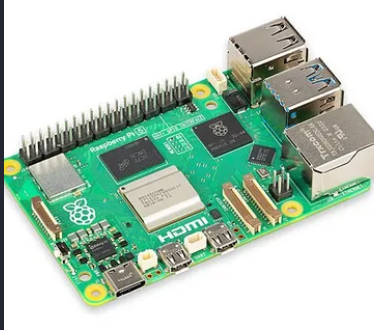
Go And Build
Here, we learn by doing and with that in mind, it’s worth doubling back to one of the very early feature articles that was done when the publication launched.
Raspberry Pi Radio would focus on using the Raspberry Pi paired with a few wires and some custom software to create a localised Radio Station with milliwatt power levels.
The only problem is that modulating the GPIO pin on the Raspberry Pi creates a square wave signal that creates significant harmonics. This is a problem for normal operation, however, it’s perfect for a project that aims to increase your knowledge about identifying and suppressing harmonics.
With some ferrite cores, a bit of wire and some connectors, you can put your newfound knowledge about harmonic frequencies to use in a project that gives you real-world results.
If that doesn’t spark your curiosity, what about the WSPR Pi? Using the same GPIO modulation, the Raspberry Pi will send high-frequency radio transmissions globally under the right conditions. Like the PiRate Radio station, you’ll need to build frequency-suitable filters to ensure that your output signal is clean and properly filtered.
If you do build, don't forget to share your project so we can check it out!