The WirEcard Scam
Anatomy of the Wirecard Collapse and the Global Fraud Network
Wirecard was no ordinary bankruptcy. It was a multi-level psychological operation in which one of the world's largest economies-Germany-allowed itself to be seduced by a vision of technological prowess, ignoring warning signs for nearly two decades.
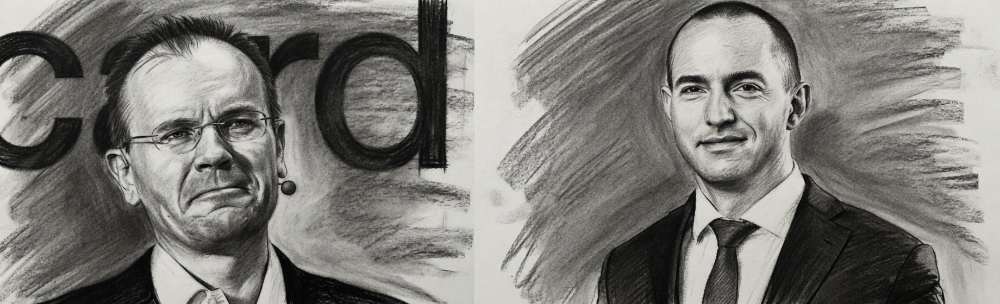
Architects of the Lie: Braun and Marsalek
Wirecard’s success relied on a carefully crafted duality between its leaders:
Marcus Braun (The Face): The Austrian CEO and former KPMG consultant. Braun was obsessively focused on the stock price. He implemented a culture of "silence and hierarchy"-working on an isolated floor accessible only to a few, leaving the building via a lift that went directly to the garage. His presentations were filled with technobabble; he overused buzzwords like "strong," "AI," and "blockchain" to deflect specific questions from analysts.
Jan Marsalek (The Operator): A man of mystery. While Braun shone in high society, Marsalek flew private jets around the world, closing "deals" in Dubai, Singapore, and the Philippines. He was responsible for the TPA (Third Party Acquirers) network-external companies that allegedly processed payments where Wirecard lacked its own licenses.
The Mechanics of Fraud: TPA Systems and "Round Tripping"
The key to Wirecard's alleged success was the "Third Party Acquiring" system. The company claimed that because it did not hold licenses in every country, it outsourced payment processing to external partners and collected a commission.
In reality, as revealed by the "Financial Times" investigation and the KPMG audit:
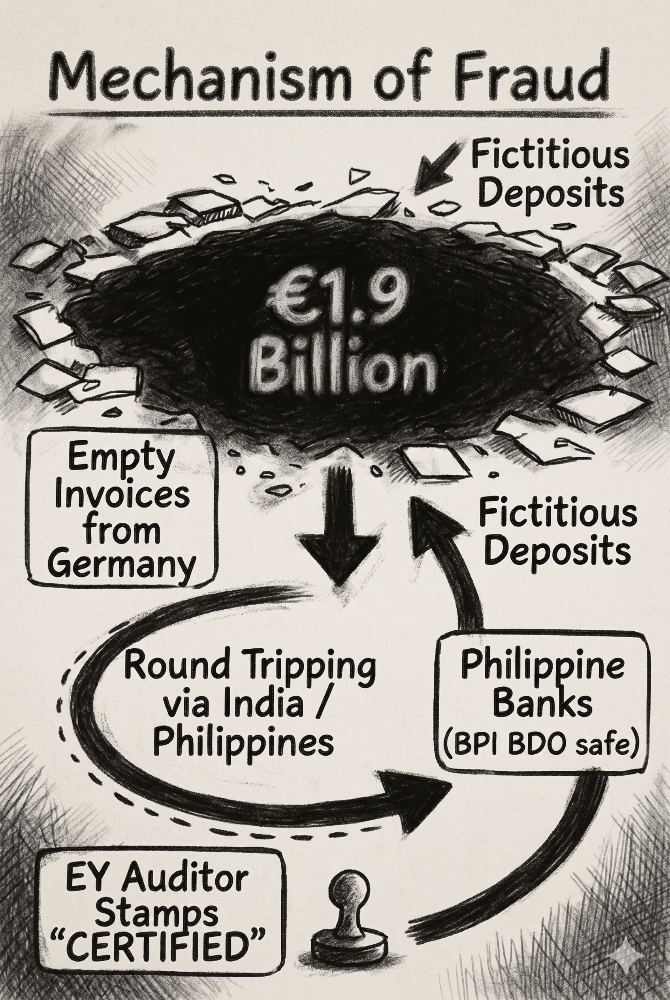
- Empty Invoices: Thousands of transactions were generated that never actually took place.
- Round Tripping:Money was sent from Germany to Asian subsidiaries (e.g., in India) and then returned to Wirecard as "operating profit," artificially inflating the balance sheet.
- Fictitious Deposits: To validate profits for EY auditors, Marsalek presented documents confirming the existence of €1.9 billion in escrow accounts at BPI and BDO banks in the Philippines. In 2020, these banks declared the documents were forged and that no such clients existed.
War on Truth: Intimidation and Hackers
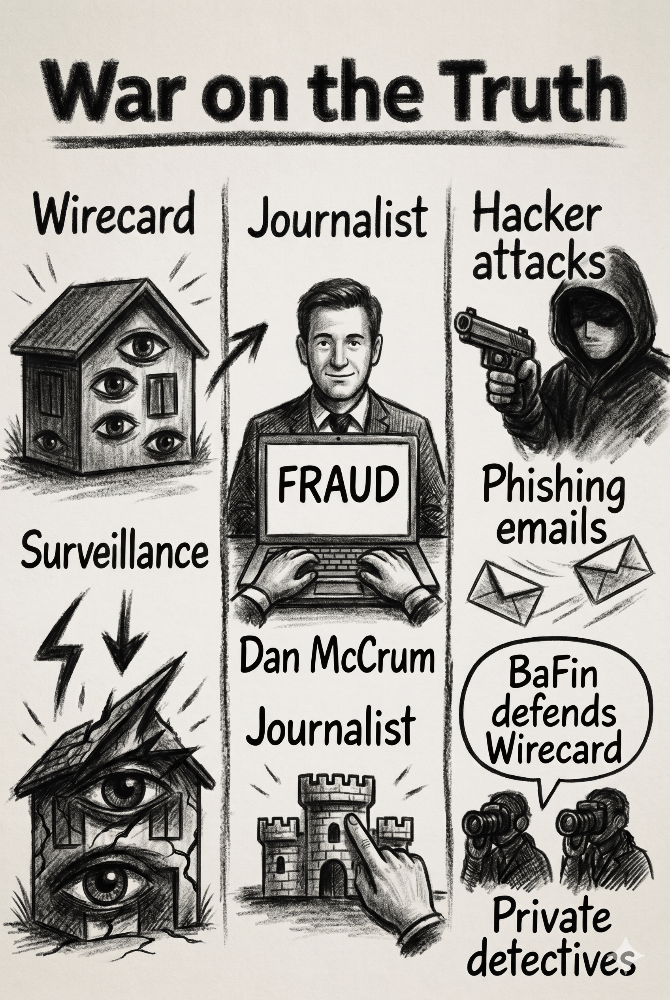
- Surveillance: Journalists were followed by private detectives in London.
- Hacking Attacks:** They utilized "Dark Basin"-a hired hacker group from India that sent thousands of phishing emails to critics and short-sellers.
- State Weaponization: Instead of investigating Wirecard, the German regulator BaFin filed a criminal complaint against the FT journalists, accusing them of market manipulation.
The Geopolitical Twist: The Shadow of Russian Intelligence
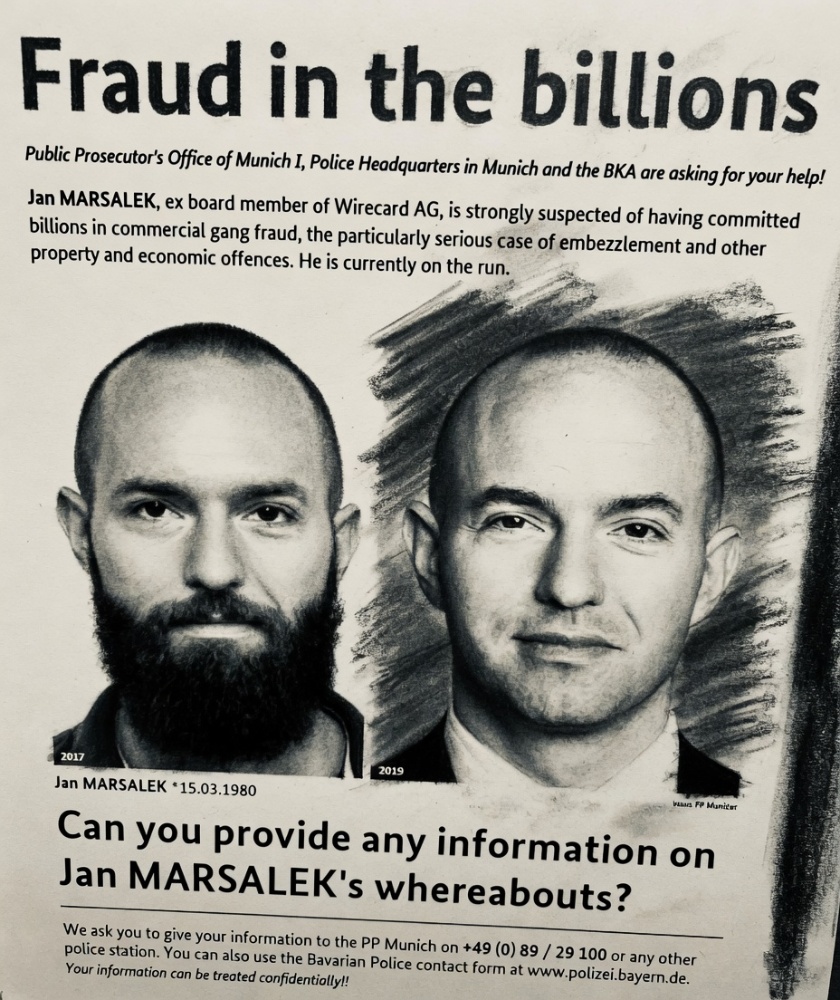
- Marsalek had close ties to Russian intelligence (GRU and FSB) for years.
- He boasted about possessing top-secret documents regarding the use of Novichok in Salisbury.
- On the day of the collapse, instead of surrendering to prosecutors, he fled through Austria and Estonia to Minsk, from where Russian services transported him to Moscow.
Marsalek is currently believed to be residing in a luxury estate under FSB protection; his financial network may have been used to fund Russian hybrid operations globally.
The fall of Wirecard led to:
- The resignation of the head of BaFin and a total reform of German financial supervision.
- A "crisis of confidence in auditors": EY (Ernst & Young) faces numerous lawsuits for signing off on financial statements for 10 years without verifying the actual status of accounts in Asia.
- "Billions of euros in losses": Victims include not only large funds but thousands of small retail investors and German pension funds.
Summary in Numbers:
- €1.9 billion – The amount that never existed.
- $4 billion – Debt owed to creditors at the time of bankruptcy.
- 99% – The drop in share value in just 9 days.
The Wirecard scandal remains a symbol of how easily modern technology (**fintech**) can become a screen for old-fashioned fraud if auditors and the state turn a blind eye in the name of national success.
Resources:
https://dnarynkow.pl/najwieksze-przekrety-gieldowe-w-historii-afera-wirecard/
https://www.wsj.com/articles/germany-asks-russia-to-help-find-former-wirecard-executive-11596056696
https://www.ksat.com/business/2020/10/30/report-fugitive-tech-boss-was-austrian-spy-agency-informant/
https://www.youtube.com/watch?v=ivACzzW5wyA&t=78s