I Fired Myself: From Manual Grinding to AI Agents. Part 2: Hive Mind Architecture

Part 2: The Architecture of the Syndicate — Thinking in Systems
"If you want to build a small business, work hard. If you want to build a machine that works for you, think systems."
In my previous post, I shared my manifesto: why I decided to stop manual grinding and transition to an autonomous AI swarm. Today, we go under the hood.
I’m not just writing a script to click buttons. I am building a Syndicate.
The Problem: The Human Bottleneck
Manual grinding (faucets, offerwalls, tasks) is designed to exhaust you. You are the worker, and your time is the product. Even with the best focus, a human can only manage a few tasks per hour.
Human Efficiency: ~5-10% (Fatigue, sleep, errors).
The Architect's Goal: 95%+ Efficiency via automation.
The Engine: Why elizaOS?
To build this, I chose elizaOS. It’s not just a bot framework; it’s a character-based autonomous engine. It allows me to give my agents "brains" — they can remember past interactions, adapt to platform changes, and operate 24/7 on a VPS without my supervision.
The Anatomy of the Syndicate
The Blueprint: Meet the Swarm
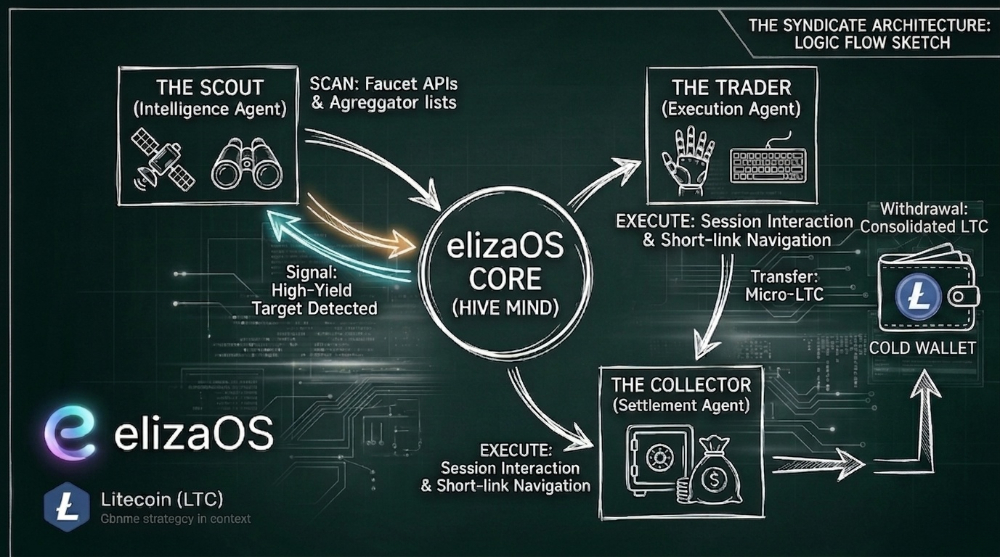
My architecture is divided into three specialized layers. Each agent has its own "Character File" and specific responsibility:
The Scout (Intelligence Node):
The eyes of the Syndicate. The Scout monitors the FaucetPay API and verified aggregator lists. It identifies which platforms are paying out the highest LTC yields right now and sends a signal to the swarm.
The Trader (Execution Node):
The hands. Once the Scout finds a target, the Trader takes over. Using elizaOS logic, it handles session management and interaction. It’s designed to mimic human intervals to remain "under the radar."
The Collector (Settlement Node):
The vault manager. This agent monitors the gas fees and minimum withdrawal thresholds. Once the target LTC amount is reached, it automatically initiates the transfer to my cold storage.
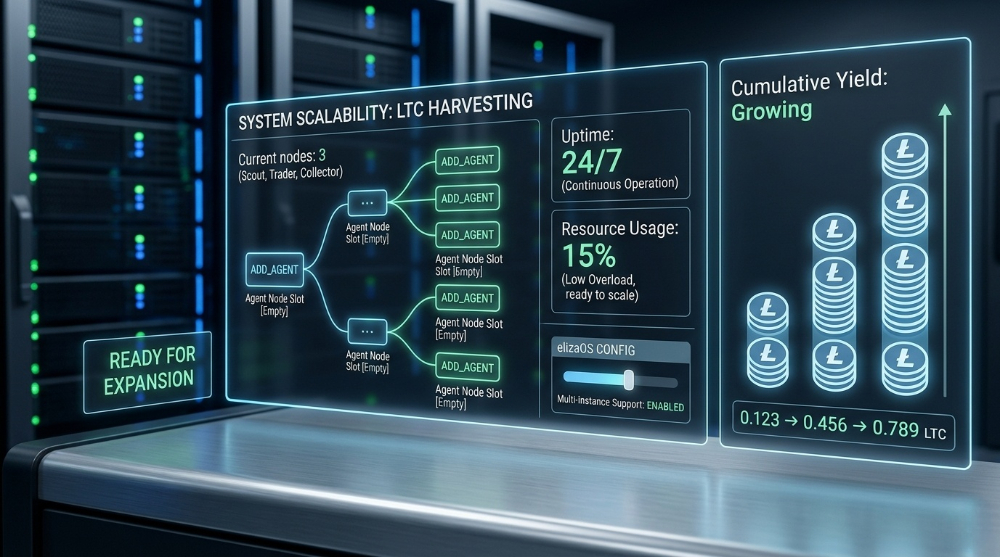
Scalability is Freedom
The beauty of this architecture? Scale.
If I want to add 10 more platforms to my list, I don't work 10 hours more. I simply update a configuration file, and the Scout starts monitoring them instantly.
The transition from a "Worker" to an "Architect" isn't about working more — it's about building a system that works while you sleep.
What’s Next?
Architecture is just the skeleton. In Part 3, I will show you how I program the "Brains" — the specific character profiles that give my agents their persistence and logic.
Subscribe to follow the journey. The Syndicate is growing. 🦾🚀📈