Why Resilient Miners Make $BWBTC a Reality


$BWBTC
https://raydium.io/launchpad/token/?mint=5wMXxY1P8VkU2Y7dCKQqPfhD5FrpQayyFSJPnqgSgray&fromCreate=true&lreferrer=7155X9ucVE6rTWtx816NjHHEhGQUSvdQe8cAMuMfZjp9
As the sun sets on 2025, the Bitcoin network stands as a monolith of contradictions. In the spot markets, the asset trades in a volatile band between $88,000 and $94,000, flirting with the psychological six-figure barrier yet seemingly restrained by a cooling of immediate corporate demand. But deep in the server farms of Texas, the hydro-powered valleys of Bhutan, and the renewable grids of Scandinavia, a different reality is unfolding.
For the miners securing the network, the "up only" mantra of price action has been replaced by a ruthless industrial Darwinism. The profitability of Bitcoin mining—once a wild west of plug-and-play speculation—has matured into a complex game of energy arbitrage, thermal dynamics, and sovereign strategy. We are currently navigating what industry insiders call the "Chill Zone," a period defined by the lingering gravity of the 2024 halving and the relentless ascent of network difficulty.
To understand the future of miner profitability, we must dissect the mechanical and economic shifts that have defined the last twelve months. This is no longer just about hashing; it is about survival, efficiency, and the geopolitical realignment of the world’s most powerful computer.
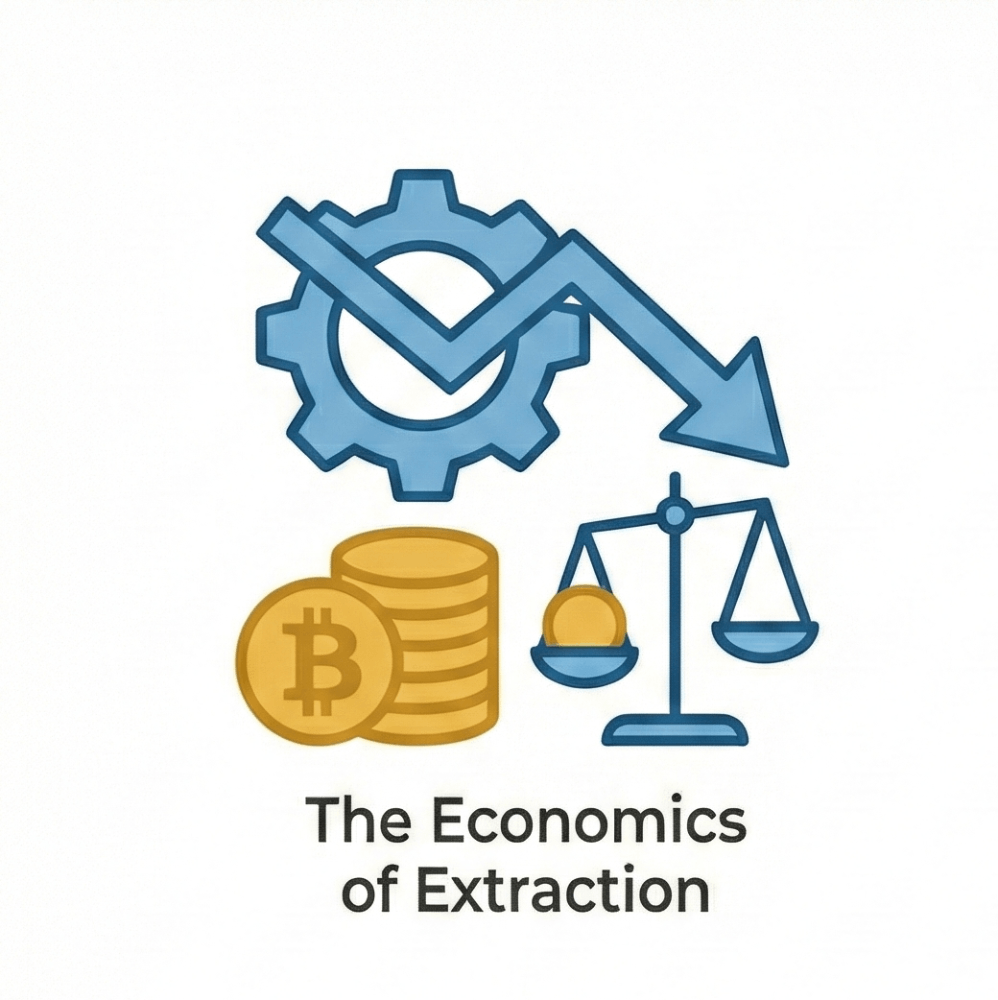
The Economics of Extraction: Payments vs. The Physics of Cost
At its most basic level, a miner’s revenue is the product of the block subsidy and transaction fees, minus the cost of electricity and hardware depreciation. In late 2025, this equation has been stressed to its breaking point.
The Subsidy Shock and the Fee Mirage
The April 2024 halving reduced the block subsidy to 3.125 BTC. Eighteen months later, the "halving shock" has largely dissipated, replaced by a chronic supply squeeze. While the price of Bitcoin has appreciated significantly to offset this drop, it hasn't been a linear salvation. According to Bitcoin Magazine, while mining stocks have occasionally outperformed the asset itself, the raw economics of hashing have forced a consolidation. The "easy money" era is dead.
Miners have increasingly looked to transaction fees to plug the revenue gap. Throughout 2025, protocols like Runes and Ordinals promised a new era of fee revenue, turning blockspace into a canvas for digital artifacts. Blockworks reports that merged mining and Layer 2 solutions are becoming essential to this thesis. By securing other chains or processing complex inscriptions, miners are attempting to build a "fee floor" that exists independent of pure monetary transfer demand. However, this revenue stream remains volatile. In Q3 2025, fee spikes were sporadic, often failing to save less efficient operators from capitulation during difficulty adjustments.
The Efficiency Asymptote
On the cost side, the industry is hitting the physical limits of silicon. For years, miners relied on Moore’s Law to double efficiency every cycle. In 2025, that curve has flattened. Bitcoin Magazine highlights that we are seeing a slowdown in process node advancements. The newest hardware, such as Canaan’s A15 AvalonMiner, boasts an efficiency of around 18.5 Joules per Terahash (J/T), a significant but incremental improvement over previous generations.
With chip efficiency plateauing, the battleground has shifted to infrastructure. Bitcoin Magazine notes a massive industry-wide pivot to 480v three-phase power systems. This electrical configuration reduces amperage draw and wiring costs, allowing miners to squeeze marginal gains out of every megawatt. Efficiency is no longer just about the chip; it is about the copper, the cooling, and the voltage regulation.
The Reason We Are Here: Divergence and Specialization
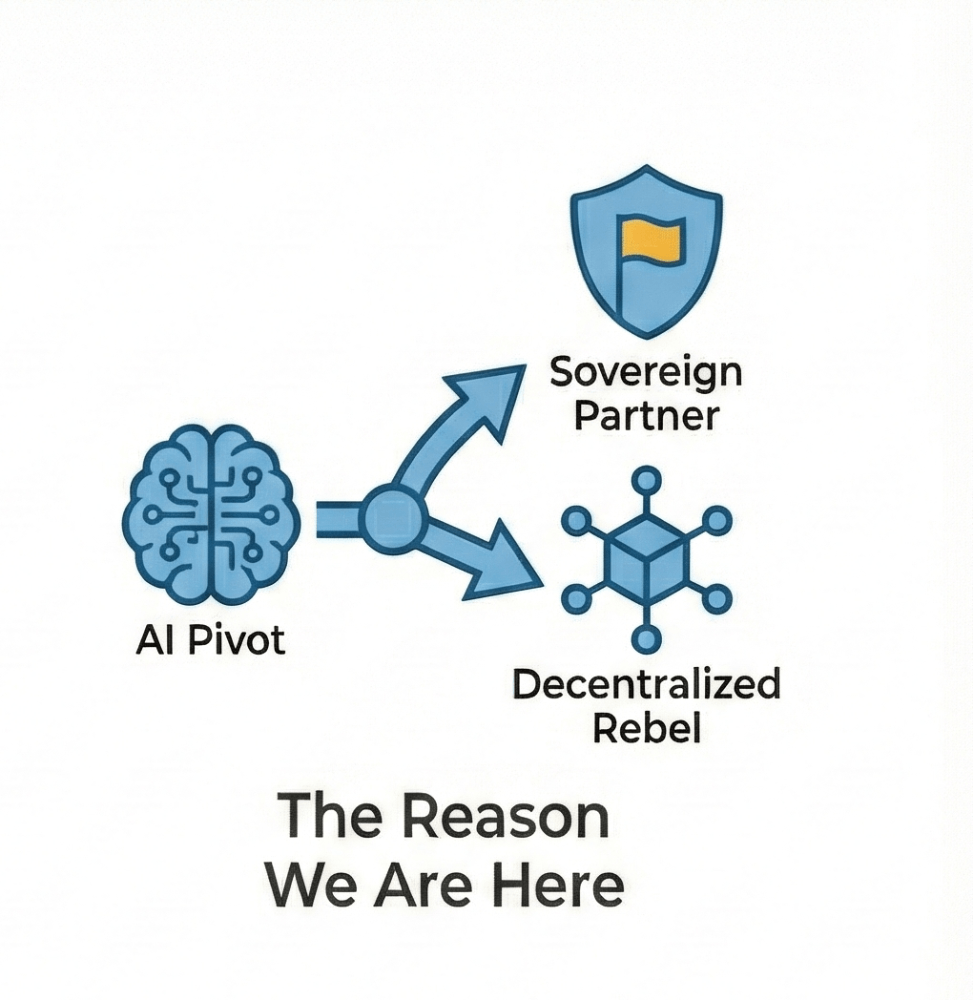
How did we arrive at this precarious equilibrium of high prices and tight margins? The answer lies in the divergence of the miner’s business model. The monolithic "Bitcoin Miner" of 2021 has evolved into three distinct species in 2025: The Energy Manager, The Sovereign Partner, and The Decentralized Rebel.
The Energy Manager: The AI Pivot
The most significant trend of 2025 has been the "AI Pivot." As reported by DL News, analysts from Bernstein and VanEck correctly predicted that miners would trade their digital pickaxes for Nvidia H100s. With AI data centers desperate for power, miners with gigawatt-scale grid connections realized they sat on a goldmine of capacity.
Companies like Core Scientific and IREN (formerly Iris Energy) led this charge, retrofitting facilities for High-Performance Computing (HPC). This created a dual-class system: pure-play Bitcoin miners who are exposed to the raw volatility of the difficulty adjustment, and "hybrid" compute firms that use steady AI revenue to subsidize their Bitcoin operations. This pivot explains why hashrate has continued to climb despite thinning margins—the cost of mining is being subsidized by the booming AI economy.
The Sovereign Partner: Nation-State Industrialization
The geopolitical landscape of mining has shifted away from private enterprise toward state-level actors. Bitcoin Magazine has extensively covered the expansion of Bitdeer, which has ramped up operations in partnership with the Kingdom of Bhutan. By late 2025, Bitdeer’s proprietary SEALMINER rigs are being deployed to monetize Bhutan’s stranded hydroelectric power, turning the nation’s renewable resources directly into sovereign wealth.
This trend is mirrored in El Salvador and hinted at in other jurisdictions. Sovereign miners are not profit-maximizers in the traditional sense; they are value-accumulators. They can mine at a loss in fiat terms because their goal is to acquire non-seizable reserves or stabilize national energy grids. This behavior creates a relentless upward pressure on difficulty, squeezing out smaller, private miners who cannot print their own money or legislate their own energy rates.
The Decentralized Rebel: Hardware Democracy
In a direct response to this industrial centralization, 2025 has also seen a resurgence of "hardware democracy." Bitcoin Magazine reported on Block’s (formerly Square) launch of the "Proto Rig," a modular, open-source mining unit designed for repairability and home use. By stripping away the proprietary "black box" nature of ASICs, Block aims to distribute hashrate back to the edges of the grid. While these units cannot compete with industrial farms on raw efficiency, they represent a philosophical and practical hedge against the centralization of the network.
Risks: The Real, The Imagined, and The Existential
As we look toward 2026, the profitability landscape is fraught with risks. Distinguishing between the noise and the signal is critical for any long-term assessment.
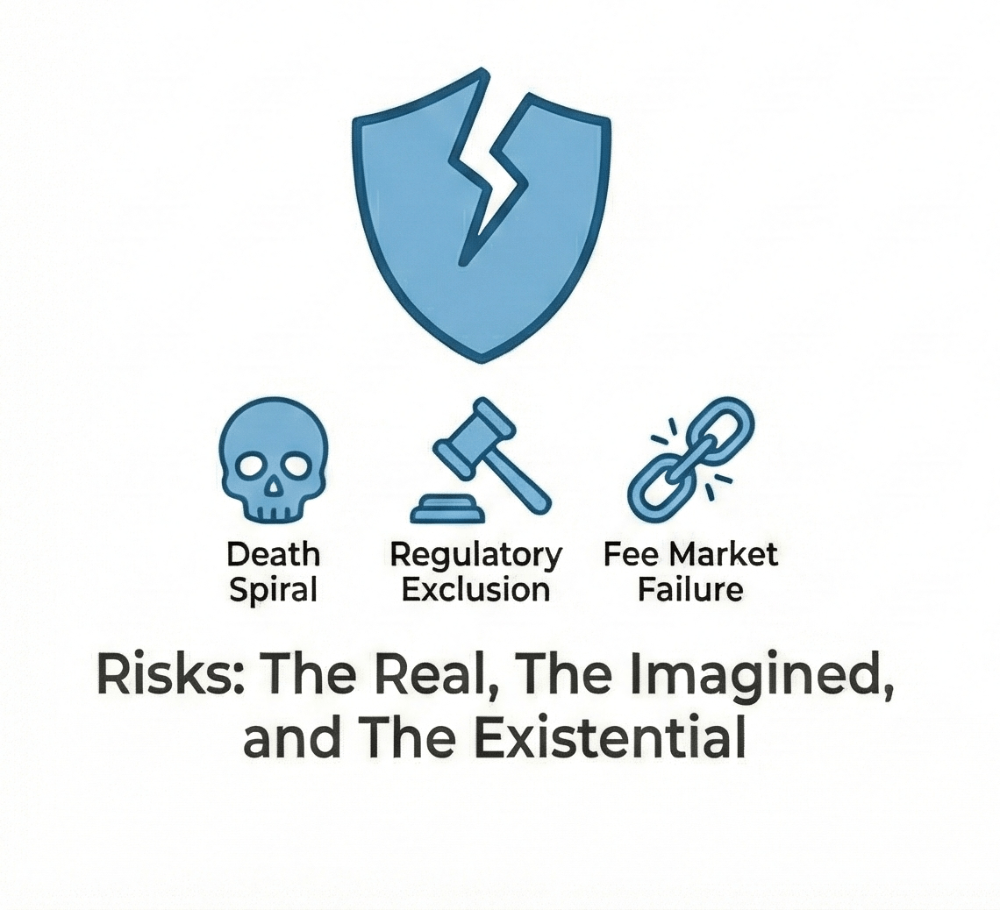
Imagined Risk: The "Death Spiral"
The perennial fear of a "mining death spiral"—where falling prices lead to miner shutdowns, slowing the chain and causing further price collapses—remains a favorite talking point of skeptics. However, 2025 proved again why this is a myth. When profitability cratered in mid-2025, the difficulty adjustment algorithm functioned exactly as designed. Difficulty dropped, margins for remaining miners recovered, and the block time stabilized. The network’s biological feedback loop is more robust than any external market force.
Probability: Near Zero
Real Risk: Regulatory Exclusion and "Clean" Block Filtering
A far more tangible risk is the weaponization of the financial layer against miners. Bitcoin Magazine and DL News have covered the controversy surrounding MSCI (Morgan Stanley Capital International) and their proposals to exclude companies with significant crypto exposure from major indices. Asset managers like Strive have fought back, arguing this creates "unjustified" benchmarks.
If major indices and banks succeed in isolating public mining companies, it raises the cost of capital. Worse, it could lead to a bifurcation of the network where "compliant" miners in the U.S. (who control a plurality of hashrate) are forced to filter transactions to satisfy OFAC or ESG mandates. If profitability is tied to regulatory compliance, the censorship resistance of the network hangs in the balance.
Probability: Moderate
Real Risk: The Hardware Supply Chain War
Bitcoin Magazine notes that trade policies are increasingly targeting mining hardware. With Bitmain still dominating the ASIC market, potential tariffs of 30-50% on Chinese electronics entering the U.S. could devastate the ROI of American miners. This protectionism could paradoxically hurt U.S. hashrate dominance, forcing the industry to rely on more expensive, less efficient domestic alternatives (like Auradine) while the rest of the world utilizes cheaper Chinese hardware.
Probability: High
Existential Risk: The Fee Market Failure
The long-term security budget of Bitcoin relies on fees replacing the subsidy. While Blockworks reports on the success of merged mining and Ordinals, the fee market is not yet mature enough to sustain the network alone. If Layer 2 scaling solutions (like the "Spark" and "Ark" L2s mentioned in Bitcoin Magazine) are too successful at taking volume off-chain without settling frequently enough to pay miners, the security budget could shrink. Miners need high-value settlement; if the base layer becomes a ghost town of static vaults, profitability will collapse.
Probability: Moderate (Long Term)
The Future Outlook: The Supercycle and The Grid
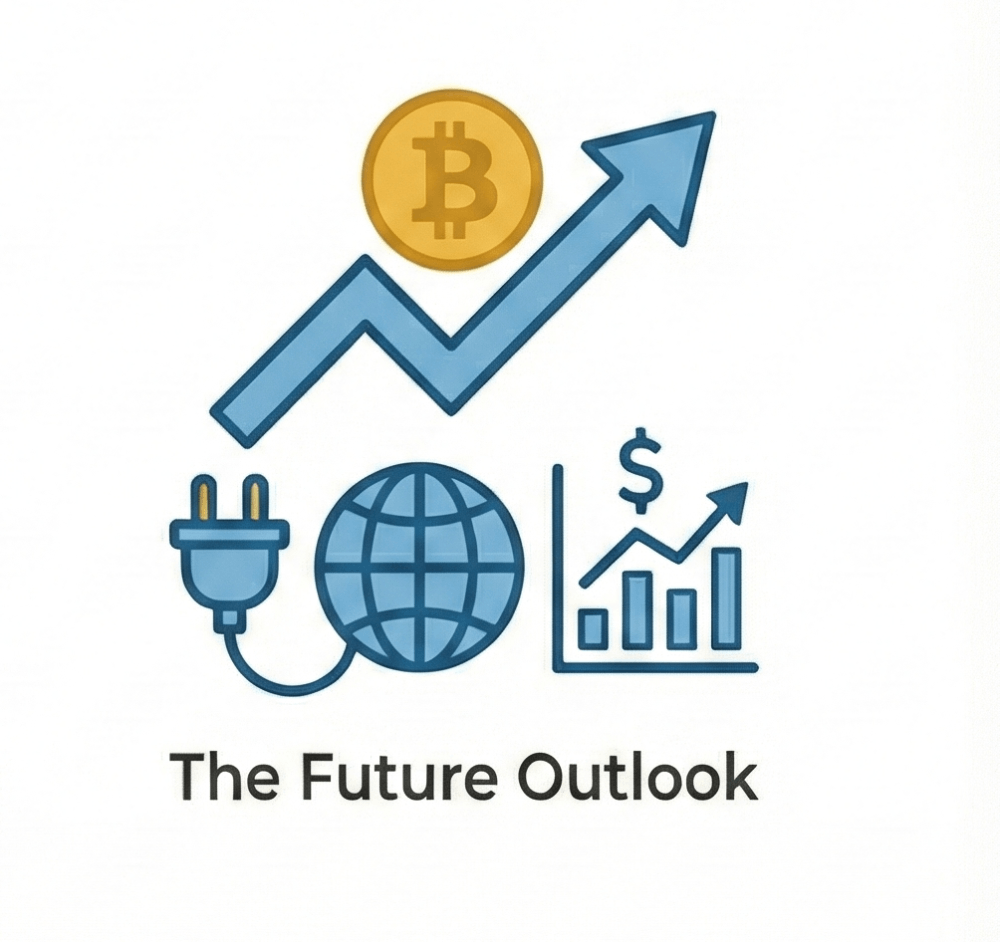
Despite the headwinds, the trajectory for miners heading into 2026 offers profound optimism. The industry is evolving from a speculative casino into a cornerstone of global energy infrastructure.
The $200,000 Horizon
Price remains the ultimate lubricant. Analysts cited by DL News and Bitcoin Magazine maintain a base case of Bitcoin reaching $150,000 to $200,000 in the coming cycle. Such an appreciation would instantaneously thaw the "Chill Zone," restoring healthy margins even for less efficient hardware. The "supercycle" thesis suggests that as institutional adoption deepens—evidenced by firms like "American Bitcoin Corp" and "ProCap Financial" aggressively adding to their stacks in late 2025—the price floor will rise, de-risking the capital expenditure of mining.
Miners as Grid Stabilizers
The most positive structural outcome is the complete integration of mining into the energy stack. The "Power of Three-Phase Systems" and heat recovery technologies championed by manufacturers like Canaan are not just about profit; they are about utility. Miners are becoming the buyer of last resort for renewable energy. In regions with stranded wind or solar, miners provide the base load that makes green infrastructure viable. By 2026, we expect to see more utility companies owning mining hashrate directly, using it to balance load and monetize excess generation.
The Financialization of Hashrate
Finally, the financial tools available to miners are maturing. The Defiant and DL News have reported on the rise of hashrate derivatives and sophisticated hedging strategies. Miners are no longer just subject to the whims of the market; they are active participants in financializing their production. By selling forward hashpower or using Bitcoin reserves as collateral for expansion (without selling the asset), miners are breaking the boom-and-bust cycle that previously defined the industry.
As we close out 2025, Bitcoin mining is no longer a "get rich quick" scheme. It is a capital-intensive, highly technical, and geopolitically charged industry. The profitability of the future will not be found in plugging a machine into a wall and hoping for the best. It will be found in the boardroom deals between miners and utility giants, in the sovereign wealth funds of developing nations, and in the innovation of open-source hardware.
The risks are real—tariffs, regulation, and fee volatility will continue to test the weak. But for the strong, the future is bright. The miner of tomorrow is not just a guardian of the blockchain; they are an essential node in the global energy grid and the backbone of the hardest money ever discovered. The subsidy is dropping, but the industry is rising.
$BWBTC
https://raydium.io/launchpad/token/?mint=5wMXxY1P8VkU2Y7dCKQqPfhD5FrpQayyFSJPnqgSgray&fromCreate=true&lreferrer=7155X9ucVE6rTWtx816NjHHEhGQUSvdQe8cAMuMfZjp9
Further Reading
Here’s a list of articles I used in my research for this post.
Bitcoin Magazine
- "Bitdeer Partners With Druk Holding & Investments For Bitcoin Mining Operation In Kingdom Of Bhutan"
- "Creator Of The Bitcoin ASIC Says Next Wave Of Mining Efficiency Is Coming" (Covering Canaan/Avalon A15)
- "Block Launches Modular Bitcoin Miner And Free, Open Source Mining Software" (The Proto Rig)
- "Bhutan's Bitcoin Holdings Revealed: Kingdom Owns $780M In BTC From Mining"
DL News
- "Why Bitcoin miners' AI pivot could be the boon they need"
- "This Bitcoin miner is sticking with AI as tech plunge raises alarm"
- "Saylor's Strategy rebuffed as S&P 500 sets 'higher bar' for crypto firms"
- "How AI will pump Bitcoin mining profits to $14bn a year: VanEck"
Blockworks
- "Empire Newsletter: Bitcoin's turn for memecoin mania" (Covering Runes and fee spikes)
- "Empire Newsletter: It's memecoins all the way down" (Additional context on market structure)