Why Has Living Become So Expensive?

Why Has Living Become So Expensive?
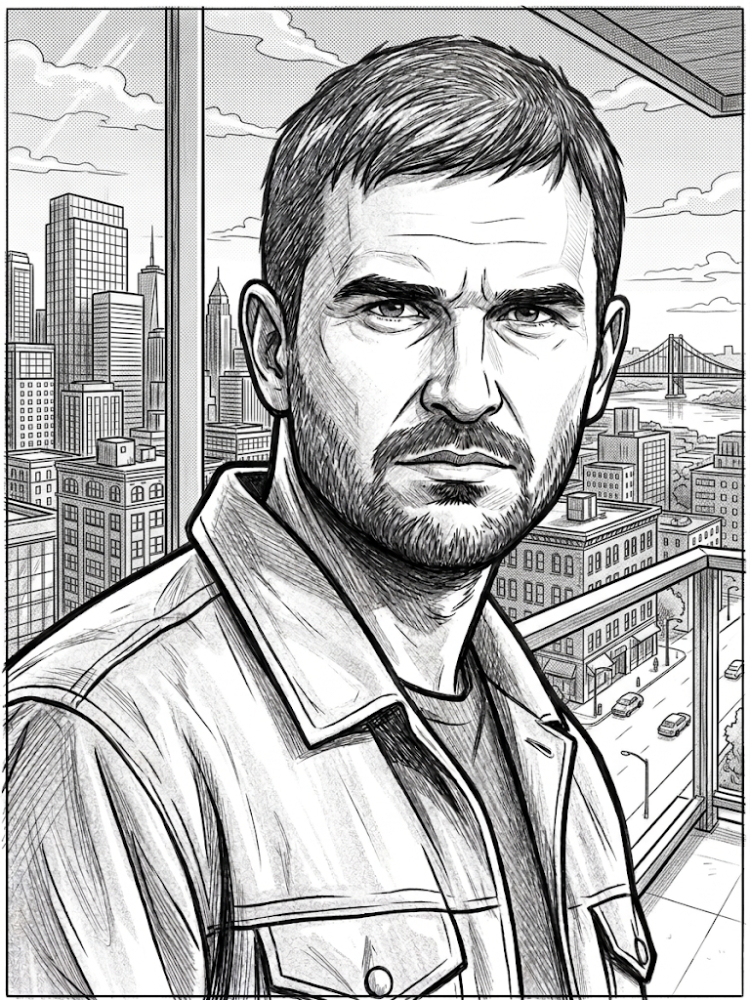
Today I went to a snack bar I usually frequent, a traditional place in the city, well known both for its quality and for its prices. Located in a busy commercial area, its position is privileged and appealing. The items on the menu are tasty, but above all, what has always defined the place were its affordable prices. In the morning, the space fills with people on their way to work. In the late afternoon, with workers returning home. Its audience is clear: the working class, which in everyday life looks for an inexpensive place for meals.
Even today, the snack bar maintains competitive prices compared to other establishments, which is why it remains full. Still, when one recalls the prices charged just a few years ago, the increase becomes evident, and disturbing. Even a place considered cheap is no longer so cheap. Added to this is the fact that, for most of the population, there has been no significant adjustment in wages. The erosion of purchasing power thus becomes concrete. For the ordinary person, the greatest everyday enemy is inflation.
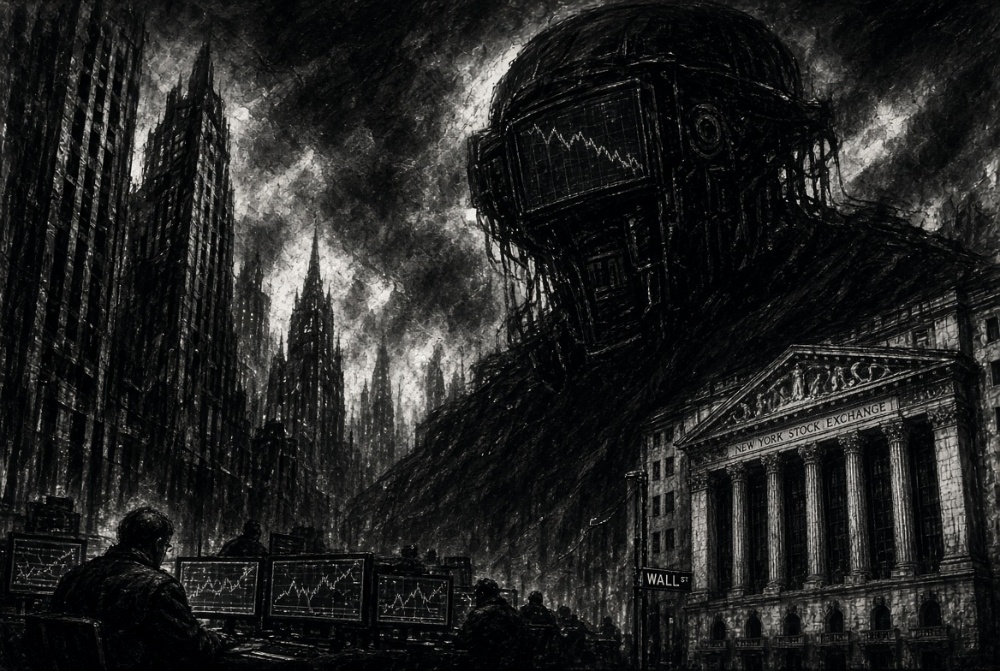
There is something deeply asymmetrical in the way the global economy has moved through recent years. While most of the world’s population has come to live under the constant pressure of rising living costs, a tiny fraction of society has witnessed an accelerated multiplication of its wealth. This is not merely a persistent inequality, but an inequality in acceleration, marked by a structural divergence between those who live from work and those who live from the valorization of capital.
For the working population, inflation manifests itself in food, services, and rents — turning the simple act of living into something expensive and small luxuries progressively inaccessible. By contrast, there is a segment for whom inflation hardly matters at all, capable of multiplying expenses in the same proportion as it multiplies gains. This scenario is not a historical novelty, inequality has accompanied humanity for centuries. What changes today are its intensity, its speed, and its normalization.
Since 2020, global billionaire wealth has grown at a historic pace, reaching unprecedented levels in the mid-2020s. Recent estimates indicate that the combined wealth of this group has surpassed US$18 trillion, with cumulative growth of more than 80% since the beginning of the pandemic. Over the same period, workers in different countries faced one of the strongest inflationary waves since the 1970s, with real income losses, precarization, and rising household debt.
This dissociation is not accidental. It is the result of a specific historical arrangement — economic, technological, and political — that redefines the very meaning of prosperity.
Genealogy of Concentration: from the Postwar Period to Asset Capitalism
To understand the present, it is necessary to return to the past. There exists a generational imaginary deeply associated with the prosperity of the world in the post World War II period. The end of the conflict and the reorganization of the international order gave rise to a singular moment of industrial expansion, accelerated economic growth, and the strengthening of the state as an agent of social mediation.
In the core countries of capitalism, especially Western Europe and the United States, this process was intense and formative. European reconstruction, driven by public investment and economic planning, and the consolidation of North American industrial hegemony created a historically specific form of capitalist success: sustained growth, expansion of formal employment, real wage increases, and broadened access to consumer goods.
In the United States, this arrangement crystallized in the myth of the American Way of Life. The middle class came to occupy the center of the economic narrative: families with intermediate incomes experienced material prosperity, social mobility, and relative stability. Consumption ceased to be a privilege and began to operate as a marker of social belonging. This model, however, was less universal than it appeared, deeply dependent on a specific geopolitical context.
Even peripheral countries such as Brazil were, to some extent, touched by this movement. Industrialization through import substitution, especially between the 1950s and 1970s, produced significant economic growth, accelerated urbanization, and the formation of an urban middle class. Although marked by deep and structural inequalities, there was a widespread perception that industrial labor, formal employment, and schooling could offer some form of social ascent.
This historical pact, productive growth in exchange for social cohesion, began to unravel in the 1980s. The oil crisis, the indebtedness of nation-states, inflationary pressures, and the reconfiguration of the international financial system opened the way for a new economic regime. The extreme financialization of the global economy began to place concrete labor in crisis, widening the distance between those who produce value and those who benefit from the gains of capital.
Increasingly, the primary source of enrichment ceased to be production and became financial valorization. This process is global, though it manifests differently across regions. In Europe, the weakening of the welfare state, austerity, and labor flexibilization eroded the social base built in the postwar period. In Brazil, historical inequality — inherited from colonialism, slavery, and land concentration — was not overcome but merely reconfigured, coexisting with structural informality and recurring inflation. In Asia, countries such as China, India, Bangladesh, and Vietnam became centers of global production, experiencing accelerated growth and reductions in extreme poverty, but also new forms of exploitation, technological dependence, and vulnerability to global shocks.
Data from the World Inequality Database show that since the 1980s, the share of income appropriated by the richest 1% has grown continuously across different regions of the world, with even more extreme concentration at the very top — the top 0.1% and 0.01%.
This genealogy makes it clear that the current scenario does not result from a momentary failure of the system, but from the historical consolidation of a model that shifted the axis of prosperity: from production to assets, from labor to property, from society to financial abstraction. It is on this terrain that inflation becomes even more devastating, acting directly on the everyday lives of the most vulnerable populations.
Pandemic, Inflationary Shock, and the Acceleration of Asymmetry
This scenario was intensified by the Covid-19 pandemic, functioning as a true systemic accelerator. To avoid economic collapse, governments and central banks injected massive volumes of liquidity into markets. This liquidity, however, was not distributed evenly. When monetary mechanisms are set in motion, the effect tends to be an inflationary cascade that erodes the real value of money and widens the distance between capital and labor.
While technology companies, digital platforms, and financial sectors benefited directly from this monetary expansion, workers faced production disruptions, informality, and loss of bargaining power. The disorganization of global supply chains and pressure on prices caused inflation to emerge forcefully between 2021 and 2023. The impact was uneven: prices rose quickly, wages did not keep pace.
Reports from the International Monetary Fund indicate that although global inflation began to decelerate after 2023, its accumulated effects persist. In many countries, average real wages have not yet returned to pre-pandemic levels. Financial assets — especially stocks and stakes in technology companies — on the other hand, continued to appreciate consistently.
Technology, Abstraction, and the Economy of Invisible Extraction
There is, however, one element that distinguishes current inequality from earlier historical cycles: technological infrastructure. Digital platforms, artificial intelligence, automation, and algorithmic economies of scale have created an environment in which a small number of agents concentrate economic, informational, and political power.
Technology, often presented as a vector of democratization, today operates as a mechanism for the abstraction of wealth. Value is extracted from data, attention, behavior, and distributed labor — often invisible or poorly remunerated — while gains are concentrated in highly protected structures.
In this context, inflation acts as a silent regressive tax. It erodes the income of those who spend almost everything they earn and barely affects those who have access to financial protection mechanisms. Society thus comes to be organized into two parallel regimes: one of inflationary survival, based on continuous work and compressed income, and another of automatic valorization, sustained by assets, algorithms, and passive income.
Two Societies, One System
The result is a social fracture that is not expressed only in numbers, but in radically different lived experiences. For a minority, time works in their favor: interest, dividends, artificial intelligence, and global markets expand wealth almost independently of individual effort. For the majority, time becomes scarce, captured by multiple jobs, long commutes, and constant economic anxiety.
This dissociation corrodes the very idea of merit and threatens democratic stability. When wealth becomes excessively concentrated, so too does the power to influence public policy, shape regulations, and define the limits of what is possible. It is no coincidence that debates over taxing great fortunes and capital gains have returned to the center of the global agenda. Institutions such as the World Bank point out that extreme inequality is not only a moral problem, but a structural obstacle to sustainable development.
The Price of Things and the Price of the World
When we look at everyday life through a historical lens, inflation ceases to be an abstract concept. It appears in more expensive coffee, in a simple lunch that no longer fits the budget, in rent that consumes an ever-growing share of income, in the diffuse feeling that money no longer has the same value as before. Beyond macroeconomic charts, real inflation is the difference between living and merely surviving.
Between economic policies and political decisions, it becomes evident that this phenomenon does not arise by chance. Inflation is not the primary cause of contemporary inequality, but one of its most visible and everyday symptoms. It reveals a system in which the cost of living rises at the same pace that the value of labor is compressed, while assets, fortunes, and fictitious financial incomes continue to multiply, almost immune to the pressures of the real world.
For those who live from work, inflation means constant adaptation: cutting back, substituting, postponing, accepting. For those who live from the valorization of capital, it is, at most, an accounting noise — easily absorbed, often offset. This asymmetry is existential, defining radically different ways of experiencing time, the future, and security itself.
When we take into account the role played by technology, the abyss deepens. If, on the one hand, there is sufficient knowledge for it to act as a catalyst for positive transformations, in practice, far from correcting this fracture, it intensifies it. By abstracting value, automating incomes, and concentrating gains, the distance between everyday effort and economic reward widens. The result is a society that no longer shares the same material experience of the world. There are those who live under the constant pressure of rising prices, and those who pass through the same process almost without noticing it.
Thus, inflation functions as an uncomfortable mirror. It reflects a world of selective prosperity, in which meritocracy empties out as a discourse and work no longer guarantees stability. It is the exacerbation of a historical model based on concentration and privilege.
Between those who benefit and those who work, the distance grows every day. Increasingly, the world resembles a game in which human beings are turned into NPCs, serving the privileged — those who are, in fact, transformed into players and moderators. In the end, the harshest truth remains: with each passing day, living simply becomes more expensive.