663 Apps Couldn't Fix My ADHD Brain. So I Built NeuroRythm.

Why I Stopped Trying to Fix My Brain (And Built a Second One Instead)
663 apps on my phone.
Not a flex. Not a joke. An actual count I did recently, sitting in my car, staring at my phone thinking... how did it come to this?
Todoist. Notion. Evernote. Motion. ClickUp. Asana. Fabulous. Brain.fm. Headway. A Kickstarter app called Focky. Level SuperMind. Brainscape. Headspace. A habit-building app whose name I literally cannot remember right now, which, honestly, tells you everything. And probably sixty others I've forgotten entirely.
I wasn't collecting them.
I was desperate.
Every app promised the same thing in a different font: this one will fix you.
And every single one failed. Or more accurately... I failed them. That's what it felt like, anyway. Broken streak notifications. Red indicators. Little digital monuments to everything I couldn't follow through on.
I tried Evernote. Feature overload nightmare, all I wanted to do was take a note. Todoist lasted the longest. Then a tech issue wasted half a day, their support took three days to respond, and the solution was "have you tried resetting your phone?" I'd fixed it myself by then. Out of pure frustrated spite.
The subscription fatigue alone is enough to break you. Every app with its urgent countdown timers and scarcity tactics and pricing tricks. All of it designed to take advantage of exactly the kind of brain that's desperately seeking a solution.
I knew I had problems with focus. Consistency. Time. Following through. I'd known for years. I'd raised it with doctors before and got told it was PTSD from my accident. Maybe. But I knew it was more than that. I just couldn't prove it.
So I kept downloading apps. Kept trying. Kept failing. Kept hearing that voice, the one built up over decades of people asking "what is wrong with you?", "why can't you just focus?", "why can't you just do the thing?", getting louder every time another streak broke.
The Script That Changed Nothing (And Everything)
At some point I got frustrated enough to build something myself.
I used Python, badly, slowly, with a lot of help, to create a simple script. Connected my Google Calendar. Added my projects. Every morning at 9am, a text window popped up showing the day's calendar and a few tasks for Be Strong Coaching and Writers Without Walls.
It worked perfectly.
I still didn't use it.
Every morning I'd look at it and think "yeah, that's great.", and then not do any of it.
And that's when something started to crack open. Because I'd built the thing. The information was right there. And my brain still wouldn't cooperate. This wasn't laziness. This wasn't lack of effort or motivation or discipline. I'd built the tool and it still didn't work.
So what the hell was actually going on?
Recognition
Around the same time, I was deep in research. Not about myself, about my son Keegan. He's autistic, nonverbal, nine years old, and brilliant in ways that most people don't have the patience to notice. I was reading medical journals, following creators with lived autism experience, mapping everything I could find.
And I kept hitting this crossover. Autism and ADHD. The overlap. The shared traits. The patterns.
I started to think: maybe.
I went to my new GP, someone who'd actually had time to know me over six months. Went in hesitant, half-expecting the same dismissal I'd gotten before.
I said "I thought I might be, you know, maybe just a tiny bit ADHD."
She didn't hesitate.
"There is no doubt in my mind whatsoever that you're ADHD."
I wasn't ready for that. I'd braced for an argument. Instead I just sat there going... wait. What?
That was the recognition. Not a diagnosis on paper, just someone finally seeing what had been there the whole time.
I opened up to her about my substance use over the years. The drinking, the self-medicating, all of it. Things I'd carried shame about for a long time.
She didn't blink. She said: "Of course. You've been self-medicating your whole life without knowing you had ADHD."
I felt seen for the first time. Like, genuinely seen.
The Reframe
What happened after that wasn't dramatic. It was quiet. Gradual. A slow unlocking of things I'd spent decades treating as character flaws.
The jobs, for a start.
I didn't leave them because I was unreliable. I left them because I'd fixed them. I'd go in, see the patterns nobody else could see, make the big sweeping changes, get the place running properly... and then there was nothing left for my brain to solve. The novelty was gone. The dopamine was gone. The reward that came from making things work had evaporated because things were already working, and my brain interpreted that as: nothing here, move on.
Everyone around me thought things were going great. That was exactly the problem.
The relationships were harder to look at.
I'd always go all in. Every single time. Too intense, too all-or-nothing, too everything. And when things got difficult, when we needed to actually talk something through, I'd freeze.
Not because I didn't care. Because I cared too much and it broke the circuit.
My exes would say: "Just talk to me."
And those four words would send me somewhere else entirely. Mouth completely silent. Brain absolutely screaming.
Say something. SAY SOMETHING. Say literally anything.
Nothing came out.
From the outside it looked like I didn't care. Like I was checked out, stonewalling, refusing to engage. The reality was the opposite... I was so flooded, so overwhelmed, so desperately trying to find the right words that the whole system locked up. And the harder I tried to force something out, the more locked it got.
I've heard "just talk to me" more times than I can count. Every time, the same freeze. Every time, the same shame afterwards.
That's not a communication problem. That's a brain in emotional overload with no off-ramp.
Then there was the hyperfocus. Disappearing into a piece of writing, a new idea, a project, falling through a hole in the universe and genuinely losing track of the fact that time was passing, that other humans existed, that sixteen hours had gone by and someone was sitting there wondering where the hell I'd gone.
I wasn't ignoring anyone. I just... wasn't there. Not in any way that had anything to do with them.
Coming up for air genuinely confused as to why anyone was upset. Which, from the outside, probably looked worse than the disappearing.
None of it was wrong. It was just different. Running on different fuel, responding to different signals, operating on a different map to the one everyone assumed I had.
The things I'd been most ashamed of looked completely different under that light.
The pattern recognition I'd had since childhood, spotting connections others missed, seeing what was coming before it arrived... that's not some quirky bonus feature. That's the ADHD brain doing what it does. Taking everything in, because it doesn't filter the way a neurotypical brain does.
We don't have a filter problem. We have a world built for filters problem.
And I'm raising a kid whose brain works even further outside that world. A kid who's been told, implicitly, explicitly, by systems and structures that were never built for him, that the way he experiences reality is the problem. He's nine. He's already navigating that.
So yeah. The anger got redirected.
Why the Apps Failed (All of Them)
Once I had the framework, once I understood what was actually happening in my brain, I could finally see why every productivity app had failed me.
They were all built by neurotypical brains, for neurotypical brains. With an "ADHD mode" bolted on as an afterthought. Different font. Gentler colour scheme. Same guilt engine underneath.
And they all made the same fundamental mistake: they picked one pain point and called it a solution.
Task management. Time blocking. Habit tracking. Pick your poison.
But ADHD doesn't work in neat categories. You can't separate I forgot to do the thing from I didn't have the dopamine to start the thing from I lost track of time doing something completely different from I'm too overwhelmed to figure out which thing to do first from life happened and now I'm three days behind and the shame spiral has started.
Those aren't five separate problems. They're one problem with five faces. And they're all connected.
Fix the task list without fixing the time blindness and you've fixed nothing. Fix the time blocking without fixing the shame around broken plans and you've fixed nothing. Build a streak system for a brain that experiences shame as a complete shutdown trigger and you haven't helped anyone. You've just built another monument to failure.
The apps weren't neutral. They were actively harmful. Every abandoned app is more evidence for the internal critic. More proof of the story you've been told your whole life.
What is wrong with you?
Nothing. The system is wrong. The tools are wrong. They were never built for us.
So I Built One That Was
Living in a bus. Chronic pain from injuries that should have killed me once. Single dad to the most important human I know. Amazon Flex deliveries to keep food on the table while building something that might actually matter.
150,000 lines of code. Seven months. No formal programming background, just Python, Claude, and a very specific kind of anger at being failed by tools that were never actually designed for brains like mine.
It's called NeuroRythm.
(Yes, that IS how Rythm is spelled. Because our neurology dances to a different Rythm.)
Not a productivity app. Not another task manager. A second brain, built for a brain that was never broken. Just running a different operating system to the one all the tools were designed for.
When you hit the Time Shift button because school drop-off ran long, your whole day adjusts. No shame. No broken plan. Just: here's where you are, here's what still works.
When the dopamine says not that project today, the Dopamine Switch doesn't punish you for it. It says: fine, what does your brain actually want to work on? And you follow the dopamine. Because you still built something. That's still a win.
When life happens, and it always does, the Life Events system pauses everything. Not you failed to keep up. Just: life happened. We held the fort. Come back when you're ready.
When you can't choose between tasks and the executive dysfunction kicks in and the choice itself becomes the wall... Task Roulette spins the wheel for you. Three chances. Third spin is final. The decision gets taken out of your hands, because sometimes that's the only way through.
Everything in NeuroRythm is connected. Because our pain points are connected. Because we're not a collection of isolated symptoms that each need their own app. We're a whole brain, a brilliant, chaotic, pattern-spotting, hyperfocusing, all-or-nothing brain, and the system should reflect that.
Who This Is For
If you've got 400 apps on your phone and none of them stuck... this is for you.
If you've been told to just focus, just try harder, just be more consistent, and you've spent years believing that was a you problem... this is for you.
If you're not formally diagnosed but you read this and something clicked, you're welcome here. We don't gatekeep. One person with ADHD is not the same as the next, and one person with ADHD is a different person the next day. The system is built to flex around that.
If you're raising a kid whose brain works differently, and you're watching the world try to sand them down to fit, and that makes you angry... yeah. I get it. That anger goes somewhere useful here.
Private beta is coming. Early access means real benefits, and it means you helped build something that actually gives a damn about how your brain works.
Sign up here.
Join our NeuroRythm community here. JD Armstrong
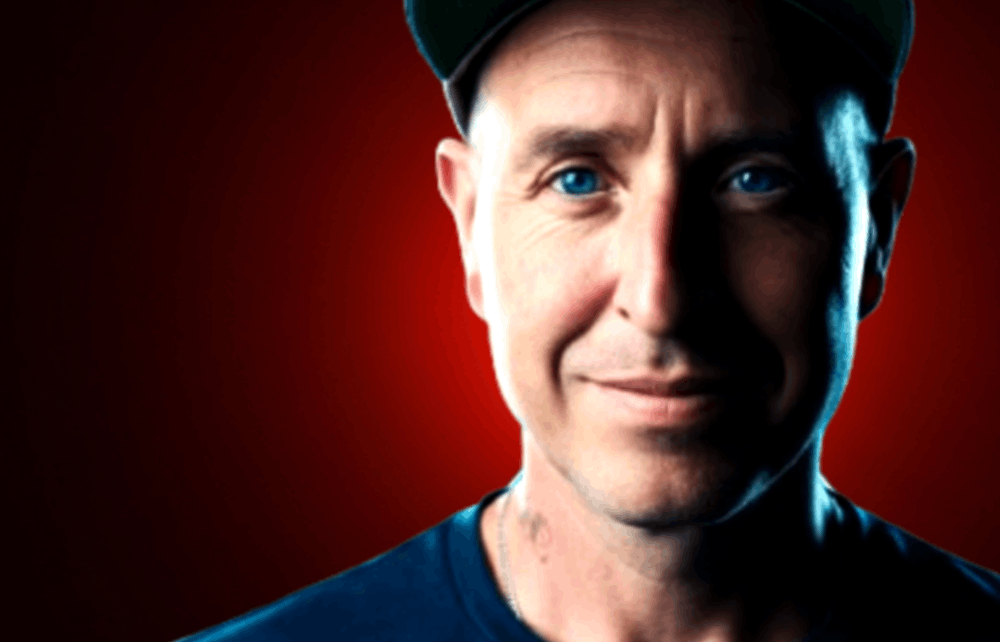
NeuroRythm founder, 663-app cautionary tale, single dad, professional oversharer.