Anatomy of the ZondaCrypto Collapse
From Marketing Giant to a Billion-Zloty Budget Hole
The case of the ZondaCrypto exchange (formerly BitBay) is currently the largest financial scandal in the Polish digital space. An investigation by the firm Recoveris, bolstered by on-chain data analysis and prosecutorial actions, reveals a brutal truth: the exchange, which sponsored world-class sports, may have been hiding a lack of access to client funds for years.
The Facade of Success and the Marketing "Escape Forward"
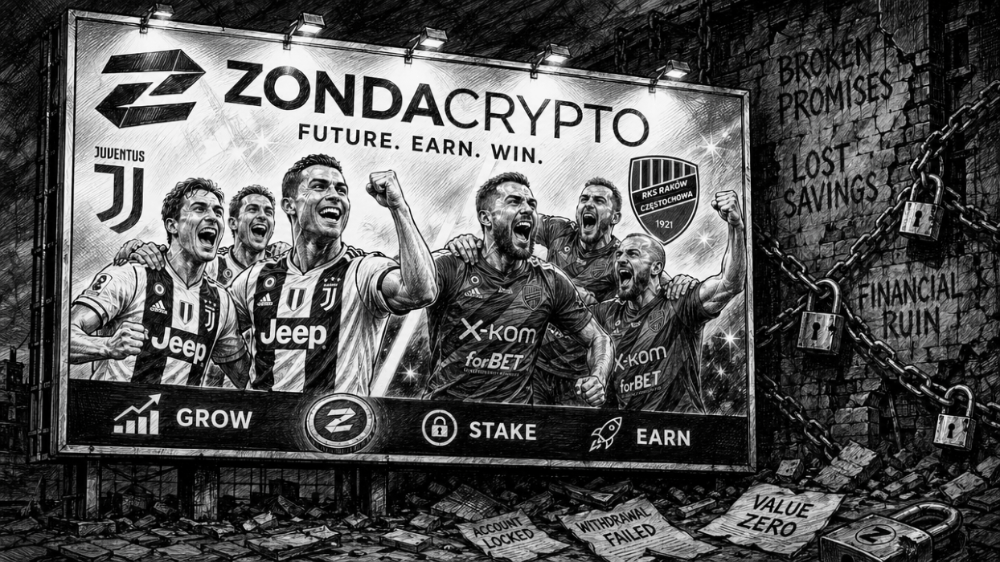
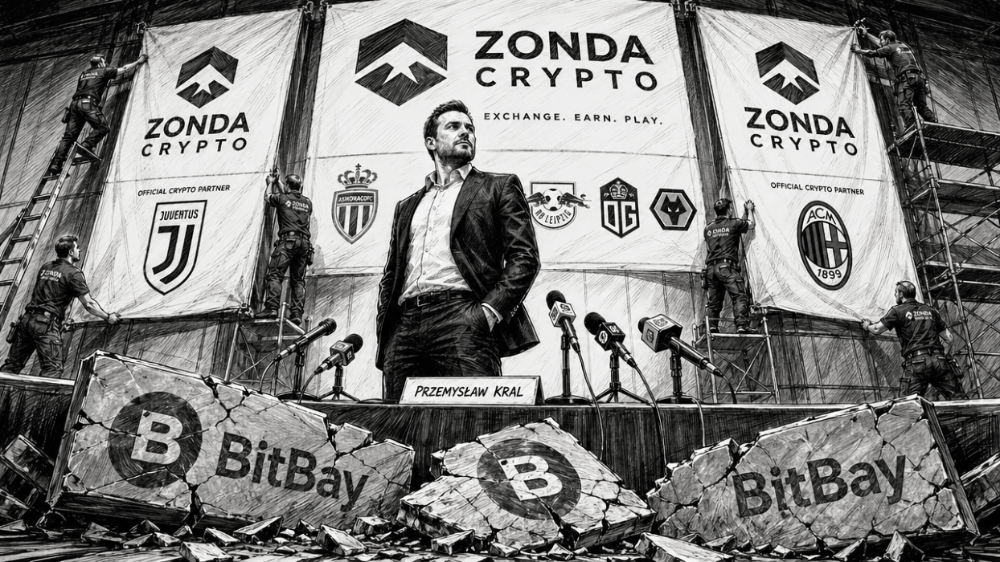
ZondaCrypto became a partner to giants: Juventus Turin, Atalanta Bergamo, and in Poland, Raków Częstochowa and Pogoń Szczecin. Today, experts—including Roman Bieda from Recoveris—assess these moves as an attempt to lend credibility to an entity that was already struggling with liquidity issues.
On-Chain Evidence: Where Did the Cryptocurrencies Go?
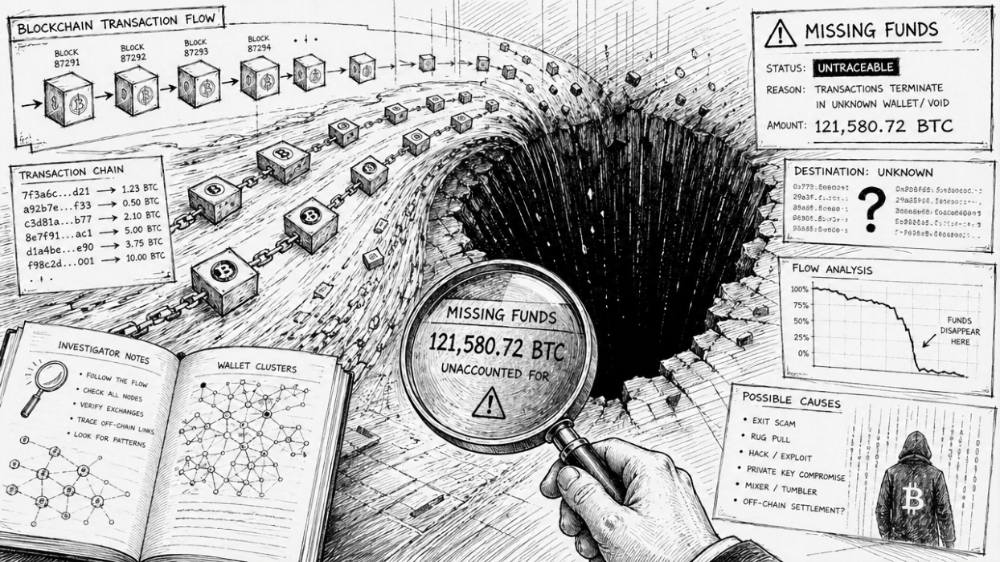
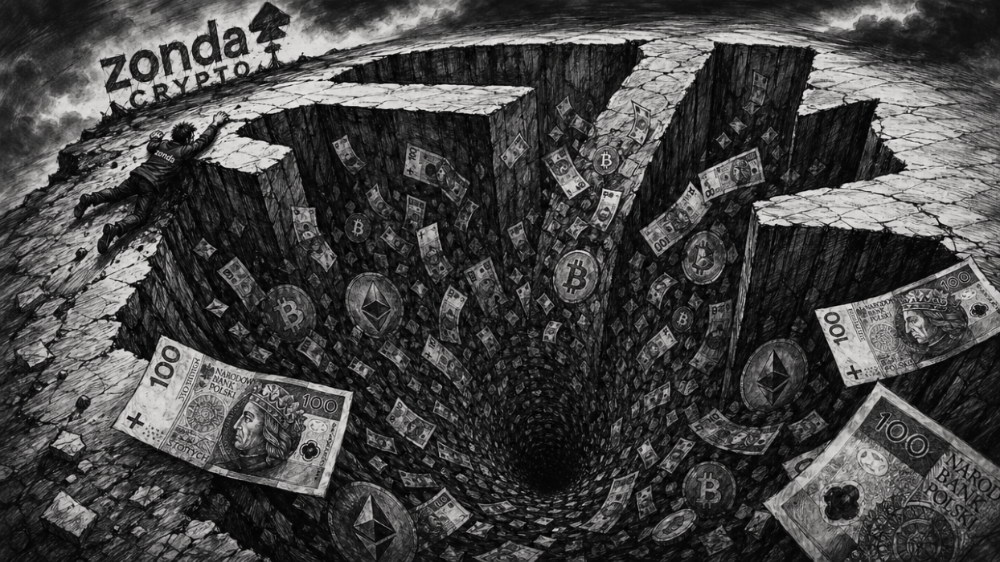
- Critical Drop in Reserves: Between August 2024 and March 2026, the BTC balance in the exchange's hot wallets plummeted by 99.7%. At a critical juncture, only 0.086 BTC remained—a total paralysis of withdrawals for thousands of users.
- Transfers to Kraken: Investigators identified an outflow of over $21 million to the Kraken exchange. Although management explained this as "liquidity rebalancing," the failure of these funds to return to ZondaCrypto wallets suggests capital flight.
- Lack of Fund Separation: Contrary to their own regulations and the upcoming MiCA (Markets in Crypto-Assets) rules, the exchange commingled client funds with its own. This led to a situation resembling a Ponzi scheme, where withdrawals were funded by the deposits of new users.
A Billion on a "Cold Wallet" and the Missing Key
The most controversial element of the case is a wallet containing 4,500 BTC (approx. 1 billion PLN). Przemysław Kral pointed to it as proof of solvency while simultaneously admitting the exchange... does not possess the private keys to it.
"It's as if a bank claimed to have money in a safe, but no one knew the combination," comments Roman Bieda.
The keys were purportedly held only by the missing Sylwester Suszek. Prosecutors in Katowice allege that the management concealed the lack of access to these reserves from clients for years, constituting a deliberate misleading of investors.
Criminal and Political Threads
The investigation extends beyond simple financial fraud. The Ministry of Justice is examining:
- Money Laundering: Connections to the defunct Russian exchange BTC-e and capital flows through Switzerland are under scrutiny.
- Suszek’s Disappearance: Authorities are verifying if the founder is alive and in contact with current management, a possibility hinted at by Kral in certain communications.
- Lobbying and Regulation: The scandal broke amidst political disputes over crypto oversight. Presidential vetoes in late 2025/early 2026 blocked legislation that could have given the KNF (Polish Financial Supervision Authority) tools to freeze Zonda's operations sooner.
Why Recoveris Targeted ZondaCrypto
1. Off-Chain Signals
Before analyzing technical data, experts noticed red flags in the exchange's environment:
- User Complaints: An increasing number of reports surfaced regarding withdrawal issues.
- Lack of Transparency: The exchange failed to publish official notices about technical breaks, dismissing inquiries about frozen funds with generic "system update" excuses.
- Sudden Marketing Withdrawal: Recoveris employees noticed that Zonda, previously omnipresent, began disappearing from industry conferences, suggesting trouble funding sponsorships.
2. On-Chain Analysis
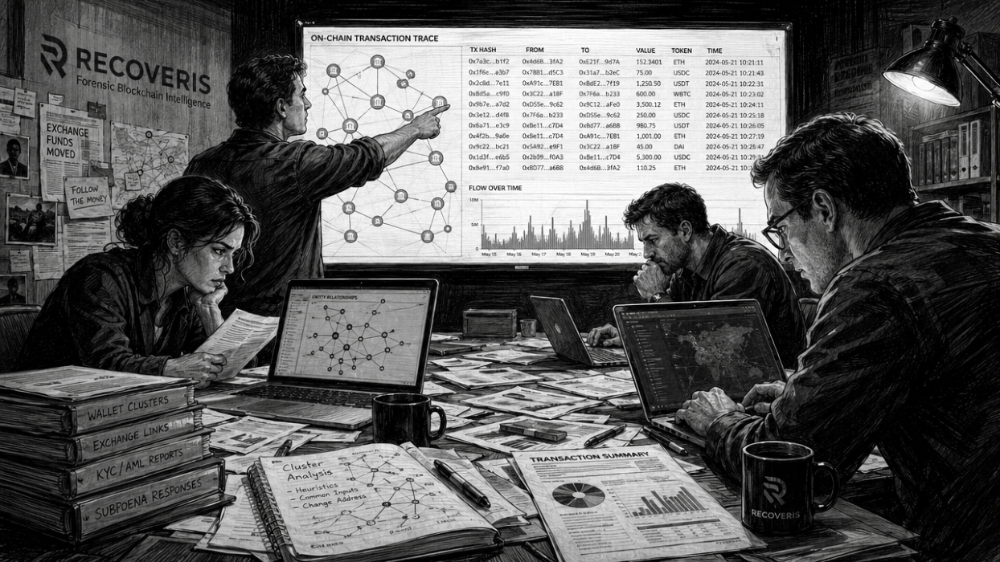
This was the deciding factor. As a blockchain investigation firm, Recoveris checked publicly available wallet data and discovered:
- Critical Liquidity Shortfall: Wallets meant for daily client withdrawals were nearly empty.
- Suspicious Flows: Large transfers to other exchanges (e.g., Kraken) never returned.
3. Unreliable Explanations
When Przemysław Kral addressed the "bank run," his arguments were viewed as illogical for a crypto exchange claiming 100% backing of client funds. If assets are fully covered, a "run" should not pose a technical problem.
4. Confirmation of Missing Reserves
The final impulse for Recoveris to publish their reports was Kral’s "admission" regarding the 1-billion-PLN reserve without private keys. This confirmed the investigators' thesis that the exchange was effectively insolvent.
The Russian Connection and Tracking "Dirty" Money
Analysis of the "cold wallet" and operational wallets revealed interactions with BTC-e, a platform shut down by the FBI in 2017 for laundering billions in cybercrime proceeds. While these links may date back to 2015–2016, they cast a shadow on the origin of the platform’s founding capital. Investigators also identified a "Switzerland-Russia-Poland" triangle involving entities of interest regarding sanction evasion.
Recoveris Investigation Methods:
On-Chain (Graph) Analysis: Using software like Chainalysis or TRM to visualize the path of every unit of cryptocurrency.
- VASP Identification: Finding the point where crypto enters an exchange and "digital numbers" turn into a real identity via KYC procedures.
- Risk Scoring: Tagging wallets that interacted with mixers or terrorist wallets as "tainted."
- AI Automation: Utilizing AI models (developed by experts from Kharkiv and London) to analyze thousands of transactions in seconds.
Technical Summary
For those who lost money on ZondaCrypto, these methods offer hope—provided the prosecution acts swiftly. As Bieda emphasizes: "Blockchain remembers everything." Any movement from Suszek’s wallet or Kraken will leave a trail leading directly to a specific ATM or bank account.
Resources:
https://www.youtube.com/watch?v=jL-mN9XCBMY
https://recoveris.io/