Beyond the Hype: Community, Revenue, and Sustainability in Web3

Beyond the Hype: Community, Revenue, and Sustainability in Web3
A perspective from practice
For several years I have been working with communities and growth strategies in the Web3 space. During this time, I have seen many projects emerge with interesting ideas, talented teams, and technically solid products. I have also seen many of them disappear.
This is not exactly surprising. Anyone who has followed the Web3 ecosystem for some time knows that sustaining a project over the years is one of the most difficult challenges in this market.
The reasons are varied: aggressive market cycles, rapid technological change, limited funding, and inflated expectations. Even so, there is a recurring pattern that appears in many of these cases.
Most ideas do not disappear because they are bad.
They disappear because they fail to find concrete ways to sustain themselves in practice.
In Web3, this often happens when there is no clear connection between four fundamental dimensions: product, community, narrative, and revenue generation.
The loop that sustains projects
By observing different projects over time, a relatively consistent pattern begins to emerge. The more resilient platforms tend to structure a functional cycle between a few basic elements of the ecosystem.
In simplified form:
product → community → narrative → partnerships → revenue → product
The product attracts the first users.
The community creates engagement and culture.
The narrative organizes this activity around a shared identity.
Partnerships expand reach and opportunities.
Revenue sustains the team and allows development to continue.
When this circuit begins to function, the project no longer depends solely on initial enthusiasm or speculative market cycles. It starts to operate in a more stable way, with technical, social, and economic dimensions reinforcing one another.
In this context, growth work goes beyond simple user acquisition. It involves structuring the relationship between community, narrative, and real mechanisms of value generation.
Communities, in this sense, are not merely a social asset. They also function as economic infrastructures within the ecosystem.
The myth of empty scale
One of the most common misconceptions in Web3 is the belief that user growth alone solves the problem of sustainability.
For a long time, the dominant strategy was straightforward: rapidly increase the number of wallets, followers, or participants. However, practical experience shows that this rarely creates lasting value.
A clear example of this dynamic can be seen in the culture of airdrops. They generate short bursts of attention and attract large numbers of users seeking rewards. In the short term, the metrics appear positive: numbers grow, social networks become active, and the project gains visibility.
But what often emerges is a farming culture.
Users enter to capture momentary value and leave soon after. The initial peak of interest is followed by a gradual emptying that drains liquidity, reduces engagement, and weakens the community itself.
In the end, the project realizes it had many numbers but little real economic structure.
Growth disconnected from value generation rarely sustains itself.
From the discourse of revolution to the criterion of real use
During the previous cycle of the crypto market, many projects were sustained by a recurring narrative: the promise of an imminent technological revolution.
Blockchain would transform everything.
Tokens would reinvent the economy.
Decentralized protocols would replace entire systems.
This imaginary played an important role at the time. It helped mobilize capital, attract developers, and form communities around emerging digital infrastructures. In some sense, it was also a necessary narrative for a technological field that was still under construction.
Today, the scenario is different.
Technology has evolved, infrastructure has matured, and the market has gone through successive cycles of expansion and correction. More recently, the rapid integration of artificial intelligence into the technological ecosystem has further raised expectations regarding what digital platforms need to deliver.
In this context, it has become harder to sustain a project based solely on the promise of future disruption.
The central question has changed.
It is no longer simply:
“Can this revolutionize the world?”
The question that increasingly guides the ecosystem now is more direct:
“Is this sustainable in practice?”
With technological advances — especially at the intersection of AI, software, and decentralized networks — the environment has become more competitive and demanding. Platforms must demonstrate something that is both simple and difficult to build: real use.
This involves genuinely active communities, functioning economies around the product, and revenue models capable of sustaining development over time.
In other words, it is about operational sustainability.
Projects that successfully structure the connections between product, community, narrative, and revenue generation tend to navigate market cycles with greater stability. They become less dependent on hype or speculation and begin to operate as systems where cultural, technological, and economic dimensions reinforce each other.
In this sense, one of the most important shifts in the current moment may be precisely this transition: from the promise of revolution to the construction of infrastructures that function in the long term.
Building sustainable ecosystems
Web3 remains one of the most fertile environments for digital experimentation. New protocols, tools, and organizational models continue to emerge at a rapid pace. Even so, recent experience in the sector has made one lesson increasingly clear.
Ideas alone do not sustain projects.
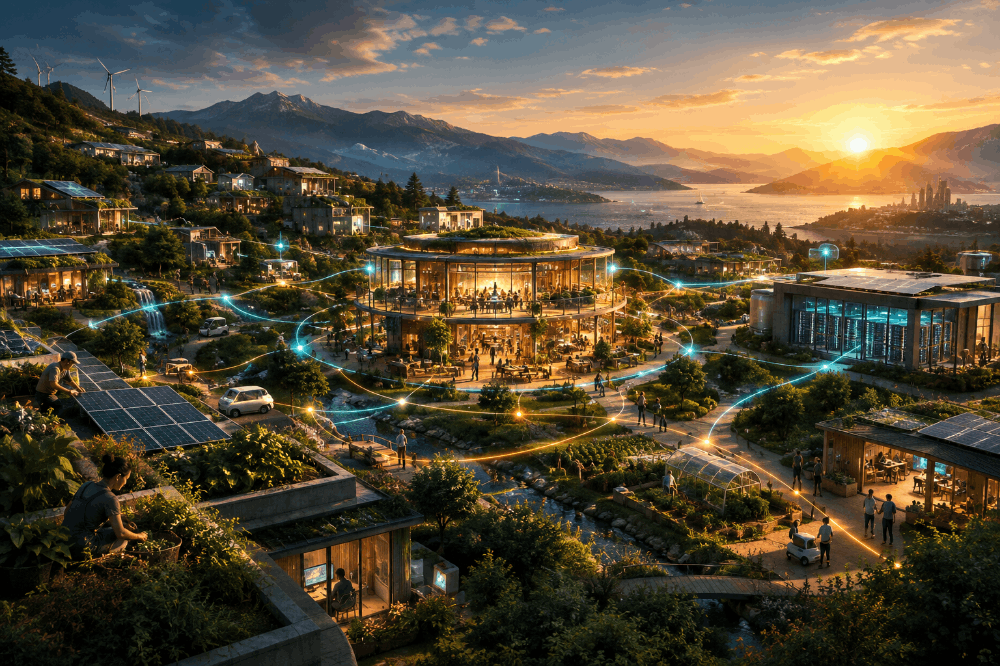
What sustains platforms over time is the ability to build economically functional ecosystems, where product, community, and value generation operate in connection with one another.
This requires moving beyond strategies based solely on rapid growth or speculative narratives and toward structures capable of maintaining continuous activity. Communities remain when they find utility, recognition, and meaningful participation within the dynamics of the product. Likewise, new users tend to arrive when they perceive an environment that is active, stable, and economically viable.
In this sense, the most consistent form of growth tends to be organic: it emerges from recurring interactions between users, creators, partners, and developers, all participating in a system that continuously produces value.
When product, narrative, and economics operate together, the platform no longer depends solely on temporary peaks of attention. It begins to build something more durable: an environment capable of retaining users, attracting new participants, and sustaining its own development.
Perhaps this is precisely the point of maturity the ecosystem is beginning to reach. It is no longer only about launching new ideas or technologies, but about creating the conditions for them to exist and grow over the long term.