🌐 Is Web3 Truly Decentralized… or Just Decentralized in Theory?

👀 Introduction
Decentralization is the heart of Web3.
It’s the concept that separates Web3 from the traditional internet we know today. Supporters of Web3 often say that blockchain technology will eliminate central authorities and give power back to users.
Instead of a few corporations controlling the internet, Web3 promises a system where:
- No single entity has complete control
- Users own their data and digital assets
- Communities govern the platforms they use
It sounds revolutionary.
But as Web3 grows, a difficult question is emerging:
💭 Is Web3 truly decentralized… or is decentralization mostly theoretical?
To answer that question, we need to explore how Web3 actually works in practice.
🌍 What Decentralization Really Means
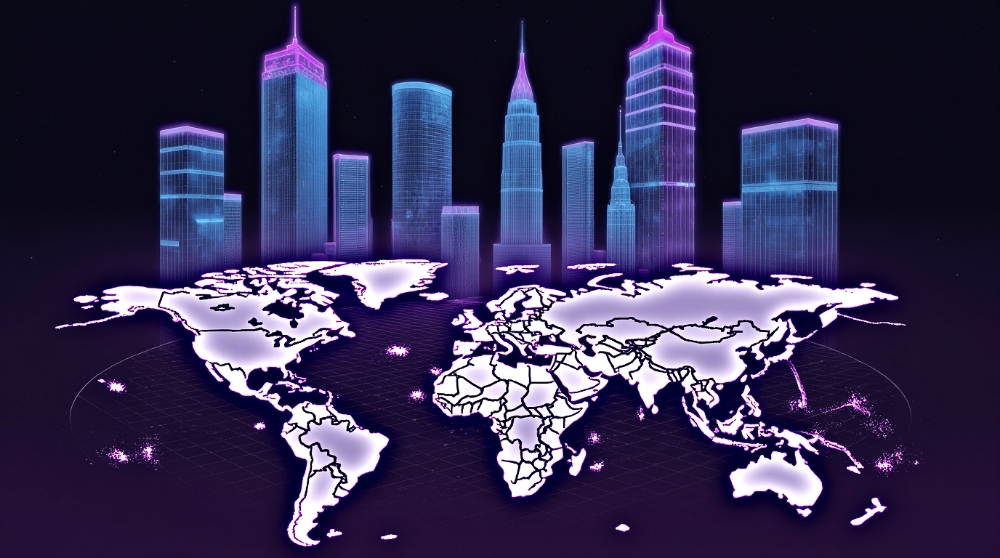
In simple terms, decentralization means distributing power across a network rather than concentrating it in one central authority.
In traditional Web2 systems, companies like large social media platforms control:
- The infrastructure
- The user data
- The rules of the platform
- The monetization systems
Web3 aims to replace this with decentralized networks where control is shared among participants.
Blockchain networks, for example, are designed so that thousands of independent nodes maintain the system together.
No single server owns the network.
In theory, this creates a more open and resilient internet.
But theory and real-world implementation are not always the same.
🪙 Blockchain Networks: Decentralized by Design
Most blockchains are built to be decentralized at the protocol level.
Transactions are validated by multiple participants rather than a central authority. The blockchain ledger is distributed across many computers around the world.
This design provides several benefits:
- Transparency
- Security
- Resistance to censorship
- Reduced dependence on central institutions
For example, if one node goes offline, the network continues functioning.
This architecture is one of the strongest arguments that Web3 truly represents a decentralized system.
However, decentralization at the technical level does not always mean decentralization in practice.
🏗️ Infrastructure Still Has Central Points
Many Web3 applications depend on infrastructure providers.
These companies offer services such as:
- Blockchain node access
- Data indexing
- Cloud hosting
- API connectivity
Without these services, many decentralized applications would struggle to function smoothly.
The challenge is that a large portion of the Web3 ecosystem relies on a relatively small number of infrastructure providers.
If these services experience outages or policy changes, large parts of the Web3 ecosystem could be affected.
This creates a paradox.
The blockchain itself may be decentralized, but the tools that connect users to the blockchain may not be.
💰 Token Distribution and Power
Another important factor in decentralization is token ownership.
Many Web3 projects distribute tokens that provide governance rights. Token holders can vote on decisions such as protocol upgrades or funding allocations.
In theory, this allows communities to control the direction of the project.
But there is a complication.
Token ownership is rarely evenly distributed.
Often, large portions of tokens are held by:
- Founders
- Early investors
- Venture capital firms
- Large market participants
When voting power depends on token holdings, those with more tokens have more influence.
This means that governance can sometimes become concentrated among a relatively small group.
The system is decentralized technically, but power may still accumulate economically.
🧠 Governance: Ideal vs Reality
Decentralized governance is one of the most ambitious ideas in Web3.
Projects often promote systems where communities can vote on proposals through decentralized autonomous organizations (DAOs).
These systems aim to replace centralized leadership with collective decision-making.
However, governance participation is often lower than expected.
Many token holders do not actively participate in voting.
As a result, decisions may be influenced by a smaller group of active participants.
This does not mean governance fails, but it shows that decentralization requires active participation to function effectively.
🌐 User Access Still Depends on Platforms
Even though blockchains are decentralized, many users access Web3 through centralized interfaces.
Examples include:
- Crypto exchanges
- Wallet providers
- Web3 applications
- Online marketplaces
These platforms simplify the user experience but introduce central points of interaction.
If these services experience restrictions or technical issues, users may temporarily lose access to parts of the Web3 ecosystem.
This illustrates another layer of complexity.
The underlying network may be decentralized, but the user experience often relies on centralized services.
⚖️ Decentralization Is a Spectrum
One of the most important insights about Web3 is that decentralization is not absolute.
It exists on a spectrum.
Some systems are highly decentralized, while others remain partially centralized.
For example:
- Some blockchains have thousands of validators.
- Others rely on a smaller set of operators.
Some projects distribute tokens widely among users.
Others concentrate ownership among early investors.
Rather than asking whether Web3 is decentralized or not, a better question might be:
👉 How decentralized is each system within the ecosystem?
🚀 Why Decentralization Still Matters
Despite its imperfections, decentralization still provides powerful advantages.
It allows systems to become:
- More transparent
- More resistant to censorship
- More accessible globally
- Less dependent on single institutions
Developers can build applications without asking permission from large corporations.
Users can move digital assets across borders without traditional intermediaries.
These possibilities represent significant progress compared to traditional internet structures.
Even partial decentralization can create meaningful change.
🔮 The Future of Web3 Decentralization
The Web3 ecosystem is still relatively young.
Many of the challenges around decentralization are actively being addressed.
Developers are experimenting with:
- More distributed infrastructure networks
- Improved governance models
- Better token distribution strategies
- Decentralized storage and computing solutions
As these technologies mature, Web3 systems may become increasingly decentralized over time.
What we see today may only be an early stage of a much larger transformation.
✨ Final Thoughts
So, is Web3 truly decentralized?
The honest answer is complex.
At the technical level, blockchain networks are designed to be decentralized.
But in practice, elements such as infrastructure, governance participation, and token ownership can still create concentrations of power.
This doesn’t mean the vision of decentralization is false.
It simply means that decentralization is a process — not a finished product.
Web3 may not be perfectly decentralized today.
But it is building the foundations for a more open and distributed digital future.
💬 What Do You Think?
Do you believe Web3 is already decentralized…
or is decentralization still more of an ideal than a reality?
Share your thoughts 👇