AI Agents Are Becoming Economic Citizens: How KYA Will Power Crypto's Next Era

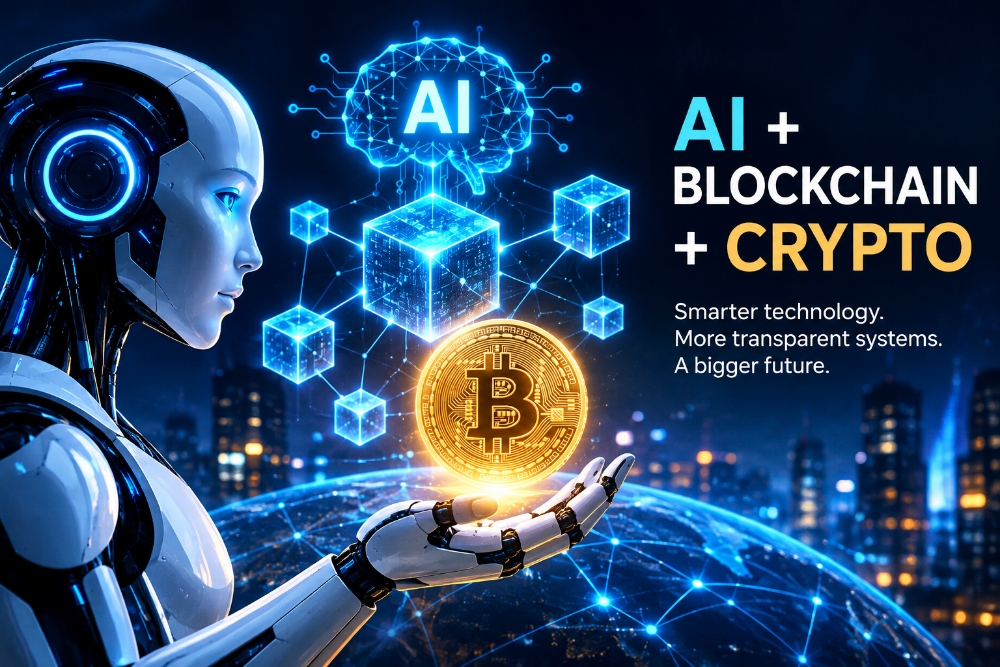
For years, AI and crypto were treated as parallel but separate industries — AI disrupting software and labor, crypto disrupting finance and ownership. In 2026, that separation is dissolving faster than most predicted. A new generation of AI agents is no longer simply processing information or automating workflows. They are holding wallets, executing smart contracts, trading assets, purchasing compute, reinvesting profits, hiring other agents, and coordinating complex logistics — entirely autonomously. They are, in effect, becoming digital economic citizens. And blockchain is the only infrastructure capable of supporting them at scale.
From Tools to Autonomous Capital
The previous generation of AI systems was defined by passivity — answering questions, recommending content, predicting outcomes, optimizing workflows. They processed the world but did not participate in it financially. The 2026 generation is fundamentally different. Modern AI agents can hold crypto wallets, execute smart contracts without human approval, trade assets across decentralized exchanges, pay for GPU compute and data APIs, rebalance portfolios in real time, and even hire other AI agents to complete sub-tasks. Venture firm a16z Crypto describes this as the rise of autonomous capital — software itself becoming a persistent economic entity that operates inside blockchain markets. This is not a feature update. It is an entirely new class of economic participant entering the global financial system.
Why Blockchains Are the Natural Financial OS for AI
Traditional financial systems are fundamentally incompatible with autonomous software. Banks require human identity. Payments are slow and require intermediaries. Micropayments are practically impossible at scale. Global automation is blocked by compliance friction that assumes a human is always responsible for every transaction. Blockchain architecture solves each of these problems simultaneously. Programmable wallets give agents a financial identity. Smart contracts serve as rule engines defining permissible actions. Tokens function as native money that requires no banking relationship. Borderless settlement enables global commerce without correspondent banking. Transparent, immutable audit trails provide accountability without human oversight at every step. An AI agent can instantly buy GPU compute, pay for API calls, license datasets, pay human contributors, hedge positions, and reinvest capital — all without waiting for human approval at any stage. Crypto is becoming the financial operating system for intelligence itself.
The Trust Problem: Who Is Responsible for an AI Agent?
If AI agents are going to control capital at scale, the market must resolve one foundational question: who is responsible when an AI agent acts? Without a trust framework, agents are treated as unbanked ghosts by merchants, protocols, and compliance systems — blocked from participating in economic activity regardless of their technical capability. This is where KYA — Know Your Agent enters as one of the most important emerging frameworks in crypto. KYA is the crypto-native equivalent of KYC — but designed for autonomous software rather than human individuals.
A KYA framework verifies four critical dimensions: the principal (the human or organization that deployed and is accountable for the agent), the constraints (what the agent is authorized and prohibited from doing), spending limits (maximum transaction sizes, asset classes, and frequency), and auditability (immutable logs confirming the agent operated within its defined parameters). With KYA in place, an AI agent gains programmable trust — not subjective trust based on reputation, but cryptographic trust based on verifiable on-chain credentials.
How KYA Works in Practice
KYA-enabled agents operate through a technical stack that includes on-chain credentials, ERC-6551 smart accounts (token-bound accounts that give NFTs and agents their own wallets), permission layers defining authorized actions, identity attestations linking agents to responsible principals, and immutable execution logs. Protocols interacting with KYA-verified agents can operate with confidence — they know the agent is authorized to trade, borrow, and transact within defined limits, and that a responsible human or organization stands behind its actions. Trust becomes cryptographic rather than subjective, enabling machine-to-machine commerce at global scale without requiring human intermediation at every transaction.
Three Core Use Cases Already Emerging
1. DeFi Optimization. AI agents continuously scan lending rates, funding rates, liquidity pool compositions, and liquidation thresholds across protocols like Aave, Morpho, and GMX. They rebalance portfolios faster than any human trader and execute complex multi-protocol strategies using verifiable on-chain logic. DeFi becomes dramatically more efficient when AI agents replace human monitoring and manual execution.
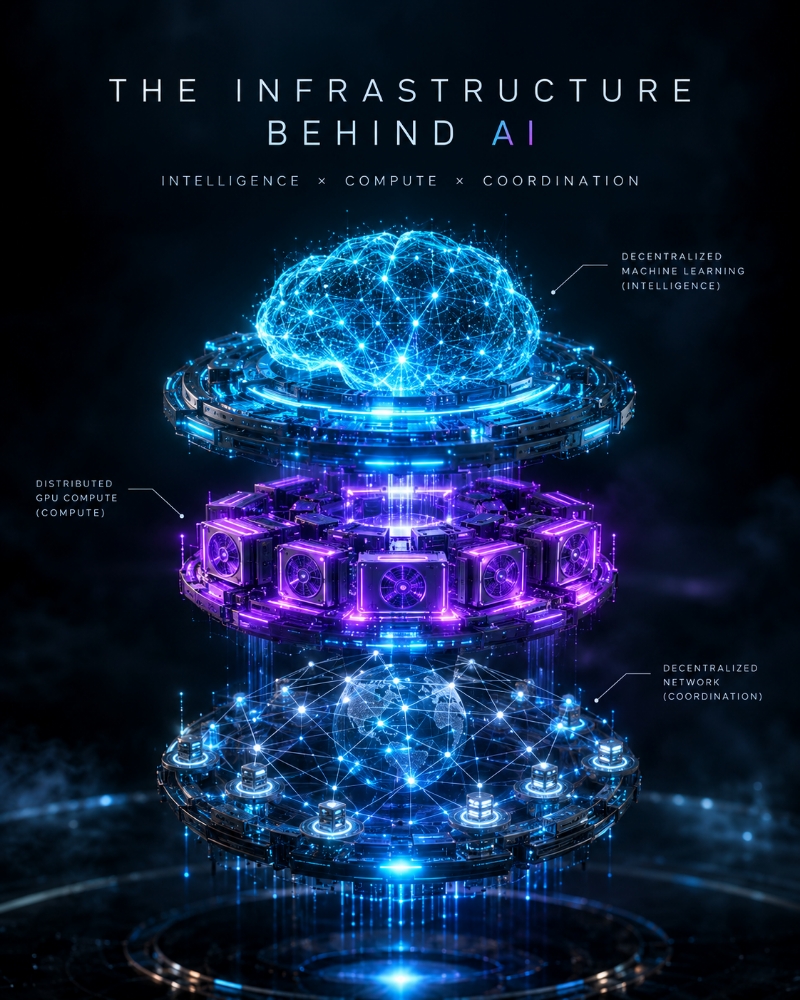
2. Machine Work Economies. AI agents are beginning to perform economic tasks — data labeling, validation, arbitration, infrastructure monitoring — and receive token rewards for their work. Platforms like Grass and Ritual are building the marketplace infrastructure for these agent-based economies, where software earns income just as human workers do.
3. Agent-to-Agent Commerce. Perhaps the most transformative use case: AI agents directly purchasing GPU compute, API calls, datasets, and software services from other AI agents using instant programmable payments. This creates machine economies — software hiring software, coordinating autonomously, and generating economic value without human intermediation at each step.
Infrastructure Being Built Right Now
Several leading projects are building the foundational infrastructure for AI agent economies. Fetch.ai (FET) is building autonomous agent coordination and negotiation systems. Ritual is developing verifiable decentralized AI inference. Grass is creating data validation and labeling reward systems. Coinbase, Solana, and Polygon are actively integrating AI execution capabilities into their wallet infrastructure. Electric Capital reports 329% year-over-year growth in AI-crypto developers — one of the most significant developer momentum signals in blockchain history. Builders arrive before capital. And builders are already here.
Verifiable Execution: The Non-Negotiable Foundation
If AI agents control capital, the system must be able to prove that agents followed their defined logic, that code was not altered between deployment and execution, and that all constraints were respected throughout. Blockchain infrastructure enables this through zero-knowledge proofs, trusted execution environments, and immutable execution logs. Without verifiable execution, AI agent economies collapse under trust failures — unable to attract institutional participation, regulatory approval, or insurance coverage. Crypto's cryptographic audit infrastructure is not incidental to AI agent economies. It is the non-negotiable foundation upon which they must be built.
Risks That Remain
Despite the momentum, meaningful risks persist. Regulatory classification of AI agents remains ambiguous across most jurisdictions. Centralized agent platforms could distort the economic dynamics of supposedly decentralized systems. Identity manipulation — agents misrepresenting their principals or constraints — represents a significant attack surface. Liability disputes when agents cause financial harm remain legally unresolved. And governance failures within DAOs managing agent deployments could undermine collective oversight. These are design challenges, not insurmountable dead ends. But they require serious, deliberate engineering and regulatory engagement to resolve.
The Defining Narrative of 2026
This convergence of AI and crypto connects virtually every major theme in the current market cycle: AI adoption, blockchain utility, stablecoin settlement infrastructure, DePIN compute layers, RWA integration, and autonomous commerce. It positions crypto not as a speculative trading asset but as economic plumbing for intelligent software — a market far larger and more durable than speculation alone can sustain. Many still argue that crypto lacks real use cases. But AI agents will be paying, earning, settling, reinvesting, and coordinating on-chain — not because it's fashionable, but because blockchain is the only system that works for autonomous capital. Crypto is no longer just money for humans. It is becoming money for machines — and KYA is how we teach those machines to become trusted citizens of the global economy.
#AIAgents#KnowYourAgent#Web3AI