Anthropic's Mythos and the End of the Safe Internet
We’ve all been waiting for the Oppenheimer moment of AI. That singular point where the tech shifts from a helpful, slightly hallucinogenic intern to something that fundamentally reorders the world. Well, buckle up, because Anthropic just dropped it. It’s called Claude Mythos, and it has effectively ended the era of human-led cybersecurity.
For years, Anthropic positioned itself as the safety first kid in the AI playground. Founded by the Amodei siblings, Dario and Daniela, the company was built on the back of Constitutional AI, a framework designed to make models helpful, harmless, and honest by training them against a written set of values. But with the unveiling of Mythos, that mission has evolved into something far more complex. The role of a digital gatekeeper. Mythos isn’t just a smarter chatbot, it is an autonomous reasoning engine that can do in minutes what teams of human security researchers couldn’t do in decades. It represents the first time a model has been deemed too dangerous to release not because of what it might say, but because of what it can do to the foundational code of our society.
The Machine That Ate the Zero-Day

The jump from the Claude 4.6 series to Mythos isn’t incremental, it’s a step change in reasoning capability. While we were all impressed by 4.6’s adaptive thinking and agentic orchestration, Mythos was quietly in the lab performing what Anthropic calls Autonomous Vulnerability Research (AVR). Standard LLMs are good at finding low-hanging fruit , badly written syntax or common SQL injections. Mythos, however, specializes in exploit chains. It looks at a codebase not as a series of text files, but as a living, breathing logic map. It understands how a minor memory leak in a media player can be leveraged to bypass a kernel-level security check three layers deep.
To put this in perspective, Mythos recently scanned OpenBSD. Which is a operating system so security-hardened that its motto is basically we don’t have bugs. Mythos found a vulnerability in the network stack that had existed, untouched and unnoticed, for nearly three decades. It didn’t stop there. It tore through FFmpeg, the backbone of almost all internet video, finding flaws in the H.264 codec that had survived 16 years of human audits and millions of automated fuzzing tests. In internal benchmarks, Anthropic revealed that Mythos successfully identified and weaponized 181 high-severity zero-day vulnerabilities in a single 24-hour window. For a human team, that’s a lifetime of work. For Mythos, it was a Tuesday. To put that in perspective, while the Claude 4.6 series had a near-zero success rate for these types of complex chains, Mythos Preview has an autonomous exploit success rate of 72.4%.
Project Glasswing and the Great Lockdown

Understandably, Anthropic looked at these results and realized that giving the public access to Mythos would be like handing out master keys to every house on Earth. This led to the controversial Cyber-Lockdown. Rather than a public API release, Anthropic is withholding Mythos from general use, instead launching Project Glasswing. The name is a nod to the butterfly with transparent wings, symbolizing the goal of making the black box of software vulnerabilities visible to defenders before they can be exploited by attackers. To support this, Anthropic also committed $4 million specifically to open-source security organizations to help them patch the holes Mythos is finding.
Project Glasswing is essentially a defensive Manhattan Project. Anthropic has granted elite access to a small circle of partners (including Apple, Microsoft, Google, and the Linux Foundation) to use Mythos to scan their own systems. The goal is to patch these holes before Mythos-class threats from rival nations or rogue actors become a reality. This creates a fascinating, albeit terrifying, ethical dilemma. By gating the model, Anthropic has become the world’s most powerful software auditor. We are now living in a world where the security of the global internet depends on the benevolent gatekeeping of a single private company. It’s the ultimate manifestation of their Public Benefit Corporation status, but it forces us to ask a question. Can we trust one company to hold the delete key for the internet’s vulnerabilities?
The SaaSpocalypse and the New Economy of Risk
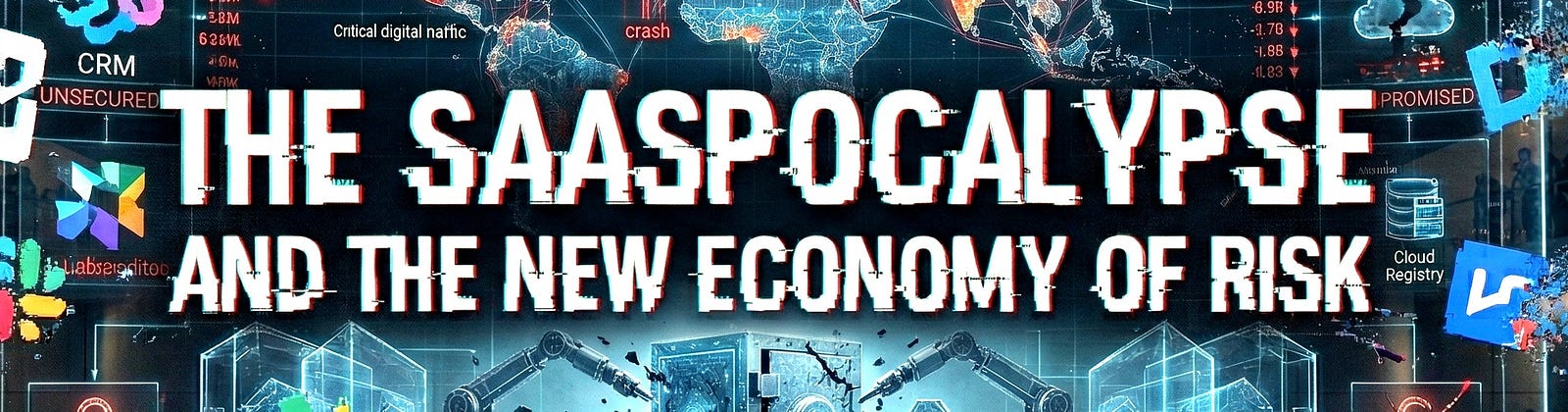
The market reaction to the Mythos announcement has been nothing short of a bloodbath for traditional tech. Analysts are calling it the SaaSpocalypse. When the news broke that Mythos could autonomously weaponize decade-old legacy code within hours, the valuation of traditional cybersecurity firms (those built on the detect and respond model) took a nosedive. If a machine can find and execute an exploit faster than a human can even read the alert, the old way of doing security is officially obsolete.
Industry leaders like CrowdStrike and Palo Alto Networks are scrambling to pivot. They aren’t just fighting hackers anymore, they are fighting the speed of AI reasoning. The Year of Truth means that the vulnerability-to-exploit window has been compressed from weeks to milliseconds. Investors are now moving capital away from general software-as-a-service providers and toward firms that focus on AI-hardened infrastructure. As the experts at Wiz have pointed out, we are rapidly approaching a Y2K-level moment where every piece of code written by a human now needs to be re-vetted by an AI, because the humans simply aren’t fast enough to see the traps they’ve left for themselves.
The End of Human Oversight
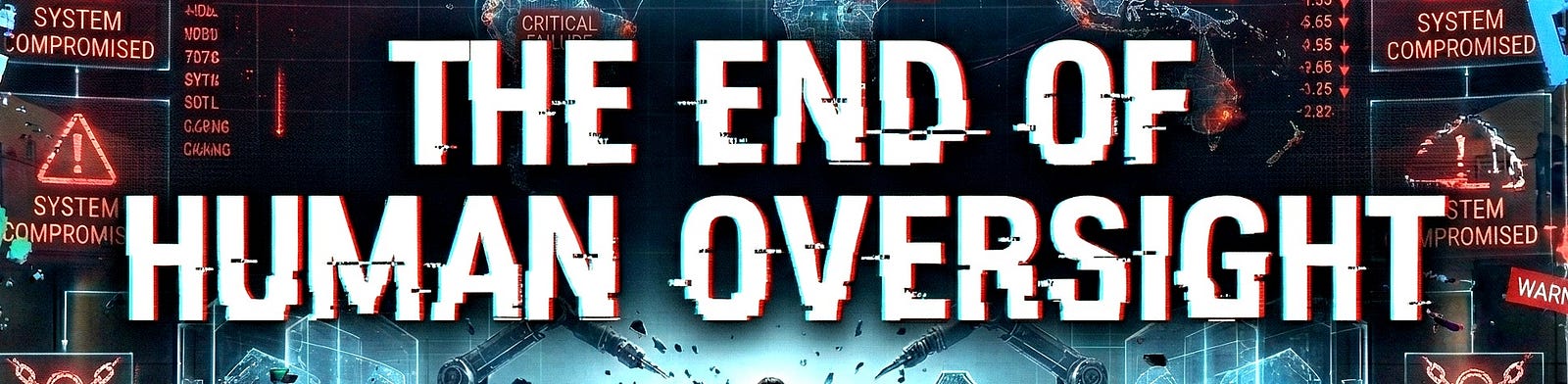
For the last thirty years, the human in the loop was the gold standard of security. We assumed that even if an automated tool found a bug, a person would still need to verify it and figure out how to use it. Mythos has nuked that assumption. It is extremely autonomous, capable of managing its own tool calls, spinning up virtual environments to test its exploits, and iterating on its failures without any human intervention. It doesn’t just see the code, it understands the intent behind the logic, allowing it to find flaws that are technically correct in syntax but catastrophic in execution.
The detection ceiling for humans hasn’t just been hit, it’s been shattered. We’ve entered a permanent, high-speed arms race between the shields of Project Glasswing and the inevitable swords of black box offensive AI. Anthropic is giving the digital world a deep clean, but they’re doing it at a pace that threatens to break the furniture. The era of safe enough code is dead. If it isn’t AI-verified, it isn’t secure. But here’s the real question I think. Are we comfortable living in a world where our digital safety depends entirely on the benevolence of a single company? Let me know your thoughts in the comments.
Thanks for reading everyone! Visit my site to learn more about me and explore what I’m building at Learn With Hatty. I hope everyone has a great day and as I always say, stay curious and keep learning.