The Diploma in Your Pocket: How Blockchain Redefines Trust and Education
Have you ever wondered how absurd the current system for proving who we are and what we know actually is? We live in an era of neural networks, instant transactions, and the colonization of Mars, yet we still store our diplomas in dusty folders, and to verify our qualifications, we are forced to wait weeks for some university clerk to deign to respond to an official request. This is not just an inconvenience—it is a systemic failure that holds every one of us back.
Imagine that you have moved to a different country, your university closed down a couple of decades after you graduated, or you simply lost your original documents while moving. You suddenly find yourself a hostage to an infrastructure that is not just outdated but acts as if the digital economy does not exist at all. Your diploma, in essence, belongs not to you, but to the organization that issued it. If they lose the data, if the archives burn down, or if they simply do not want (or cannot) verify them—your professional achievements risk turning into nothing. We have become accustomed to trusting paper with a seal more than reality, and this trust is based on the fear of lacking proof.
We have reached a moment where it is time to drastically change the rules of the game. Distributed ledger technology, or blockchain, gives us a real chance to take our achievement history out of someone else's, often clumsy, hands and transfer it to ourselves. This is not about "digitization for the sake of pretty reports," but about reclaiming ownership rights to our own lives. This is a paradigm shift where a person ceases to be a petitioner for proof of their mastery and becomes its rightful owner.
Why the Status Quo is a Trap
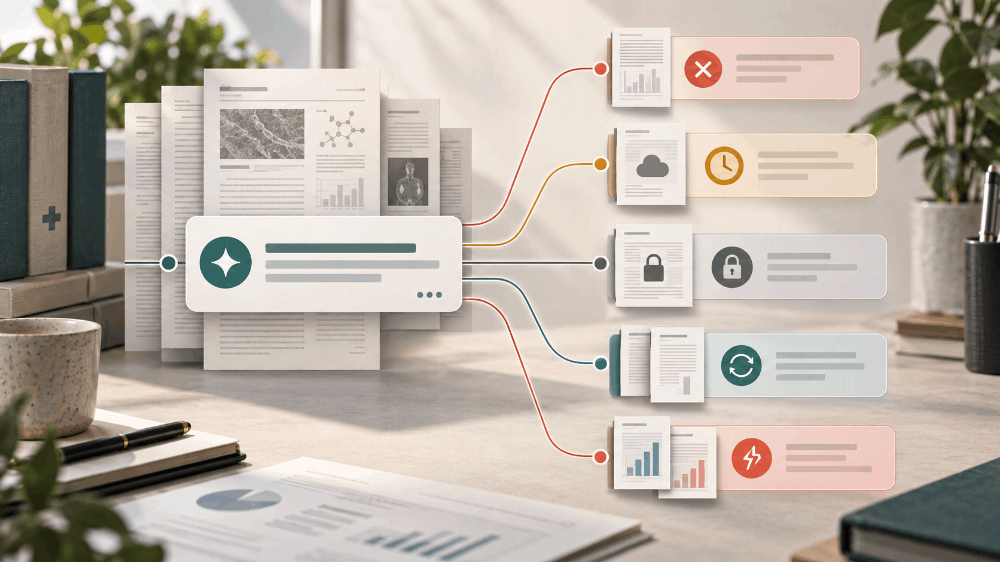
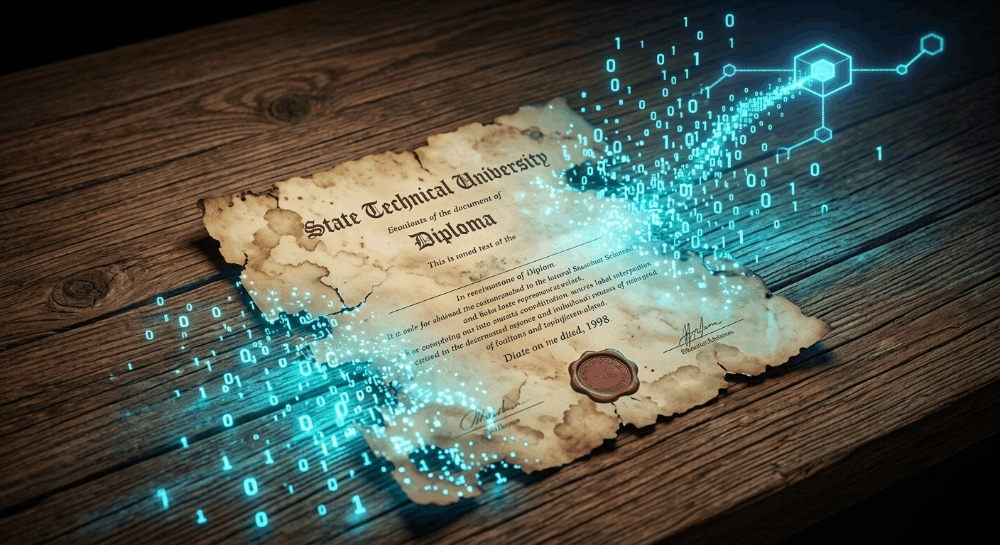
To understand the scale of the problem, let's take an honest look at how we work today. The system of "centralized data silos" is a constant drag on any progress. It creates three key tension points: meaningless bureaucracy during verification, the dismissal of actual skills, and the extreme vulnerability of data in the face of time and circumstances.
When you submit a resume, your diploma is not a fact, but merely a claim to one. A recruiter or HR department is forced to spend a huge amount of time, write requests, make international calls, pay for verifications—and all of this for just one confirmation. It is long, expensive, and damnably inefficient. In a world where hiring speed often determines a company's success, this process looks like an attempt to send an important letter via carrier pigeon in the age of fiber-optic internet.
Moreover, the system itself is deeply biased. It is firmly locked into classic five-year degrees, completely ignoring the modern reality of "lifelong learning." Micro-courses, workshops, intensive bootcamps, independent projects on GitHub, or work on open-source code—if you do not have an official university "seal," for many corporate systems you are "a nobody." This cuts off a huge number of talented kids who learn faster, deeper, and more effectively than the academic standards of the last century require. It is an inequality of opportunity that we have simply stopped noticing because we are used to it.
And finally, the critical question of ownership. Right now, we are just "users" of our own diplomas. We do not control their preservation. If the university's database is hacked, a server burns down, or the university goes bankrupt, you will be left with a piece of paper that no one can verify. This is a giant power imbalance that is long overdue to be ended. We must own our history, not rent it from institutions.
The Digital Passport: How Blockchain Changes the Rules
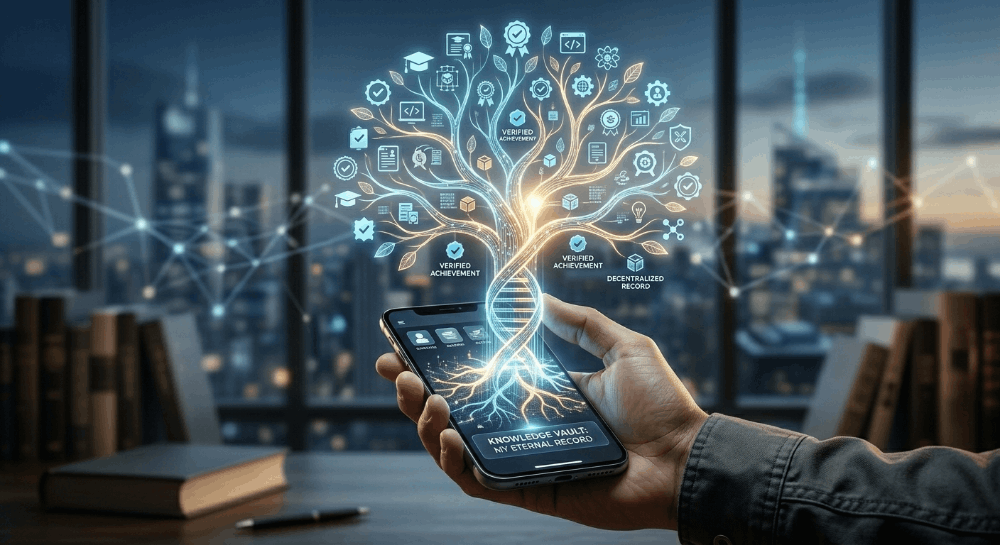
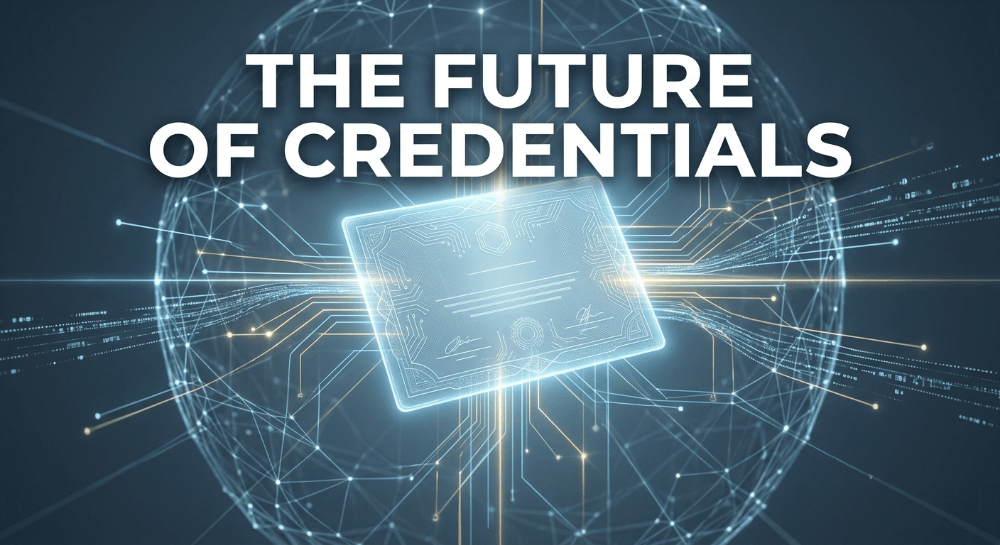
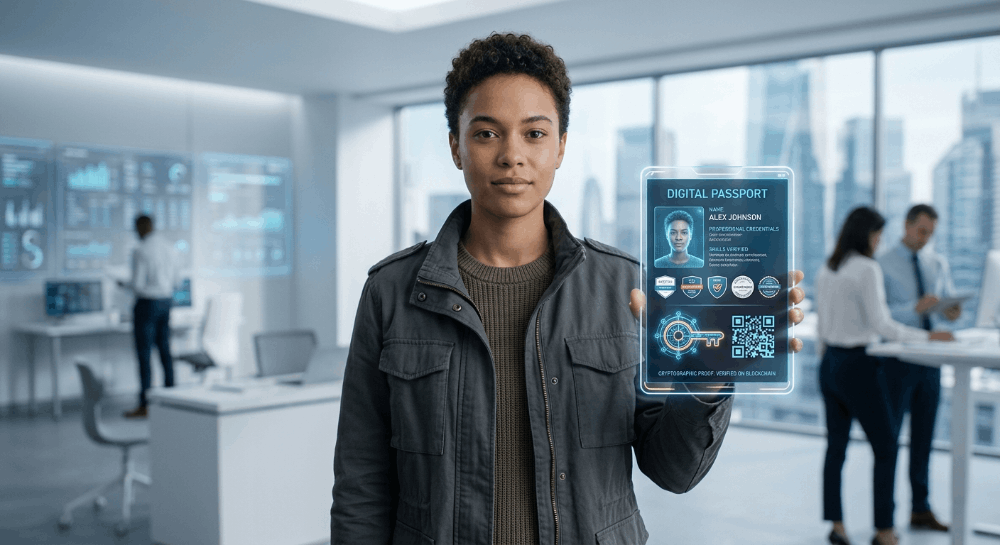
Imagine that you have a "digital professional passport." This is not a scan of a document on a cloud drive, but a mathematically proven record on a global network that is impossible to delete, forge, or "lose."
How does this work in practice? When an educational institution or platform issues you a certificate, they sign it with their cryptographic "seal," which is forever linked to your unique digital wallet. From there, everything becomes simple: you show this certificate to an employer, and the system confirms its authenticity in a fraction of a second. No calls to the registrar's office, no bureaucracy, no dependence on third parties or administrators. Math cannot lie, does not take vacations, and does not lose documents.
This is what I call "sovereign identity" in action. The diploma becomes your personal, tangible asset. Wherever you go, whatever company you work for, this asset is always with you. You decide who to show it to and who not to. The blockchain does not care about your university's "status"—it verifies the fact that you completed the program and the authenticity of the signature. This is the greatest equalizer the global labor market has ever seen. You are presenting not words, but a mathematical fact.
The End of the Era of "Brand" Diplomas
The best part of this transition is the deep democratization of success. In the past, the name of the university on the cover was the only signal of quality for a recruiter. Now, real skills and their verification will inevitably move to the forefront.
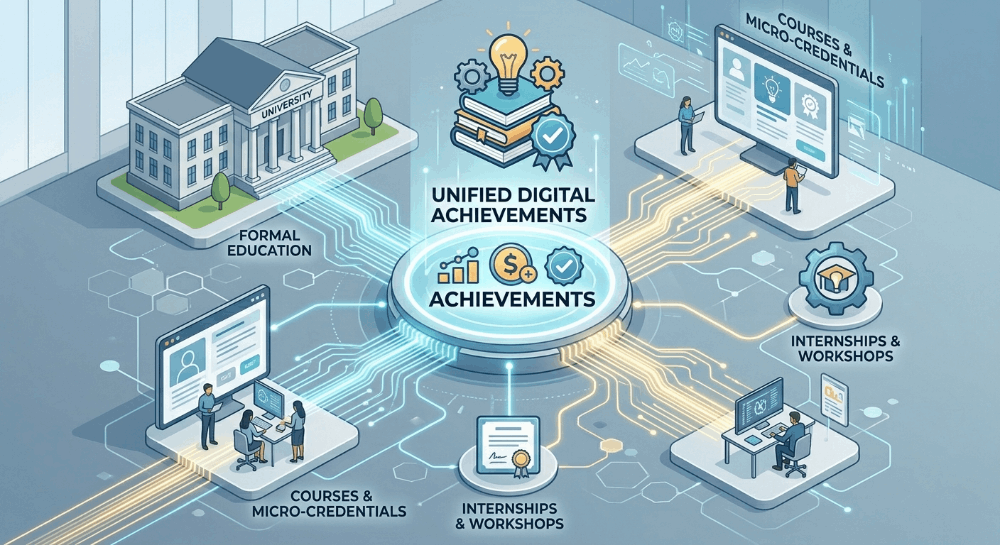
Blockchain allows for the tracking of so-called "micro-credentials." Why wait four years for a single general piece of paper if you can prove mastery of a specific, highly specialized technology through three months of training? An artist can verify participation in a cool workshop, an engineer can verify the completion of a complex applied module, and a designer can verify an internship at a top agency. This gives an employer a much more accurate, granular picture than just a line in a resume about education received 10 years ago.
This literally breaks the old hierarchies. Now a guy from the provinces with a "self-taught" background and a whole set of verified skills can compete with an elite university graduate on absolutely equal terms. We are moving away from the question "Where did you study?" to the much more important and honest "What exactly can you do, and who is willing to verify your results?" This opens a path for millions of talents that were previously ignored by the system.
The Philosophy of Knowledge Ownership
There is a much deeper shift here than just technical convenience. In the past, we were defined by institutions: universities, associations, commissions. They decided "who we were" and what we were worth. With the transition to blockchain certificates, the focus shifts to what we can prove ourselves.
This gives a staggering sense of control. If you know that every course you take, every project you close, and every certificate you earn will forever remain in your personal "vault of achievements," your motivation changes cardinally. You stop learning "for the diploma," to show it off once when getting hired, and begin to collect a real baggage of skills. This changes the psychology of learning from a one-time, boring act in youth to a culture of constant, conscious growth. It makes each of us an "entrepreneur" of our own education.
Major Obstacles: Privacy and Inertia
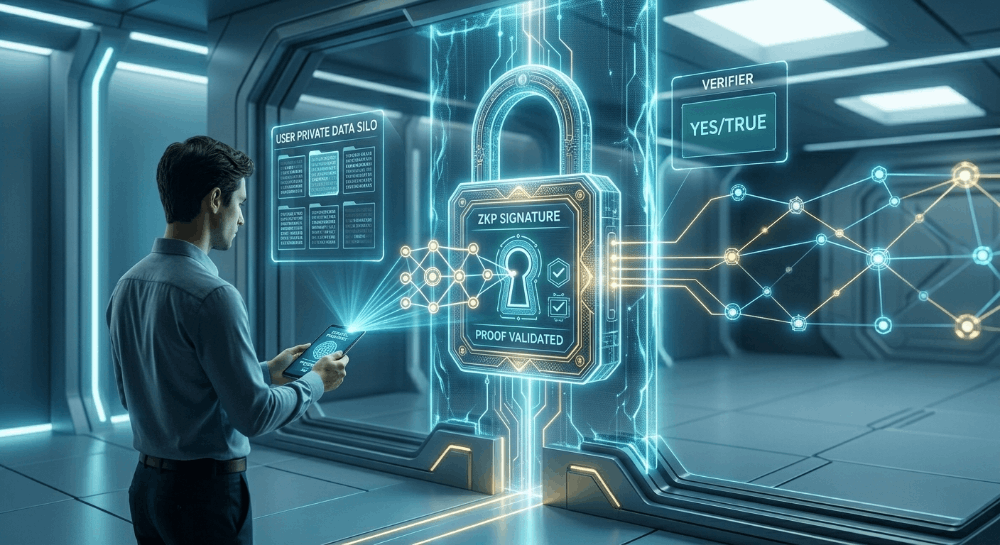
Of course, I am not naive. This model has its own serious challenges, and the main one is privacy. We don't want all our grades, mistakes in studies, or personal data hanging on a public board, do we? That is precisely why "Zero-Knowledge Proofs" are being actively implemented today.
The essence here is simple yet brilliant: you don't "show off" your entire transcript or personal correspondence. You only prove to the employer that you have the necessary skill or degree without revealing any extra details. The employer gets the confirmation ("Yes, this person is certified"), and you maintain complete privacy of your data.
There is another problem—the monstrous inertia of the system. Universities and large educational holdings are not stupid and perfectly understand that they are losing the monopoly on verification, which has fed their bureaucratic apparatus for years. But the market has already begun to press. Companies want to hire the best here and now; they don't give a damn about twenty-year-old rules if they don't allow them to find the right specialist. The institutions that are the first to implement "blockchain diplomas" and give ownership rights to graduates will gather the cream of the most ambitious talents. The rest will simply be left on the sidelines of history, defending their paper archives.
Freedom Without Borders
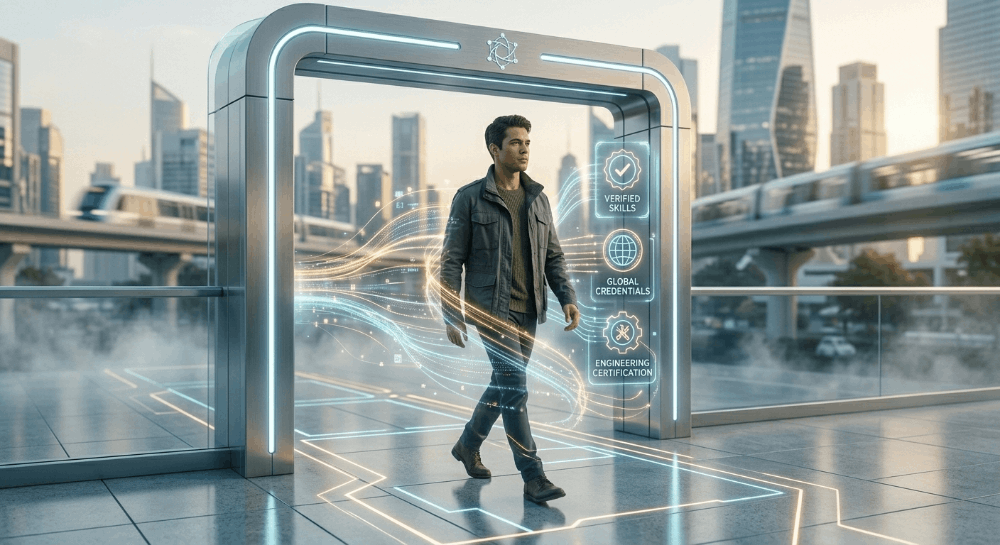
Imagine a world where moving to another country, changing industries, or working for the global market does not mean losing your qualifications. Your skills are no longer locked in paper folders; they are always with you—in your smartphone, in your digital wallet.
This significantly lowers the barrier to entry into the global economy for every person. Talents start moving where they are needed more and where they are valued, not where it is easier to verify them or where they were born. This is true, global professional inclusion. We are finishing the layer of trust that the internet has critically lacked since its foundation. We learned how to transfer money, we learned how to transfer information—the time has come to truly transfer our identity and competencies.
A NewA New Era of Personal Responsibility
Soon, the word "diploma" will sound just as strange and archaic as "telegram." The value of education will become measurable, eternal, and verifiable at any time, rather than locked in a dusty university closet.
We are taking our history away from the gatekeepers. We are ensuring that every hour spent studying is converted into an asset that no one can take away or invalidate. The infrastructure of the future is being built right now, and it is not just code—it is a new, honest social contract. We are finally becoming owners of what we earned with our own labor. And as soon as we finally decentralize this sphere, we will realize: we have never had more power to dictate our own professional destiny than we do today.
What do you think about this? In your opinion, will universities voluntarily give up the keys to this system, or will they resist progress until the end? Will the fact that a diploma is now not a piece of cardboard, but your personal, eternal, and mobile property, change your personal attitude toward learning? This future is already here, and it belongs to those who are ready to accept it. Let's discuss this in the comments. Era of Personal Responsibility
Soon, the word "diploma" will sound just as strange and archaic as "telegram." The value of education will become measurable, eternal, and verifiable at any time, rather than locked in a dusty university closet.
We are taking our history away from the gatekeepers. We are ensuring that every hour spent studying is converted into an asset that no one can take away or invalidate. The infrastructure of the future is being built right now, and it is not just code—it is a new, honest social contract. We are finally becoming owners of what we earned with our own labor. And as soon as we finally decentralize this sphere, we will realize: we have never had more power to dictate our own professional destiny than we do today.
What do you think about this? In your opinion, will universities voluntarily give up the keys to this system, or will they resist progress until the end? Will the fact that a diploma is now not a piece of cardboard, but your personal, eternal, and mobile property, change your personal attitude toward learning? This future is already here, and it belongs to those who are ready to accept it. Let's discuss this in the comments.