The death of Helium

Good morning/evening
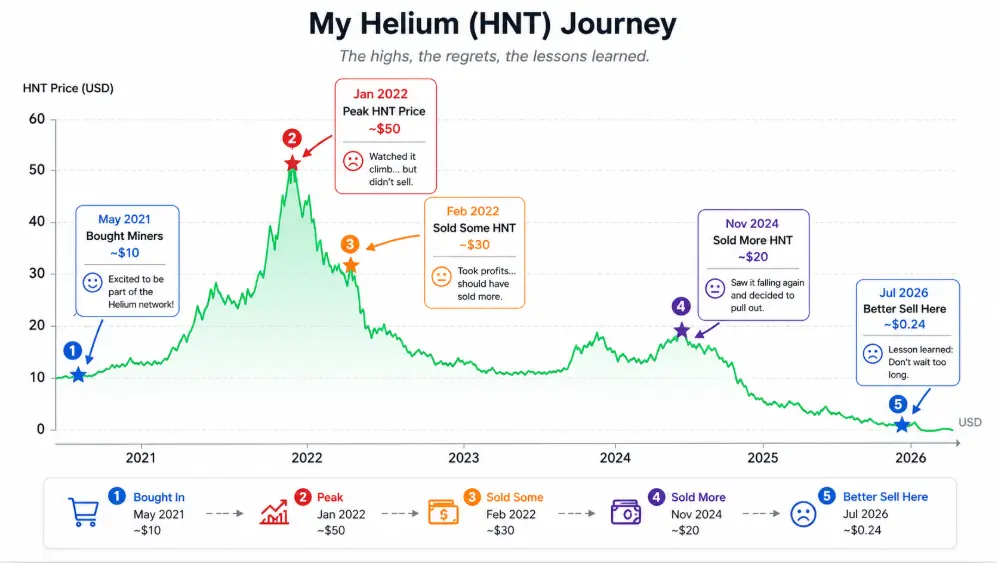
The Helium journey is one that has, at times, made me happy, sad, annoyed and frustrated, but without that experience I would never have gotten into crypto. Even though I didn't understand at the time what an ERC 20 token was or how I was actually paying for these miners, Helium was my gateway into this crazy world of crypto.
There were so many changes over the last six years. At first you needed line of sight, then you needed height, and the challenge became how far you could ping another miner. Those of us who used internet towers could reach huge distances until the rules changed and a limit was placed on witness distances. Almost every major change seemed to come at the expense of the IoT miners. It is frustrating when you spend so much time, money and effort doing something the right way, only for the goalposts to keep moving.
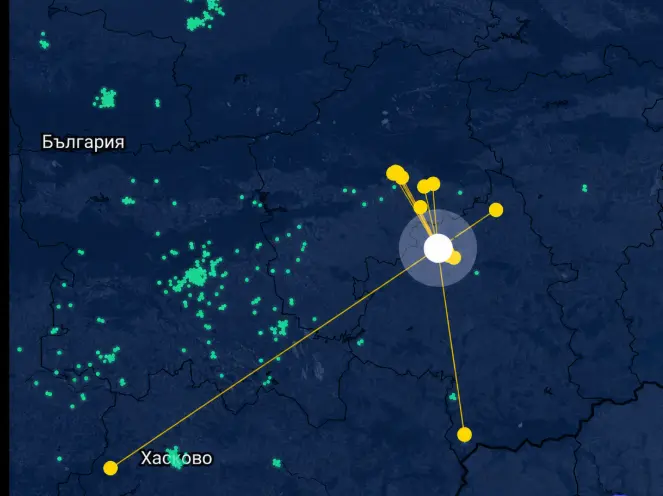
This picture is from the early days as more miners appeared in Bulgaria, showing how far my reach was with my Helium miners, I was proud then of all the work put into it and this was my screen saver for a while!
Well, you may be wondering why I'm waffling on about this. The reason is that there has been another HIP (Helium Improvement Proposal), and in all honesty, it doesn't sound much like an improvement.
HIP-149 - Helium Utility and Emissions Realignment
This governance proposal aims to shift Helium's reward mechanism away from Proof of Coverage and towards rewarding real world network usage. On paper that sounds sensible, but it bundles four major changes into one community vote.
1. Retiring Proof of Coverage (PoC)
The proposal officially retires Proof of Coverage on both the Mobile and IoT networks. Instead of earning rewards simply for proving your hotspot is online and providing coverage, operators will only earn rewards by serving genuine, verified network traffic.
Proof of Coverage was the whole reason many of us bought these miners in the first place. The idea was simple: build wireless coverage, prove your hotspot was genuinely contributing to the network, and earn HNT in return. It wasn't perfect, but everyone understood the rules. If you put in the effort to find a good location, install a better antenna and optimise your setup, you had a reasonable chance of earning decent rewards.
That incentive helped build nearly one million hotspots around the world.
2. Implementing a Deployer Earnings Floor
(This only applies to Mobile hotspots, which are currently only available in the USA.)
To protect Mobile network operators from declining rewards and crypto volatility, HIP 149 introduces a US dollar based earnings floor. Operators are guaranteed to receive at least 50% of the revenue generated from carrier paid data usage.
For Mobile hotspot owners, that's a welcome safety net but for the rest of us, it changes absolutely nothing.
3. Operations and Growth Token Capitalisation (Minting More Tokens!)
HIP 149 authorises the creation of 141 million new HNT tokens over a 36 month period, with roughly half being minted during the first year. These tokens will be held in a Nova Labs managed multisig wallet and used to fund engineering, carrier partnerships and expansion of the Mobile network.
The logic is understandable. If Helium wants to become a genuine telecom provider, it needs money to grow.
Adding around 72% more HNT into circulation is a huge increase in supply. Unless demand grows just as quickly, it is difficult to imagine this not putting significant downward pressure on the token price.
Perhaps my biggest concern isn't actually the inflation itself, it's trust. When people spend hundreds, or even thousands, building infrastructure because they're promised one set of incentives, only to see those incentives completely rewritten years later, it becomes much harder to believe in the next proposal.
Once trust is lost, it's incredibly difficult to get back.
4. Creating an Advisory Council
To oversee this newly created treasury, HIP 149 establishes a seven seat Advisory Council consisting of five elected community members and two Nova Labs appointees, the aim is greater transparency over how the funds are spent.
To vote on the proposal, users needed to have staked HNT (veHNT), with maximum voting power only available after staking for four years. I did have some staked years ago, but eventually sold after earning about five cents over eighteen months.
The reality is that Nova Labs, venture capital investors, institutional validators and large Mobile deployers control enormous amounts of veHNT and historically they have dominated governance votes to the point where many ordinary miners simply stopped voting altogether because they felt their votes made little difference.
Who Really Loses?
The biggest losers are the original IoT hotspot owners.
These miners relied almost entirely on Proof of Coverage for their earnings. Remove PoC and anyone living outside a busy commercial area generating significant network traffic is likely to see their rewards fall to zero.
There are also obvious concerns around centralisation, handing control of a multi million-dollar treasury to a Nova Labs managed multisig wallet feels like a step backwards from what was once marketed as The People's Network.
The Numbers Tell the Story
Back in the early days, Europe had to wait around six months after the United States before we could even buy a Helium IoT miner. Even today, Mobile hotspots are still only available in the USA, meaning users in other countries can't participate in that side of the network even if they want to.
That makes the following figures quite striking.
- The Mobile network represents less than 2% of Helium's physical hardware, yet it generates more than 99% of the network's revenue and data traffic.
- The original IoT network represents over 98% of all deployed hotspots worldwide, yet today it generates very little actual network traffic.
In other words, HIP 149 effectively removes passive income from the vast majority of people who helped build the network in the first place.
Final Thoughts
From a business perspective, I can sort of understand why Helium is making this change. A network that earns genuine revenue from real customers is obviously more sustainable than one that simply rewards hotspots for talking to each other. Nearly one million IoT hotspot owners spent years helping to build Helium into what it is today. They invested in miners, antennas, masts, paying to be on internet towers and electricity, believing they were helping create a decentralised wireless network that rewarded participation.
Today, those same people appear to be getting screwed (sorry for the lack of a better word, but it is what it is!), while the focus shifts almost entirely towards a Mobile network that most of the world still can't even access. It is the final chapter of The peoples network. If Drift was still active I would be shorting HNT right now! Do you know a good perp DEX where I can short HNT? What are your thoughts? Do you think this is the end of the Helium network. Was I right to sell all my tokens?
As always thank you for reading and please feel free to comment.