What Is an AI Agent? A Plain-Language Guide to the Technology Reshaping Everything

You have seen the term everywhere in the past eighteen months. AI agent. Agentic AI. Autonomous agent. Every project announcement, every token launch, every protocol upgrade seems to invoke it. And yet, if you asked most people in any crypto community to explain what an AI agent actually is — not what it costs, not which token to buy, just what it is — you would get a lot of vague hand-waving about "automation" and "the future of work."
That gap between hype and understanding is a problem. Not because the hype is entirely wrong — the technology is genuinely significant — but because you cannot evaluate what you do not understand. You cannot spot the real projects from the noise. You cannot make good decisions about the platforms you use, the tokens you hold, or the tools you integrate into your work.
This article exists to close that gap. No jargon for the sake of it. No token price speculation. Just a clear, grounded explanation of what an AI agent actually is, what distinguishes it from the AI tools you already use, what problems it solves, and why it matters — whether you are a developer, a creator, a business owner, or simply someone trying to understand where the world is heading.
Start Here: What an AI Agent Is Not
The easiest place to start is with what an agent is not, because most people's mental model of "AI" is built around tools that are genuinely useful but fundamentally different from agents.
A chatbot is not an agent. When you open a chat window and ask a question, you get an answer. The system responds to your prompt, generates text, and stops. If you want it to do something else, you ask again. The human is always driving. The AI is always responding. This describes the majority of AI interactions most people have had.
A copilot is not an agent. A writing assistant that suggests the next sentence, a coding tool that autocompletes a function, a design tool that generates variations on your layout — these are copilots. They suggest. They assist. They wait for you to approve or reject each step before continuing. The decision is always yours.
A workflow automation tool is not an agent. Tools that trigger a sequence of predefined steps when something happens — "when a new email arrives, add it to this spreadsheet and send a Slack notification" — are automations. They are powerful, but they are rigid. They follow the script you wrote in advance. They do not adapt. They do not decide. If something unexpected happens, they fail silently or break entirely.
An AI agent is different from all three. What separates an agent from a chatbot, a copilot, or a workflow tool is the autonomy axis. A chatbot answers a question. A copilot suggests an action and waits for a human to approve it. A workflow tool runs a fixed sequence you defined in advance. An agent decides what to do next based on what just happened. The decision is the product.

So What Actually Is an AI Agent?
AI agents are autonomous systems that perceive, reason, and take real-world actions to achieve goals without human approval at every step. Unlike chatbots, they operate in a continuous loop of plan, act, observe, and adapt until the task is complete.
Break that definition down and four things become clear:
Perceive. An agent takes in information from its environment — emails, documents, APIs, databases, web pages, blockchain state, sensor readings. It does not wait for you to hand it a prompt. It can read the situation on its own.
Reason. An agent uses that information to decide what to do. It has a goal — something it is trying to accomplish — and it evaluates the available options against that goal. This is the piece that separates agents from simple automation: the reasoning step is dynamic, not scripted.
Act. An agent executes real actions in the world. It sends messages. It calls APIs. It moves files. It executes code. It submits transactions. It does not just produce text describing what should happen — it makes things happen.
Adapt. After acting, an agent observes the result and adjusts. If the action worked, it continues. If it did not, it tries a different approach. This loop — plan, act, observe, adapt — continues until the goal is achieved or the agent determines it cannot be.
The simplest one-sentence version: an AI agent is a system that takes a goal, decomposes it into steps, calls tools to execute those steps, holds context across the steps, and decides on its own when to act, when to escalate, and when to stop.
The Four Components That Make an Agent Work
Every functioning AI agent, regardless of the platform or use case, is built on four foundational components. Understanding these makes it much easier to evaluate real projects versus ones that are using the word "agent" as a marketing term.
1. Perception (What It Can See)
An agent needs input channels — ways of reading its environment. These might include access to files and documents, web browsing, email and calendar data, database queries, API calls, blockchain state, or even physical sensors in industrial applications. The richer and more accurate the perception layer, the more capable the agent can be.
2. Reasoning (How It Thinks)
This is where large language models come in. Modern agents use LLMs — the same underlying technology as the chatbots you already know — as their reasoning engine. Modern systems analyze observations, evaluate options, predict outcomes, and decide on actions. They are weighing tradeoffs in real-time: Is this the right approach? Will this change break something else? What is the fastest path to resolution? This reasoning capability separates AI agents from simple scripts.
3. Memory (What It Remembers)
A key limitation of most chatbots is that each conversation starts fresh. Agents are designed to maintain context across actions and over time. Some use short-term memory — holding context within a single task run. Others use long-term memory — storing results, preferences, and history that persist between sessions. This is what allows an agent to learn from previous interactions and improve over time.
4. Action (What It Can Do)
Actions are the tools an agent has access to — the things it can actually do in the world beyond generating text. These might include running code, searching the web, calling external APIs, sending messages, writing to databases, interacting with smart contracts, or triggering payments. The range and reliability of an agent's action layer determines what problems it can realistically solve.

What Problems Does an AI Agent Actually Solve?
This is the question that matters most, and it has a cleaner answer than most people expect: agents solve problems where the work is too complex, too continuous, or too multi-step for a simple chatbot or automation, but too repetitive or too time-consuming for a human to manage efficiently.
Here are concrete examples across contexts:
Research and Analysis
A human researcher might spend days pulling information from dozens of sources, cross-referencing data, identifying patterns, and producing a summary. An agent can be given the same goal and accomplish it autonomously — browsing, reading, comparing, and synthesizing across hundreds of documents without losing track of the objective. JPMorgan agents generate investment banking presentations in 30 seconds, compared to the hours junior analysts previously spent, drafting M&A memos and automating trade settlement across 450+ active AI agent use cases in production.
Healthcare Administration
Physician burnout from documentation is one of the most well-documented problems in modern medicine. Doctors in the United States spend more time on administrative notes than on patients. AtlantiCare, a regional healthcare system in New Jersey, deployed an AI documentation agent that listens to consultations, generates structured clinical notes, and pre-populates the relevant fields in the electronic health record. Among the 50 providers who tested it, the organization saw an 80% adoption rate and a 42% reduction in documentation time, saving approximately 66 minutes per day.
Supply Chain Management
Supply chains involve thousands of simultaneous decisions — routing, inventory, vendor coordination, demand forecasting — happening in real time across global operations. An AI agent can detect low stock in a high-demand store, shift inventory from another warehouse, notify vendors, and update logistics — all autonomously before a human agent manually checks stock levels. The response-time gap between when an agent catches a problem and when a human would notice it is where most of the financial value concentrates.
Software Development
An AI agent can connect with various apps and data sources, execute multi-step tasks, and make context-driven decisions. In software engineering, this translates to agents that can review entire codebases for architectural issues, run tests, identify bugs across multiple files, propose fixes, and iterate — not just autocomplete single lines of code. By 2028, Gartner projects that 75% of enterprise software engineers will use AI coding agents.
Customer Service
Rather than retrieving answers from a knowledge base and handing the customer back to a human, an agent can understand the customer's situation, access their account data, take the relevant action, and resolve the issue — all without escalation. Customer service and eCommerce lead AI agent adoption due to clear ROI and repeatable workflows.
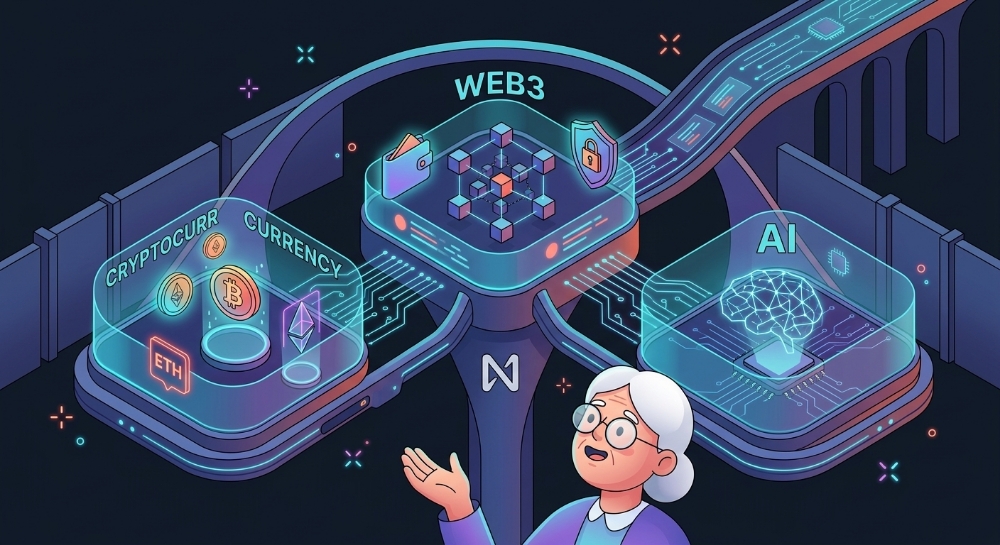
How AI Agents Connect to Web3
The connection between AI agents and blockchain is not a forced marriage cooked up by crypto marketing teams. It is a logical fit that solves a specific, concrete problem: agents need to transact, and traditional payment infrastructure cannot support the way agents transact.
Think through what an agent needs when it operates at scale. It might need to pay for an API call worth $0.003. It might need to hire a human to complete a task and pay them $0.08. It might need to access a data feed, license a model, or pay a toll to use infrastructure — all in fractions of a cent, thousands of times per hour, across multiple vendors, with no human approving each payment.
Traditional financial rails — credit cards, bank transfers, even PayPal — are architecturally incompatible with this. The fees exceed the transaction values. The processing times are too slow. The account-creation requirements are designed for humans, not software.
This is precisely the problem Solana's sub-cent transaction fees and sub-second finality solve. And it is why protocols like x402 — which allows an agent to discover a price for a service, pay for it programmatically, and receive the result, all within a single HTTP exchange — have attracted the backing of Coinbase, Stripe, Visa, Mastercard, and Google as an open standard for agentic payments.
Several projects in this space are worth understanding:
Fetch.ai / Artificial Superintelligence Alliance (ASI): Fetch.ai is an advanced decentralized AI platform that creates and deploys autonomous AI agents for Web3 and cryptocurrency ecosystems. Its technology allows businesses to automate operations across decentralized networks by merging blockchain with AI, resulting in smart, self-executing systems. Following its merger with SingularityNET, Ocean Protocol, and CUDOS into the ASI Alliance, it operates Agentverse — a marketplace for deploying and discovering agents — alongside ASI-1 Mini, a Web3-native LLM built for agentic reasoning in DeFi and autonomous workflows.
Virtuals Protocol: Its GAME framework and Agent Commerce Protocol (ACP) let developers create multimodal, tokenized AI agents spanning trading bots, research assistants, and gaming NPCs without writing code. Virtuals has become one of the most active agent deployment ecosystems on Base, with real transaction volume that grew sharply after integrating the x402 payment standard.
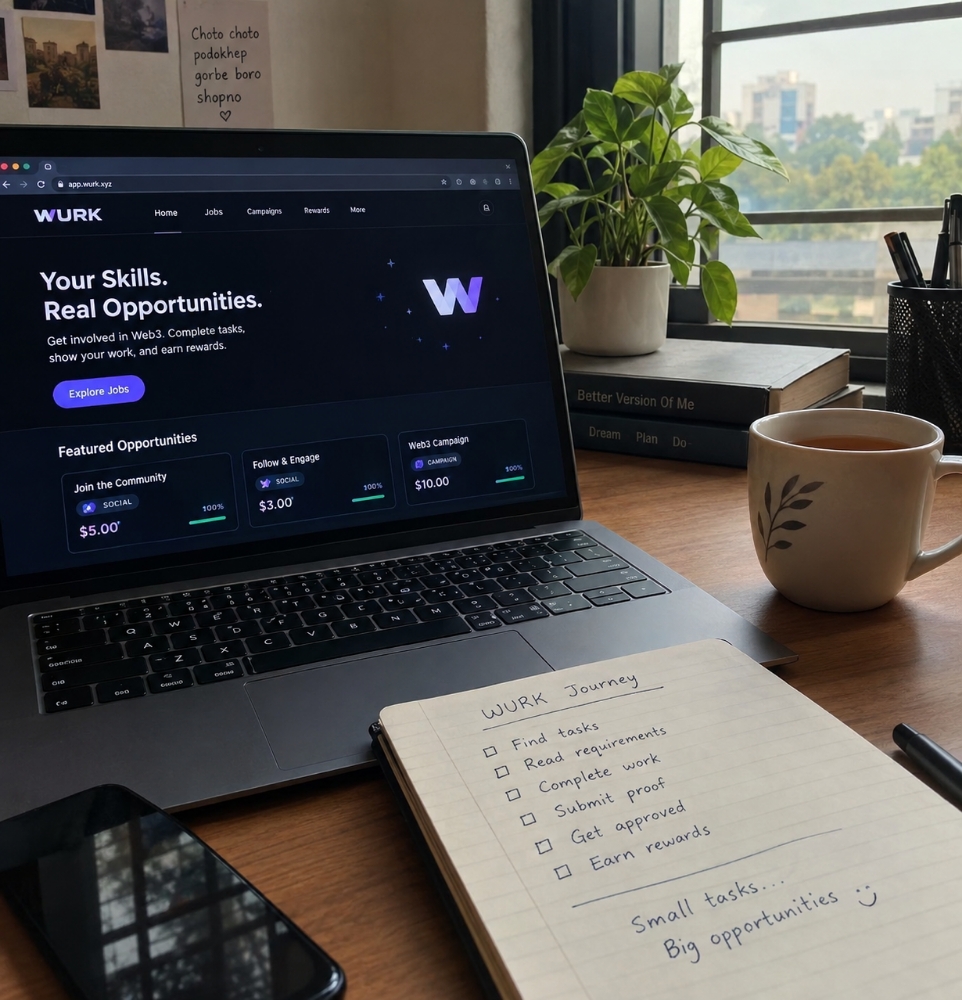
WURK.fun: One of the clearest implementations of agents hiring humans in production. WURK operates a microtask marketplace where AI agents can post jobs, select workers, and pay them in real time using x402 on Solana and Base, or MPP on Tempo. The infrastructure handles the payment routing automatically — an agent submits a task, a human completes it, payment settles on-chain in seconds. The "agent to human" endpoint represents exactly the use case that most discussions of agentic AI treat as theoretical but that WURK has operational today.
Autonolas / Olas: An agent protocol that allows developers to create, own, and monetize autonomous on-chain and off-chain agents. Its AI Portfolio Manager, for instance, autonomously manages stablecoin positions across Base, Optimism, and Mode — rotating between liquidity providers based on yield conditions, continuously, without human intervention.


The Scale of What Is Happening
It is easy to dismiss agentic AI as another overhyped cycle, so it is worth anchoring the conversation in numbers.
The agentic AI market was valued at $7.55 billion in 2025 and is expected to reach $10.86 billion in 2026, with a CAGR of 44.6% projected through 2032. Gartner forecasts that 40% of enterprise applications will include task-specific AI agents by the end of 2026, up from less than 5% in 2025.
A spring 2025 survey conducted by MIT Sloan Management Review and Boston Consulting Group found that 35% of respondents had already adopted AI agents, with another 44% expressing plans to deploy the technology in short order. Leading software vendors, including Microsoft, Salesforce, Google, and IBM, are fueling large-scale implementation by embedding agentic AI capabilities directly in their software platforms.
Microsoft's leadership calls 2026 "the year of the agent," and in a recent global survey, nearly 70% of business executives said they expect autonomous AI agents to transform operations in the year ahead.
These are not crypto numbers. These are enterprise technology numbers — the kind that come from organizations that run serious due diligence before committing budget.

What Agents Cannot Do Yet — The Honest Picture
Good analysis requires the full picture, not just the upside.
Agents fail regularly in unscripted environments. The gap between a polished demo and reliable production deployment is real. Only about 23% of organizations report significant ROI from AI agents, and Gartner expects more than 40% of agentic AI projects to be cancelled by 2027 — mostly from unclear business value, escalating costs, and inadequate risk controls.
Most agents today are task-specific, not general-purpose. An agent that excels at clinical documentation will not necessarily transfer those capabilities to supply chain management. The domain expertise baked into a well-designed agent is a product of careful engineering, not inherent in the technology.
Agentic workflows that need to run for more than a few hours without human review, or to operate in regulated industries with audit requirements, mostly do not yet work reliably. The vendors who claim otherwise are usually describing controlled conditions, not production reality.
This is not an argument against agents — it is an argument for understanding where they actually are in their development, so you can evaluate real deployments versus marketing narratives.

Why This Matters for Everyone
If you are a creator or freelancer, agents are already changing the economics of the work you do. Platforms like WURK that route agent-generated tasks to human workers are creating new income streams that did not exist three years ago — micro-tasks, content generation requests, UX feedback assignments, data labeling — all posted by software, all paid automatically.
If you are a developer or builder, understanding agent architecture is rapidly becoming a foundational skill. The projects generating real traction are the ones where someone understood not just that agents exist, but how to design the perception, reasoning, memory, and action layers correctly for a specific problem.
If you are an investor or token holder, agents are not a narrative to trade around a cycle — they are infrastructure being embedded into the actual products and workflows of the largest companies in the world. The relevant question is not which token goes up next, but which projects have actual agent infrastructure running in production with real usage.
If you are none of the above — if you are just someone trying to understand what is happening in the world — the one-sentence version is this: the same way the internet gave software the ability to communicate globally, agentic AI gives software the ability to act autonomously. That is a genuine shift in what is possible, not a marketing rebrand of something that already existed.
What Comes Next
This article covered the foundation: what agents are, how they work, what problems they solve, and where they are actually deployed today.
Part 2 of this series will take on the harder question — one that every serious conversation about agents eventually reaches: what happens when you give an agent a wallet and let it spend money autonomously? What are the real risks? What safeguards exist? Where is the line between useful autonomy and dangerous exposure? And what does responsible agent deployment actually look like?
The answer is more nuanced than either the enthusiasts or the critics tend to acknowledge.
Written for the @XlusiveWeb3 content portfolio · June 2026 Part 1 of a two-part series on AI Agents