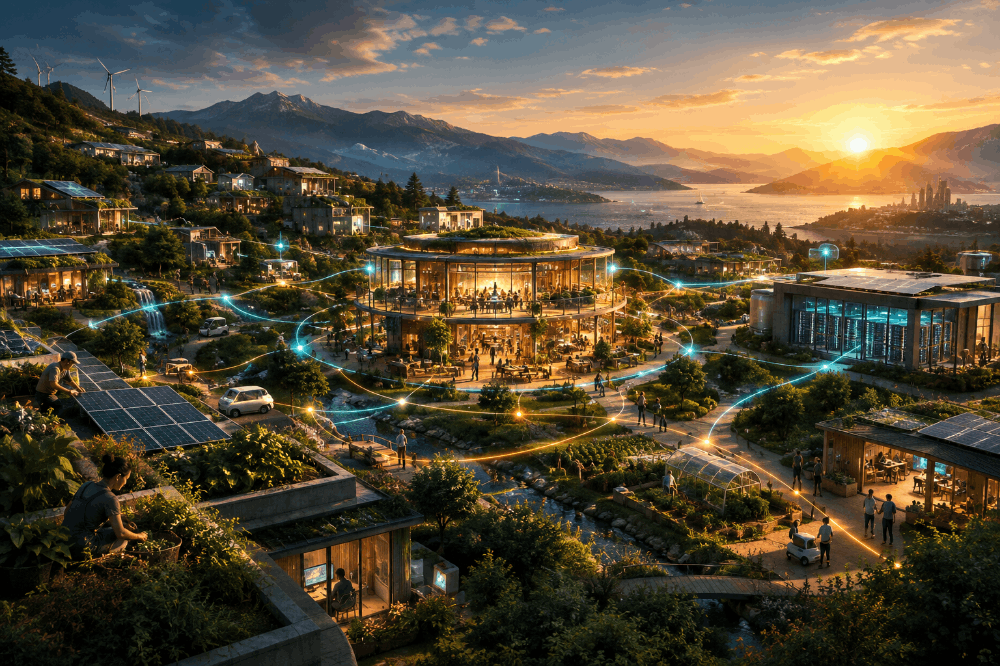
Speed Gets You In. Community Keeps You Here.

Why Solana's Tech Is Only Half the Story — and Why the Other Half Matters More for Long-Term Survival
Solana has the most compelling technical stack in blockchain right now — and the data backs that up.
But the chains that survive decades aren't the fastest ones. They're the ones people refuse to leave.
Here's why both sides of that equation matter, and what Solana is doing about both.
The Most Important Question in Blockchain Isn't "Which Chain Is Fastest?"
It's a question the crypto industry has asked incorrectly for years: which blockchain has the best technology? As if the answer to that question automatically settles everything — who wins, who survives, who gets to shape the next decade of finance and the internet.
Technology does matter. It matters enormously. And if we're being honest, Solana's technical architecture is genuinely in a class of its own right now — not as a matter of tribalism or hype, but as a measurable, verifiable fact that institutions, developers, and serious builders have voted on with their time and capital.
But here is the thesis of this piece, and it is grounded in the wreckage of thousands of dead projects: technology is a necessary condition for long-term success, but it is not a sufficient one.
The blockchain graveyard is full of technically impressive chains that no one uses anymore. The survival variable — the thing that separates protocols that become infrastructure from protocols that become cautionary tales — is community. Specifically, whether a blockchain can cultivate a culture of builders and believers who feel genuine ownership over the ecosystem they inhabit.
Solana is one of the very few chains trying to get both right simultaneously. Let's examine each side carefully.
PART ONE: The Technical Case
Solana's Technology Is Not Just Fast — It's Architecturally Different
Most blockchain comparisons default to the speed discussion, and it's a fair place to start because the numbers are staggering. Unlike Ethereum and most other chains that rely on Layer 2 scaling solutions to offload congestion, Solana processes everything directly on its base layer. No fragmentation. No bridge risk. No split liquidity across rollups. Everything happens on one chain, by design.
Here is what that looks like in production numbers as of early 2026:
Metric Figure Monthly Transactions 2 billion+ Daily Active Wallets ~3 million Median Transaction Fee $0.0011 DeFi Total Value Locked ~$10 billion 2025 Application Revenue $2.39 billion (+46% YoY) These aren't vanity metrics. They represent real economic activity from real users doing real things — trading, lending, borrowing, minting, settling. The infrastructure is being used, not just benchmarked.
Proof of History: The Architecture That Made It Possible
Solana's founding innovation is Proof of History (PoH) — a cryptographic timestamping mechanism invented by Anatoly Yakovenko that allows the network to process transactions in parallel rather than sequentially.
Traditional blockchains have to agree on the order of transactions before processing them. Solana's PoH means validators already have a verifiable record of time, so consensus can happen at the same time as execution.
The earliest demonstration of this architecture's potential came in early 2018, when the first testnet processed 10,000 transactions in just half a second — a result that hinted at what was possible. Since then, Solana has taken a monolithic approach: everything happening on one layer, with optimized runtime efficiency, delivering faster finality without fragmenting liquidity across secondary networks.
The 2026 Roadmap: Alpenglow and Firedancer
The technical story doesn't stop with what already exists. Solana's 2026 roadmap is genuinely ambitious.
- The Alpenglow upgrade targets 150-millisecond finality
- The Firedancer validator client, built by Jump Crypto and now live on mainnet, aims to push theoretical capacity beyond 1 million transactions per second
- The IBRL program (Increase Bandwidth, Reduce Latency) focuses on consistent confirmation windows under real market conditions
Critically, the focus in 2026 has shifted from chasing raw TPS numbers to something more valuable for real-world deployment: predictability and reliability. Institutions don't need the fastest chain. They need the most predictably fast chain — one that delivers consistent settlement windows they can build operational SLAs around.
Solana's 2026 technical roadmap is about hardening the network into something institutions can treat as infrastructure. Rather than chasing headline throughput, the focus shifts to predictable finality, execution integrity, and redundancy.
Institutional Validation: The Most Credible Signal
Numbers can be gamed, but institutional capital usually can't be. The roster of organizations deploying on Solana in 2025–2026 reads like a TradFi honours list:
- J.P. Morgan arranged a U.S. commercial paper issuance for Galaxy Digital on Solana's public mainnet — validating the thesis that public chains offer superior liquidity and settlement guarantees
- State Street (with $50 trillion in custody) announced plans to launch a tokenized private liquidity fund on Solana
- Western Union announced a stablecoin launch on Solana in H1 2026
- Visa processes approximately $3.5 billion in annualized USDC settlement volume on the network
- US spot Solana ETFs launched in late 2025, with offerings from Bitwise and 21Shares
"Just one year ago, this had a zero probability of happening." — Scott Lucas, J.P. Morgan, on the commercial paper issuance on Solana's public mainnet
When J.P. Morgan and State Street choose your infrastructure, the technical due diligence argument is settled. These are not organizations chasing hype. They are deploying institutional capital into infrastructure they believe will be load-bearing for global finance.
The Developer Ecosystem: 17,700 Active Builders
The Solana Foundation reports over 17,700 active developers as of late 2025. Seven distinct applications each surpassed $100 million in annual revenue, including Pump.fun, Jupiter Exchange, and Raydium. The long tail of smaller applications generated over $500 million combined.
Through multiple developer bootcamps varying in focus and difficulty, 400–500 senior developers graduate every 6 months with the intention of building on Solana. There have been 10+ Solana Foundation-sponsored hackathons since 2020, with more than 4,500 projects launched and over $800 million in funding raised for projects submitted through those hackathons.
On balance, the technical argument is clear: Solana has a real, measurable, and institutionally-validated technological edge.
PART TWO: The Uncomfortable Truth
The Blockchain Graveyard Is Full of Technically Impressive Corpses
Here is where the honest analysis gets uncomfortable for pure technologists: brilliant engineering, alone, has never been sufficient to sustain a blockchain ecosystem.
History is littered with technically superior protocols that died because they couldn't cultivate the one thing that turns technology into infrastructure — people who genuinely care.
The numbers are stark:
According to CoinGecko, over 50% of all cryptocurrencies ever listed on GeckoTerminal have failed — 3.7 million out of nearly 7 million projects. From 2021 to 2025, the number of failed cryptocurrencies increased dramatically, with 2024 alone witnessing 1.4 million failures.
And as of 2025, most blockchain startups have failed, many consuming millions of dollars before building a working product. Despite raising significant funds, failure rates touched 80%.
Here is the critical detail: most of these projects didn't fail because their technology was bad. They failed for reasons that had nothing to do with the code.
Why Good Technology Isn't Enough: The Core Failure Modes
The majority of projects, despite possessing advanced technology platforms and talented development teams, still fell into stagnation or collapse. The reasons include:
What kills technically solid projects:
- No real community ownership or governance participation
- Token economics designed to enrich founders, not sustain ecosystems
- Building for "decentralization" without knowing why it's needed
- Governance imbalances and misaligned economic incentives at the ecosystem level
- "Play to Earn" models that collapse when new user growth slows
- Technology adopted as a buzzword rather than a strategic tool
What surviving projects have in common:
- Genuine community with real governance participation
- Sustainable, revenue-generating applications
- Builders who are also believers — long-term stakeholders with skin in the game
- Culture and identity that makes the ecosystem feel like home
- Transparent incentives and clearly defined governance rules
- Real utility that generates organic demand over time
The TradeLens Lesson
IBM and Maersk's TradeLens platform is one of the most instructive examples. It was technically sophisticated — a blockchain-based global shipping coordination layer with genuine real-world utility. It had two of the world's most trusted corporate names behind it. It still failed.
Why? The failure of collaborative projects is not primarily due to usability issues but rather governance imbalances and misaligned economic incentives at the ecosystem level. Shipping companies, port operators, and regulatory authorities couldn't agree on data ownership, liability, and revenue sharing.
Without genuine stakeholder alignment — which is a community problem, not a technology problem — even the best infrastructure collapses. Network effects only materialize when there is sufficient trust. TradeLens never had it.
The GameFi Massacre: 93% Didn't Make It
The GameFi space is perhaps the starkest illustration of what happens when a technically functional platform is built on a community model that doesn't hold.
Why did 93% of GameFi projects fail in 2024–2025? Most had an average lifespan of just four months because of excessive focus on the unsustainable "Play to Earn" model. As the number of new players decreased, in-game economies inflated, tokens lost value, and users left in droves.
These weren't communities. They were extraction mechanisms dressed up as communities. The moment the incentives dried up, the people left. There was no culture, no identity, no sense of ownership — nothing that made participants feel like they were building something together.
"The hidden truth of the 2026 stagnation is that crypto technology is succeeding, but crypto projects are failing."
The most dangerous outcome for any public blockchain is that its technology becomes so validated that it gets cloned into closed, permissioned systems — deployed by banks and institutions without any public community benefit. The only protection against that outcome is a public ecosystem so vibrant, so liquid, so culturally alive, that no private version can compete.
And that requires community.
PART THREE: Solana's Community Is a Structural Advantage
Tested in the Fire
Solana's community story becomes genuinely interesting when you realize it didn't emerge from good times. It was tested in one of the worst possible environments — the FTX collapse of 2022 — and came out structurally stronger. The projects that stayed weren't there for the price. They were there because they believed in what they were building.
That's not sentiment. That's data: the projects that survived the FTX crash went on to build the applications that generated $2.39 billion in ecosystem revenue in 2025.
Breakpoint: The Conference That Became a Culture
Most blockchain conferences are networking events dressed as community gatherings. Solana's annual Breakpoint conference is demonstrably different — and its growth trajectory tells the real story.
2021 — Lisbon: The first in-person Solana gathering. A small community celebration across multiple themed venues. The beginning of what would become the most important annual gathering in high-performance blockchain.
2023 — Amsterdam: 3,000 attendees. Developers, validators, founders, engineers, and ecosystem contributors. Hosted one year after the FTX collapse — proof that the community survived the worst possible stress test.
2024 — Singapore: Scale continues upward. Institutional figures begin appearing alongside community builders. Jeremy Allaire (Circle CEO) among notable speakers.
2025 — Abu Dhabi: Over 7,000 attendees from more than 100 countries — the largest Solana conference in history. Among those attendees, approximately 1,800 were identified as founders. The theme was "Revenue and Returns" — not hype, but real economic activity.
2026 — London: Breakpoint 2026 is scheduled for November 15–17 at the Olympia Exhibition Centre. 6,000+ expected attendees, 100+ countries. Chosen to position Solana at the heart of European institutional finance.
The trajectory matters: Lisbon to London, from 2021 to 2026, from a celebration to a global financial convergence event. But more significant than the scale is the shift in theme.
"Revenue and Returns" signals that this community has moved beyond dreaming about what blockchain could do, to measuring what it already does.
Superteam and the Global Builder Network
One of Solana's most underappreciated community assets is Superteam — a globally distributed network of builder communities spanning continents from Southeast Asia to Africa to Latin America.
The numbers are striking: over 94% of Radar hackathon projects were submitted by globally-distributed, non-US teams. This means Solana's building culture has genuinely taken root outside Silicon Valley, outside the usual Web3 hubs, in communities across the world that see Solana as their platform of choice — not because of marketing, but because the tooling works and the community rewards builders.
Culture as a Moat
This might sound trivial, but it isn't: Solana has the most distinct cultural identity in blockchain. It is simultaneously the chain for institutional-grade DeFi and the chain that spawned the memecoin supercycle. The coexistence of J.P. Morgan commercial paper and Pump.fun launches on the same layer-1 is not a contradiction — it's evidence of genuine platform breadth.
Solana has become the go-to blockchain for launching memecoins due to its speed and accessibility. 400ms block times enable instant trading and rapid token launches. An active, meme-driven community helps tokens go viral quickly through platforms like X and Telegram.
Culture is a moat. When a community has inside jokes, shared language, recognizable aesthetics, and a sense of collective pride — when people identify as Solana builders with genuine affection — they are harder to migrate away. They will evangelize the platform for free. They will weather the downturns because they feel ownership of something bigger than a line chart.
The Community Spotlight Awards: Treating Builders Like Stakeholders
At Breakpoint 2025, Solana held its inaugural Community Spotlight Awards, powered by Solflare. Over 5,000 community members submitted nominations through an open selection process. Fourteen winners were recognized across categories spanning DeFi innovation, gaming, content creation, and viral marketing.
Awards ceremonies for community members are not standard blockchain practice. They signal something important: the ecosystem treats its community as stakeholders, not just users.
Hackathons: Where Community and Tech Merge
Hackathons are the single best evidence of a healthy blockchain community, because they require people to voluntarily invest their time and skills with no guaranteed return.
- 10+ Solana Foundation-sponsored hackathons since 2020
- 4,500+ projects launched through hackathon submissions
- $800 million+ in funding raised for hackathon projects
- ~50% of top hackathon winners completed Solana developer bootcamps — evidence of a structured pipeline from learner to builder to contributor
The community is investing in its own regeneration. That is the most powerful signal of long-term health.
PART FOUR: Why Most Blockchains Only Get Half of This Right
The Two Traps
Trap 1 — The Pure Tech Chain. Teams that prioritize technical excellence above all else often build excellent infrastructure that nobody uses. They attract developers through technical credibility, but those developers build for other developers. The ecosystem never achieves mass. The performance metrics are incredible. The user numbers are not.
Trap 2 — The Pure Hype Chain. Teams that prioritize community and culture at the expense of technical robustness create explosive but short-lived ecosystems. The network effect kicks in, but the infrastructure can't support it. Fees spike. Transactions fail. Whales exit. The community fractures.
In most practical scenarios, organizations adopt blockchain as a buzzword to impress stakeholders — not as a strategic tool that aligns with actual requirements. That mistake plays out in both directions: hype without infrastructure, and infrastructure without community.
What Solana Is Doing Differently
Solana's approach is to treat the technical and community layers as interdependent systems that must evolve together. The 2026 roadmap upgrades aren't just about making the chain faster. They're about making the chain trustworthy enough that community members can build businesses on it, not just experiments.
The meta-narrative of Breakpoint 2025 is convergence:
- Convergence of Capital: TradFi assets merging with DeFi rails to create a unified global ledger
- Convergence of Latency: Onchain markets now competing with centralized exchanges on speed and price
- Convergence of Users: The line between Web2 and Web3 dissolving
"Developers are building businesses, not demos."
When builders are running businesses — not experiments, not proofs-of-concept — they become the most powerful community engine a blockchain can have. They hire other builders. They advocate for the platform with clients and partners. They contribute to governance because they have direct economic stakes in the outcome. They become, in the truest sense, stakeholders.
Conclusion: The Chains That Last Are the Ones People Can't Imagine Leaving
The data on Solana's technical performance is verifiable and compelling:
- 2 billion+ monthly transactions
- Sub-second finality approaching with Alpenglow
- Institutional adoption by J.P. Morgan, State Street, Visa, and Western Union
- $2.39 billion in application revenue in 2025
- Close to $10 billion in DeFi TVL
The data on Solana's community is equally compelling and often overlooked:
- 7,000+ builders travelling to Abu Dhabi from 100+ countries for a conference themed around real revenue
- 17,700+ active developers
- Hackathons that seeded 4,500+ projects and catalyzed $800M+ in funding
- A global Superteam network where 94% of submissions come from outside the US
The history of blockchain is littered with chains that thought technology was enough. It never is.
Technology creates the conditions for adoption. Community creates the conditions for survival.
The blockchains that endure — that become genuine infrastructure over decades rather than hype cycles over months — are the ones where people build their livelihoods, their identities, and their futures.
Solana is not there yet. No blockchain is. The work of community-building is never finished; it only compounds or decays. But in 2026, Solana is the closest any blockchain has come to threading both needles simultaneously: building infrastructure that institutions trust, and a culture that builders love.
Speed gets you in. Community keeps you here. Solana is working hard on both — and so far, the results speak loudly.
Key Takeaways
- The technical case is real, not speculative. Solana's performance metrics are verified by institutional deployments from the world's largest financial players. This is not hype; it is production infrastructure.
- Technology alone has never been enough. Over 50% of all cryptocurrencies ever listed are now dead coins. The failure mode is almost never "bad technology." It is almost always "no community, no culture, no sustainable reason for people to stay."
- Solana is taking both sides of this equation seriously. The Breakpoint conference's growth from Lisbon to London, the global Superteam network, the hackathon pipeline, and the Community Spotlight Awards are not accidents. They are the output of a deliberate strategy to build a platform that people choose because they belong to it — not just because it's the fastest.
In the long run, that combination — verifiable technical excellence plus genuine community ownership — is the only formula that has ever produced enduring infrastructure. And right now, Solana is one of the best examples we have of a blockchain trying to earn both.
Written for the @XlusiveWeb3 content portfolio · June 2026 Analysis grounded in publicly verifiable data from CoinGecko, Solana Foundation, CoinBureau, Blockdaemon, CountDeFi, and Solana Media.