5 Best Cloud Security Providers for 2026
Cloud adoption continues to accelerate in 2026 as organizations embrace multi-cloud, hybrid cloud, containers, Kubernetes, serverless computing, and AI-powered applications. While these technologies improve agility and scalability, they also introduce new security challenges. Misconfigurations, identity-based attacks, ransomware, API vulnerabilities, and compliance requirements have made cloud security a top priority for organizations of every size.
Choosing the right cloud security provider is no longer just about protecting cloud infrastructure. Modern businesses require comprehensive platforms that secure workloads, applications, identities, networks, data, and cloud configurations while providing continuous threat detection and automated response.
In this guide, we'll explore the five best cloud security providers for 2026, compare their strengths, and help you determine which solution best fits your organization's security needs.
Why Cloud Security Matters in 2026
Cybercriminals increasingly target cloud environments because they often contain sensitive business data, customer information, and mission-critical applications. Organizations also face growing complexity as they manage workloads across AWS, Microsoft Azure, Google Cloud Platform (GCP), and private cloud environments.
Modern cloud security solutions help organizations:
- Prevent data breaches
- Detect sophisticated attacks
- Secure cloud-native applications
- Monitor cloud configurations
- Ensure regulatory compliance
- Reduce attack surfaces
- Protect APIs and containers
- Automate threat response
Without a comprehensive cloud security strategy, organizations risk costly downtime, regulatory penalties, and reputational damage.
What to Look for in a Cloud Security Provider
Before selecting a cloud security provider, consider these essential capabilities:
Multi-Cloud Support
The platform should seamlessly secure AWS, Azure, GCP, Kubernetes, containers, and hybrid cloud environments.
Cloud-Native Application Protection Platform (CNAPP)
A modern CNAPP combines multiple security capabilities into one platform, including:
- CSPM (Cloud Security Posture Management)
- CWPP (Cloud Workload Protection Platform)
- CIEM (Cloud Infrastructure Entitlement Management)
- Container Security
- Kubernetes Security
- Vulnerability Management
Threat Detection
Look for AI-driven analytics capable of identifying suspicious behavior, lateral movement, malware, and zero-day attacks.
Compliance Management
The solution should continuously monitor compliance against standards such as:
- PCI DSS
- HIPAA
- ISO 27001
- SOC 2
- GDPR
- NIST
- CIS Benchmarks
Automated Remediation
Automation significantly reduces response times by fixing misconfigurations, isolating compromised workloads, and enforcing security policies.
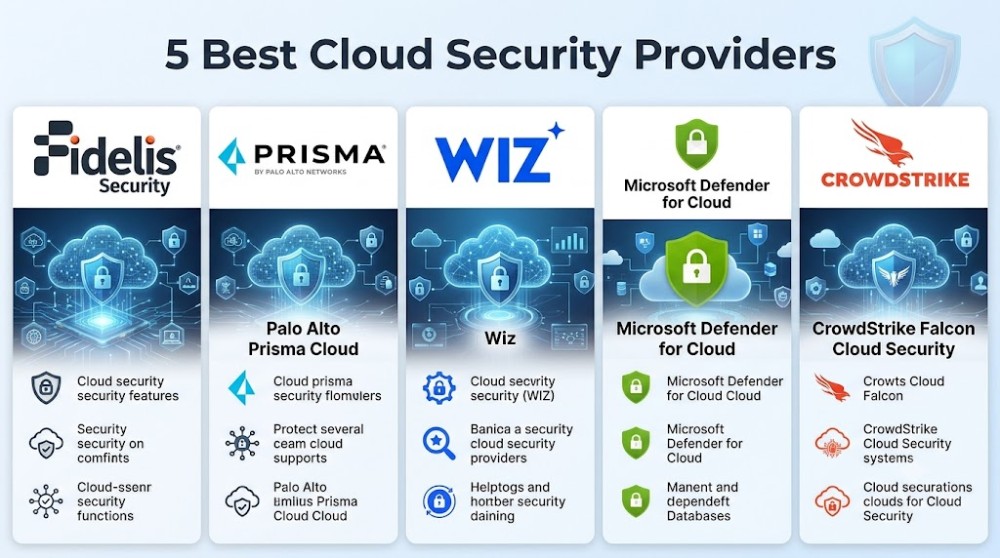
1. Fidelis Security
Best For
Comprehensive CNAPP and Extended Detection and Response (XDR) for enterprise cloud security.
Overview
Fidelis Security delivers a unified cybersecurity platform designed to protect modern hybrid and multi-cloud environments. Its cloud-native application protection capabilities, combined with advanced threat detection and automated response, provide organizations with end-to-end visibility across their cloud infrastructure.
Fidelis focuses on identifying sophisticated threats that traditional security tools often miss while helping security teams reduce alert fatigue through contextual analytics.
Key Features
- Comprehensive CNAPP capabilities
- Cloud Security Posture Management (CSPM)
- Cloud Workload Protection (CWPP)
- Container and Kubernetes security
- Cloud asset discovery
- Attack path analysis
- Identity risk management
- AI-assisted threat detection
- Extended Detection and Response (XDR)
- Automated incident response
- Compliance reporting
- Multi-cloud visibility
Advantages
- Unified security platform
- Strong hybrid cloud support
- Excellent threat visibility
- Advanced attack path analysis
- Integrated XDR capabilities
- Reduced security tool sprawl
Ideal For
- Large enterprises
- Financial institutions
- Government agencies
- Healthcare organizations
- Global enterprises with hybrid infrastructure
2. Palo Alto Networks Prisma Cloud
Best For
Comprehensive cloud-native application security.
Overview
Prisma Cloud provides one of the industry's most mature CNAPP solutions. It secures applications throughout the development lifecycle while offering runtime protection, posture management, vulnerability assessment, and compliance monitoring.
Key Features
- Full CNAPP platform
- Code-to-cloud visibility
- Runtime protection
- Vulnerability management
- Infrastructure-as-Code scanning
- API security
- Identity security
- Compliance automation
Advantages
- Strong DevSecOps integration
- Broad cloud coverage
- Extensive compliance support
- Excellent visualization dashboards
Ideal For
Organizations adopting DevSecOps and cloud-native development.
3. Wiz
Best For
Agentless cloud security and rapid deployment.
Overview
Wiz has become one of the fastest-growing cloud security providers by offering agentless scanning across cloud environments. Its platform helps organizations identify toxic combinations of vulnerabilities, identities, secrets, and network exposure.
Key Features
- Agentless architecture
- Attack path analysis
- Multi-cloud visibility
- Security graph technology
- Risk prioritization
- Vulnerability management
- Container security
- Compliance monitoring
Advantages
- Fast deployment
- Minimal operational overhead
- Excellent cloud visibility
- Strong risk prioritization
Ideal For
Organizations seeking quick cloud security implementation.
4. Microsoft Defender for Cloud
Best For
Microsoft Azure and hybrid cloud environments.
Overview
Microsoft Defender for Cloud provides integrated cloud security across Azure, AWS, and Google Cloud. Organizations already invested in Microsoft technologies benefit from seamless integration with Azure services, Microsoft Defender XDR, and Microsoft Sentinel.
Key Features
- CSPM
- Workload protection
- Azure-native integration
- Threat intelligence
- Secure score
- Compliance dashboard
- Kubernetes security
- Recommendations for remediation
Advantages
- Deep Microsoft ecosystem integration
- Strong Azure protection
- Easy deployment
- Continuous assessment
Ideal For
Organizations heavily using Microsoft Azure and Microsoft 365.
5. CrowdStrike Falcon Cloud Security
Best For
AI-driven workload protection and cloud threat detection.
Overview
CrowdStrike extends its endpoint protection expertise into cloud environments with Falcon Cloud Security. It combines runtime protection, posture management, identity protection, and threat intelligence within a unified platform.
Key Features
- CNAPP capabilities
- Runtime protection
- Identity threat detection
- Cloud posture management
- AI-powered analytics
- Container protection
- Threat hunting
- Automated response
Advantages
- Strong threat intelligence
- Excellent endpoint integration
- AI-powered detection
- Unified console
Ideal For
Organizations already using CrowdStrike Falcon.
Comparison of the Top Cloud Security Providers
ProviderBest ForStrengthsMulti-CloudCNAPPThreat DetectionFidelis SecurityEnterprise Cloud SecurityXDR + CNAPP integration✔✔ExcellentPalo Alto Prisma CloudDevSecOpsCode-to-cloud protection✔✔ExcellentWizAgentless SecurityRisk visualization✔✔Very GoodMicrosoft Defender for CloudAzure SecurityMicrosoft ecosystem✔✔Very GoodCrowdStrike Falcon Cloud SecurityRuntime ProtectionAI-powered detection✔✔Excellent
Benefits of Using a Leading Cloud Security Provider
Investing in a modern cloud security platform delivers several advantages:
Improved Visibility
Gain complete visibility into cloud assets, workloads, containers, APIs, and identities.
Faster Threat Detection
AI-powered analytics identify suspicious activity before attackers can escalate privileges or move laterally.
Reduced Misconfigurations
Continuous monitoring helps identify risky cloud configurations that attackers commonly exploit.
Compliance Readiness
Automated compliance reporting simplifies audits and reduces manual effort.
Lower Operational Costs
Unified platforms eliminate multiple standalone security products while simplifying management.
Faster Incident Response
Automation minimizes response times and reduces business disruption.
How to Choose the Right Cloud Security Provider
Selecting the best provider depends on your organization's infrastructure, security maturity, and compliance requirements. Consider the following:
- Evaluate your cloud environment (AWS, Azure, GCP, hybrid, or multi-cloud).
- Prioritize providers that offer unified CNAPP capabilities.
- Look for AI-driven threat detection and automated response.
- Ensure seamless integration with your existing SIEM, XDR, and DevSecOps tools.
- Verify support for industry-specific compliance frameworks.
- Assess scalability to support future cloud growth.
A proof of concept (PoC) can also help validate performance, ease of deployment, and operational fit before making a long-term commitment.
Future Trends in Cloud Security
Cloud security continues to evolve rapidly. Key trends shaping 2026 include:
- AI-powered threat detection and autonomous response
- Identity-first security and Zero Trust architectures
- Attack path analysis for proactive risk reduction
- Agentless cloud security solutions
- Integrated CNAPP platforms
- Real-time cloud exposure management
- Continuous compliance monitoring
- Enhanced protection for AI workloads and cloud APIs
Organizations adopting these capabilities will be better equipped to defend against increasingly sophisticated cyber threats.
Conclusion
As cloud environments become more distributed and complex, choosing the right cloud security provider is essential for maintaining resilience and reducing cyber risk. The leading providers in 2026 offer far more than basic posture management—they deliver integrated platforms that combine visibility, threat detection, compliance, identity security, and automated remediation.
For enterprises seeking a unified platform with strong CNAPP and XDR capabilities, Fidelis Security is a compelling choice. Palo Alto Networks Prisma Cloud excels in code-to-cloud security for DevSecOps teams, Wiz stands out for its agentless deployment and risk prioritization, Microsoft Defender for Cloud is an excellent option for Azure-centric organizations, and CrowdStrike Falcon Cloud Security provides advanced AI-driven runtime protection.
By aligning your cloud security provider with your infrastructure, compliance obligations, and operational goals, you can strengthen your security posture while enabling innovation with confidence.