How to Build a Gold Tokenization Platform in Dubai


Introduction
Gold has long been considered a valuable store of wealth, but investing in physical gold can involve storage costs, security concerns, transportation, and limitations when transferring ownership. Blockchain technology offers another approach: gold tokenization.
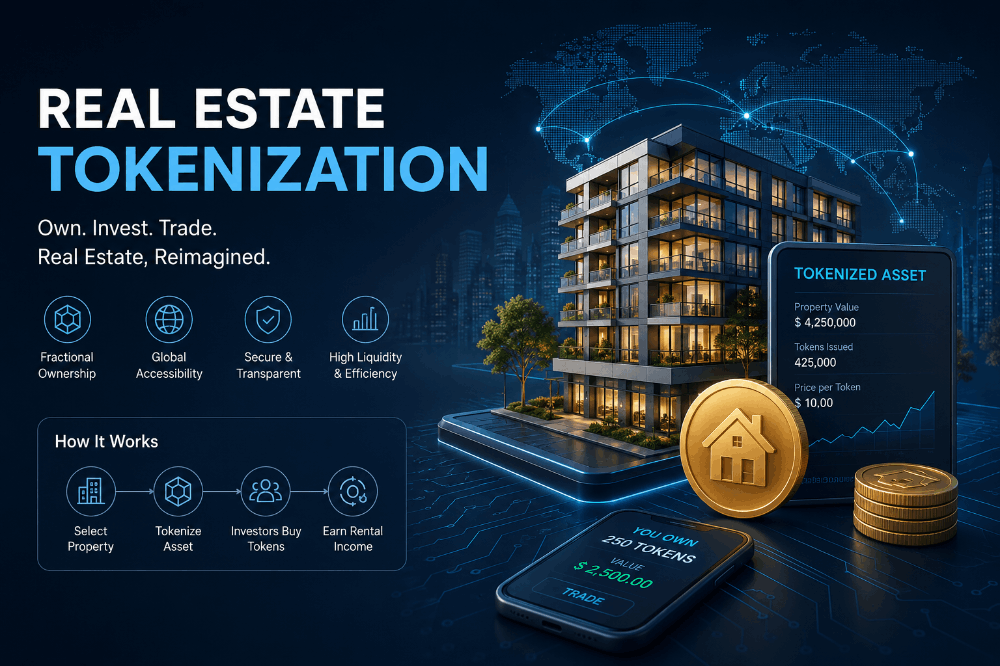
A gold tokenization platform allows businesses to represent ownership rights or other legally defined interests in physical gold through digital tokens on a blockchain. Depending on the platform's legal structure, users may be able to purchase fractional interests, transfer eligible tokens, track their holdings, and request redemption under specified conditions.
Dubai is an interesting market for this business model because of its established gold trading ecosystem, international business connections, and growing interest in digital assets. The World Gold Council's Q2 2026 report also recorded a 30% year-over-year increase in UAE gold bar and coin investment demand. This indicates activity in the underlying gold market, although it does not directly measure demand for gold tokenization software.
For businesses exploring this opportunity, developing a gold tokenization platform requires more than creating a smart contract. Asset custody, legal ownership, investor verification, reserve reporting, redemption procedures, and regulatory requirements must work together.
This guide explains how to build a gold tokenization platform in Dubai, the essential features to include, the development process, and the main factors that influence cost.
What Is a Gold Tokenization Platform?
A gold tokenization platform is a digital system that connects physical gold holdings with blockchain-based tokens. Each token represents the rights defined in the issuer's legal documentation, which may include ownership of a specified quantity of gold, a beneficial interest, or a contractual claim.
For example, a business might design a platform where one token represents one gram of gold held in an approved vault. Investors could purchase eligible quantities through the platform, subject to the issuer's terms and applicable regulations.
However, a token does not automatically establish legal ownership of physical gold. The rights attached to the token depend on the legal structure, custody arrangements, contracts, and applicable laws.
A properly designed platform connects the physical asset, its custody records, token issuance, investor accounts, and redemption process.
Businesses considering this model can explore Techfyte's commodity tokenization development services to understand the technical components involved in building a gold-backed digital asset platform.
Why Build a Gold Tokenization Platform in Dubai?
Dubai provides access to an established gold trading and investment ecosystem. For businesses that already work with bullion, commodity trading, financial services, or digital assets, tokenization can create an additional way to manage and distribute eligible gold-backed interests.
Several factors make the market worth exploring.
1. Access to an Established Gold Market
Dubai has a longstanding role in the international gold trade. Bullion dealers, refiners, traders, logistics providers, and storage businesses can potentially participate in a gold tokenization ecosystem.
A tokenization platform can connect these participants through digital records and defined asset-management workflows.
2. Fractional Investment Models
Physical gold is commonly traded in bars, coins, and other standard quantities. A digital platform can support smaller investment amounts when its legal structure, custody arrangements, and product terms permit fractional interests.
This can help a business serve customers who want exposure to gold without purchasing and storing an entire bar.
3. More Accessible Ownership Records
Blockchain transactions provide a traceable record of token transfers. When combined with accurate off-chain custody records, the platform can help operators reconcile token balances with the gold held in reserve.
Blockchain records alone, however, cannot prove that the underlying gold exists. Independent verification and reliable custody controls remain essential.
4. Digital Distribution and Transfers
A gold tokenization platform can support online onboarding, investor dashboards, eligible token transfers, transaction histories, and redemption requests.
Any secondary trading functionality must be designed around the product's transfer restrictions and applicable regulatory requirements.
5. Potential for Business Expansion
Once the operating model for gold is established, a business may evaluate whether similar infrastructure could support other precious metals or eligible commodities.
For example, the same underlying platform architecture may be adapted for silver or platinum, provided each asset receives appropriate legal, custody, and technical treatment.
How Does Gold Tokenization Work?
A gold tokenization platform typically follows a process that connects physical assets with digital ownership records.
Step 1: Gold acquisition and verification
The issuer or its designated partner acquires eligible gold and records its weight, purity, identification details, and other relevant information.
Step 2: Secure custody
The gold is placed with an appropriate vault or custodian under a documented custody arrangement. Insurance, access controls, ownership records, and responsibilities should be clearly defined.
Step 3: Legal and asset verification
The operator confirms that the gold is eligible for tokenization and establishes the legal rights represented by each token. Reserve verification procedures should be documented before tokens are issued.
Step 4: Token issuance
The smart contract creates tokens according to the approved issuance rules. The number of tokens must be reconciled with the eligible gold reserves and the terms of the offering.
Step 5: Investor onboarding
Users complete the required identity verification and eligibility checks before purchasing or receiving tokens.
Step 6: Transfers and redemption
Eligible holders can transfer tokens within the permitted framework. Where physical redemption is offered, the platform follows the specified process for verifying balances, burning or locking tokens, and arranging delivery or collection.
This process requires coordination between blockchain technology and off-chain business operations. If custody records, token supply, and redemption procedures do not match, the platform can lose the trust of investors.
Key Features of a Gold Tokenization Platform
The features required depend on whether the product targets individual investors, bullion businesses, institutional clients, or a combination of these audiences.
1. Investor Registration and KYC/AML
The platform should support user registration, identity verification, sanctions screening where applicable, and risk-based customer due diligence.
Additional checks may be necessary depending on the customer type, transaction profile, jurisdiction, and regulatory obligations.
2. Digital Gold Wallet
Users need a secure interface for viewing token balances, receiving eligible tokens, reviewing transactions, and initiating permitted transfers.
Wallet architecture may use self-custody, institutional custody, or a hybrid model. The choice affects user experience, security responsibilities, and compliance requirements.
3. Gold Reserve Management
Reserve management is one of the most important features.
The system should maintain records for:
- Gold quantity and purity.
- Bar identification and custody location.
- Deposits, withdrawals, and movements.
- Issued and redeemed token quantities.
- Vault reports and independent verification.
- Insurance and relevant supporting documents.
A reserve dashboard can help authorized operators reconcile off-chain gold records with on-chain token supply.
4. Smart Contract-Based Token Issuance
Smart contracts manage token creation, transfers, and redemption-related transactions according to predefined rules.
Depending on the chosen structure, contracts may include:
- Minting after approved gold deposits.
- Burning or locking tokens during redemption.
- Transfer restrictions for ineligible wallets.
- Role-based administrative permissions.
- Emergency pause and recovery controls.
- Events and records for audit purposes.
The contract must prevent unauthorized issuance and ensure that every mint or burn follows the platform's approved procedures.
5. Gold Price and Valuation Integration
A valuation module can display gold prices using a suitable market data provider. The platform should disclose the pricing source, timestamp, currency, and any applicable premiums or fees.
A price feed helps calculate indicative values, but it does not establish the value of the holder's legal claim or guarantee that the token can be sold at that price.
6. Redemption Management
If the product allows holders to redeem tokens for physical gold, the platform should define minimum quantities, processing times, delivery locations, applicable fees, and identity checks.
A redemption workflow should verify the user's eligible balance, prevent duplicate claims, update token supply, and record the associated custody movement.
If redemption is not available, the platform must communicate that limitation clearly.
7. Admin and Compliance Dashboard
Platform administrators need tools to monitor users, token supply, reserve records, suspicious activity alerts, transactions, and redemption requests.
Access should be restricted by role, with important administrative actions recorded for review.
8. Reporting and Audit Trails
The platform should produce reports that help reconcile the gold held in custody with the tokens in circulation.
Useful reports may include reserve summaries, token supply changes, custody movements, redemption records, and compliance events. Independent attestations or audits should be arranged according to the product structure and applicable requirements.
Step-by-Step Process to Develop a Gold Tokenization Platform in Dubai
Developing a gold-backed digital asset platform involves business planning, legal structuring, blockchain engineering, and operational preparation.
Step 1: Define the Business Model
Start by identifying who will use the platform and how it will generate revenue.
Possible models include:
- A bullion dealer offering digital access to eligible gold holdings.
- A gold-backed token issuer working with professional custodians.
- A B2B platform for bullion businesses and commodity operators.
- A marketplace that supports eligible transfers through appropriately authorized partners.
The business model determines the user experience, custody requirements, regulatory analysis, and technical architecture.
Step 2: Establish the Legal and Regulatory Structure
Before development begins, determine what rights each token represents and which entities will issue, custody, distribute, or trade it.
Dubai's regulatory framework depends on the activity and the legal characteristics of the token. VARA regulates virtual assets in Dubai's mainland and free zones, except for the Dubai International Financial Centre (DIFC), which falls under a separate framework.
VARA's Virtual Asset Issuance Rulebook includes categories and requirements for virtual asset issuance. Its Asset-Referenced Virtual Assets rules address specific requirements concerning asset-referenced tokens.
The DIFC has its own regulatory framework administered by the Dubai Financial Services Authority (DFSA). Businesses operating there should review the DFSA's Crypto Token framework.
A gold-backed token should not automatically be classified as a payment token or an asset-referenced virtual asset without examining its actual characteristics. If the platform also provides payment-related functionality, additional requirements may apply. The UAE Central Bank's Payment Token Services Regulation is relevant to activities within its scope.
Obtain advice from qualified UAE legal and compliance professionals before issuing tokens, marketing an offering, or enabling trading. This article provides general information, not legal advice.
Step 3: Arrange Gold Sourcing and Custody
A digital gold platform is only as credible as the physical asset arrangements behind it.
Identify suitable gold suppliers, refiners, vault operators, and independent verification providers. Establish how gold is received, identified, stored, insured, and released.
The custody agreement should clarify:
- Who legally owns the gold.
- Whether assets are segregated from the custodian's own assets.
- How gold quantities and quality are verified.
- How often reserves are reconciled and independently checked.
- What happens if a custodian fails or a reserve discrepancy occurs.
- How holders can exercise their contractual rights.
These arrangements should be finalized before token issuance logic is deployed.
Step 4: Design the Token Model
Choose the asset representation and define what each token means.
For example, a token might represent a specified quantity of gold or a legally structured interest in a pool of gold. The platform must explain whether holders have direct ownership, beneficial rights, or a contractual claim.
The token model should also define minimum holdings, transfer restrictions, fees, redemption rights, and what happens if the issuer or custodian becomes insolvent.
Step 5: Select the Blockchain and Token Standard
Choose a blockchain based on security, ecosystem maturity, transaction costs, wallet support, scalability, and integration requirements.
The token standard should match the legal and operational model. A conventional fungible token may be appropriate for some products, while a permissioned token standard such as ERC-3643 can support identity-based transfer controls where suitable.
Technology selection should follow the product's legal and compliance requirements rather than precede them.
Step 6: Develop and Audit Smart Contracts
Build the contracts responsible for token issuance, transfers, access control, and redemption-related actions.
Security measures should include role separation, multi-signature administration where appropriate, secure key management, automated testing, and independent smart contract audits.
Testing should cover unauthorized minting, duplicate redemption requests, transfer restrictions, administrative key compromise, and recovery procedures.
Step 7: Integrate Custody, Pricing, and Compliance Systems
The blockchain is only one part of the platform. Integrations may be needed for:
- Customer verification and screening.
- Vault and custody records.
- Gold price data.
- Accounting and reconciliation.
- Notifications and transaction monitoring.
- Reporting and audit workflows.
Each integration should have a defined source of truth, access controls, and error-handling process.
Step 8: Build the Investor and Admin Interfaces
Develop the website or application through which customers can register, complete verification, purchase eligible tokens, review balances, and request redemption.
Administrators need separate interfaces for approving users, reconciling reserves, monitoring token issuance, managing redemption requests, and generating reports.
The interface should clearly explain fees, product rights, risks, and restrictions before users commit funds.
Step 9: Test the Platform and Prepare for Launch
Before launch, test the complete system in a controlled environment.
Testing should include smart contract security, wallet functionality, transaction reconciliation, KYC/AML workflows, redemption operations, load handling, backup procedures, and incident response.
The launch should only proceed after the business has completed its required approvals and confirmed that the operational and compliance arrangements are ready.
Technology Stack for a Gold Tokenization Platform
The technology stack depends on the required functionality and deployment model. A typical architecture may include the following components.
Platform layerPurposeFrontendInvestor dashboard, registration, balances, and redemption interfaceBackend APIsBusiness logic, permissions, user accounts, and integrationsBlockchainToken issuance, transfers, and transaction recordsSmart contractsSupply controls, transfer rules, and redemption-related actionsDatabaseUser profiles, custody references, and operational recordsWallet infrastructureSecure wallet access and transaction signingKYC/AML integrationsIdentity verification, screening, and monitoringOracle and data integrationsGold pricing and approved external informationSecurity and reportingAudit trails, monitoring, alerts, and reconciliation
The architecture should clearly separate public blockchain data from confidential customer information. Personal information and sensitive compliance records should not be placed directly on a public blockchain without a carefully reviewed legal and privacy design.
Businesses planning a broader tokenization product can also review Techfyte's asset tokenization development services for an overview of asset modeling, token architecture, compliance workflows, and platform development.
What Is the Cost of Building a Gold Tokenization Platform in Dubai?
The cost of developing a gold tokenization platform depends on its features, legal structure, integrations, security requirements, and launch scope. There is no reliable single price for every project.
A basic proof of concept will generally require less engineering than a production platform that handles real gold reserves, investor onboarding, custody integrations, token transfers, and physical redemption.
The main cost factors include:
1. Platform complexity: A simple token demonstration is less complex than a complete investor and administrator platform.
2. Smart contract development: Custom issuance controls, permissioned transfers, redemption logic, and security reviews affect development effort.
3. Custody and reserve integrations: Integrating vault operators, accounting systems, and reserve verification workflows can add significant complexity.
4. Compliance integrations: Identity verification, sanctions screening, transaction monitoring, and reporting requirements depend on the business model.
5. Wallet and trading functionality: Self-custody, institutional custody, secondary trading, and payment integrations each introduce different requirements.
6. Testing and security: Independent contract audits, penetration testing, operational security, and incident response planning should be included in the project budget.
7. Ongoing operations: Hosting, monitoring, maintenance, custody fees, insurance, legal services, and compliance operations may continue after launch.
The project budget should separate one-time software development expenses from recurring operational and third-party costs. Regulatory authorization, legal structuring, gold acquisition, custody, and insurance should be budgeted independently of software engineering.
For a more accurate estimate, define the token model, target users, required jurisdictions, custody arrangement, blockchain, and redemption process before requesting a development proposal.
Business Models for Gold Tokenization Platforms
A gold tokenization platform can support several commercial models, depending on the operator's capabilities and regulatory permissions.
Gold-Backed Token Issuance
A qualified issuer creates tokens representing defined rights linked to physical gold. Revenue may come from disclosed issuance, redemption, or service fees.
B2B Tokenization Infrastructure
A technology provider supplies software to bullion dealers, refiners, or asset operators. Revenue may come from licensing, implementation, integration, and maintenance services.
Digital Gold Investment Platform
An operator provides eligible customers with an interface to acquire and manage gold-backed interests. Revenue may be generated through transaction charges, custody-related service fees, or other disclosed fees, where permitted.
Tokenization-as-a-Service
A platform provider offers configurable issuance, investor onboarding, reporting, and asset-management infrastructure to businesses that want to launch their own tokenization products.
Each model requires a different combination of technical features, operational partners, and regulatory permissions. A technology provider should not assume that building the software itself authorizes the customer to issue tokens or operate a trading platform.
Challenges in Gold Tokenization and How to Address Them
Proving the Underlying Gold Exists
Blockchain records cannot independently verify physical gold. Use documented custody arrangements, bar-level records where applicable, independent reserve checks, and regular reconciliation.
Protecting Investor Rights
Token holders need clear contractual rights and a process for enforcing them. Legal documentation should address ownership, redemption, insolvency, disputes, and reserve shortfalls.
Maintaining Smart Contract Security
A vulnerability could lead to unauthorized issuance, frozen balances, or loss of assets. Use secure development practices, independent audits, restricted administrative permissions, and tested incident-response procedures.
Meeting Regulatory Requirements
A token may fall within a regulatory category based on its characteristics and the activities performed around it. Obtain a legal classification before launching, and reassess the position when the product or its distribution model changes.
Managing Physical Redemption
Redemption introduces operational requirements that purely digital assets may not have. Define minimum quantities, processing times, fees, delivery arrangements, and procedures for reconciling tokens with released gold.
Building Investor Trust
Publish understandable information about reserves, custody, pricing, fees, risks, and redemption terms. Claims about backing should be supported by verifiable evidence rather than marketing language alone.
How Techfyte Can Help Build a Gold Tokenization Platform
Businesses developing a gold-backed digital asset product need a technology partner that understands how blockchain components connect with asset management, compliance, and investor-facing applications.
Techfyte provides asset tokenization development services and commodity tokenization solutions for businesses exploring blockchain-based asset infrastructure.
Depending on the project scope, the development work may cover:
- Token architecture and smart contract implementation.
- Investor and administrator dashboards.
- Wallet and blockchain integrations.
- Identity verification and transfer-control integrations.
- Reserve reporting and reconciliation workflows.
- Testing, security improvements, and ongoing maintenance.
The required scope should be established around the business model, legal structure, custody arrangements, and operational requirements. Regulatory approvals and legal advice should be handled by appropriately qualified professionals.
If you are planning to launch a gold tokenization platform in Dubai, start by defining the asset rights, custody model, intended users, and redemption process. These decisions provide the foundation for an effective technical roadmap.
Ready to Build a Gold Tokenization Platform in Dubai?
Discuss Your Gold Tokenization Project with Techfyte
Frequently Asked Questions
1. What is a gold tokenization platform?
A gold tokenization platform is a digital system that represents legally defined rights linked to physical gold through blockchain-based tokens. It may support token issuance, investor accounts, eligible transfers, reserve reporting, and redemption.
2. Is gold tokenization legal in Dubai?
Gold tokenization is not automatically permitted or prohibited in every form. The applicable requirements depend on the token's characteristics, the rights it represents, the activities performed, and the jurisdiction. Businesses should obtain UAE legal advice and confirm the necessary regulatory requirements before launching.
3. How does a gold-backed token maintain its connection to physical gold?
The connection depends on legal documentation, custody records, controlled token issuance, reserve reconciliation, and independent verification. Smart contracts can enforce token supply rules, but they cannot independently prove that the physical gold exists.
4. Which blockchain is suitable for gold tokenization?
The best blockchain depends on transaction costs, security, ecosystem support, wallet compatibility, scalability, and transfer restrictions. The token standard and blockchain should be selected after defining the product's legal and operational requirements.
5. Can investors redeem gold tokens for physical gold?
Yes, if the product explicitly offers physical redemption and the issuer can fulfill it under the applicable terms. The platform should specify minimum redemption quantities, fees, processing times, delivery arrangements, and eligibility requirements.
6. How much does gold tokenization platform development cost?
The cost depends on the platform's complexity, smart contracts, wallet model, custody integrations, compliance features, security audits, and trading or redemption functionality. A reliable estimate requires a defined project scope.
7. How long does it take to develop a gold tokenization platform?
The timeline depends on the scope and readiness of the business and its partners. A prototype is generally simpler than a production platform with real custody integrations, compliance workflows, audits, and redemption operations. Regulatory approvals and third-party onboarding may extend the overall launch schedule.
8. What are the most important features of a gold tokenization platform?
Core features typically include secure token issuance, investor onboarding, wallet functionality, custody and reserve management, transaction records, compliance controls, reporting, and redemption workflows where supported.
Conclusion
Building a gold tokenization platform in Dubai requires a coordinated approach to physical asset management, legal structuring, blockchain development, security, and compliance. The strongest projects begin with a clear definition of the rights represented by each token and a credible process for verifying, safeguarding, and reconciling the underlying gold.
Once these foundations are established, businesses can develop the smart contracts, investor interfaces, wallet integrations, reporting systems, and redemption workflows needed to operate the platform.
For businesses exploring this opportunity, the next step is to define the business model and custody arrangements, confirm the regulatory pathway, and then develop a technical roadmap that matches the product's actual requirements.