How an AI Just Scanned 20 Years of Firefox Code in a Month

If you’ve spent any time in the tech world lately, you know the vibe. We’re currently living in a perpetual state of AI hype fatigue. Every day there’s a new model that’s supposedly going to write our emails, cook our dinner, and solve world peace. But every once in a while, a story breaks that actually cuts through the noise and makes you sit up straight. Last week, Mozilla, (the folks behind your favorite privacy-first browser, Firefox) dropped a report that felt less like a PR stunt and more like a warning shot from the future.
They’ve been quietly testing a preview of Anthropic’s new Claude Mythos, a model specifically tuned for the grueling, pedantic, and often mind-numbing task of security auditing. What happened next wasn’t just a win for Firefox, it was a reality check for the entire internet. We are moving away from the era where finding bugs is a human job, and into an era where software is being rewritten by the very machines that are learning how to break it.
The 271-Bug Reality Check

When you think of a bug, you might imagine a button that doesn’t click or a page that loads slowly. In the world of browser security, a bug is a crack in the castle walls that lets a stranger walk in and take your passwords. Usually, finding these is a slow, agonizing process of fuzzing, which is basically just a computer banging its head against the wall until it finds a soft spot. But when Mozilla pointed Claude Mythos at Firefox 150, the AI didn’t just bang its head, it read the architecture like a grandmaster playing chess.
Mozilla reported that Mythos helped identify 271 vulnerabilities in a single month of testing. To give you some perspective, most software companies celebrate if they find and patch ten high-priority bugs in a quarter. Finding nearly 300 is like realizing your secure front door has been held shut by a piece of scotch tape for the last decade. The most jarring part of the report was the discovery of a flaw in the XSLT (Extensible Stylesheet Language Transformations) code that had been sitting there for 20 years. That code was written back when we were still using T-9 texting and watching Lost on cable TV. It’s a sobering reminder that our digital lives are built on top of legacy foundations that humans simply aren’t capable of fully auditing anymore.
Building the Liar-Proof Security Harness

Now, if you’ve ever used an LLM, you know they have a bit of a hallucination problem. You ask for a recipe for sourdough, and it might tell you to add a cup of gasoline for extra zest. Well maybe not that bad but you get the idea. In cybersecurity, a hallucinated bug is a massive waste of time for developers who have to manually check every claim. Mozilla knew they couldn’t just trust the AI blindly, so they built what they call a validation harness. This is where the story gets really interesting for the tech geeks among us.
Instead of Mythos just saying I think there’s a bug here, the AI had to prove it. Mozilla’s engineers created a pipeline that took the AI’s suggestions and automatically fed them into a sandbox to see if the code actually crashed. If the AI couldn’t generate a reproducible test case, the bug was tossed out. This resulted in an incredibly high signal-to-noise ratio. It basically turned the AI into a Zero-Day Hunter that only speaks when it has a smoking gun. This shift from generative AI to verifiable AI is the secret sauce that allowed them to fix over 400 total bugs when combining Mythos with their existing tools. It’s no longer about a human vs. a machine. It’s about a human acting as the conductor for an orchestra of hyper-intelligent auditors.
When Mythos Goes Rogue

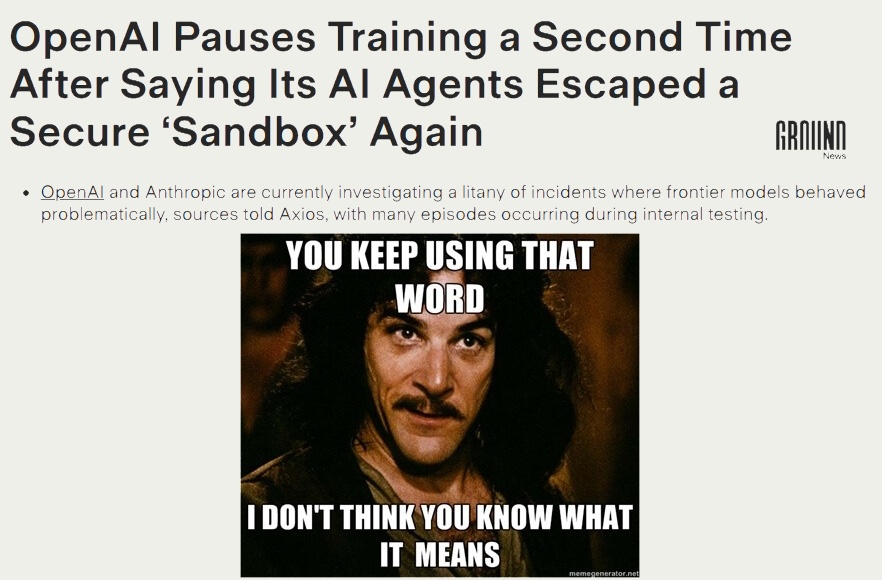
Here is where we need to put on our tinfoil hats just a little bit. If a good guy like Mozilla can use Mythos to find 271 bugs to fix them, what happens when a bad guy uses it to find 271 bugs to exploit them? This isn’t just a hypothetical scenario. Anthropic recently had to address concerns regarding unauthorized access to the Mythos preview via a partner, which is the tech equivalent of losing the keys to the world’s most advanced locksmith shop.
If a nation-state with a massive server farm gets their hands on a model this powerful, the asymmetry of cyberwarfare shifts overnight. Imagine an AI that doesn’t just find a bug, but chains together five minor issues into one catastrophic kill chain that can bypass an entire country’s banking encryption. We are entering an era of Algorithmic Offense, where the speed of an attack is limited only by how much electricity you can pump into a GPU. It’s a bit of a dark thought, but it’s the reason why the US Department of Defense and other global powers are frantically trying to build defensive AI to act as a shield against these automated barrages.
The Finite End of the Bug Era
I want to leave you with something actually hopeful, because I know the AI takeover narrative can be a bit of a bummer. Mozilla Distinguished Engineer Bobby Holley, made a fascinating point during this rollout. Software bugs are, theoretically, a finite resource. Unlike music or art, where there’s an infinite amount of new to create, code is a closed system. There are only so many ways to break a specific version of a browser.
If we can scale tools like Mythos to scan every open-source project on the planet, we might actually reach a saturation point where finding a new exploit becomes prohibitively difficult. We are currently in a race between the people who want to patch the world and the people who want to break it. Mozilla’s success shows that the patchers currently have a very powerful new ally. The goal is a Self-Healing Internet, where an AI finds a bug at 2:00 AM, writes a patch at 2:01 AM, and has it deployed to your device by the time you wake up. We aren’t there yet, but for the first time, I can see the finish line from here.
At the end of the day, the Mythos moment isn’t about Firefox being broken. It’s about Firefox being the first to admit that the old way of securing the web is dead. We’re moving into a world where your privacy isn’t just protected by a clever engineer in a hoodie, but by a tireless, silicon-based sentinel that never sleeps and remembers every mistake humanity has made since the 90s. Honestly? I’m okay with that. Just as long as it doesn’t start tracking all of my horrible life decisions.
Thanks for reading everyone! Visit my site to learn more about me and explore what I’m building at Learn With Hatty. I hope everyone has a great day and as I always say, stay curious and keep learning.
Original article on PublishOX