Silent Wars: The Acoustic Kitty

The sixties were apparently a crazy time. Aviation would go through rapid iterations and changes, while overall, big money would be thrown at Cold War projects in what was seen to be a race for survival.
One of the biggest beneficiaries of said money influx would be the US government’s intelligence agencies. This would lead to new spyplanes, satellites that could provide high-detail imagery of Soviet bases and a huge chunk of money to pursue projects that might assist in gathering usable intelligence.
While some of these projects were valid, some were borderline ridiculous. It’s the ridiculous one we are interested in today. Known as Project Acoustic Kitty, millions of dollars would be spent on a cat that would essentially be useless for intelligence gathering. The Directorate of Science & Technology would bring the acoustic kitty to life. Source: Wikipedia
The Background
Sometimes, even the smartest people make mistakes, and as the sixties rolled around, the technical evolution that the world was going through meant that for the US’s Central Intelligence Agency, there was huge money and incentive to find out new and productive ways of spying on the Soviets.
This was one of the primary roles assigned to the Directorate of Science & Technology. Here, they would research new types of audio bugs and test new surveillance techniques in secret before they were deployed to the field.
With electronic surveillance being particularly prevalent after the discovery of “The Thing”, the stage was set for some radical ideas to be put forward.
And so, in the early 1960’s, the Acoustic Kitty project would be born in all its oddball glory.
Acoustic Kitty Mk 1
The project was as simple as it was ridiculous. After selecting a Kitty, the agency would use a veterinarian to put the animal through a surgical procedure. This procedure, which took about an hour, would see hardware implanted within the cat’s body in an attempt to turn it into a living, breathing listening device.
A microphone would be placed in the animal’s ear canal, while a radio transmitter would be implanted at the base of its skull. This transmitter would then go to a short wire antenna placed lengthwise down the animal's body.
When completed, the Acoustic Kitty then had the means to record and capture sound from within its local environment.
Animal welfare issues aside, if you’ve ever actually owned a cat, you’re probably already starting to see the issue here. While dogs are trainable, Cats typically tend to do their own thing, on their own time, and Acoustic Kitty was no different.
Internal CIA documents that have been declassified show that during the project, the agency had multiple issues with obedience and that hunger-specific training was needed before Kitty could go play in the field. Implants were also used in an attempt to prevent Kitty’s natural urges around sex and hunger.
It’s worth mentioning that for Kitty to function correctly, the surveillance equipment and the overall range of movement needed to be entirely natural for the project to have any chance of working.
After incurring costs of nearly 20 million dollars to bring the project to life, Acoustic Kitty was almost ready for the first field test.
Cats Do Cat Things
After all was said and done, it was time to put Kitty to the test, and the agency saw a simple operation out the front of a Soviet Embassy in Washington to be a perfect start.
However, as the title says, Cats do Cat things, and as the mission kicked off, it didn’t take long for things to go badly. As Kitty went to cross the road to spy on the men, rumour has it that it was hit and killed by a taxicab almost immediately.
In 2013, though, this point would be disputed by some within the agency. Rather than Kitty being an operational failure, they claimed that Kitty was a success that was wrapped up only due to issues with training the Cat. Because obviously, cats will do whatever it is that they want to do. Rarely, will they do what they are told.
They also claimed that when the project was wrapped up, the first acoustic kitty would go through a second round of surgery to remove the listening device before it went on to live a long and happy life.
So, now it’s open to your interpretation. Did the CIA finally do Kitty a solid and put it in an early retirement? Or was this an epic face-saving measure in an attempt to rewrite the narrative around what had occurred?
With information about the project thin on the ground, much of this is open to some questions.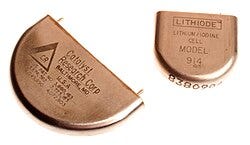 While the project was clearly odd, it did leverage exciting new technology like miniature batteries. Source: Wikipedia.
Was It All Stupid?
Obviously, the ethics behind using animals for such a project is terrible to say the least. However, it’s known that during this time, the agency did do some significant experiments with animals, and cats would play a key role in this.
In fact, a later paper titled “Views on Trained Cats” that would be released in 1967 would conclude that “while cats could be trained to move short distances, the environmental and security factors made the technique impractical for intelligence purposes”
With this in mind, the agency could have asked any nerd at the time the same question, got the same answer and saved themselves millions.
Overall, while the solution was not on the intelligent side, there’s no denying that the problems that the agency faced regarding successful surveillance techniques were entirely real. And when Acoustic Kitty was created, the agency would throw some real technology at the project.
Miniature components for the transmitter, surgical techniques for the implants, small batteries for power supply and transistors for management would all be cutting-edge technology for the 1960s.
That is about all for the highlights, though, by every other metric, the project was destined to fail. The fact that the project existed at all was a clear indicator that the agency had ignored thousands of years of knowledge regarding the motivations and behaviours of domesticated cats.
The return on overall investment was also severely lacking. With tens of millions of dollars and years lost to producing just a single “functional” animal, the project was never destined to succeed at scale.
Sometimes, the real-life spy games we see really are stranger than fiction.
Investigator515 explores the RF spectrum, cybersecurity, and the hidden tech behind modern espionage.
Follow for new content weekly
Bluesky • X • Substack
You might also like,
- OSINT Investigators Guide to Self Care & Resilience
- Spies In The Mud: The RF-111 Aardvark
- What The Tech?! Space Shuttles