The Best Crypto Wallets for Every Purpose: Vault, Daily Use & High-Risk Activity

Most crypto users ask the wrong question.
"What is the best crypto wallet?"
The better question is:
Which wallet is best for this purpose?
There is no single wallet that excels at everything.
A wallet designed for maximum security usually sacrifices convenience.
A wallet designed for everyday interaction naturally accepts more exposure.
A wallet intended for experimentation should never become your long-term storage.
As explained throughout The Three-Wallet Model™: A Practical Guide to Safer Crypto and Web3 Self-Custody, wallet security is not about finding one perfect wallet.
It is about assigning the right wallet to the right role.
That is exactly what this guide will help you do.
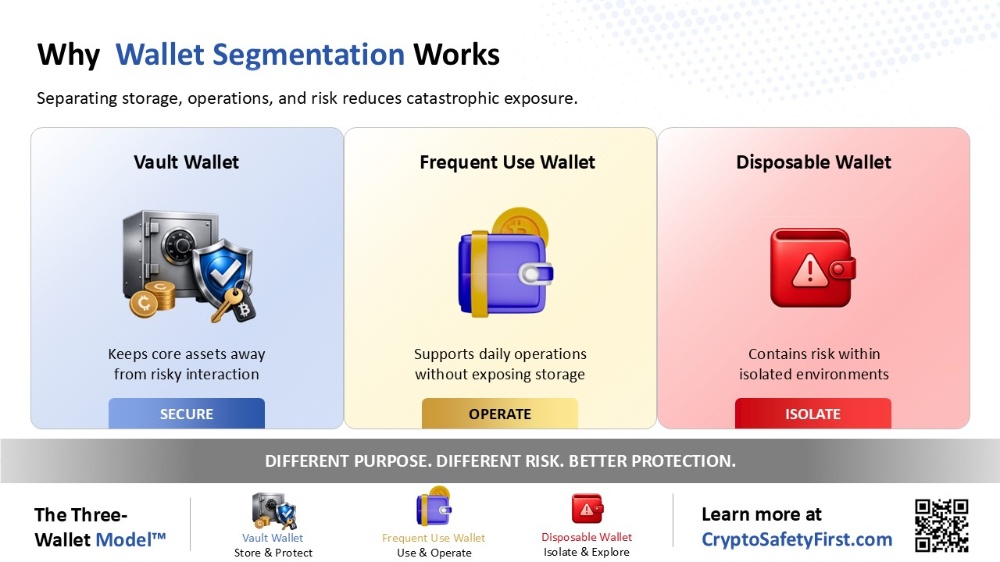
Why There Is No Single Best Crypto Wallet
Every wallet represents a trade-off.
Some prioritize:
- maximum security
- offline storage
- resilience
Others prioritize:
- convenience
- speed
- ecosystem compatibility
Neither approach is inherently better.
They simply solve different problems.
The mistake many users make is expecting one wallet to safely handle:
- long-term savings
- DeFi
- NFTs
- staking
- airdrops
- governance
- experimental dApps
- Web3 identity
That is how exposure accumulates.
Instead of searching for one perfect wallet, build a system where each wallet has a clearly defined purpose.
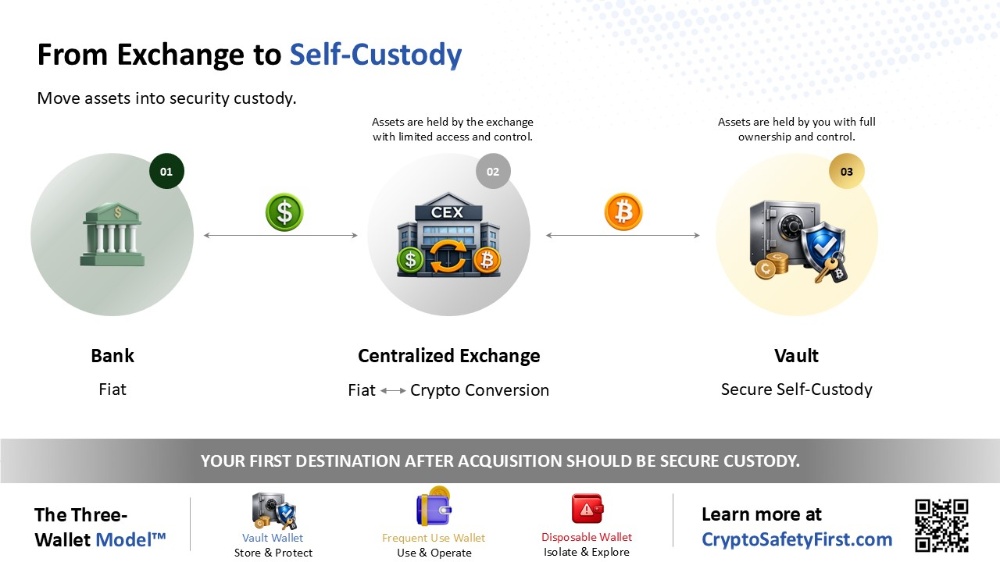
The Three Wallet Roles
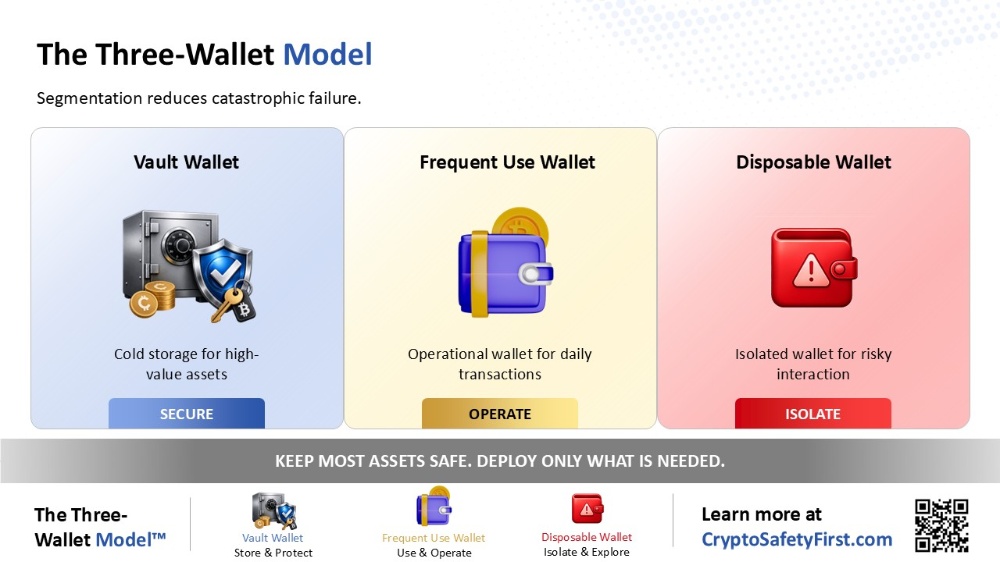
The Three-Wallet Model separates crypto activity into three environments:
Vault Wallet
Protects your highest-value assets.
Frequent Use Wallet
Handles trusted everyday crypto activity.
Disposable Wallet
Isolates risky or experimental interaction.
The role matters more than the wallet brand.
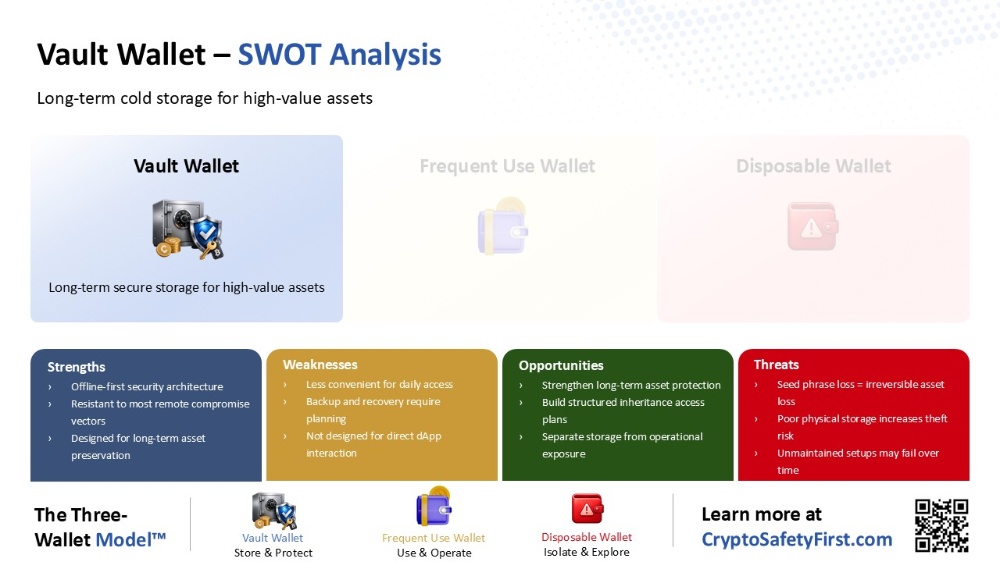
Selecting a Vault Wallet
The Vault Wallet protects assets you cannot afford to lose.
It should prioritize security over convenience.
The wallets below are examples of products that align well with the Vault Wallet role within the Three-Wallet Model. While new wallets will emerge and existing products will evolve, the underlying principle remains the same: choose wallets based on their role, not their popularity.
Typical Vault Wallet assets include:
- Bitcoin
- Ethereum reserves
- long-term investments
- valuable NFTs
- inheritance assets
For most users, hardware wallets remain the preferred solution.
Suitable Vault Wallets
Ledger Flex
Best suited for:
- multi-chain users
- long-term investors
- users wanting strong mobile support
Strengths
- secure element
- excellent asset support
- Bluetooth connectivity
- large ecosystem
Consider if:
you regularly manage multiple blockchains.
Ledger Stax
Best suited for:
- larger portfolios
- premium user experience
Strengths
- secure element
- large touch screen
- NFT visualization
- broad ecosystem support
Trezor Safe 5
Best suited for:
- users who prefer open-source firmware
- transparent security architecture
Strengths
- open ecosystem
- touchscreen
- strong community trust
Trezor Safe 3
Best suited for:
- cost-conscious investors
Strengths
- excellent value
- strong security
- beginner friendly
Blockstream Jade
Best suited for:
- Bitcoin-only users
Strengths
- air-gapped options
- open source
- excellent Bitcoin integration
Coldcard
Best suited for:
- advanced Bitcoin holders
Strengths
- air-gapped operation
- exceptional Bitcoin security
- highly configurable
Less suitable for complete beginners.
Vault Wallet Selection Principles
Choose a Vault Wallet if it offers:
✓ strong security
✓ reliable backups
✓ excellent reputation
✓ long-term manufacturer support
✓ compatibility with your assets
Do NOT choose based on:
- marketing
- popularity
- appearance
Remember:
Your Vault Wallet exists to protect wealth.
Not to maximize convenience.
Selecting a Frequent Use Wallet
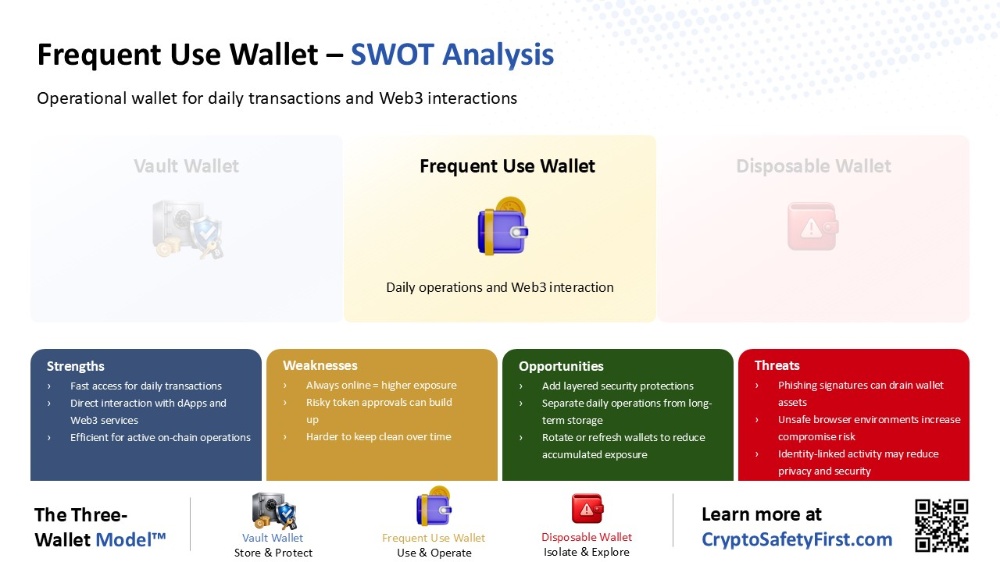
Your Frequent Use Wallet is your operational wallet.
You use it for:
- transfers
- trusted DeFi
- staking
- NFT marketplaces
- Web3 login
- everyday crypto activity
Because it remains connected regularly, convenience becomes more important.
Security still matters—but usability matters too.
The best Frequent Use Wallet is one you can use confidently, review regularly, and keep clean over time.
Suitable Frequent Use Wallets
Rabby
One of the strongest choices for Ethereum and EVM users.
Strengths
- transaction simulation
- excellent security warnings
- automatic chain switching
- approval visibility
Ideal for active DeFi users.
MetaMask
Still one of the most widely supported wallets across the Ethereum ecosystem.
Strengths
- enormous ecosystem compatibility
- supports almost every major dApp
- highly customizable
Because it is so popular, phishing campaigns frequently target MetaMask users.
Always verify websites carefully.
Phantom
A natural choice for Solana users.
Strengths
- intuitive interface
- excellent NFT support
- growing multi-chain support
Coinbase Wallet
Well suited to beginners.
Strengths
- simple interface
- easy onboarding
- strong mobile experience
Rainbow
Excellent for Ethereum users wanting simplicity.
Strengths
- clean design
- intuitive experience
- good NFT support
Frequent Use Wallet Principles
Keep only the amount of crypto you actually need.
Review:
- token approvals
- connected dApps
- browser extensions
Regularly.
The goal is operational flexibility.
Not long-term storage.
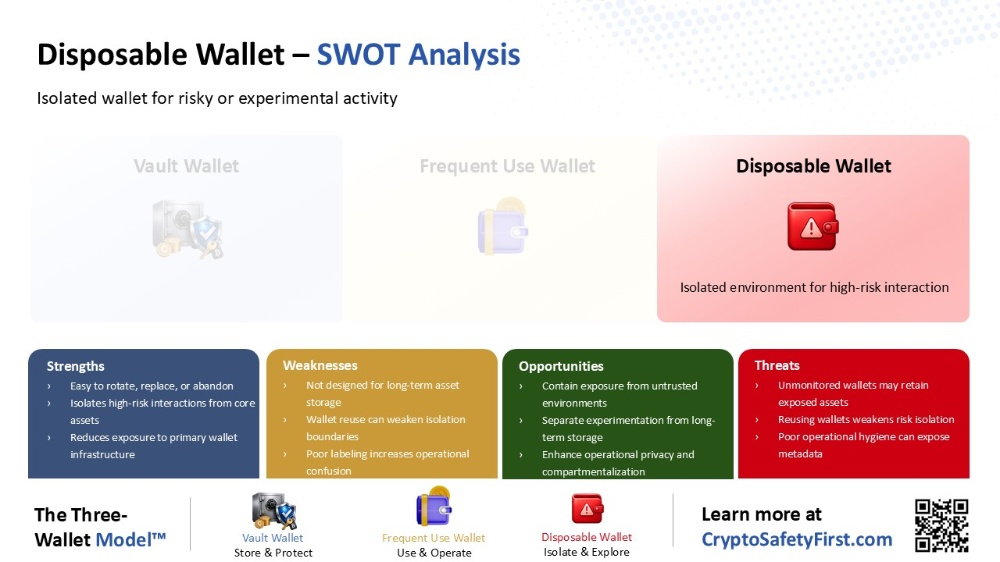
Selecting a Disposable Wallet
The Disposable Wallet exists to absorb risk.
Typical uses include:
- unknown dApps
- new protocols
- experimental ecosystems
- NFT mints
- test transactions
- airdrops
This wallet should contain:
- minimal funds
- no valuable NFTs
- no long-term investments
Suitable Disposable Wallets
In many cases, the best Disposable Wallet is simply: a fresh installation of a wallet you already know.
Examples include:
- MetaMask
- Rabby
- Phantom
Many experienced users create:
- separate browser profiles
- separate wallet instances
- isolated browser environments
for Disposable Wallet activity.
The software matters less than maintaining complete separation.
Example Three-Wallet Setups
There is no single "correct" wallet combination. The examples below illustrate how different users can implement the Three-Wallet Model™ using different wallet software. The specific products may change over time, but the underlying roles remain the same.
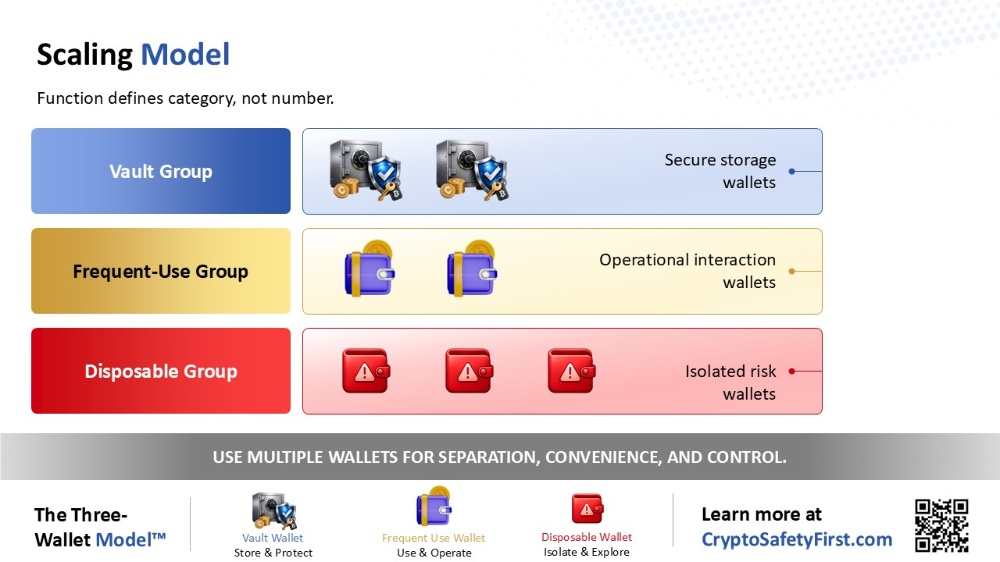
As your crypto activity grows, you do not replace the Three-Wallet Model—you expand it. You may use multiple Vault Wallets to separate long-term holdings, several Frequent Use Wallets for different ecosystems or activities, and multiple Disposable Wallets to isolate higher-risk interactions. The role defines the category, not the number of wallets.
Beginner
Vault
• Trezor Safe 3
Frequent Use
• Coinbase Wallet
Disposable
• MetaMask
Intermediate
Vault
- Ledger Flex
Frequent Use
- Rabby
Disposable
- MetaMask
Advanced Multi-Chain
Vault
- Ledger Stax
Frequent Use
- Rabby + Phantom
Disposable
- separate MetaMask
- separate Phantom
Bitcoin-Focused
Vault
- Coldcard
Or
- Blockstream Jade
Frequent Use
- Sparrow Wallet
Or
- BlueWallet
Disposable
Usually unnecessary unless interacting with experimental Bitcoin applications.
The Most Common Wallet Selection Mistakes
Avoid these mistakes:
- choosing one wallet for everything
- storing long-term assets inside operational wallets
- keeping large balances in Disposable Wallets
- chasing every new wallet trend
- ignoring backup quality
- prioritizing appearance over security
The safest wallet is not always the newest.
It is the one performing the correct role.
Which Wallet Should You Choose?
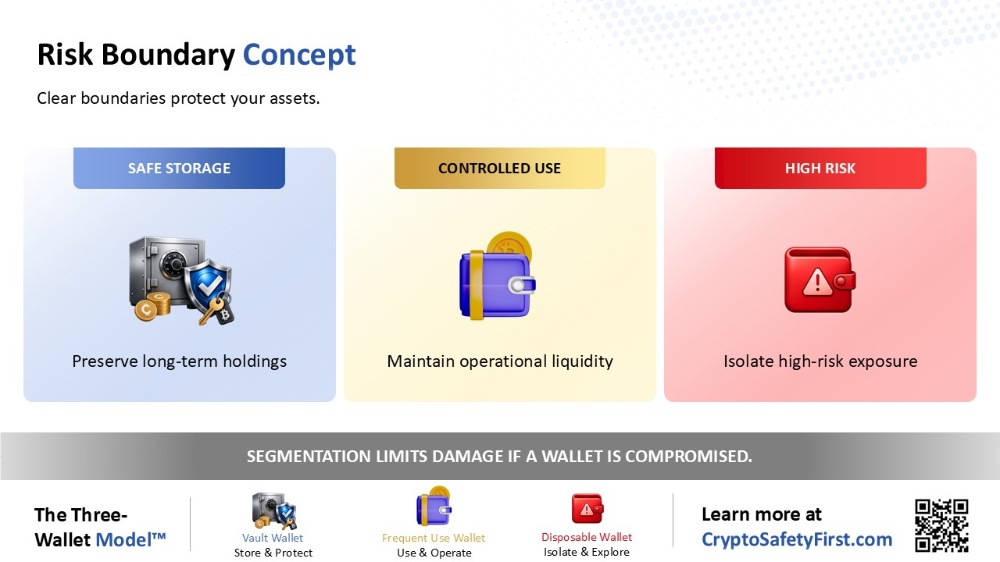
Ask yourself:
Am I protecting long-term savings?
Choose a Vault Wallet.
Am I interacting with trusted dApps?
Use a Frequent Use Wallet.
Am I experimenting with unknown projects?
Use a Disposable Wallet.
Choosing the correct role first usually makes the wallet choice obvious.
Final Takeaway
There is no universally best crypto wallet.
There are only wallets that are better suited to different roles.
The biggest improvement most users can make is not replacing their wallet.
It is assigning each wallet a clear role.
A hardware wallet does not automatically make your setup secure.
A browser wallet is not automatically unsafe.
What matters is how each wallet fits into your overall security structure.
The Three-Wallet Model™ transforms individual wallets into a complete self-custody system by separating storage, daily activity, and high-risk interaction into distinct environments.
Because in crypto, the safest wallet is rarely the one with the most features.
It is the one with the right purpose.
Continue Your Crypto Security Journey
This article is part of the Three-Wallet Model™ educational series designed to help crypto and Web3 users reduce the risk of scams, hacks, and costly mistakes through practical security guidance and real-world incident analysis.
Explore more practical guides, wallet security resources, and self-custody best practices at CryptoSafetyFirst.com.