The Anatomy Of A Signal: MHz, Bandwidth & Noise Explained

While some readers are pretty comfortable with exploring the spectrum and using their SDR device to explore and find different signals, we’re also trying to encourage newbies to grab a device and get to experimenting as well. And if you happen to be of the new persuasion, there’s certainly no shortage of fundamentals that are part of that journey.
As part of the publication, we’ve aimed to break down essential pieces of hardware, different antenna types and other fundamental skills. Today, we’re going to go right into the basics and look at some of the characteristics that we will see when looking at different signal types.
If you’re an experienced hand, you might find this to be a little boring, so skip ahead. If you’re a newcomer, though, there’s plenty here to help set you on your way.
Subscribe now
The Basics
While it’s easy to wonder why we should care about such nerdy things, the fundamentals of things like Signals Intelligence dictate that we must. This is because when we look to analyse a signal, we’ll look at several different things to help give us clarity around what we are looking at.
We also need to understand these basics to help us best grasp how our transmitted signals might propagate. With each frequency range moving and propagating differently, understanding these differences can mean the difference between a successful transmission and radio silence.
Today we’ll be looking at three things: MHz, Bandwidth and Noise. You’ll need a good understanding of these when it comes time to start using software for reverse engineering and understanding intercepted signals. So, here is as good a place as any to start.
To keep things simple to understand and clear, we can use an analogy of the ocean to help break this down a little further.
Frequency is like the speed of waves in the ocean, bandwidth is how wide the waves spread, and noise is the splashing from other waves that makes it hard to determine which wave is making noise.
MHZ (Frequency)
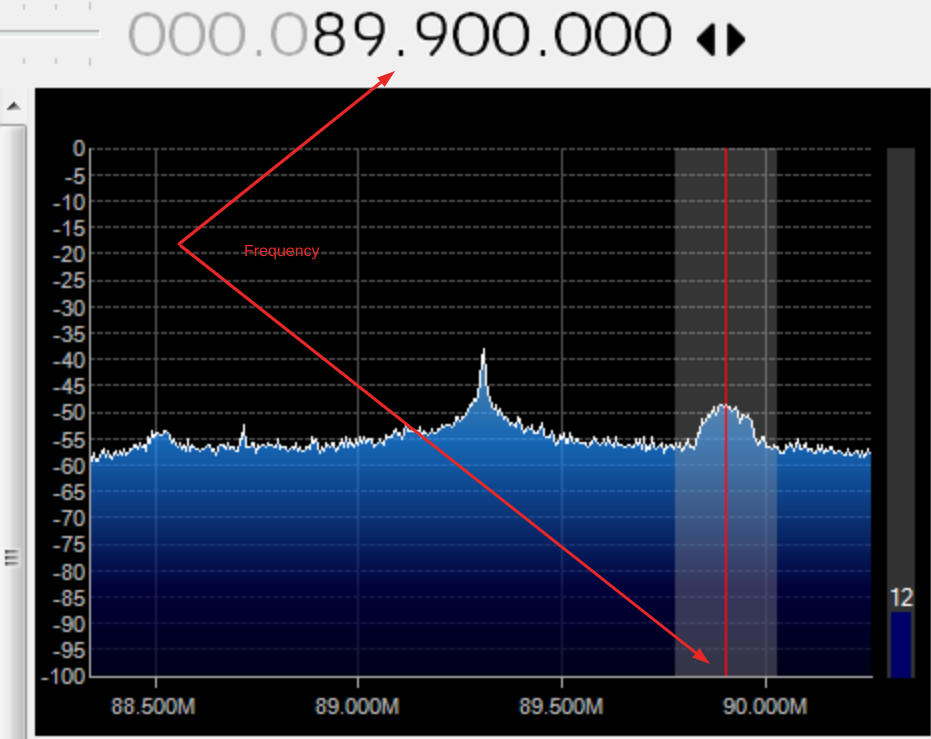
What it is: Frequency tells you how fast a radio wave oscillates, measured in cycles per second (Hertz, Hz). In radio, we usually use megahertz (MHz), where 1 MHz = 1 million cycles per second.
Why it matters:Frequency determines where a signal sits on the radio spectrum. Eg, FM radio stations are around 88–108 MHz, while WiFi or cellular networks are much higher at around 2400MHz.
Key point: Different frequencies have different propagation characteristics: Lower frequencies can travel farther; higher frequencies carry more data but are more easily blocked by obstacles.
Bandwidth (Signal)
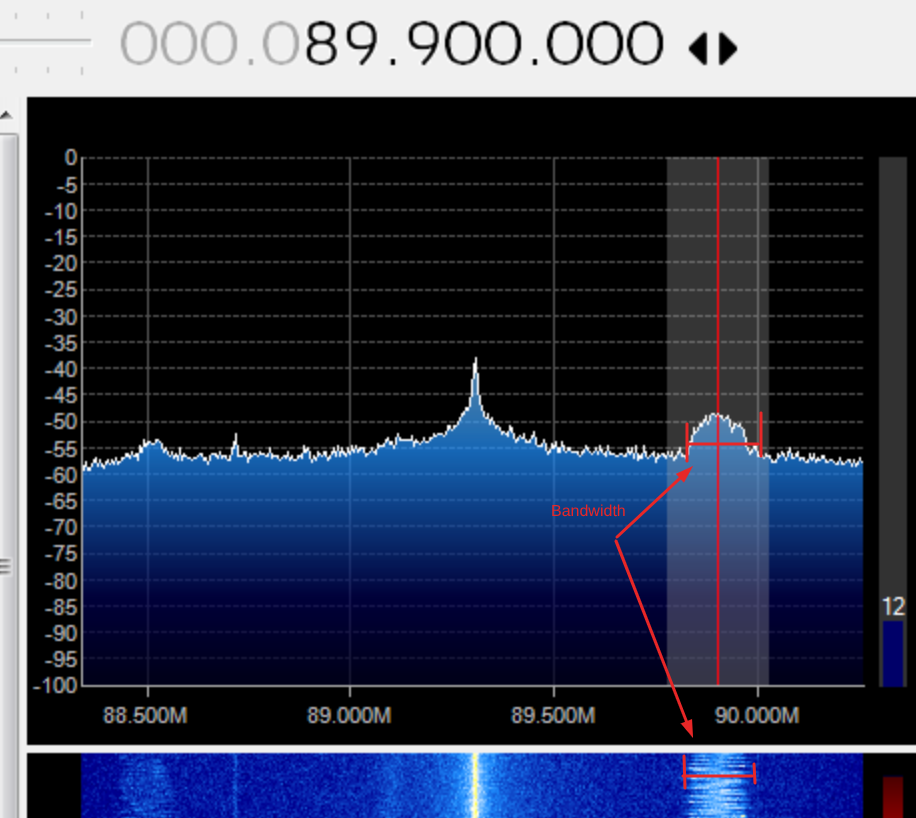
What it is: Bandwidth is the range of frequencies a signal occupies. Think of it as the “width” of the signal on the spectrum.
Why it matters: Wider bandwidth allows a signal to carry more information, like faster data rates for Wi-Fi or clearer audio for FM radio.
Key point: Bandwidth is limited by regulations and the physical characteristics of the channel. Two signals too close together can, and often will, interfere.
Noise (Background)
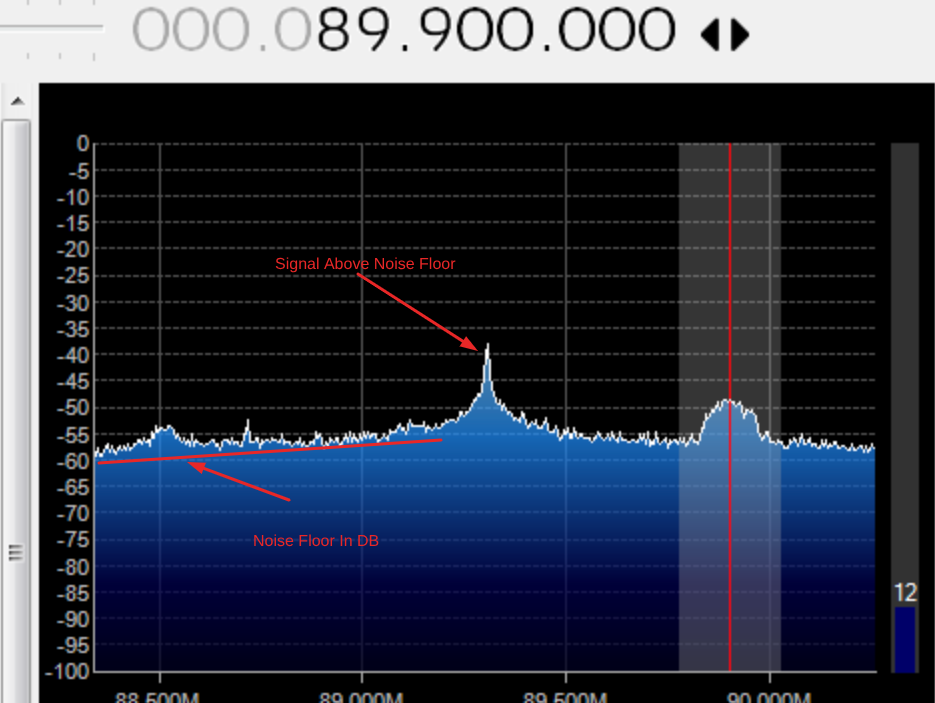
What it is: Noise is any unwanted background signal that mixes with the signal you’re trying to receive. It can come from electronics, the environment, or other transmissions.
Why it matters: Noise reduces clarity and makes it harder to extract the information you want. High noise can make a weak signal unusable.
Key point: Signal-to-noise ratio (SNR) is a common way to measure how strong your signal is compared to the background noise — higher SNR = cleaner reception.
Remember
While there are a few variables to consider outside of these circumstances, for the most part, understanding the anatomy of a signal and how these three things interact on the spectrum is a huge step forward.
Once you’re clear of the basics, you’ll also start to understand plenty of other concepts along the way. For instance, if we think of an excessive noise floor as humans, that typically makes it harder for “us” to communicate. But if we apply this analogy to radio communications, the existence of communication modes like WSPR and FT-8 proves that in the radio world, communication modes that work below the noise floor not only exist, but are also extremely easy to use.
If this type of thing is of interest to you, you might find it beneficial to explore getting an amateur radio license. This gives enhanced frequency ranges and greater output power and is the best investment you can make if radio experimentation is in your future.
If you’re interested, search “Amateur Radio Licensing” and your country for more information. Most beginner-grade licenses are low theory and easy to complete over the course of a day or two, so don’t be put off by the technical requirements. Successful completion will unlock the spectrum for you, giving you access to a wide range of communication modes and protocols.
The real fun comes when you pair electronic devices like the Raspberry Pi with transmitters. But that’s a story for another article.
Investigator515 explores the RF spectrum, cybersecurity, and the hidden tech behind modern espionage.
Follow for new content weekly
Bluesky • X • Substack
You might also like,
- OSINT Investigators Guide to Self Care & Resilience
- Spies In The Mud: The RF-111 Aardvark
- What The Tech?! Space Shuttles