Can Crypto Solve Financial Problems in Africa?

Introduction
Africa faces many financial challenges: limited access to banks, high transaction fees, currency instability, and slow cross-border payments.
At the same time, the continent has one of the fastest-growing crypto adoption rates in the world.
This raises an important question:
Can crypto really help solve financial problems in Africa?
In this article, we explore how cryptocurrencies and blockchain technology are being used across Africa, the problems they aim to solve, and the challenges that still remain.
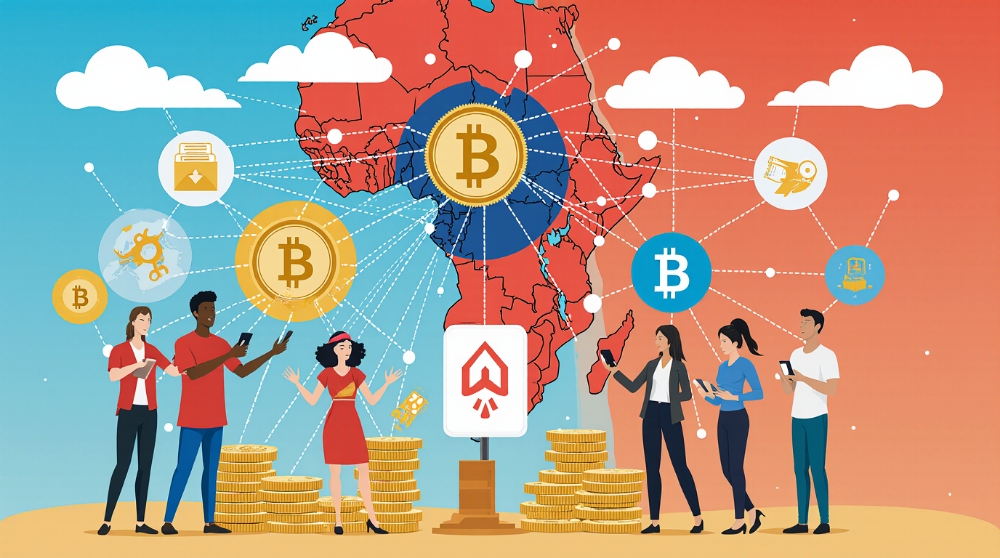
1. Financial Challenges in Africa
Many Africans struggle with traditional financial systems.
Common issues include:
- Limited access to banking services
- High remittance fees
- Currency devaluation
- Inflation
- Slow and expensive cross-border transfers
Millions of people are unbanked or underbanked, especially in rural areas.
Crypto emerged as an alternative to these systems.
2. Crypto and Financial Inclusion
One of crypto’s biggest promises is financial inclusion.
With crypto, people only need:
- A smartphone
- Internet access
- A digital wallet
No bank account is required.
This allows millions of Africans to:
- Store value
- Send and receive money
- Participate in the global economy
Crypto gives people access where banks cannot.
3. Cheaper and Faster Remittances
Remittances are a lifeline for many African families.
Traditional remittance services:
- Charge high fees
- Take several days
- Depend on intermediaries
Crypto enables:
- Near-instant transfers
- Lower fees
- Direct peer-to-peer payments
This helps families receive more money, faster.
4. Protection Against Inflation and Currency Devaluation
Some African currencies face high inflation and instability.
Crypto offers alternatives:
- Bitcoin as a store of value
- Stablecoins pegged to stronger currencies
Many people use stablecoins to:
- Save money
- Trade
- Protect purchasing power
Crypto becomes a hedge against unstable local currencies.
5. Crypto and Small Businesses
Small businesses are the backbone of African economies.
Crypto helps entrepreneurs:
- Accept global payments
- Avoid high banking fees
- Access new customers
- Operate without borders
Freelancers, traders, and online sellers use crypto to get paid internationally.
6. Decentralized Finance (DeFi) Opportunities
DeFi opens new financial tools.
With DeFi, Africans can:
- Save and earn interest
- Borrow without banks
- Access global financial markets
No credit history or paperwork is needed.
This creates opportunities where traditional finance fails.
7. Challenges Facing Crypto Adoption in Africa
Despite its potential, crypto is not a perfect solution.
Major challenges include:
- Limited internet access
- Lack of education
- Scams and fraud
- Volatility
- Regulatory uncertainty
Without proper education and regulation, users remain vulnerable.
8. Regulation and Government Perspectives
African governments have mixed views on crypto.
Some:
- Support innovation
- Create regulatory frameworks
Others:
- Restrict or ban crypto usage
Clear and balanced regulation is necessary for long-term adoption.
9. Real Adoption Across the Continent
Crypto adoption is already happening in Africa.
People use crypto for:
- Peer-to-peer trading
- Remittances
- Online payments
- Savings
Communities are building local crypto solutions adapted to African needs.
10. Is Crypto the Complete Solution?
Crypto alone cannot fix all financial problems.
But it can:
- Complement existing systems
- Provide alternatives
- Empower individuals
Education, infrastructure, and regulation are key to success.
Conclusion
Crypto has strong potential to help solve financial problems in Africa.
It offers:
- Financial inclusion
- Faster payments
- Economic freedom
- Global access
However, crypto is a tool — not magic.
With the right education, infrastructure, and policies, crypto can play a major role in Africa’s financial future.
💬 Do you think crypto can transform finance in Africa?
Share your opinion and experience in the comments!